RBI Removes Paytm Payments Bank From Scheduled Banks. Was Paytm’s Biggest Mistake Trying To Become A Bank, Or Did Its Ambitions Grow Faster Than Its Systems And Controls?
The Reserve Bank of India has now formally removed Paytm Payments Bank from its list of scheduled banks. On paper, it sounds like another technical regulatory notification. But this is actually the latest chapter in a four-year-long collapse that began with RBI's supervisory concerns in 2022, escalated into sweeping restrictions in 2024 and ended with the cancellation of PPBL's banking licence in April 2026. How did one of India's most celebrated fintech companies end up here?

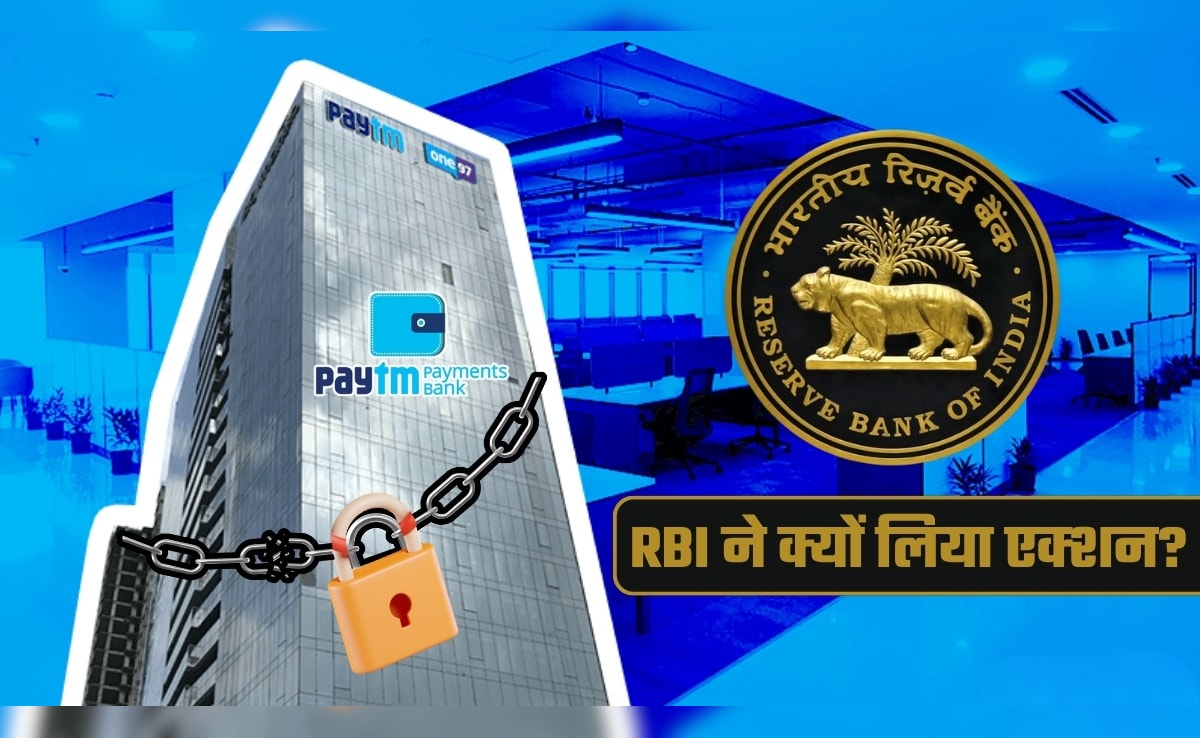
The Reserve Bank of India has formally removed Paytm Payments Bank Limited (PPBL) from the list of scheduled banks, marking another significant step in the winding-up of the bank that once sat at the centre of Paytm’s financial ecosystem. The RBI’s latest action may sound like a technical regulatory change, but it is actually the latest consequence of a much longer battle between the regulator and Paytm Payments Bank.
The important point is that PPBL did not lose its banking status because of this latest RBI notification. Its banking licence had already been cancelled by the RBI in April 2026.
The Delhi High Court subsequently ordered the bank’s winding-up in July, following RBI’s petition. The removal from the Second Schedule of the RBI Act is therefore part of the formal process that follows the loss of its banking licence.
That distinction matters because the headline can make it sound as though RBI has suddenly taken another action against Paytm. It hasn’t. The latest notification is effectively another marker in a process that has been unfolding for years.
And for Paytm, there is an equally important distinction. Paytm Payments Bank is being wound up. Paytm itself is not shutting down. One97 Communications continues to operate its broader payments business through other banking partners, including UPI, QR payments and other merchant-facing services.
So what exactly does it mean when RBI says Paytm Payments Bank has been removed from the list of scheduled banks?
What Does It Mean To Be Removed From The Scheduled Banks List?
To understand the significance of the RBI’s move, it helps to understand what a scheduled bank actually is.
Under the Reserve Bank of India Act, banks that meet certain conditions are included in the Second Schedule of the Act. Being a scheduled bank essentially gives a bank recognised status within India’s formal banking system and allows it to access certain facilities available to scheduled banks, including eligibility for certain RBI facilities, subject to the applicable rules.
Paytm Payments Bank had been included in this list since it began operating as a payments bank. Its removal now reflects the fact that it no longer holds a valid banking licence and is in the process of being wound up.
In other words, the sequence is important.
PPBL was first subjected to regulatory restrictions. Those restrictions were subsequently followed by the cancellation of its banking licence. The Delhi High Court then ordered its winding-up. And now RBI has formally removed the bank from the Second Schedule.
So the latest RBI notification is not the beginning of the Paytm Payments Bank crisis. It is closer to the paperwork that follows the end of its banking licence.
But that immediately raises the more important question. Why did RBI cancel Paytm Payments Bank’s licence in the first place? Because the answer takes us back well before 2026 – to the first major warning signs that appeared in 2022.
But Why Did RBI Cancel Paytm Payments Bank’s Licence?
The answer goes back much further than the latest RBI notification. In April 2026, when the Reserve Bank cancelled Paytm Payments Bank’s banking licence, it did not point to one isolated violation. Instead, it cited a broader set of concerns about how the bank was being run.
RBI said the affairs of PPBL were being conducted in a manner detrimental to the interests of the bank and its depositors. It also said the general character of the bank’s management was prejudicial to depositors and the public interest, that continuing the bank would serve no useful purpose or public interest, and that PPBL had failed to comply with conditions attached to its payments-bank licence. Paytm Bank
That is a much more serious finding than simply saying Paytm Payments Bank had a few compliance problems.
And it is important to note what RBI didn’t say. The central bank did not announce in April 2026 that the bank had suddenly run out of money or was unable to return customer deposits. In fact, RBI specifically said PPBL had enough liquidity to repay its entire deposit liability during the winding-up process.
So the story was primarily about regulatory compliance, management and the way the bank was being operated, rather than a conventional bank run or a sudden liquidity crisis.
But if the final decision came in 2026, the problems themselves were considerably older.
The Warning Signs Were Already There In 2022
The first major warning came in March 2022, when RBI directed Paytm Payments Bank to stop onboarding new customers with immediate effect.
At the time, the central bank cited “material supervisory concerns” and directed PPBL to appoint an IT audit firm to conduct a comprehensive systems audit. That meant RBI was already looking closely at the bank’s technology and operational systems well before the much bigger confrontation that followed in 2024. Paytm Bank
PPBL’s own subsequent financial statements provide more detail about what followed. The bank said an external auditor’s report received in October 2022 identified the need to strengthen its IT outsourcing processes and operational risk management, including KYC and anti-money-laundering controls. RBI then recommended remedial steps and continued to engage with the bank over the deficiencies.
The significance of that 2022 order is easy to miss today. Paytm was still expanding rapidly, its consumer-facing payments business remained hugely visible and the company was trying to build an increasingly broad financial-services ecosystem. But behind that growth, its banking arm was already under regulatory scrutiny.
And the restriction did not disappear quickly.
In its later disclosures, PPBL said it remained engaged with RBI through 2023 to address the outstanding deficiencies. By early 2024, however, the restrictions had escalated dramatically.
That is when the Paytm Payments Bank story stopped being a regulatory warning and became a full-blown crisis.
Then Came The 2024 Paytm Payments Bank Crisis
If 2022 was the warning, January 2024 was the point at which the problem became impossible to ignore.
On January 31, 2024, the RBI announced sweeping business restrictions on Paytm Payments Bank after what it described as persistent non-compliances and material supervisory concerns.
The restrictions were severe: PPBL was told not to accept further deposits or top-ups in customer accounts, prepaid instruments, wallets and other products, while restrictions were also placed on credit transactions and other banking services.
The RBI initially set February 29, 2024 as the deadline. But after considering the interests of customers and merchants who needed more time to make alternative arrangements, the central bank extended the deadline to March 15.
After that date, customers could continue withdrawing or using whatever balance was already available, but fresh deposits and top-ups were no longer permitted, apart from limited credits such as interest, refunds and cashback.
The implications went far beyond ordinary bank accounts.
Customers could no longer receive salaries or government benefits into PPBL accounts. Wallets could not be topped up. Paytm Payments Bank-issued FASTags could continue to be used until the existing balance ran out, but could no longer be recharged.
Merchants whose Paytm QR codes or other payment devices were linked to PPBL accounts had to move to alternative banking arrangements. System Health
For Paytm, this was particularly damaging because the bank was deeply woven into the company’s payments ecosystem.
The problem was no longer confined to a regulator and a subsidiary. Millions of customers and merchants suddenly had to understand which parts of Paytm would continue working, which would not, and where their money needed to go.
And that distinction became crucial.
The RBI was not shutting down Paytm’s entire payments business. It was effectively forcing the company to separate its broader Paytm ecosystem from Paytm Payments Bank.

Paytm Had To Break Its Dependence On Its Own Bank
The February 2024 restrictions forced Paytm to start rebuilding parts of its payments infrastructure around other banks.
The RBI’s directions required PPBL to terminate the nodal accounts of One97 Communications and Paytm Payments Services, with existing transactions to be settled by March 15.
That was the beginning of a fundamental change in Paytm’s business model.
The company that had once built an ecosystem where the payments platform and its own bank could work closely together now had to operate its payments business with other banks sitting behind it.
And that raises a much bigger question about Paytm’s original ambition.
What exactly was the company trying to build when it moved from being a payments platform into banking – and did that expansion create a level of regulatory and operational complexity that the company ultimately struggled to manage?
That takes us back to how Paytm became one of India’s biggest fintech names in the first place.
How Paytm Became India’s Fintech Rockstar
To understand why the collapse of Paytm Payments Bank matters, it helps to understand just how far Paytm had travelled before it ran into trouble with its banking ambitions.
Paytm was launched in 2009, initially around mobile recharges and payments. It launched its wallet in 2014, and that wallet quickly became the company’s biggest opportunity. By 2015, Paytm had applied for a payments-bank licence, and the company received an in-principle licence that year. The bank itself was incorporated in August 2016, received its payments-bank licence in January 2017 and began operations in May 2017.
Then came demonetisation in November 2016.
The government’s decision to withdraw high-value currency notes suddenly pushed millions of Indians and merchants towards digital payments. Paytm was already sitting there with a functioning wallet and a growing merchant network. Its own IPO documents acknowledge that demonetisation helped drive merchant adoption of digital payments, including wallets and QR codes.
What followed was more than just the growth of a payments app. Paytm kept adding pieces to the financial-services puzzle – QR payments, bill payments, ticketing, FASTags, merchant devices, wealth products and eventually banking. By 2017, Paytm Payments Bank had become part of that expansion.
And the ambition was enormous.
Paytm wasn’t merely trying to become another wallet. The idea was to build an ecosystem in which a customer could pay, save, transfer money, shop and access financial products from the same platform. Its payments-bank launch was described by the company at the time as part of a much bigger mission to bring hundreds of millions of Indians into the formal financial system.
That ambition helped turn Paytm into one of India’s best-known fintech companies.
But it also created a problem that would become increasingly important: a payments app can move fast; a bank cannot operate on the same rules.
A payments bank is a regulated financial institution. It has obligations around customers, KYC, technology, risk management, data and compliance that go far beyond simply making an app convenient to use.
And that distinction would become increasingly difficult for Paytm to ignore.
The Bigger Paytm Ambition Came With A Bigger Regulatory Burden
Paytm’s expansion into banking was not an accidental side project. It was central to the company’s attempt to build a much larger financial-services business.
The payments bank could accept deposits and provide payment and remittance services, while Paytm continued building products around the customer relationship. By 2021, the company had grown into a publicly listed fintech giant, with ambitions stretching well beyond the original mobile-recharge business.
PPBL’s own records show how its product portfolio expanded from wallets and savings accounts into debit cards, current accounts, fixed deposits and other services. But the more Paytm expanded, the more complicated the underlying operation became.
There was a crucial difference between building a huge consumer platform and running a regulated bank at the centre of that platform.
That distinction is particularly important in hindsight. RBI’s first major intervention came in 2022, when it stopped PPBL from onboarding new customers and cited material supervisory concerns. Its subsequent restrictions in 2024 went much further, eventually preventing the bank from accepting fresh deposits and top-ups and from providing most banking services.
By then, the question was no longer whether Paytm could attract customers.
It clearly could.
The harder question was whether the systems, controls and compliance framework supporting that enormous customer base were keeping pace with the company’s ambitions.
And that is where the story moves from Paytm’s extraordinary rise to the regulatory problems that ultimately brought its banking experiment to an end.
What Exactly Went Wrong Inside Paytm Payments Bank?
The easiest way to describe the Paytm Payments Bank crisis is to say it was a “compliance failure.” But that phrase is too broad to explain why the RBI eventually went as far as cancelling the bank’s licence.
The regulatory concerns built up over several years and involved the bank’s technology systems, customer due diligence, KYC and anti-money-laundering controls, outsourcing arrangements and operational risk management. PPBL’s own disclosures show that an external IT audit had identified areas requiring strengthening as early as 2022, after which the bank was asked to take remedial measures.
The RBI’s January 2024 action was therefore not based on one isolated incident. The central bank referred to persistent non-compliances and material supervisory concerns when it imposed restrictions on PPBL.
The April 2026 licence-cancellation order went further. RBI said PPBL’s affairs were being conducted in a manner detrimental to the interests of the bank and its depositors. It also said the general character of management was prejudicial to depositors and public interest and that the bank had failed to comply with conditions attached to its banking licence.
That progression is important.
The regulator first identified problems and gave the bank an opportunity to address them. The restrictions then became progressively more severe. Eventually, RBI concluded that allowing PPBL to continue as a bank served no useful purpose or public interest.
In other words, the licence cancellation was the endpoint of a regulatory process, not a single-day decision.
Was Paytm’s Problem Its Ambition?
This is where the Paytm story becomes more complicated than a simple tale of a regulator cracking down on a fintech company.
Paytm’s ambition was never merely to run a wallet. It wanted to build a broad financial-services ecosystem around its enormous customer and merchant base. That meant payments, banking, merchant services and other financial products increasingly operating alongside one another.
The opportunity was enormous. But so was the regulatory burden.
A payments platform can scale by adding customers, merchants and transactions. A bank has to scale its controls at the same time. Every additional customer means KYC obligations. Every transaction creates monitoring requirements. Every technology system becomes part of the institution’s operational-risk framework.
That is why the RBI’s concerns about technology, KYC, AML controls and operational risk matter so much to the larger Paytm story. They raise a fundamental question: did Paytm’s financial-services ambitions expand faster than the infrastructure and controls required to support a regulated banking business?
We should be careful here. RBI has not officially said that Paytm’s “ambition” was the cause of the bank’s failure. That is an analytical question, not a finding of the regulator.
But the chronology is difficult to ignore.
Paytm went from a mobile-recharge company to one of India’s most prominent digital-payment platforms, launched a payments bank, built a huge customer and merchant ecosystem and eventually became a listed fintech giant. Meanwhile, its banking arm was facing supervisory concerns, restrictions and repeated demands for corrective action.
By 2026, RBI had reached the point where it no longer believed the bank should continue. And that brings us to the question that sits at the centre of Paytm’s entire story: was becoming a bank the mistake, or was the problem trying to build a regulated bank at the same speed at which Paytm had built a technology company?
Paytm Payments Bank Is Gone. But Paytm Is Not
The biggest misconception created by the Paytm Payments Bank saga is that the death of the bank means the death of Paytm. It does not.
The distinction became particularly important after RBI’s restrictions in 2024. Paytm had to move away from its dependence on PPBL and build alternative banking relationships for its payments business. One97 Communications said its UPI services, merchant payments and other businesses would continue through partnerships with other banks.
That means the company has effectively had to separate Paytm the consumer-facing fintech platform from Paytm Payments Bank the regulated banking entity.
For customers, that distinction matters because a Paytm QR code or a Paytm payment service does not necessarily mean the underlying banking relationship is with PPBL. The company has continued operating its payments ecosystem through other banking partners even after PPBL’s ability to provide banking services was restricted.
And there was another reason for the separation: PPBL’s licence cancellation did not leave customers facing a conventional bank-collapse scenario. When RBI cancelled the licence in April 2026, it said PPBL had sufficient liquidity to repay its entire deposit liability during the winding-up process.
So the bank may be disappearing, but the Paytm brand and its payments business have survived. The more difficult question is what Paytm has lost by having to rebuild without its own bank.
The Cost Of Losing Its Banking Arm
For years, Paytm’s appeal came partly from how many financial services it could bring together under one roof. Its payments bank was an important part of that ecosystem, even though the business was subject to the restrictions that apply to payments banks and could not operate like a conventional lending bank.
Once PPBL came under RBI restrictions, that integration had to be dismantled.
Paytm had to shift merchant settlements and other banking relationships to other lenders. Its UPI operations moved to a multi-bank model, and the company increasingly became a payments platform sitting on top of other banks, rather than a payments platform with its own banking arm.
That is a significant strategic change.
It doesn’t necessarily mean Paytm cannot remain a major payments company. But it does mean that one of the biggest ideas behind its expansion – building a broad financial ecosystem with its own regulated bank at the centre – has effectively been abandoned.
And that is what makes the RBI’s latest notification more significant than it initially appears.
The removal of Paytm Payments Bank from the scheduled-banks list is not the event that destroyed Paytm’s banking ambitions. It is the formal confirmation that those ambitions, at least in their original form, are over.
The bank has lost its licence. The court has ordered its winding-up. RBI has now removed it from the Second Schedule. What remains is the much bigger Paytm business – and the question of whether it can continue growing without the banking arm that was once supposed to help take it to the next level.
So, Was Becoming A Bank Paytm’s Biggest Mistake?
It would be too easy to look at everything that happened to Paytm Payments Bank and conclude that becoming a bank was the mistake. The evidence does not quite support such a simple answer.
The payments-bank model itself was not the problem. RBI created payments banks precisely to expand access to deposits, payments and remittance services, particularly for customers who were underserved by traditional banking. Paytm was one of the companies that saw an opportunity to build an enormous business around that model.
The problem was what happened as the business grew.
By the time RBI cancelled PPBL’s licence in April 2026, its concerns were not about Paytm having too many customers or transactions. They were about the bank’s compliance with the rules and conditions under which it was allowed to operate.
RBI specifically cited the manner in which the bank’s affairs and management were being conducted, its compliance with the conditions of its licence and the public interest in allowing it to continue.
That distinction matters.
Growth itself wasn’t the regulatory failure. The question was whether the controls supporting that growth were strong enough for a regulated bank.
And the chronology makes the question harder to dismiss. RBI’s first major intervention came in 2022, when PPBL was stopped from onboarding new customers because of what the regulator called material supervisory concerns.
Two years later, the restrictions became far more severe. And eventually, in 2026, RBI concluded that the bank’s licence could no longer continue. Moneycontrol
So perhaps Paytm’s bigger mistake wasn’t simply trying to become a bank.
It may have been underestimating what it meant to operate one at the scale and complexity of the ecosystem it was building.
That is an analytical conclusion rather than an RBI finding. But it is the question the company’s four-year regulatory journey leaves behind.
/entrackr/media/media_files/2024/10/22/7PSY9ZL2xFlXnxIcmzbL.jpg)
The Last Bit, The Paytm Story Was Never Really Just About A Bank
There is also an irony in where Paytm has ended up.
The company that once wanted to bring payments, banking and financial services together under one ecosystem has now had to separate its payments business from the bank that was supposed to help power that ecosystem.
PPBL’s licence is gone. The Delhi High Court has ordered its winding-up. And RBI has now removed the bank from the Second Schedule.
But Paytm itself has continued.
The company has shifted towards a multi-bank model for its payments business and says its core services, including UPI, QR payments, Soundbox, card machines and Payment Gateway, continue to operate. It had also ended its material business arrangements with PPBL in March 2024, well before the bank’s licence was finally cancelled.
That makes the latest RBI action both significant and slightly misleading at first glance.
The bank is disappearing. The fintech isn’t.
What has disappeared is one particular version of Paytm’s ambition – the idea that the company could build a giant consumer payments platform and place its own regulated bank at the centre of it.
And that leaves Paytm with a very different business to build from here: one that is less dependent on owning the banking infrastructure itself, and more dependent on whether it can make the broader payments and financial-services business profitable and sustainable.
That, ultimately, may be the more important question than why RBI removed Paytm Payments Bank from the scheduled-banks list.