TCS Bets On AI Agents And Paytm Hires Thousands. Why India Inc.’s AI Message Sounds Very Different From Silicon Valley
As fears mount that artificial intelligence could trigger widespread job losses, two of India's corporate giants have offered a very different perspective. While TCS envisions a future where AI agents work alongside employees, Paytm is expanding both its AI ambitions and workforce, raising important questions about how India Inc. views the AI revolution.

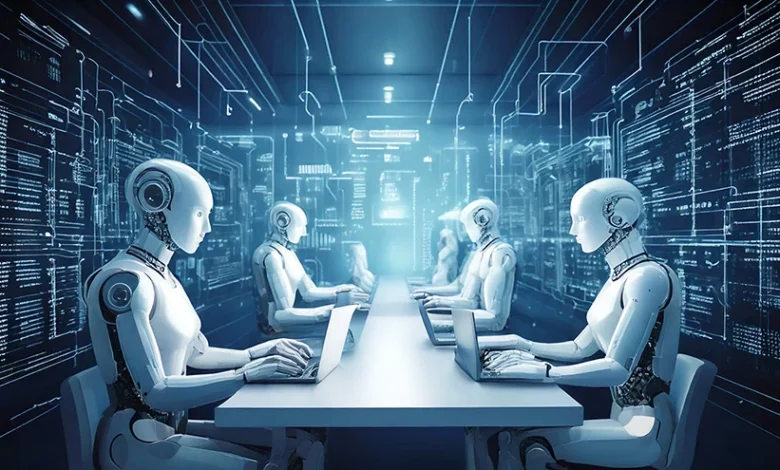
At the 31st Annual General Meeting of Tata Consultancy Services, TCS, Chairman N. Chandrasekaran made one of the boldest statements yet on the future of artificial intelligence in corporate India, saying that the company could have as many AI agents as human employees within the next three years.
Chandrasekaran’s remarks come at a time when businesses across the world are struggling with a fundamental question: if artificial intelligence can perform an increasing share of tasks traditionally carried out by humans, what does that mean for companies built on human expertise?
According to Chandrasekaran, the answer lies not in viewing AI merely as a tool that reduces effort, but as an entirely new layer of infrastructure that will create fresh opportunities for businesses. He argued that while AI can lower the amount of human input required for software development and maintenance, it is also expanding the market for technology services by enabling organisations that previously did not rely on IT services to embrace digital transformation.
The TCS chairman revealed that the company’s annualised AI revenue stood at approximately $2.4 billion in the last quarter and was growing at a compound quarterly growth rate of over 22 per cent. He also identified five major opportunity areas emerging from the AI revolution: modernising enterprise technology systems, reimagining business operations, AI governance and oversight, sovereign AI initiatives and physical AI applications.
Perhaps most notably, Chandrasekaran sought to challenge the growing perception that artificial intelligence represents an existential threat to the IT services industry. Instead, he argued that AI is widening the market and creating new categories of work, adding that what will matter most in the enterprise AI era is not access to models, but trust, context and customer relationships.
For India’s technology sector, which has long relied on its vast pool of engineering talent as a competitive advantage, such comments offer an early glimpse into how one of the country’s largest employers believes the workplace of the future may evolve.
Paytm Is Betting On AI – And More Employees
While much of the global conversation around artificial intelligence has focused on layoffs and workforce reductions, Paytm’s latest announcement suggests that some Indian companies are approaching the technology from a different perspective. Even as it expands its AI-driven offerings, the fintech giant has unveiled plans to hire around 4,000 employees over the next nine months, representing roughly a 10 per cent increase in its current workforce.
The recruitment drive will span product, technology, artificial intelligence and leadership roles, underscoring the company’s ambition to strengthen its position in an increasingly competitive digital financial services market. According to the company, more than 800 employees have already been added over the past two months, with further hiring expected to continue through March 2027.
At the same time, Paytm confirmed that around 400 employees, or approximately 1 per cent of its workforce, would be let go following the latest performance appraisal cycle. While the job cuts have attracted attention, they remain relatively modest compared to the thousands of positions eliminated after regulatory action forced the winding down of Paytm Payments Bank.
The development indicates an important reality of the AI era. Rather than simply replacing workers, many companies appear to be restructuring their workforce, reducing some roles while simultaneously creating demand for new skills in areas such as artificial intelligence, product development, data analytics and digital services.
For Paytm, AI is not being presented as a substitute for human talent but as a growth enabler that requires fresh investment in people, technology and leadership. The company’s hiring plans suggest that even as automation becomes more sophisticated, businesses may still need large numbers of employees to build, manage and commercialise the next generation of AI-powered products and services.

In Silicon Valley, AI Is Increasingly Being Linked To Layoffs
The conversation around artificial intelligence has evolved very differently in Silicon Valley. While many Indian companies continue to emphasise reskilling, workforce expansion and new business opportunities, some of the world’s largest technology firms have become increasingly direct about the disruptive impact AI could have on employment.
Meta has emerged as one of the most prominent examples. As the company pours billions of dollars into artificial intelligence infrastructure and research, it has simultaneously undertaken significant workforce restructuring. Recent reports indicate that nearly 8,000 employees have been impacted as the company reallocates resources toward its AI ambitions, with thousands of workers being reassigned to newly created AI-focused teams.
Amazon has delivered an equally clear message. Chief Executive Officer Andy Jassy has publicly stated that artificial intelligence will reduce the need for certain roles over time as AI agents become capable of handling a growing range of tasks. The company has already eliminated tens of thousands of corporate positions across multiple rounds of restructuring while continuing to invest aggressively in AI infrastructure and services. Recent reports suggest that roughly 30,000 corporate jobs have been cut as Amazon accelerates its push into artificial intelligence.
Microsoft has also been streamlining parts of its workforce while dramatically increasing investments in AI. Reports indicate that thousands of employees have either accepted voluntary retirement packages or been affected by restructuring efforts as the company races to strengthen its position in the rapidly evolving AI ecosystem. At the same time, Microsoft executives have openly acknowledged that artificial intelligence is already contributing to software development and coding tasks that were once performed exclusively by humans.
The broader trend is difficult to ignore. According to workforce tracking data, the technology sector in the United States has announced more than 123,000 job cuts so far in 2026, making it the worst-hit sector in the economy. Artificial intelligence has emerged as the most frequently cited reason for layoffs for several consecutive months, with AI linked to approximately 40 per cent of all job cuts announced in May alone.
To be clear, not every layoff can be attributed solely to artificial intelligence. Economic conditions, restructuring programmes and post-pandemic hiring excesses have also played a role. Nevertheless, the language coming from Silicon Valley has become increasingly focused on efficiency, automation and doing more with fewer people. It is against this backdrop that the recent announcements from TCS and Paytm begin to stand out.

Why India Inc.’s AI Message Sounds Very Different
Against a backdrop of layoffs and workforce rationalisation in Silicon Valley, the messaging emerging from India’s corporate sector appears markedly different. Rather than framing artificial intelligence primarily as a tool for reducing headcount, many Indian companies are presenting it as a catalyst for growth, productivity and entirely new business opportunities.
The same trend can be observed across much of India’s technology sector. Infosys has repeatedly stated that artificial intelligence is creating opportunities rather than eliminating them and continues to maintain significant fresher hiring plans. Wipro and HCLTech have focused their public messaging on training employees to work alongside AI tools while integrating generative AI across their operations. Across the industry, the emphasis has largely been on reskilling and adaptation rather than workforce reduction.
Part of the explanation may lie in the structure of India’s technology industry itself. Unlike many Silicon Valley firms that generate revenue by building and selling technology products, India’s largest technology companies derive a significant portion of their business from services, consulting, implementation and long-term client relationships. As AI adoption accelerates, these firms see opportunities not only in deploying the technology internally but also in helping customers see their own AI transformation journeys.
This has created a striking contrast. While Silicon Valley is increasingly discussing how artificial intelligence can help companies operate with fewer people, India Inc. is largely focused on how AI can create new services, new revenue streams and potentially even new categories of employment. Whether this divergence persists over the long term remains uncertain, but for now, the two sides appear to be telling very different stories about the future of work.
But Can India Remain Immune To The AI Disruption?
Despite the optimism surrounding artificial intelligence in India, it would be premature to conclude that the country will be insulated from the disruptions already being witnessed elsewhere. Even among executives who are bullish on AI’s long-term potential, there is growing acknowledgement that the technology will inevitably alter hiring patterns and the nature of work.
The reason is simple. Many of the tasks now being enhanced by AI are the very tasks that have traditionally formed the foundation of India’s technology services industry. Software coding, testing, documentation, customer support, data processing and various back-office functions are increasingly being automated or accelerated through AI-powered tools. Work that once required large teams can now often be completed faster and with fewer people.
This shift is particularly significant for entry-level roles. For decades, India’s IT sector has relied on hiring large numbers of fresh graduates, training them and deploying them across projects for clients around the world. However, as artificial intelligence becomes more capable of handling routine and repetitive work, companies may find themselves needing fewer junior employees while placing greater emphasis on specialised skills, domain expertise and AI literacy.
Even TCS Chairman N. Chandrasekaran has previously acknowledged that artificial intelligence is likely to eliminate certain categories of jobs while simultaneously creating new ones. Similar views have been expressed by technology leaders globally, many of whom argue that AI will reshape jobs rather than simply replace them.
The challenge for India therefore may not be whether jobs disappear overnight, but whether workers can adapt quickly enough to the changing demands of the market. Reskilling and upskilling have become recurring themes in corporate discussions precisely because companies recognise that the workforce of the future will require a very different mix of capabilities.
In that sense, the debate is no longer about whether artificial intelligence will transform the workplace. That transformation is already underway. The more important question is whether India’s workforce, educational institutions and corporate sector can evolve fast enough to ensure that the opportunities created by AI outweigh the jobs that may eventually be displaced.

The Last Bit,
The announcements from TCS and Paytm offer a glimpse into two realities that are likely to define the next phase of the AI revolution.
On one hand, artificial intelligence is becoming deeply embedded in business operations, creating concerns about automation and workforce disruption. On the other, companies continue to invest in people, skills and new opportunities that AI itself is helping to create.
For now, India’s corporate sector appears to be taking a notably different approach from Silicon Valley. While many Western technology companies are openly discussing efficiency gains and workforce reductions, India Inc. is largely framing AI as an engine for growth, transformation and expansion.
Whether that difference reflects a fundamentally distinct business model or simply a different stage of the same journey remains to be seen. What is certain, however, is that artificial intelligence is no longer a future possibility. It is already reshaping how companies operate, how employees work and how businesses think about growth. The only question is how profound that transformation will ultimately prove to be.