NEXA EVERGREEN INVESTMENT SCAM: ₹2,676 CRORE COLLECTED, ₹932.54 CRORE INVESTOR SHORTFALL AND JUST ₹52 CRORE IN ASSETS ATTACHED — WHERE IS THE REST OF THE MONEY?
Dholera's Smart City dream, promises of extraordinary weekly returns, a vanished investment platform and thousands of unanswered questions: the ED's latest action brings the Nexa Evergreen case back into focus, but the most important test will be whether investigators can trace the money, build sustainable prosecutions and deliver justice to investors.

A promise of exceptional returns. The prospect of owning a plot in a future smart city. An investment application that made the operation look organised. Incentives for recruiting additional investors. And then, in January 2023, the payments stopped, the website and mobile application were shut down, and offices ceased operating.
What remained was a trail of investor complaints and a financial investigation involving figures large enough to demand the attention of every financial enforcement agency in the country.
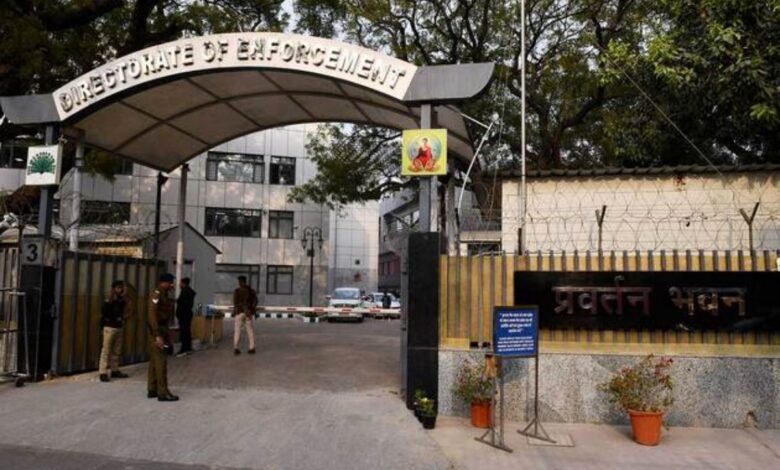
The Enforcement Directorate’s Jaipur Zonal Office has now filed a prosecution complaint in the Nexa Evergreen investment fraud case, naming Subhash Chandra Bijnoriya, also spelt Bijarnia or Bijarania in different reports, along with other accused persons and entities. The complaint was filed on 7 October 2026 before the Special Court under the Prevention of Money Laundering Act in Jaipur. The ED’s press release was issued on 13 October.
The headline figures are stark: approximately ₹2,676 crore collected from investors between 2019 and 2023, an aggregate shortfall of ₹932.54 crore affecting 47,664 investors according to company software data cited by the ED, and approximately ₹52 crore in assets seized, frozen or attached so far.
These numbers demand more than another official announcement and another round of headlines. They demand answers.
How did an investment operation of this reported scale attract so much money? What happened to the funds? Which properties and financial assets can be traced to the money collected? How many investors have received their full principal back? And, most importantly, how long will victims have to wait for meaningful financial recovery?
The ED’s latest action is a significant procedural development. It is not the conclusion of the case, a final accounting of the money or proof that investors will recover their losses.
The central question remains brutally simple: tracing assets is not the same thing as returning money to victims.
₹2,676 crore collected, but ₹932.54 crore remains an investor shortfall
According to the ED, the Nexa Evergreen group collected approximately ₹2,676 crore from investors over the four-year period from 2019 to 2023.
The agency says company software data identified 47,664 investors who received less money back than they had invested. Their aggregate shortfall was ₹932.54 crore.
The distinction between these figures matters.
The ₹2,676 crore figure represents reported gross collections. The ₹932.54 crore figure represents the reported aggregate shortfall for the identified group of investors. They are not interchangeable measures, and the latter should not be casually presented as proof that every rupee collected disappeared.
Nevertheless, a shortfall of ₹932.54 crore is an extraordinary financial exposure. It means that a very large group of people were left with less money than they had committed to the scheme, according to the ED’s findings.
The figures also make one thing clear: the case cannot be adequately resolved by announcing arrests, conducting searches or publishing the value of attached properties. The investigation must reconstruct the complete financial trail.
That means identifying the original receipts from investors, the amounts paid back, the accounts through which funds passed, the entities that received transfers, the individuals who ultimately benefited and the assets purchased using the money.
Without that reconciliation, the public is left with headline figures but no complete explanation of where the money went.
And without a credible mechanism for returning recovered funds to verified claimants, even a successful investigation may offer little immediate relief to the people who suffered the losses.
The Dholera dream: when a development story becomes an investment pitch
The ED states that investors were allegedly attracted by claims that their funds would be invested in land development and plotting projects associated with Dholera Smart City in Gujarat.
The pitch reportedly offered two principal attractions: assured weekly returns of 3% for 60 weeks or the allotment of plots. Investors were also offered rewards, including laptops, motorcycles and cars, for bringing new participants into the scheme.
The combination was powerful. Real estate offered the appearance of a tangible asset. Dholera provided an association with a prominent development project. Regular payments supplied evidence of apparent financial performance. Recruitment incentives encouraged existing investors to introduce friends, relatives, colleagues and acquaintances.
But the branding of an investment proposition is not proof of its commercial substance.
A genuine development project can exist without endorsing every private venture that invokes its name. A photograph of land is not proof of ownership. A proposed layout is not proof of a sanctioned project. A plot-related promise is not the equivalent of a legally enforceable allotment supported by verifiable title and development approvals.
The distinction is particularly important in this case because, in 2025, Delhi Police’s Economic Offences Wing alleged that presentations to investors included videos portraying Prime Minister Narendra Modi as endorsing the project or acting as its brand ambassador. That allegation has been reported as part of the police investigation; it must not be confused with evidence of an official government endorsement of Nexa Evergreen.
If investigators establish that the scheme deliberately used the credibility of a public development project or purported political endorsement to induce investments, the implications would extend beyond ordinary financial misrepresentation. It would raise questions about the calculated use of public confidence to sell a private financial proposition.
The necessary questions are straightforward.
What land was actually owned by the relevant entities when money was collected? Which parcels were acquired before and after investor receipts? Were the properties properly identified to investors? Were legally valid allotments made? Which projects obtained the necessary approvals? And did the actual deployment of funds match the promises presented during investor meetings?
These are questions that land records, company accounts, transaction histories and contemporaneous promotional material can answer. They should not be left to speculation.
The weekly-return promise that demanded scrutiny
The ED’s latest account describes a promise of assured weekly returns of 3% for 60 weeks.
On a simple calculation, 3% of the original investment every week for 60 weeks represents payouts equivalent to 180% of the original principal across the period, if the percentage is calculated on the original amount. That calculation excludes any question of compounding or whether the principal would also be returned separately.
Such a promise should have prompted serious questions about the underlying economics. Where would the money come from? What revenues would a land-development operation need to generate to sustain the promised payouts? Were projected returns supported by actual sales, development margins or other verifiable business income?
The appropriate scrutiny is not a matter of hindsight alone. Any investment product promising high, fixed and frequent returns must be assessed against the underlying business model, financial disclosures and applicable regulatory requirements.
The ED has alleged that the operation was structured in the nature of a Ponzi scheme, with money from investors being used to pay returns to earlier participants. If established in court, that would fundamentally undermine the representation that regular payouts demonstrated a profitable underlying investment.
There is, however, an important qualification. Different media accounts of the scheme have described the promised rate in different ways, including weekly and monthly formulations. The ED’s October 2026 press release specifically states 3% weekly for 60 weeks. Investigators should establish the precise contractual and promotional terms applicable to each scheme, rather than allowing inconsistent descriptions to muddy the evidentiary record.
The broader point is unavoidable: a scheduled payout is not proof of profit. A functioning app is not proof of solvency. And the fact that some investors may initially have received money back does not, by itself, establish that the business generated sufficient legitimate revenue to sustain the promised returns.
A referral system that helped the operation spread
The ED says the scheme offered rewards for enrolling additional investors through a multilevel referral arrangement.
The reported inducements included laptops, motorcycles and cars. Such incentives can turn the existing investor network into a distribution mechanism, encouraging participants to recruit others in the expectation of additional benefits.
The result, according to the agency’s account, was a broad collection operation that generated approximately ₹2,676 crore over the period under investigation.
A referral scheme is not inherently unlawful. The critical issue is the source of the promised returns and rewards, the representations made to participants, and whether the system depended on a continuous influx of new money rather than sustainable commercial earnings.
That is the question investigators must answer with bank statements, payment records, company accounts and evidence of actual property transactions.
If money from later investors was used to satisfy the obligations owed to earlier investors, as the ED alleges, the referral network would not simply have been a marketing device. It would have formed part of the financial mechanism that kept the operation functioning.
The prosecution must establish that mechanism transaction by transaction. The size of the case makes a complete evidentiary reconstruction indispensable.
The app disappeared. The obligation to investors did not.
According to the ED, payments stopped abruptly in January 2023, while the website, mobile application and offices were shut down.
Delhi Police reporting placed the shutdown around 23 January 2023 and described investors’ inability to access the platform or contact those operating it.
An application that allows participants to monitor balances and transactions can create the appearance of transparency. But a displayed balance is not an independently audited liability. A digital record is only as reliable as the underlying transaction data and the integrity of the system maintaining it.
The closure of a website or app does not, on its own, establish criminal intent. It does, however, make the preservation and forensic examination of available records critically important when a large investment scheme collapses.
Investigators should establish who controlled the platform, where its servers and data were hosted, how investor records were generated, whether the displayed balances matched bank transactions and whether any records were deleted or altered.
The original application database, payment histories, customer identification records, referral links and communications may help reconcile individual claims with the larger financial investigation.
The challenge is not merely to prove that a platform stopped operating. It is to determine, reliably and lawfully, what each investor paid, what each investor received, which promises were made and which funds remain traceable.
For thousands of claimants, that digital trail may be central to establishing the amount owed to them.
The corporate web: who received the money, and who ultimately benefited?
The ED alleges that Subhash Chandra Bijnoriya and Ranveer Singh alias Ranveer Bijarnia exercised control over the operation through a network of companies, limited liability partnerships, partnership firms and proprietorship concerns registered in the names of associates and investors.
According to the agency, the entities and their bank accounts were allegedly used to collect investor funds, make payments to earlier participants and acquire immovable properties. The ED describes those transactions as part of an alleged process of layering proceeds of crime and concealing their source and ownership.
This is one of the most consequential aspects of the investigation.
A long list of companies does not, by itself, establish wrongdoing. Nor does a company become criminal merely because it received a transfer from an entity under investigation. The critical issue is whether the relevant transactions had a legitimate commercial purpose, whether beneficial ownership was concealed and whether the funds can be traced to an alleged criminal activity.
The necessary investigation must follow the money beyond the first account.
Which entities collected the original deposits? Which accounts received subsequent transfers? Who were the authorised signatories? Who were the actual beneficial owners? What consideration was paid for properties? Were loans genuine and supported by repayment records? Did the entities have independent operating revenue? Were transfers recorded consistently in the books of account?
These are not peripheral accounting questions. They go to the heart of the alleged structure.
The ED’s prosecution complaint reportedly names Subhash Bijnoriya alongside 12 associated companies and 10 other individuals, according to reporting by The Times of India. That breadth underscores why the case must distinguish between the role alleged against each person and the activities of each corporate entity.
A prosecution built on indiscriminate allegations against everyone connected with a company risks weakening its own case. A prosecution built on bank records, beneficial-ownership evidence, property records and a clear transaction trail has a stronger foundation.
The objective must be to identify the people who knowingly participated in any unlawful activity, establish their individual roles through admissible evidence and distinguish them from people whose involvement may have been nominal, incidental or unrelated to the alleged wrongdoing.
The land trail: hundreds of claims, parcels across multiple locations
The property trail deserves particular scrutiny.
In 2025, Delhi Police reporting identified two firms—Nexa Evergreen Developers Dholera and 9 Oak Developers Dholera—as important recipients of investor funds. Police said investigations indicated that the group had acquired approximately 1,200 bighas of land in the Dholera area, while about 168 acres had been identified through records verified with the local sub-registrar at that stage.
Those figures were reported in the context of the police investigation and should not be treated as a complete, present-day land inventory. They nevertheless make a parcel-by-parcel examination essential.
The ED’s October 2026 release separately records a provisional attachment covering 69 immovable properties and balances in 26 bank accounts and term deposits, with a combined stated value of ₹34.91 crore.
The properties reportedly include land and plots in Dholera and Dhandhuka in Gujarat, residential flats in Ahmedabad and Sikar, and a 45% shareholding in a resort company at Calangute, Goa. Other reporting also refers to a plot in Dausa district.
Each asset raises questions that should be answered through official records.
Who holds legal title? When was the property purchased? What was the purchase consideration? Which account supplied the funds? Was the property later transferred, mortgaged or charged to a lender? Is it already subject to another attachment or competing claim? What is its independently supportable market value? And what proportion of its value, if any, can ultimately be made available for restitution?
A property list is a starting point, not a recovery plan.
The distinction matters because a provisional attachment does not automatically translate into cash available for distribution to investors. Legal challenges, ownership disputes, secured claims, valuation differences and statutory procedures may affect the eventual realisation of an asset.
The agencies must therefore move beyond announcing a collective valuation and publish, subject to legal and investigative constraints, a clear account of the status of each attached asset and the steps required for lawful realisation.
₹52 crore attached against a ₹932.54 crore shortfall: progress, but a vast gap remains
The financial comparison is difficult to ignore.
The ED reports approximately ₹52 crore in assets seized, frozen or attached in total. Against the ₹932.54 crore investor shortfall cited by the agency, that figure is equivalent to roughly 5.6%.
Against gross collections of ₹2,676 crore, it is approximately 1.9%.
Neither comparison is a formal recovery rate. The asset figure includes different enforcement measures, and the valuation of seized, frozen or attached assets is not the same as cash actually returned to victims. The shortfall figure is also not necessarily the complete set of every person’s individual claim.
Nevertheless, the proportions illustrate the scale of the remaining challenge.
The ED’s latest attachment of ₹34.91 crore consists of 69 immovable properties valued at approximately ₹29.37 crore and balances of about ₹5.54 crore in 26 bank accounts and term deposits, according to the latest reporting. The agency’s earlier action in June 2025 resulted in the seizure of ₹2.05 crore in cash and the freezing of ₹15.31 crore in bank and cryptocurrency accounts.
These are meaningful enforcement steps. But they are not a substitute for identifying all available assets, establishing their lawful ownership, resolving competing claims and pursuing funds that may have moved through additional accounts or entities.
The public must not be given the impression that ₹52 crore has already been distributed among investors. The ED’s stated figure concerns assets seized, frozen or attached. It does not establish that investors have received that amount back.
If the objective is victim restitution, the next phase must be as much about financial recovery as prosecution.
The prior enforcement timeline raises its own questions
The case did not begin with the October 2026 prosecution complaint.
The ED states that it initiated its investigation on the basis of multiple FIRs and chargesheets filed by Rajasthan Police.
In June 2025, the agency conducted searches at 25 premises in Jaipur, Sikar, Jhunjhunu and Ahmedabad. The searches resulted in the seizure of ₹2.05 crore in cash, and ₹15.31 crore in bank and cryptocurrency accounts was frozen, according to the ED’s earlier disclosure.
The current press release records that Subhash Chandra Bijnoriya was arrested by the ED on 10 August 2026 under Section 19 of the PMLA and was in judicial custody as of the release date.
There is also an earlier criminal-proceeding timeline. A Delhi Police EOW briefing published in September 2025 said Subhash Bijarnia and Opendra Bijarnia had been arrested in December 2024 and were in judicial custody in those proceedings. The two dates relate to different enforcement stages and legal proceedings; they should not be collapsed into a single arrest event.
The chronology demonstrates that several agencies have been involved over an extended period. It also raises legitimate questions about coordination and case management.
Were investor complaints from different districts consolidated into a shared financial map early enough? Were bank accounts and property holdings identified promptly? Were the same individuals and entities being investigated by different units without a common asset inventory? Were records and witness statements exchanged in a way that avoided duplication while preserving the independence of individual investigations?
The documents reviewed do not establish that an agency deliberately delayed action. But a case of this scale demands a transparent explanation of the investigative sequence, the steps taken to preserve assets and the work still outstanding.
A public-interest investigation should not confuse suspicion with proof. Equally, it should not treat the existence of several enforcement actions as the end of the inquiry into what happened before those actions were taken.
Approximately 150 cases? More than 100 FIRs? Or over 200? The numbers need reconciliation.
One of the more revealing features of the public record is the variation in reported case counts.
A Rajasthan High Court order dated 11 February 2026 recorded that four petitioners connected with entities including Nexa Evergreen Energy were facing more than 100 FIRs registered in different districts of Rajasthan in relation to alleged investment and real-estate transactions. The court noted that some matters had resulted in chargesheets and trials, while others remained under investigation.
A Delhi Police EOW briefing in September 2025 referred to approximately 150 cases across the country. Reports published locally in August 2026 cited more than 200 cases in Rajasthan.
These figures have different dates, geographic scopes and reporting sources. They should not simply be added together or presented as one definitive count.
The discrepancy is precisely why a consolidated, authoritative case-status record is needed.
Such a record should identify each FIR number, police station, date of registration, alleged offences, accused persons and entities, investigating agency, chargesheet status, court, current procedural stage and any orders granting bail, discharge or acquittal.
Without that inventory, there is a risk that investors, journalists and even agencies will struggle to distinguish separate complaints concerning different transactions from proceedings involving the same underlying allegations.
The problem is not merely administrative. Case management affects the pace of trials, witness availability, the preservation of evidence and the ability to establish a consistent picture of the alleged network.
The larger the number of proceedings, the more important it becomes to maintain accuracy rather than use a fluctuating headline count as a substitute for a verified case register.
A major development in Delhi: the allegation of purported government endorsement
The Delhi EOW investigation brought another serious issue into public view.
In September 2025, The Indian Express reported that police alleged that people associated with the company had used Zoom presentations containing a doctored video appearing to show Prime Minister Narendra Modi praising the project. The police account also described promises of returns and plots in Dholera.
This allegation is relevant because purported official endorsement, if falsely represented, can materially influence an investor’s assessment of risk.
However, three distinct questions must remain separate: what the investors were shown, whether any video was altered, and whether a government authority had any actual association with the private investment operation.
Those questions require evidence, including original files, presentation records, witness testimony, the provenance of any video and the wording used in promotional communications.
The legitimate Dholera development project must not itself be conflated with the private Nexa Evergreen investment scheme. Association with a real public project does not prove an investment venture is authorised, approved or financially sound.
If the alleged misrepresentation is established, it would show how public trust can be invoked in a financial pitch. If it is not established, the claim should not be repeated as fact. Investigators must settle the issue with evidence.
One reported acquittal should be a warning against weak prosecutions
Any serious account of this case must also acknowledge a development that complicates the wider narrative.
Local news reports published on 27 August 2026 stated that a court in Sikar acquitted four accused in a separate case involving an alleged ₹6.50 lakh investment-related loss connected with Nexa Evergreen. The reports said the court found the prosecution evidence insufficient and raised concerns about the investigation and the preparation or use of the chargesheet.
That reported outcome is significant, but its scope must be understood correctly.
An acquittal in one specific prosecution does not automatically determine the outcome of other FIRs involving separate complainants, transactions or evidence. Conversely, the gravity and scale of the overall allegations cannot justify treating every person named in every complaint as guilty.
The lesson for investigators is direct: serious allegations require serious evidence.
The prosecution must be prepared to show what each accused person did, which representations were made, how the money moved, what documents support the allegations and how the evidence connects a particular accused to a particular offence.
Simply invoking the scale of the alleged scheme or attaching serious statutory provisions cannot replace proof.
The acquittal also strengthens the case for reviewing the quality of investigation across this sprawling matter. Are the chargesheets internally consistent? Are financial records authenticated? Have witnesses been examined properly? Are bank and property documents being tied to individual allegations rather than merely appended to large case files? Are the roles of alleged principal operators being distinguished from those of agents or investors who may themselves have suffered losses?
Those questions are not concessions to alleged wrongdoing. They are essential to ensure that prosecutions are fair, durable and capable of withstanding judicial scrutiny.
A weak prosecution can fail victims twice: first through the alleged financial loss and then through the failure of the legal process to establish responsibility where evidence warrants it.
Rajasthan High Court proceedings: bail is not acquittal, and custody is not conviction
Court records also illustrate the distinction between procedural outcomes and findings on the merits.
In an order dated 7 August 2026, the Rajasthan High Court granted bail to Ranveer Singh in a specific FIR registered at Begun police station in Chittorgarh under Sections 420, 406 and 120-B of the Indian Penal Code, with additional provisions of the Prize Chits and Money Circulation Schemes (Banning) Act. The order recorded the prosecution’s submission that money invested by complainants had moved from Nexa Evergreen to two limited liability partnerships said to be owned by the petitioner.
The court granted bail after considering the period in custody and the time likely to be required for trial. It expressly stated that it was not expressing an opinion on the merits of the case.
That qualification is essential. Bail does not establish innocence or guilt. Nor does an allegation recited during a bail hearing become a final judicial finding.
The February 2026 Rajasthan High Court proceedings concerning more than 100 FIRs similarly reflected the practical complexity of proceedings spread across numerous districts, including matters at different stages of investigation and trial.
These proceedings underline why the answer cannot be reduced to whether an accused is in custody, has been granted bail or has obtained relief in a particular FIR. The legally relevant position may differ from one case to another.
The final determination of criminal responsibility must come through a fair trial on the evidence applicable to each charge.
The agencies now need to answer questions, not merely issue announcements
The ED’s prosecution complaint is an important step. But the size of the reported investor shortfall, the number of proceedings and the complexity of the corporate and property trail demand a much more comprehensive public accounting of the work ahead.
At least seven priorities should guide the next phase.
First, publish a consolidated case-status inventory. Rajasthan Police, the Delhi EOW and other concerned authorities should coordinate a verified register of FIRs, chargesheets, courts, accused, procedural orders and current trial status. Where multiple cases relate to the same underlying transactions, the relationships should be identified without collapsing distinct prosecutions into one.
Second, complete the financial reconstruction. Investigators should reconcile gross collections, refunds, transfers between entities, payments to earlier investors, property acquisitions, loans, fees and remaining balances. The public needs to understand the difference between money collected, money returned, money diverted and amounts that remain untraced.
Third, identify the beneficial owners and ultimate recipients. Every relevant company, LLP, partnership and proprietorship should be examined on the evidence. Account signatories, directors, actual controllers, transaction beneficiaries and individuals who acquired assets should be distinguished rather than treated as interchangeable categories.
Fourth, create an auditable asset inventory. Attached and frozen assets should be listed with ownership information, valuation basis, current legal status and any known competing claims, subject to the restrictions necessary to protect ongoing investigations and third-party rights. Authorities should explain which assets are potentially realisable and what further legal steps would be required.
Fifth, build victim-verification and claims procedures. Investors need a reliable route to submit documentary evidence, reconcile payments and receive updates. The process should guard against duplicate claims, fraudulent claims and unfair preference among similarly placed victims. No one should be promised a particular refund merely because an asset has been attached.
Sixth, examine referral recruitment and alleged representations. Promotional materials, communications, reward structures, digital records and the alleged use of purported official endorsement should be examined through authenticated evidence. The prosecution must establish which representations were made, by whom and to which investors.
Seventh, prioritise timely trials without sacrificing fairness. Courts and prosecution agencies should identify the cases ready for trial, avoid unnecessary procedural duplication and ensure adequate staffing for financial-document analysis. Speed cannot mean cutting corners, but neither should a financial case of this magnitude drift indefinitely without a clear timetable and accountability for avoidable delay.
These are practical demands, not rhetorical flourishes. Each can be measured through published case statuses, completed forensic work, verified asset schedules, processed claims and reasoned judicial orders.
The larger failure would be to let the case become a permanent headline
Nexa Evergreen is not just a story about an investment pitch that collapsed. It is also a test of how effectively India’s enforcement and judicial systems respond when large numbers of investors are drawn into an operation that investigators allege relied on extraordinary returns, a referral network and the movement of funds through multiple entities.
The ED has taken action. Police have registered cases and made arrests. Courts have considered bail applications and other procedural questions. Assets have been seized, frozen or provisionally attached. The prosecution complaint filed in October 2026 brings the PMLA proceedings into another stage.
Those developments should be recognised for what they are.
But no press release, however detailed, can substitute for the answers investors need. The ₹52 crore figure is not proof of repayment. The number of FIRs is not a measure of how much of the alleged wrongdoing has been proved. An arrest is not a conviction. An attachment is not a final forfeiture. And an allegation about a corporate network is not a substitute for evidence identifying the role of each person involved.
The most serious test now concerns traceability and accountability.
If investigators can reconstruct the money trail, establish ownership of the assets, identify who benefited and present reliable evidence, the prosecution will have a stronger foundation. If the case remains fragmented across multiple jurisdictions with inconsistent figures and weak financial reconciliation, the sheer size of the allegations will not protect it from evidentiary failure.
The victims require more than assurances that an investigation is progressing. They need transparent information, a credible legal process and a realistic path towards restitution.
The agencies should therefore move urgently on the remaining financial and evidentiary work, publish verified updates, coordinate across jurisdictions and work with the courts to ensure timely trials.
The ultimate measure of success will not be how many searches were conducted or how many crores appeared in a headline. It will be whether the evidence establishes what happened, whether the law is applied fairly, whether culpable persons are held accountable where guilt is proved, and whether recoverable assets can lawfully reach those entitled to them.
The Nexa Evergreen case now demands a higher standard of public accountability: trace the money, establish individual responsibility, prosecute on evidence, expedite the trials and pursue lawful restitution. Anything less would leave the most important questions unanswered.
DISCLAIMER: ALLEGATIONS ARE NOT CONVICTIONS
This article is based on the Enforcement Directorate’s press releases, reported police investigations, available court records and published news coverage reviewed as of 14 October 2026. It reports allegations and investigative findings attributed to the relevant authorities; it does not declare any individual or entity guilty.
The filing of a prosecution complaint, registration of an FIR, arrest, search, freezing of an account or provisional attachment of property does not, by itself, establish criminal guilt. The accused are entitled to the presumption of innocence and a fair trial in accordance with law.
The records reviewed for this article do not establish a conviction of the principal accused in the overall Nexa Evergreen scheme or in the newly filed ED/PMLA prosecution as of the publication date. Because multiple FIRs and proceedings exist across jurisdictions, this statement should not be treated as an exhaustive certification of the status of every individual case. Reports of an acquittal in one separate case must also be understood within the scope of that proceeding.
All allegations should be tested through admissible evidence and determined by the competent courts. Any person or entity discussed in connection with the allegations should have a fair opportunity to respond, and any material response or subsequent judicial development should be reflected in an updated report.