From A ₹24,000 Crore Sales Target To A ₹4,000 Crore Family Dispute The Contrasting Fortunes Of The Lodha Group
Lodha Group is targeting ₹24,000 crore in sales bookings in FY27 as India's housing market continues to support its expansion. But behind the real estate giant's growth story are allegations of financial irregularities, ED investigations and a ₹4,000 crore family dispute now before the Bombay High Court.

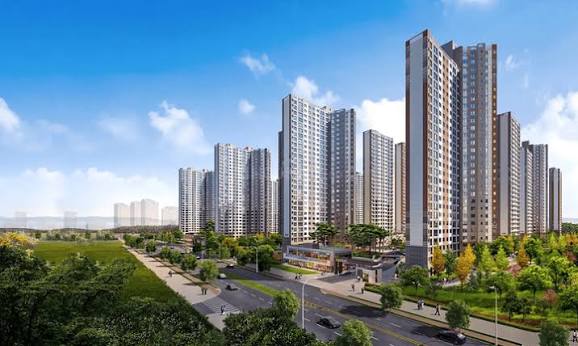
Lodha Group, now known as Macrotech Developers, is entering the second half of FY27 with a strong set of numbers and an ambitious sales target. The Mumbai-based real estate developer reported sales bookings of ₹5,037 crore in the September quarter, marking a 10% increase over the corresponding period last year, as demand for residential properties continued to support its business.
For the first half of FY27, the company’s sales bookings stood at ₹9,670 crore, registering growth of 7% year-on-year. Its net profit rose 28% to ₹1,013.5 crore, while total income increased to ₹4,584.9 crore from ₹3,878.9 crore in the year-ago quarter. The performance comes as India’s organised residential real estate market continues to attract buyers, particularly in the premium and upper-mid housing segments.
The company is targeting sales bookings of ₹24,000 crore in FY27, compared with ₹20,530 crore recorded in FY26. The target reflects its confidence in the housing market and its ability to convert demand into new project sales. Management has also indicated that it expects to comfortably exceed its full-year profit guidance, giving the company some room to pursue its expansion plans while maintaining its financial growth trajectory.
For Lodha, the current housing cycle is an opportunity to build on its established presence in the Mumbai Metropolitan Region and Pune while expanding into newer markets. However, achieving the ₹24,000 crore target will depend not just on the strength of the residential market but also on how successfully the company executes its project launches and expands its geographical footprint.
Beyond Mumbai, Lodha Group Is Looking At Bengaluru And Delhi-NCR
While its existing markets continue to contribute to sales, Lodha is also looking beyond its traditional strongholds to sustain growth. The company has been expanding its presence in Bengaluru and preparing to enter Delhi-NCR, two markets that offer opportunities to tap into residential demand beyond western India.
Its Bengaluru expansion has already begun to take shape, with the company’s North Bengaluru launch receiving a positive response. The move is significant because it gives Lodha an opportunity to establish a presence in one of India’s largest technology and employment hubs, where residential demand is supported by a growing workforce, infrastructure development and the expansion of commercial activity.
The company is also preparing to launch its first pilot project in Delhi-NCR during the festive season. This would mark another important step in its geographical expansion, taking the developer into a market with an established residential property industry and several competing large developers.
For Lodha, entering new markets is not simply about adding more projects to its portfolio. It is also about reducing its dependence on a handful of established geographies and creating additional sources of sales growth. However, expanding into unfamiliar markets comes with its own challenges, including competition, land acquisition, project execution and the need to build buyer confidence.
The company’s ability to establish itself in Bengaluru and Delhi-NCR will therefore be an important factor in determining how much of its ambitious FY27 sales target it can achieve.
Middle East Tensions And AI Are Among The Risks Lodha Is Watching
For all the optimism around housing demand, Lodha Developers is not ignoring the risks that could affect the real estate market over the coming years.
The company has identified the continuing conflict in the Middle East and its possible geopolitical and macroeconomic consequences as developments it is monitoring closely.
Managing Director Abhishek Lodha said the recent increase in Indian interest rates was unlikely to have a direct impact on housing demand in the segments served by the company. However, he indicated that the developer would continue watching the indirect effects of global developments, particularly as geopolitical tensions can influence economic activity, investor sentiment and the broader business environment.
Artificial intelligence is another emerging concern for the residential property market. While AI-led disruption could affect employment patterns and purchasing power, particularly among sections of the workforce that typically drive demand for homes beyond the affordable segment, the company believes demand for quality housing remains resilient.
Abhishek Lodha pointed to the positive response to the company’s latest North Bengaluru launch as evidence of continued buyer interest, saying it helped address concerns about AI-related disruption affecting housing demand.
The company’s position, therefore, is one of cautious optimism. It is pursuing an ambitious expansion and sales target while keeping an eye on developments that could influence the economic conditions supporting India’s housing market.
The ₹85 Crore Fraud Case That Brought A Former Lodha Director Under Investigation
While Lodha Developers has been expanding its real estate operations, it has also been dealing with a serious legal dispute involving one of its former directors, Rajendra Narpatmal Lodha. In September 2025, the Mumbai Crime Branch arrested Rajendra Lodha in connection with an alleged ₹85 crore fraud case following a complaint filed by the company.
The allegations involved several property transactions that investigators claimed had caused financial losses to Lodha Developers. According to the police complaint, Rajendra Lodha had allegedly misrepresented transactions involving flats at the company’s New Cuffe Parade project in Mumbai. In one instance, he was accused of promising land rights to a homebuyer in exchange for payment and collecting more than ₹3 crore in cash.
The investigation also covered an alleged sale of company-owned land in Ambernath, valued at approximately ₹10 crore, for just ₹88 lakh. Another transaction involved a 3,630-square-metre plot sold to Edutech Infratech LLP, an entity linked to his son, Sahil Lodha. Police alleged that the transaction resulted in a loss of approximately ₹6.3 crore to the company.
Investigators further alleged that transferable development rights (TDR) worth more than ₹49 crore had been diverted through 35 transactions allegedly carried out at below-market rates. The police suspected that company-owned land parcels and development rights had been transferred without proper authorisation, with proceeds allegedly diverted through cash transactions.
The case also named Sahil Lodha and several other associates. Rajendra Lodha, however, denied wrongdoing. During the proceedings, he reportedly told the court that he had worked with the company for 35 years and was not the only person responsible for approving transactions. He maintained that several senior officials had been involved in the approval process and that the transactions he carried out had received the necessary clearances.
The case marked a significant development because the complaint had come from Lodha Developers itself, placing the company’s former director at the centre of allegations involving the handling of its property assets and development rights.
The ED Steps In With A ₹59 Crore Seizure And A ₹271 Crore Asset Attachment
The alleged fraud case soon attracted the attention of the Enforcement Directorate (ED), which initiated a money-laundering investigation based on FIRs registered by Mumbai Police. In November 2025, the agency conducted searches at 14 locations across the Mumbai region as part of its probe into Rajendra Narpatmal Lodha and others.
According to the ED, the searches on November 12 resulted in the seizure or freezing of movable assets worth approximately ₹59 crore, including cash, bank balances and fixed deposits. Investigators also recovered documents, digital devices and details of immovable properties allegedly connected to the transactions under investigation.
The agency’s investigation focused on allegations that company-owned land had been transferred at undervalued prices to proxy entities and individuals connected to Rajendra Lodha, without approval from the company’s board.
The ED also alleged that inflated memorandums of understanding (MoUs) had been created for land purchases, allowing portions of the money to be siphoned off in cash through sellers.
The investigation subsequently led to another major development. On March 26, 2026, the ED provisionally attached immovable assets worth approximately ₹271.48 crore, comprising land parcels in Maharashtra’s Panvel and Shahapur talukas. In its March 30 press release, the agency put the cumulative value of seizures and attachments in the case at approximately ₹359.48 crore, including earlier enforcement action.
The agency’s March release cited approximately ₹88 crore in earlier seizures and freezing, a figure that differs from the ₹59 crore reported following the November searches.
Rajendra Lodha was subsequently arrested by the ED on February 12, 2026, in connection with the money-laundering investigation and remanded to judicial custody. However, his arrest itself became the subject of a separate legal challenge.
On September 21, 2026, the Bombay High Court allowed his petition, set aside the remand order and directed his release on bail. The court questioned the ED’s decision to abandon an earlier course of questioning for which it had obtained permission from the Special Court and proceed with an arrest on substantially the same material without fresh incriminating evidence or a supervening circumstance.
The ruling concerned the legality of the arrest and did not determine whether the underlying allegations of financial misconduct were true or false. The ED investigation into the alleged transactions remains a separate matter.
The ₹4,000 Crore Family Asset Dispute Reaches Bombay High Court
While the criminal and money-laundering investigations were unfolding, another dispute involving Rajendra Lodha and his family emerged before the Bombay High Court.
This time, the issue was not just the alleged handling of company assets but the terms of a settlement that the family claims resulted in the transfer of assets worth more than ₹4,000 crore.
In October 2026, Sahil Rajendra Lodha, son of the former Lodha Developers promoter, approached the Bombay High Court challenging consent terms recorded by the court on January 28, 2026. The application alleges that Abhishek Mangal Prabhat Lodha, Managing Director and CEO of Macrotech Developers, used his position to exert pressure on Rajendra Lodha and his family into accepting the settlement.
At the centre of the dispute are consent terms executed between Lodha Developers and Rajendra Lodha and other members of his family. These terms were recorded by the High Court in a suit filed by the company. The January 28 order stated that the parties had signed the terms in their individual capacities and confirmed before the court that they had done so voluntarily, without fraud or coercion. The suit was subsequently decreed in accordance with the settlement.
However, Sahil Lodha’s subsequent application seeks to set aside the consent decree, alleging that the circumstances surrounding its execution were coercive. The application claims that Rajendra Lodha signed the terms while in custody and did not give his free consent. It also alleges that the family was pressured into relinquishing substantial assets, transferring shareholdings and agreeing to restrictions on its future business activities.
One of the central claims concerns 19,81,442 Class E equity shares held by Rajendra Lodha in another entity. The family alleges that these shares, which it values at approximately ₹3,000 crore, were transferred to the entity or its nominee for just ₹19.81 lakh.
The application also alleges that assets worth approximately ₹70 crore were transferred to Lodha Developers without consideration, while loans amounting to around ₹36.77 crore were assigned to the company for ₹1,800.
The disputed terms reportedly also required the family to pay ₹100 crore to the company and imposed restrictions on its activities. These allegedly included a seven-year prohibition on entering or remaining in Maharashtra and a 15-year restriction on conducting real estate business across India, except in Rajasthan and Madhya Pradesh. The family has challenged these provisions as part of its application.
The matter was taken up by the Bombay High Court on October 28, 2026. The court adjourned the proceedings to November 27, allowing the parties three weeks to complete their pleadings. The allegations of coercion and the circumstances surrounding the asset transfers are yet to be adjudicated.
Another Lodha Family Dispute Over A Name Worth ₹5,000 Crore
The dispute involving Rajendra Lodha and his family is not the only legal disagreement to have emerged within the wider Lodha family.
Abhishek Lodha has also been involved in a high-value trademark dispute with his younger brother, Abhinandan Lodha, over the use of the Lodha name in the real estate business.
Abhinandan, who runs The House of Abhinandan Lodha (HoABL), established an independent real estate venture after the brothers separated their business interests. While Abhishek continued to lead the established Lodha Group, Abhinandan built a separate business focused largely on plotted developments and land investments.
The disagreement eventually reached the Bombay High Court in January 2025, when Macrotech Developers filed a trademark infringement suit seeking damages of ₹5,000 crore. The company alleged that Abhinandan’s use of the Lodha name could create confusion among customers and allow his business to benefit from the reputation associated with the established developer.
The dispute also brought earlier family arrangements into focus. A 2017 agreement had reportedly set out conditions governing Abhinandan’s independent business activities and use of the Lodha name. Macrotech subsequently alleged that certain businesses and corporate entities associated with him violated those arrangements.
The brothers eventually settled the trademark dispute through mediation in April 2025. Under the settlement, Macrotech retained exclusive rights to the Lodha and Lodha Group names, while Abhinandan continued operating under The House of Abhinandan Lodha brand.

A Real Estate Empire Expanding As Legal Disputes Continue
For Macrotech Developers, the immediate focus remains on growing its residential business, expanding into new markets and meeting its ₹24,000 crore sales booking target for FY27. Its latest quarterly performance suggests that demand remains supportive, even as the company monitors geopolitical and economic developments that could influence the housing market.
The legal developments involving Rajendra Lodha and his family, meanwhile, have followed separate courses. The criminal investigation into alleged irregular property transactions has led to action by both Mumbai Police and the ED, although the Bombay High Court has set aside Rajendra Lodha’s ED arrest on grounds concerning its legality. The allegations themselves have not been conclusively adjudicated.
The separate family asset dispute has also brought the terms of the January 2026 settlement before the Bombay High Court, with Sahil Lodha seeking to challenge the consent decree. The matter is scheduled for November 27, 2026.
The trademark dispute between Abhishek and Abhinandan Lodha, meanwhile, was settled in April 2025, formally separating their respective business identities.
Taken together, these developments show two very different aspects of the Lodha Group’s story. One is a real estate business pursuing ambitious growth plans in a competitive Indian housing market. The other involves a complicated history of family business separation, disputed transactions and legal proceedings that continue to unfold in court.