Godrej Properties: India’s Highest-Selling Listed Developer, But Do They Deliver The Projects In Time?
The Highest Selling Listed Developer That Still Misses Possession Deadlines; Because Sales Leadership Is Not the Same as Timely Delivery at Godrej Properties


When Brand Premium Meets RERA Notices: Godrej Properties Under Scrutiny
Godrej Properties has spent the past two years reinforcing its position as India’s highest-selling listed real estate developer. In FY26 the company recorded booking value of ₹34,171 crore, up 16 percent from ₹29,444 crore the previous year. That figure made it the clear leader among listed peers, ahead of Prestige Estates at ₹30,024 crore and Lodha Developers at ₹20,530 crore. Calendar year 2025 produced the same headline booking number of ₹34,171 crore (up 19 percent), with collections rising 28 percent to ₹18,979 crore.
Management has set a higher target of ₹39,000 crore for FY27. On paper the momentum looks strong. The brand has often traded at a steep valuation—historical median trailing P/E around 70 times earnings—precisely because investors and buyers have been willing to pay for the Godrej name and the assumption of reliability that comes with it. Market capitalisation was cited near ₹57,000 crore around the time of key regulatory news in April 2026.
Yet the same period has produced a steady stream of RERA interventions, buyer complaints and missed possession dates that sit uncomfortably beside the sales numbers. In April 2026 Maharashtra RERA issued default notices covering three Godrej projects and approximately 1,800 units. The share price reacted immediately, falling about 5.5 percent in a single session. Around the same time Haryana RERA directed the promoter of a Godrej project in the Gurgaon/Sohna area (reported as Godrej Highview / Nature Plus) to hand over a flat originally booked in 2018 with a 2023 possession commitment and to pay statutory delay interest. Force-majeure arguments were rejected.
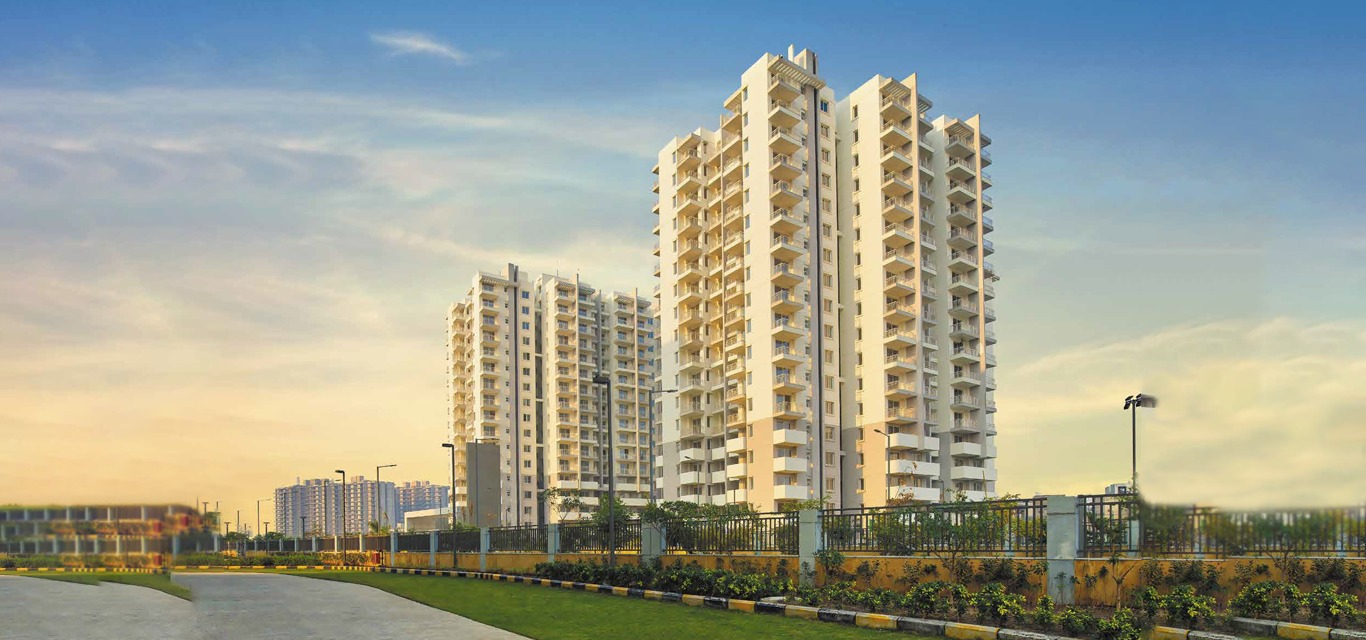
A closer look at individual projects reveals the human cost behind the aggregate numbers. At Godrej Green Vistas in Mahalunge, Pune, more than 740 families saw the original RERA deadline of 31 December 2024 slip past. An extension to 30 June 2025 was also missed even after occupancy certificates had been obtained for the towers. Buyers have reported that amenities remain incomplete and that communication has been intermittent.
Similar patterns appear at Godrej Park Greens and Forest Grove in the Pune region, where complaints describe delays of one to three years beyond original commitments and repeated RERA extensions. In other cities, West Bengal RERA has registered complaints over postponed possession at Retreat at Godrej Prataiti (also referred to as Prakriti in some filings), while individual homebuyers in Gurgaon and Mumbai continue to document revisions of handover dates.
One independent analysis of 43 Godrej projects registered between 2017 and 2023 across Maharashtra, Karnataka and the NCR found that only about 42 percent were delivered within six months of the promised date. Another 37 percent were delayed between six and eighteen months, 16 percent between eighteen and thirty-six months, and roughly 5 percent were classified as significantly delayed or stalled.
These percentages are better than the broader industry average often cited near 25 percent on-time delivery, yet they still mean that more than half the sampled projects left buyers paying EMIs while continuing to rent. For a developer that markets itself as premium and trustworthy, a 42 percent on-time rate is not a badge of honour. It is a reminder that scale and brand equity have not eliminated the execution gaps that plague Indian residential real estate.
The financial strength of the company makes the delays harder to overlook. Godrej Properties maintains one of the cleaner balance sheets in the listed sector, with net debt-to-equity commonly reported in the region of 0.3 times or lower in contemporaneous commentary and cash reserves around ₹8,000 crore, a large portion of it ring-fenced in RERA accounts. Construction spending has risen as projects move toward completion.
Management has spoken of moderating aggressive land acquisition in favour of steadier growth and higher free cash flow. In other words, the resources exist to prioritise timely finishing and handover. When those resources are not consistently converted into on-schedule possession, questions arise about organisational capacity and prioritisation.

Sales velocity itself may contribute to the pressure. Rapid booking numbers require continuous launches, joint-venture structures and expansion into multiple cities. Each new project adds complexity in approvals, labour, materials and local coordination. When the pipeline expands faster than the organisation’s capacity to close projects cleanly, delays can become structural rather than purely episodic.
The 1,800 units under MahaRERA notice and the hundreds of families at Green Vistas are not statistical outliers; they are visible consequences of the tension between growth and execution. Buyers who paid booking amounts years earlier discover that their agreements contain the usual force-majeure language and that RERA extensions are granted with some regularity. The statutory interest for delay, when awarded, rarely fully compensates for the dual burden of EMI and rent or for the disruption of life plans built around a specific move-in date.
Market reaction has been uneven. The April 2026 share-price drop reflected investor sensitivity to any threat against the brand premium. Yet the stock continues to trade at a substantial multiple because the sales machine remains intact and the balance sheet provides a cushion. Analysts still publish targets well above current levels, assuming that notices will be closed with revised schedules and that new launches will keep the booking engine running. That assumption may prove correct in the short term. It does nothing for the buyer who has already waited through two missed deadlines and is still waiting for keys. Equity markets price future cash flows; homebuyers price the present reality of an unfinished flat.
Comparisons with peers sharpen the picture. Several listed developers carry higher leverage and still manage tighter delivery ratios on their core projects. Others have chosen slower geographic expansion precisely to protect execution quality. Godrej’s choice has been the opposite: dominate the booking charts, expand the footprint, and treat occasional RERA friction as a cost of growth. The strategy has delivered impressive top-line numbers and a market capitalisation that once hovered near ₹57,000 crore. It has also produced a growing file of regulatory orders and buyer petitions that chip away at the trust the valuation rests upon.
The deeper issue is structural. Indian real estate has long operated on the principle that buyers will absorb delay because alternatives are limited and a branded name still feels safer than an unknown local developer. RERA was supposed to change that calculus by imposing statutory timelines and financial consequences. When a market leader still requires formal directions to hand over a 2018 booking or to address 1,800 delayed units, the message is that the old patterns have adapted rather than fully transformed. Interest payments and revised schedules become another line item rather than a clear signal to reorganise construction and handover processes.
None of this negates the commercial achievement. Recording ₹34,171 crore in a single year is a genuine operational feat. Collecting nearly ₹19,000 crore demonstrates that customers continue to write cheques. The Godrej conglomerate backing and the transparent listed-company disclosures remain real advantages. Yet sales leadership without consistent delivery is an incomplete form of success. Every missed possession date converts a satisfied customer into a reluctant advocate or an active complainant. Over time those individual stories accumulate into a reputational drag that no quarterly booking number can fully offset.

For prospective buyers the practical implication is clear. The Godrej name reduces certain risks—title clarity, financial capacity, eventual completion—but it does not eliminate timeline risk. Agreements should be read for the actual RERA-registered date rather than the marketing brochure. Contingency funds for extended rental periods are prudent. Monitoring of project-level RERA status and occupancy-certificate progress matters more than the parent company’s annual sales ranking. For investors the premium valuation already embeds an assumption of superior execution. Each new set of default notices tests whether that assumption remains justified.
Godrej Properties has proven it can sell more homes than any other listed developer in India. The open question is whether it can also finish them on the dates it publishes. Until the gap between those two capabilities narrows, the record booking figures will continue to sit beside an equally visible record of delayed keys, regulatory notices and frustrated families. Sales charts measure velocity. Possession dates measure reliability. On the second metric the highest-selling listed developer still has work to do.