DLF Donated To Electoral Bonds And Got Rid Of Allegations: How Political Donations In India Give You Clean Chit From All Your Dark Past?

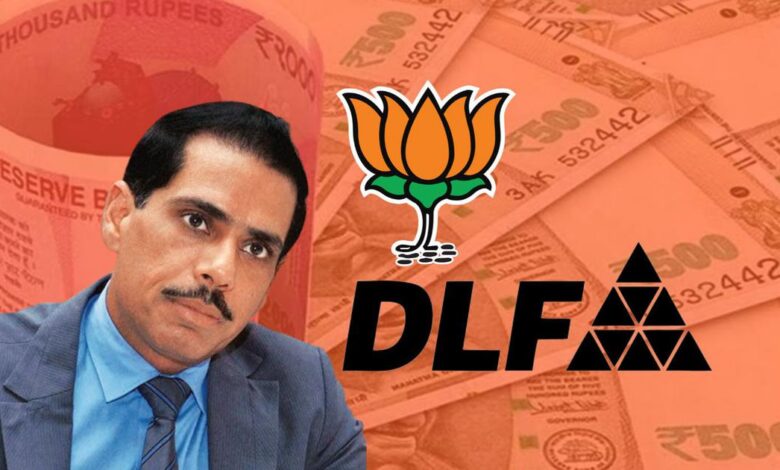
In the high-stakes theatre of Indian politics and real estate, few stories illustrate the elegant dance between corporate generosity and official memory quite like the DLF-Robert Vadra land saga. What began as a headline-grabbing controversy that helped fuel a national election campaign eventually drifted into the background, just as a steady stream of electoral bond money flowed in one direction. The numbers are public, the sequence is documented, and the questions they raise remain stubbornly alive.
Recall the original plot. In 2008, Robert Vadra’s firm Skylight Hospitality purchased 3.5 acres in Gurugram for Rs 7.5 crore. Within months DLF agreed to buy the same plot for Rs 58 crore, a roughly seven-fold jump in value. The transaction later drew the attention of IAS officer Ashok Khemka, who in 2012 cancelled the ownership transfer citing procedural flaws. Khemka was promptly transferred. The episode became political gold. The BJP turned it into a major campaign issue in the 2014 Lok Sabha elections, painting a picture of alleged corruption and nepotism under the then Congress-led Haryana government. Booklets were issued, speeches delivered, and the narrative of a “damad” benefiting from political proximity dominated the discourse.
Power changed hands. In September 2018 the Haryana police registered a case against Vadra, former chief minister Bhupinder Singh Hooda, DLF executives and others under sections related to criminal conspiracy, cheating, fraud, forgery and the Prevention of Corruption Act. In January 2019 the Central Bureau of Investigation searched DLF offices in connection with a separate land allocation matter. The cloud over the company looked thick.
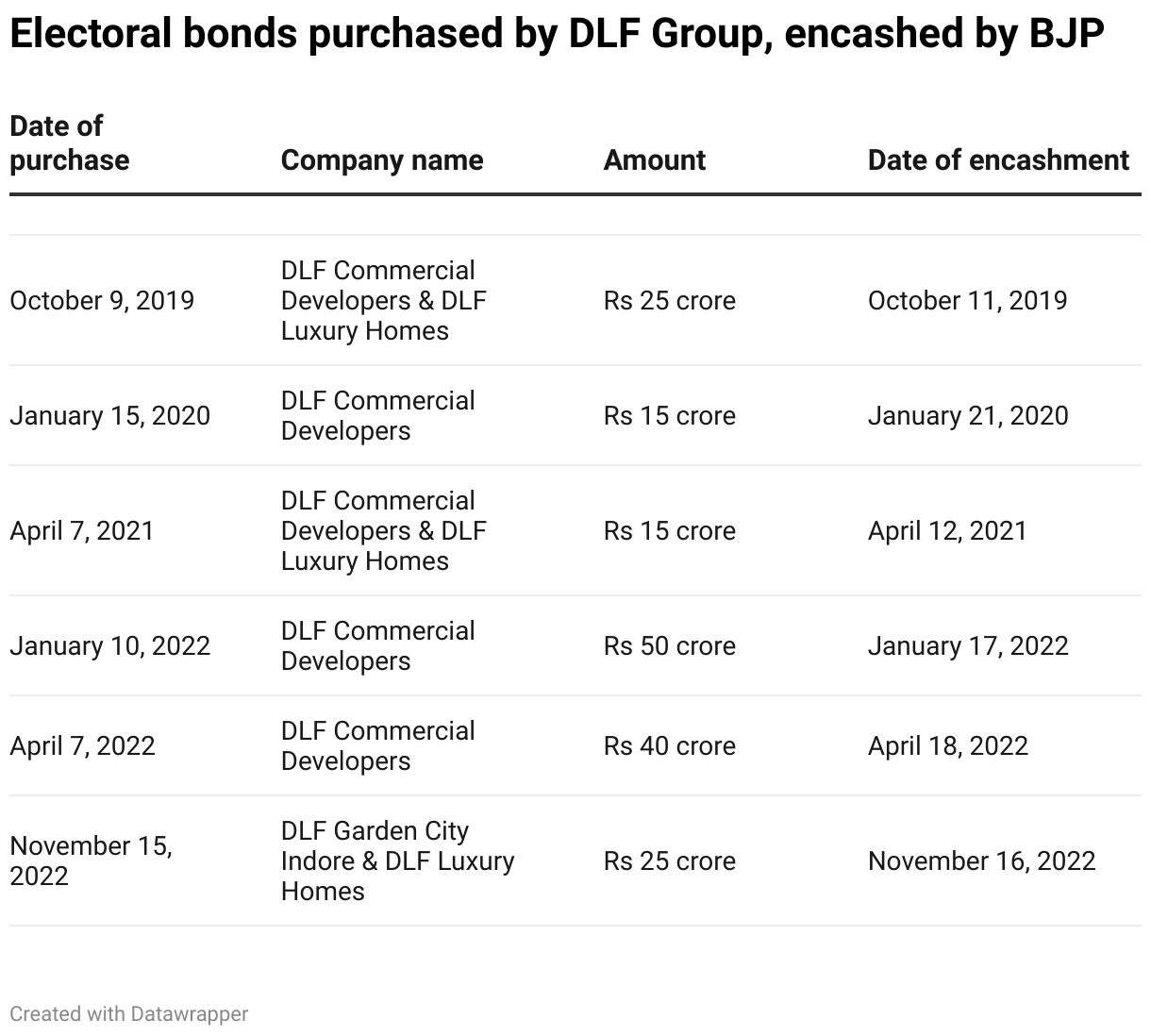
Then the electoral bond data entered the picture.
Between October 2019 and November 2022, three DLF group companies – DLF Commercial Developers Limited, DLF Garden City Indore Private Limited and DLF Luxury Homes Limited – purchased electoral bonds worth a total of Rs 170 crore.
Every single bond went exclusively to the BJP. No other political party received a rupee from these donations. The first bonds were bought in October 2019. Contributions continued through 2020, 2021 and into November 2022.
Five months after the final known bond purchase, in April 2023, the Haryana government informed the Punjab and Haryana High Court that “no regulation/rules have been violated” in the 2012 land transaction between Vadra’s firm and DLF. Robert Vadra promptly claimed vindication on social media.
The state government quickly clarified that its submission did not amount to a formal “clean chit” and announced a new special investigation team. Yet the practical effect was unmistakable: the sharp edges of the old allegations had been noticeably softened. The High Court later observed that the probe had been “crawling” for five years and directed it to be completed at the earliest. No dramatic fresh action against DLF followed in the public domain on this specific deal.
DLF’s financial scale provides context. In financial year 2022-23 the group reported a turnover of Rs 6,012 crore and a net profit of Rs 2,051 crore. A Rs 170 crore contribution, while significant, represented a manageable fraction of its profits. What stands out is the exclusivity and the timing: money flowed only to the ruling party at the Centre and in the state, and the most favourable official statement on the long-pending case arrived shortly after the donations tapered.
The electoral bond system itself was designed for anonymity until the Supreme Court ordered full disclosure. Once the data became public, patterns of corporate giving and subsequent regulatory or investigative developments invited public scrutiny across many sectors. In DLF’s case the sequence is particularly neat. A controversy once useful for electoral mobilisation later received a more benign official assessment after substantial, exclusive political funding had been recorded.
Citizens are entitled to notice when a company that was once publicly associated with a high-profile allegation becomes a large exclusive donor and, months later, hears official language that significantly dilutes the seriousness of that same allegation.
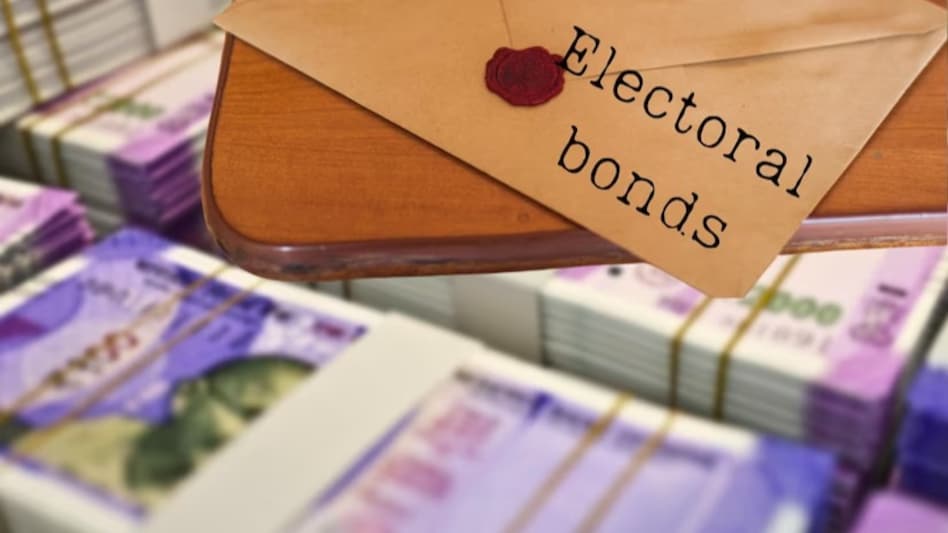
The original 2014 campaign had treated the deal as emblematic of deeper problems. The 2023 submission treated it as largely free of regulatory violation. Between those two points sat Rs 170 crore in opaque (at the time) political funding directed solely at the party that had once weaponised the issue.
This is not an accusation of illegality. It is an observation about optics, timing and the quiet power of money in a system that, until recently, allowed large political contributions without public scrutiny of the beneficiaries. Real estate developers operate in a heavily regulated environment where land licences, mutations, zoning and investigations can make or break projects worth thousands of crores. When the same developer that once featured in campaign speeches later features in the donor list of the ruling party, and when official positions on old cases subsequently soften, the public is left with an uncomfortable impression that accountability can be elastic.
The Haryana government maintained that a fresh SIT would continue the probe. Whether that team has produced new findings remains less visible than the original political noise of 2014 or the bond figures of 2019-2022. Meanwhile DLF continues as one of India’s largest listed real estate companies. The land that once generated headlines has long since been absorbed into the urban landscape of Gurugram. What lingers is the sequence itself: a controversy that helped win elections, years of legal proceedings, exclusive political donations running into nine figures, and then an official statement that the rules had not been broken.
In a democracy that prizes both free enterprise and clean politics, the DLF electoral bond episode serves as a quiet case study. It shows how generously timed contributions can coincide with a change in official temperature around long-standing allegations. Whether that coincidence is purely accidental or something more calculated is a question the data alone cannot answer. But the data does ensure the question will not disappear.

When political funding and regulatory outcomes appear to move in harmonious rhythm, the public is right to ask whether the music is being conducted or merely observed. The Rs 170 crore figure, the exclusive beneficiary, and the subsequent court submission form a timeline that invites exactly that scrutiny – without needing to shout, only to notice.