Ola’s Intellectual Property Move: Smart Business Or Founder Enrichment Scheme? Who Truly Benefits?

In the high-octane existence of Indian startups, there is a troubling trend that is getting investors and industry observers to sit up and take notice. Bhavish Aggarwal, owner of the Ola group, appears to be contemplating a massive restructuring that would alter the way his business empire generates revenues; this shift would immensely enrich him personally but potentially hurt the health of his companies.
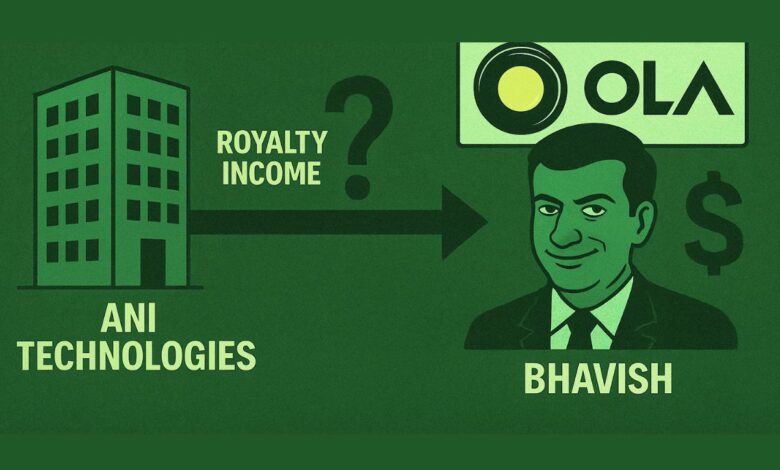
The center of controversy surrounding this change is the “Ola” brand ownership. Currently, this right rests with ANI Technologies, which owns Ola’s ride-hailing business. This right, however, sources privy to the information reveal, may be transferred to a new company that will be owned by Aggarwal’s family office directly. This, if it happens, could have a great and troubling impact on a number of individuals.
What Is The Current Setup and Why It Matters?
To get an idea of how serious this is, we need to go back to 2019, when Ola Electric was formed as a standalone company, independent of Ola Cabs. At that time, a big deal was struck: ANI Technologies licensed the Ola brand name and logo to Ola Electric for royalty consideration. Similar licensing agreements were given to other group companies, such as Krutrim AI and Ola Maps.
These royalty payments are more crucial to ANI Technologies now, especially considering that its main ride-hailing business has been going down steadily over the past few years. These licensing fees are a huge and stable source of revenue for the company, and they help to compensate for problems in its main business segment.
The proposed restructuring, however, threatens to upend this arrangement in a way that could redirect these financial benefits away from ANI Technologies and its investors and into Aggarwal’s personal coffers. The consequences of such a move would be twofold: First, the royalty income that currently flows to ANI Technologies would instead go to Aggarwal’s family office. Second, and perhaps more troublingly, ANI Technologies, the original owner of the Ola brand, might find itself in the peculiar position of having to pay Aggarwal for the right to use its own brand name.
“It is as if you buy a house but they tell you they still own the front door and you have to pay rent each time you enter your own home”.
This is not the first time that people have questioned sharing resources and control in Aggarwal’s firm. When Ola Electric was demerged from ANI Technologies, investors had raised similar concerns regarding shared assets and operations.
The situation is made even more complex since the shareholder groups in the respective companies are highly dissimilar.
- Large shareholders of ANI Technologies such as Warburg Pincus, Vanguard, Steadview Capital, and DST Global are not share holders of Ola Electric or Krutrim AI.
- At the same time, companies like SoftBank, Hyundai Motor, Temasek, Tencent, Tiger Global, and Alpha Wave Global have invested in ANI Technologies as well as Ola Electric.
- Limited investors such as the venture capital firm Z47 (earlier Matrix Partners India) and former Vodafone chief executive Arun Sarin’s family office hold interests in all three key companies.
The ownership structure becomes more complicated. Aggarwal holds approximately 8-9% of ANI Technologies, over 30% of Ola Electric, and nearly 90% of Krutrim AI, documents and sources having information in their possession reveal.
Can We See Historical Analogues; When Founders Kept Personal Interests First
This is not a new scenario. The corporate world has witnessed several instances when owners of businesses have been involved in asset manipulation that benefited them individually but could harm their firms and outside investors.
A well-known example is from the early days of Facebook (now Meta) when Mark Zuckerberg was accused of stealing primary ideas from Harvard Connection (now ConnectU) to his startup. Even though the situation was different, happening at the formation of the company and not a restructuring, the case showed how ownership of ideas can lead to conflicts.
Another example is WeWork and co-founder Adam Neumann. Before WeWork tried to go public, Neumann had registered the “We” brand under his own name and then sold it back to his company for about $5.9 million. When the public reacted with outrage, Neumann returned the money, but it showed the ways in which founders can become muddled between personal and company ownership.
In India, the Biyani group was under close scrutiny for how they managed intellectual property and brand rights in their various retail enterprises. A few analysts commented that the actions served individuals in the company more than it served listed companies’ minority shareholders.
The proposed intellectual property right changes to Ola are significant to Aggarwal’s various business ventures. His AI venture, Krutrim, aims to begin engaging in costly projects such as creating massive language models and AI chips. Aggarwal announced in February that he would be investing ₹2,000 crore in Krutrim, vowing to invest a total of ₹10,000 crore over the next year.
To fund these lofty plans, Aggarwal has committed 2.4% of his Ola Electric stakes worth approximately ₹520 crore. The scheme appears to include channeling investments through his BA Family Office, which will be the umbrella holding entity. According to people familiar with the matter, “The holding company will also manage funds raised by Aggarwal from the sale of shares in these companies.”
Last year, prior to Ola Electric’s public offering, Aggarwal earned ₹288 crore by offloading a portion of his shares. His outstanding share market value in the electric vehicle firm is ₹6,433 crore, while ANI Technologies’ near 4% stake in Ola Electric is valued at ₹771 crore.
Also, the IPO Dreams Deferred!
Individuals have been attempting to take ANI Technologies public for years now, beginning in 2020. Such efforts still continue to be relegated to the backburner. In January, it was announced that Ola Consumer, an ANI-run company, was to go public by March 2026. According to sources privy to the move, such plans can once again be delayed.
The firm had recently renamed itself from Ola Cabs to Ola Consumer. The name change appeared to indicate a shift from vanilla ride-hailing to new business verticals. Today, the consumer business is being repositioned to encompass food delivery through the government-backed Open Network for Digital Commerce (ONDC), cloud kitchens, and dark store-as-a-service in fast commerce.
Meanwhile, ANI Technologies is witnessing increasing competition from Rapido, which is supported by WestBridge Capital, in the ride-hailing space. Latest statistics indicate that Ola commands a 30% market share of the four-wheeler ride-hailing space. Rapido is expanding at a robust 20%, while Uber commands a 50% market share.
ANI Technologies has had a spotty financial performance. For FY2024, the company reported total revenue of ₹2,203 crore, a 3% decline from ₹2,277 crore in FY23. But its losses fell to ₹216 crore from ₹388 crore in the previous year.
Ola’s valuation has come under tremendous pressure from its investors during the last twelve months. Its valuation stood at $2 billion as of August 2024—a sharp decline from its 2021 high valuation of $7.3 billion, at which it had raised $139 million of fresh capital.
Not To Forget, The Electric Dreams Are Against Headwinds!
Ola Electric dominated India’s electric two-wheeler space hands down but now faces more challenging competition. New players such as Ather Energy, which is set to go public, and auto giants such as Bajaj Auto and TVS Motor are now competing with the company stiffly.
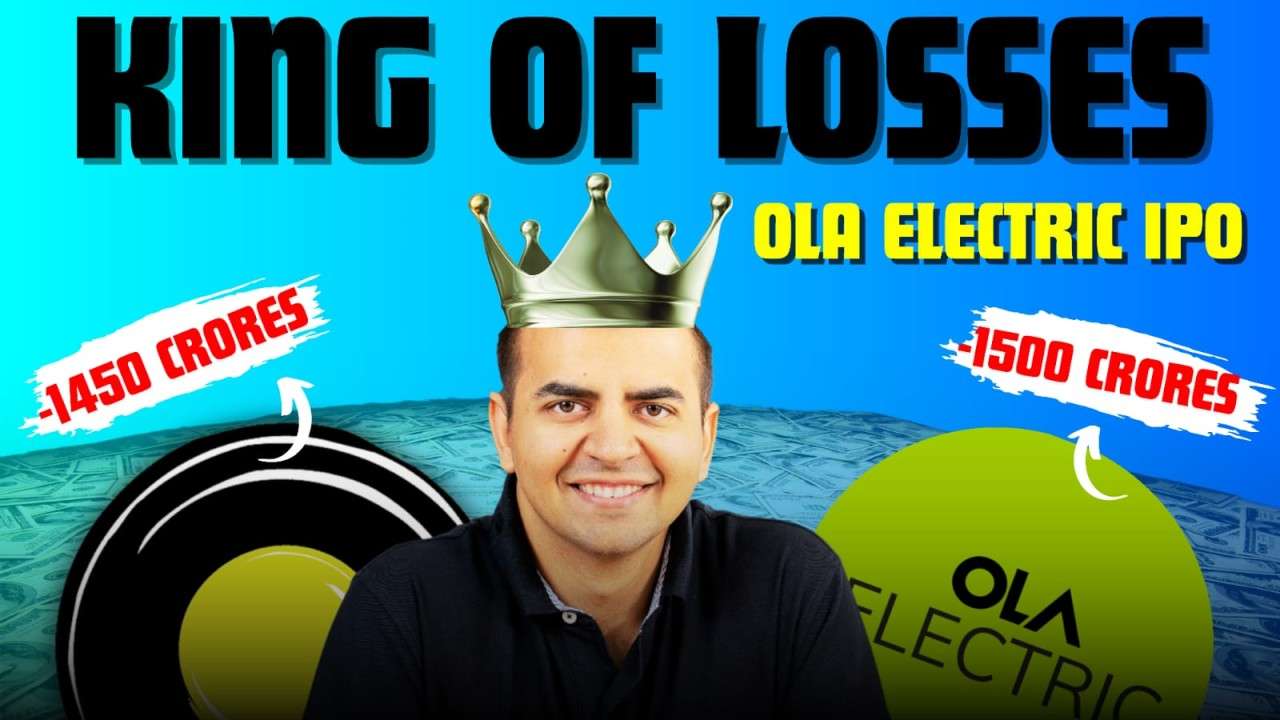
Ola Electric in April said sales fell 42% year-on-year, dropping to second in the market after TVS Motor. The company is still burning a lot of money, with its net loss rising 50% to ₹564 crore in the quarter ending December 2024, from ₹376 crore a year ago. These cash troubles are due to increased competition and ongoing problems with after-sales service.
Icra lowered the debt securities of Ola Electric Technologies on May 1. They explained that the rationale was that sales of two-wheelers grew at a slower pace than expected. This has meant a longer duration of burning money and stretched the timeline for the company to achieve profitability. The agency also warned that the company might have to explore additional sources of raising funds in the upcoming 12 to 24 months as their cash cushions incrementally decline.

Last, But Not The Least- Contemporary Corporate Governance Challenges at Ola
What makes cases such as Ola’s so pertinent in the contemporary business world is the increased focus on corporate governance and the founder’s conduct. In recent history, investors have been increasingly anxious about the conduct of corporate governance and assets on the part of founders of scaling companies.
Companies like Theranos, with Elizabeth Holmes at the helm, showed the extreme problems that can happen with bad management and regulation. Although Ola’s case is fairly unique, it shows how corporate organizations can be set up to benefit insiders in a way that may not be in the best interest of everyone involved.
In India, cases like those of Cafe Coffee Day, where founder V.G. Siddhartha had multiple businesses with intricate financial interlinkages, have cautioned investors about corporate structure problems. In the same way, the Hindenburg Research report on the Adani Group brought a lot of focus on intricate corporate structures and their implications for shareholders.
The most urgent concern is how the changes might impact ANI Technologies’ long-delayed plans to go public. The company has been keen to be listed for more than five years, but still faces hurdles.
The timing is extremely challenging. ANI Technologies is reportedly losing market share in its auto-hailing, bike, and cab segments. Local players such as Namma Yatri have emerged as strong competitors to both Ola and Uber in certain markets.
Also, individuals are less optimistic about Ola group companies due to several issues with the founder, numerous probes into the EV manufacturing business, and concerns over management. Issues such as allegations of a poor workplace culture, numerous high-ranking executives departing, and discrepancies between reported and actual sales data have all made their reputation challenging.
“If ANI Tech lost one of its revenue streams and had to pay to use a brand it already owns, it would make any subsequent IPO less attractive,” said a technology listings specialist analyst. “The market would most likely interpret this as a sign of the company’s governance priorities.”
Walking the Thin Line: Legal vs. Ethical
The plan to alter Ola’s IP rights is complex. It is probably legal but not necessarily ethical. The observation is similar to a sentiment of the late film director and actor Orson Welles. He once remarked, “The law and justice are not always the same. When they aren’t, destroying the law may be the first step toward changing it.” No one is advocating for the destruction of laws, but the quotation illustrates how actions can be lawful but raise ethical questions nonetheless.
The case is analogous to Warren Buffett’s famous quote: “It takes 20 years to build a reputation and five minutes to ruin it.” For Ola and Aggarwal, they must balance the short-term monetary benefits of altering who owns the IP with the potential long-term damage to investor trust and their firm’s reputation.
What Are The Broader Impacts to India’s Entrepreneurial Culture?
Beyond Ola’s immediate issues and those of shareholders, the case also presents general questions regarding India’s increasingly established startup ecosystem in terms of governance regulations. More Indian startups succeed and consider issuing an IPO as they mature, founder-early investor-public shareholder dynamics become even more significant.
“What founders do prior to going public establishes the tone for the way they will behave once they have public shareholders,” said a corporate governance professor at one of India’s leading business schools. “Investors are becoming increasingly skilled at spotting warning signs prior to companies going public.”
High-profile instances of bad management within India’s startup ecosystem could make it harder for new businesspeople to secure funding. Foreign and Indian investors might insist on stronger safeguards and clearer company structures before they will invest.
As this situation continues to play out, some possible consequences are arising. Aggarwal might go ahead with the restructuring as described, which would result in investors objecting or even taking the issue to court. Or, the public glare might result in rethinking or scrapping plans, just as Adam Neumann later went on to rethink the WeWork “We” trademark issue.
Another possibility is that the restructuring can take place, but there need to be arrangements to ensure that ANI Technologies and shareholders are not saddled with an unreasonable cost. This can be in the form of more beneficial terms for ANI Technologies’ use of the Ola brand or other financial arrangements that soften the impact.
It is clear that a lot of people will be watching the outcome of this episode. This includes not just those who are directly associated with Ola, but the entire startup and investment ecosystem in India. It is a test case of how founder-led companies navigate the sensitive terrain where business and personal interests overlap.
Conclusion: A Critical Moment for Corporate Governance
As the dust settles on these company realignment reports, one can be certain of this: the decisions made today will have lasting impacts. For Bhavish Aggarwal and the Ola group of companies, this is a reckoning moment about what they care about and what they value.
Management guru Peter Drucker once stated, “Management is doing things right; leadership is doing the right things.” Over the next few months, we will see whether Ola’s leadership chooses a path of action that serves the interests of all concerned or one that serves the founder’s good at the expense of the company’s well-being.
As the Indian startup ecosystem grows, there will be more of such instances that will demonstrate what good management will look like for founder-led firms that are scaling up. The long-term effect of this saga could be more profound than Ola itself, perhaps even spreading to how Indian entrepreneurs structure their businesses and manage their ideas going forward.

For the time being, investors, business observers, and the public at large will be watching to determine if this is, as the initial article stated, “just a company restructuring move to make the founder rich and the company weak.” The answer to that question could significantly impact corporate governance regulations in India’s burgeoning startup economy.