Witness In 2018, Accused In 2023: The Curious Case Of Harresh Mehta And Rohan Developers
In 2012, ₹155 crore of State Bank of India money reached Ruby Mills. In 2016, the CBI registered a case. In 2018 it filed a chargesheet that did not name Harresh Mehta as an accused and reportedly treated him as a witness. In 2023, he was arrested. This article interrogates the gap between those dates: what the agency found, what it waited for, why further custody was refused, and whether a supplementary chargesheet ever followed. It asks what an eleven-year distance between transaction and arrest does to evidence, fairness and public trust, and who answers for the delay.

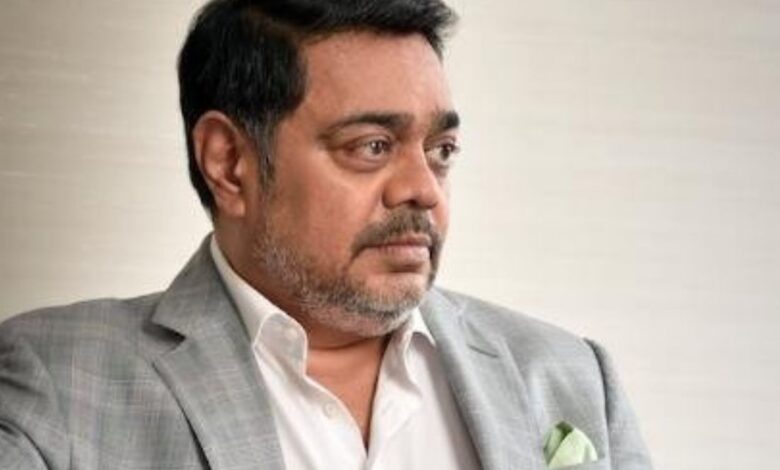
The Witness Who Became an Accused: What Did the CBI Learn Between 2018 and 2023, and Why Did It Take So Long?
A Case Told Backwards
Most fraud cases are told forward: money moves, a crime is suspected, an agency investigates, an accused is named. The case of Harresh Mehta (Harresh Navnitrai Mehta), associated with Mumbai’s Rohan Developers and Rohan Lifescapes, resists that order. On the reported record, he was absent from the 2016 First Information Report and treated as a witness when the CBI filed its 2018 chargesheet. In May 2023 he was arrested by the same agency in the same case. Nothing visible in the public record explains the reversal, and that silence is the subject of this article.
The statement of what is established must come first. Harresh Mehta was arrested by the CBI on 20 May 2023 and granted bail by the Special CBI Court at Thane in June 2023. No conviction against him in the ₹280-crore State Bank of India case could be verified. He denies involvement. The CBI’s allegations about a ₹50-crore Inter Corporate Deposit are allegations, not findings. This is a critique of process, not a verdict on a man. But process is where Indian criminal justice most often fails, and a case in which a witness becomes an accused after five years is a case in which process deserves unusual scrutiny.
Five Years Between the Money and the Complaint
The underlying transactions date to 2011–2012. According to the CBI’s account, as reported in the 2023 proceedings, Rajput Retail Limited, later renamed Shreem Corporation Limited, obtained multiple credit facilities from SBI using fabricated documents, and the bank was cheated of roughly ₹280 crore. The CBI’s Economic Offences Wing in Mumbai registered its case in 2016, following an SBI complaint. By the agency’s own timeline, then, about four to five years separated the money movement from the FIR.
The briefing does not explain that gap, and no one should pretend otherwise. But the question is fair. Did SBI fail to detect the alleged fabrication until the accounts soured? Did the loans become non-performing and only then attract forensic scrutiny? Did the bank’s internal fraud-classification and reporting processes, which in India have historically moved slowly, consume the time?
Each answer implicates a different party, and none flatters the system. If the bank detected irregularities early and delayed complaining, that is a failure of the lender. If it detected them late, that is a failure of monitoring. A ₹155-crore disbursement moved on 10 February 2012, and the criminal process began years later, by which point the money had long since travelled onward.
The Chargesheet and Its Cast of Characters
In 2018 the CBI filed its chargesheet against Rajput Retail Limited, promoters Vijay R. Gupta and Ajay R. Gupta, SBI relationship manager V.N. Kadam, chartered accountant Vijay M. Patil and Archana Vishwas Kadam. On its face, it has the familiar structure of a bank-fraud case: a borrower company, its promoters, one bank officer on the inside and one professional who certified the paperwork. A reader could be forgiven for thinking the architecture of the alleged fraud was complete.
The list invites its own cross-examination, though. The CBI’s later case concerned a transaction in which ₹155 crore, comprising a ₹139-crore term loan and a ₹16-crore short-term loan, was credited to Ruby Mills on 10 February 2012 for floors of The Ruby building in Dadar. Ruby Mills received the money. A Ruby Mills representative, Bharat M. Shah, is named in the CBI’s account of the transaction. Mindset Estates, associated with Harresh Mehta, is named in that account too. Yet none of these appear among the 2018 accused. The chargesheet named the borrower’s side and a single bank employee, and it left the counterparties of the property transaction outside the dock.
Was that deliberate sequencing, a decision to chargesheet what could be proved and keep investigating the rest? Or was it a gap in the original theory, one that the agency recognised later? Either explanation leaves a problem. If the CBI knew in 2018 that the Ruby transaction was central, why were the other participants not even provisionally accused? If it did not know, then the 2018 chargesheet was built on an incomplete picture of a fraud the agency itself had spent two years investigating.
What “Witness” Means, and What It Does Not
Reporting based on Harresh Mehta’s bail proceedings states that he appeared as a witness in the original chargesheet. His bail application reportedly emphasised this, together with the assertion that SBI never named him in the FIR and that the CBI’s 2016-to-2018 investigation never identified him as an accused. This detail carries the entire weight of his procedural defence, so it is worth being careful about what it does and does not establish.
In Indian criminal procedure, listing a person as a prosecution witness means the investigating agency considered their evidence useful to the case and recorded or intended to rely on their statement. It is not an immunity. The Code of Criminal Procedure permits further investigation after a chargesheet is filed, and a court trying a case can, on evidence emerging at trial, summon additional persons as accused. (This is general legal context rather than part of the briefing and should be checked against the case’s actual procedural history.) So a witness becoming an accused is not legally impossible, and the CBI is entitled to say that investigation never stopped.
But legal permissibility is not the same as institutional credibility. The unusual feature here is not the mere possibility of reclassification. It is the five-year interval, and the absence of any public explanation for what drove it. Did Harresh Mehta’s statement as a witness contain something later contradicted by documents? Did bank records, call records or ledgers obtained after 2018 change the CBI’s reading of the ₹50 crore? Or did the agency simply re-read the same evidence differently? The distinction matters enormously. The first would be a case developing as investigations should. The second would be a case in which a person’s status changes without any change in the facts, which is exactly what the defence will argue.
The “Open Investigation” Clause
The 2018 chargesheet, as reported, left open the investigation into certain other private persons and bank officials. Open investigations are a normal feature of complex financial cases. What is less normal is the length of time for which this one stayed open. Five years passed between the chargesheet and Harresh Mehta’s arrest.
What was the CBI doing during that period? The briefing records only the outcome: searches at premises associated with Rohan Developers and Ruby Mills, followed by the arrest. It does not record how many bank officials were examined, whether any were ever added as accused, or what became of the “certain other private persons” the chargesheet had flagged.
The reference to bank officials is especially pointed. A fraud of this scale does not ordinarily proceed without at least some lapse in the sanctioning and monitoring chain, and the 2018 chargesheet named only one SBI employee. If more officials were being investigated, the public record is silent on what became of them. If they were not, the claim of an ongoing investigation into “bank officials” deserves explanation.
There is a reasonable critique to make about agency prioritisation as well. The CBI is a stretched institution handling a heavy docket of high-value economic offences. A case that has gone to chargesheet may reasonably drop down the queue, with the open strand of the investigation waiting for staff and attention. That is an administrative explanation, not a justification, and the people affected by it, whether accused or victims of fraud, do not experience it as neutral.
The Searches: Looking for What, Exactly?
The agency eventually searched premises associated with Rohan Developers and Ruby Mills. The briefing identifies this as part of the continuing investigation that preceded the arrest. Searches of this kind are conducted to recover documents, devices and records, and the reasonable inference is that the CBI was looking for evidence of the ₹50-crore Inter Corporate Deposit trail: the 8 February 2012 request, the six-month term at 10 percent interest, and the alleged onward lending to an associate company.
The CBI’s theory, as reported, is that this ₹50 crore represented Harresh Mehta’s or Rohan’s share of the alleged proceeds, that it was never returned, and that interest on the larger transaction remained outstanding. If that is so, one has to ask why the key documents had not been obtained earlier.
A 2012 ICD between two companies would, by nature, leave a paper trail in ledgers, bank statements, board approvals and audited financial statements, much of it in public filings. Why did it take until 2023 to search for it? And if the documents were already available in 2018, as ordinary corporate records often are, what did the agency learn from the searches that it could not have learned from a notice under the relevant provisions years earlier?
This question cuts both ways. If searches produced decisive material, the delay is merely regrettable. If they produced little, the arrest that followed them looks less like the culmination of an investigation and more like a pressure tactic.
20 May 2023: Why Then?
The arrest came on 20 May 2023. By then the transactions were eleven years old, the FIR seven, the chargesheet five. The briefing contains nothing in the public record to explain the timing, and that is itself the most important fact. Arrest is the most coercive step an investigating agency can take, and Indian courts have repeatedly said that it should not be routine. The law expects an arrest to be justified by something: a risk of flight, of evidence tampering, of non-cooperation, or a need for custodial interrogation.
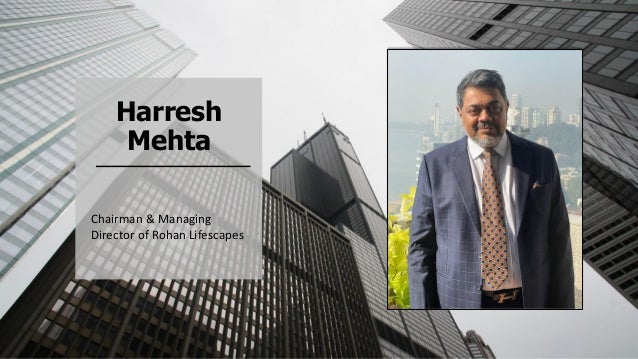
What was the justification here? Harresh Mehta was a known figure with a registered corporate presence. He had been a witness in the same case. His premises had been searched. A man who has been a witness for five years does not obviously present a flight risk, and a man whose offices have been searched has little left to tamper with. If the answer is that the agency needed custodial interrogation to confront him with other accused, as it reportedly argued, then the questions multiply. Why had he not been confronted with those accused during five years of availability? What new development in 2023 made custody necessary where it had not been before?
The Court Declines Further Custody
The first judicial test of the CBI’s position came on 24 May 2023, four days after the arrest. According to the Times of India, the court refused to extend CBI custody, observing that merely saying the accused was not cooperating, and that investigators wished to confront him with other accused persons, was insufficient for further police custody. Harresh Mehta was sent to judicial custody.
That observation deserves to be read closely. Courts do not lightly refuse an investigating agency’s request for custody in a major economic case, and when they do, it is typically because the stated grounds are generic. “Non-cooperation” is among the most commonly cited justifications in custody applications, and its familiarity is exactly the problem. Without specifics, such as questions evaded, documents withheld or contradictions identified, it can be asserted in almost any case. The court’s reported remark is a quiet rebuke to an agency that had had five years to prepare its confrontation strategy and, apparently, could not show in four days why it still needed him in its custody.
The point should not be overstated. A refusal of further police custody is not a finding on the merits and certainly not on innocence. It is a finding that the stated grounds for continued custody were thin. But it does lend weight to the question hanging over the whole case: if the agency’s justification for holding Harresh Mehta evaporated within four days, how compelling was the justification for arresting him in the first place?
Bail and the Shadow of Recovery
In June 2023, the Special CBI Court at Thane granted bail on a ₹5-lakh personal bond and a ₹5-lakh security bond, with reporting conditions at the CBI’s Economic Offences Wing in Mumbai on Mondays and Tuesdays, and a bar on tampering with evidence. Bail is not an acquittal, and the briefing is careful to say so.
One reported feature of the bail proceedings bears directly on the delay question. According to the Times of India, Ruby Mills had received roughly ₹101 crore from Rajput Retail in connection with the transaction, Bharat Shah had deposited ₹22.5 crore, and he was prepared to deposit about ₹78.5 crore more. The Thane court reportedly observed that the term-loan amount could therefore be treated as secured. Later insolvency records involving Shreem Corporation refer to the ₹101 crore being received by its resolution professional.
If the money had in substance been secured or returned, the argument for arrest in 2023 weakens further. Arrest for investigative purposes makes sense where there is a continuing risk to the investigation or to recovery. Where a court is told the exposure is largely secured, custody starts to resemble punishment before trial. This is where the CBI’s decade-long timeline bites hardest. The longer the agency waited, the more the facts moved in the accused’s favour, with recoveries made, deposits offered and insolvency processes absorbing the proceeds. An agency that moves late must expect to be judged on the situation it created by moving late.
The Missing Supplementary Chargesheet
The most striking unanswered question in the briefing is also the simplest. The 2023 court proceedings reportedly referred to the investigation having remained open and to a supplementary chargesheet being contemplated. The briefing’s author, after searching publicly indexed sources, found no reliable 2026 court record establishing what happened next, and deliberately declined to invent one.
That caution is correct, and it carries a consequence. If a supplementary chargesheet naming Harresh Mehta was filed, the public should be able to learn the grounds on which the witness of 2018 became the accused of 2023. If it was filed and the court took cognisance, a trial would be pending. If it was not filed, then a man was arrested, held in custody for several days, placed on bail with reporting conditions and, for all the public record shows, left in procedural limbo. Indian law imposes timelines on chargesheeting in many contexts, and further investigation does not automatically excuse indefinite delay.

What does silence signal? There are only a few possibilities. The supplementary chargesheet may have been filed quietly and simply not reported, which would say something about how little public attention these cases receive after the arrest headlines fade. It may be pending, which would mean the agency’s contemplated filing has itself been delayed for years. Or the case against Harresh Mehta may have weakened, with the agency unable to convert its allegation into a chargesheet the court would accept. No one outside the court file can say which. A public that read the arrest headline in May 2023 deserves a comparable headline about its outcome, and rarely gets one.
Evidence Decay: What Eleven Years Does to the Truth
Delay corrodes evidence in predictable ways. People retire or die. Bank officials who sanctioned the loans move on, and their recollections soften. Documents are archived, misplaced or destroyed in routine retention cycles. Companies change names, as Rajput Retail became Shreem Corporation, or enter insolvency, as Shreem did and as Rohan Developers did in February 2025. When a company enters the Corporate Insolvency Resolution Process, its records pass into the custody of a resolution professional whose priorities are creditors and continuity, not the preservation of material for a criminal trial.
These are not abstract risks in this case. The central dispute turns on what a ₹50-crore deposit from February 2012 really was: a plain commercial ICD, as Harresh Mehta contends, or a share of diverted proceeds, as the CBI alleges. That question depends on intent, on contemporaneous documents and on the testimony of people who were in the room. Every year that passes degrades all three.
The CBI will say that complex financial investigations take time. The accused will say that the passage of time has itself made a fair defence harder, because exculpatory witnesses and records are as perishable as incriminating ones. Both are right, and the person who pays most for the delay is whichever party bears the burden of proof, which in a criminal case is the prosecution.
The Comparative Lens
How unusual is this timeline? Not very, which is the real indictment. Large Indian bank-fraud cases routinely stretch across a decade. One widely discussed example is the ABG Shipyard matter, where SBI’s initial complaint dates to 2019 and the CBI’s FIR for a fraud alleged at over ₹22,000 crore followed only in early 2022. In many such cases the pattern repeats: a loan sanctioned years before the account is classified as fraud, a complaint filed after more delay, an FIR followed by a chargesheet that omits some participants, and a long tail of “further investigation.”
The Rohan Developers matter fits that pattern closely, and that is why it deserves attention beyond one individual. A system that takes four to five years to register a case, two more to chargesheet it in part and another five to arrest a person it initially treated as a witness is not an outlier. It is, arguably, the norm. The relevant comparison for a rigorous version of this article would be median durations from FIR to chargesheet and from chargesheet to trial in CBI economic-offence cases, drawn from official data such as parliamentary replies and CBI annual reports. That data is not in the briefing, and any publication should add it before making sweeping claims.
The Defence, Weighed Fairly
It would be easy to read the foregoing as an argument that Harresh Mehta is a victim of investigative caprice. That would be unfair to the CBI, and the evidence does not support it. The agency’s theory is coherent on its face: ₹155 crore reached Ruby Mills on 10 February 2012, ten days before the Letter of Intent was executed on 20 February, and an ICD request for ₹50 crore had been made on 8 February. That sequence is unusual enough to justify scrutiny. An agency that spotted it late is still entitled to pursue it.
Harresh Mehta’s own defence has weaknesses a sceptical reader can identify. Being a witness in 2018 says nothing about the merits of a ₹50-crore transaction. That Mindset Estates, rather than Harresh Mehta personally, held the development rights does not answer why a Rohan Developers-linked entity asked for an ICD two days before the SBI-funded money arrived. These are reasons the CBI’s inquiry was legitimate. They are not reasons to excuse how it was conducted.

The Larger Indictment
Strip away the names and the case poses four questions that Indian investigative institutions should be forced to answer in public. The first is why serious bank fraud is detected and reported so slowly after the money moves. The second is why chargesheets so often arrive incomplete, with open-ended “further investigation” clauses that leave some participants unnamed for years. The third is why reclassification of a witness as an accused, which is lawful, happens without any public articulation of what changed. The fourth is why, once an arrest generates headlines, the follow-through, whether a supplementary chargesheet, discharge or trial, so rarely reaches the same audience.
None of these questions requires believing that Harresh Mehta is guilty or innocent. They require only believing that a ₹280-crore allegation, involving public-sector bank money, deserves a process that is timely, transparent and complete. On the public record available, it has been none of these. The 2016 FIR, the 2018 chargesheet, the 2023 arrest and the 2023 bail order mark the visible points of a case whose interior is opaque. Between them lie years in which an agency was investigating, a man was a witness, and the public was told almost nothing.
Until the Special CBI Court’s file is examined, the supplementary chargesheet located or its absence confirmed, and the reason for Harresh Mehta’s changed status stated on the record, the honest conclusion is the uncomfortable one. We do not know what the CBI learned between 2018 and 2023. We do not know whether it was enough. And we should keep asking why, after eleven years, the people who paid for the loans, the people who took the money and the people who are simply waiting for an answer are all still waiting.