Why Lawyers Across India Are Demanding Manan Kumar Mishra’s Resignation as Chairman of the Bar Council of India

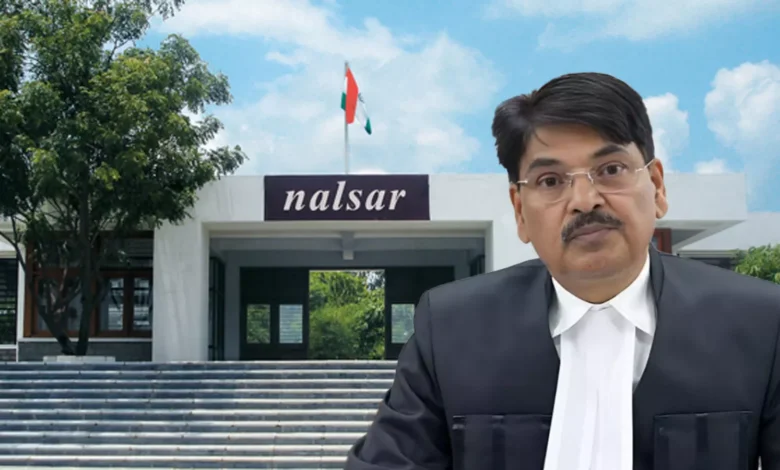
In the span of less than 72 hours in mid-August 2026, the Chairman of the Bar Council of India, Senior Advocate and BJP Rajya Sabha MP Manan Kumar Mishra, issued a punitive directive against an entire graduating batch of one of India’s premier National Law Universities, watched it collapse under internal revolt and judicial rebuke, reversed course twice, and then offered a carefully worded apology. What followed was not quiet acceptance. Three lawyers’ collectives representing more than 700 members across the country, along with the All India Lawyers Union and sections of the broader legal fraternity, have demanded his immediate resignation. If he refuses, they have called on other members of the Bar Council to move a formal no-confidence resolution.
This is not a spontaneous outburst over a single misjudged order. It is the boiling over of long-simmering frustration with a leadership style that has concentrated extraordinary power in one individual for well over a decade, repeatedly tested the outer limits of statutory authority, and left the institution responsible for regulating India’s legal profession and legal education looking both overbearing and ineffective.
The NALSAR Episode: A Case Study in Overreach
On the evening of 13 August 2026, Mishra, acting largely on his own, directed every State Bar Council in the country not to enrol any 2026 graduate of NALSAR University of Law, Hyderabad, as an advocate. The trigger was a peaceful campaign by roughly 450 students opposing the invitation of Chief Justice of India Surya Kant as chief guest for their convocation. The students cited the CJI’s earlier remarks during hearings related to police action against protesters. Mishra’s letter went further: it ordered the university’s Vice-Chancellor to identify the students and faculty involved, alleged “groupism” and “dirty politics” within the faculty, and suggested that those who participated had demonstrated unsuitability for the legal profession.
Within hours, the order began to unravel. Several BCI office-bearers, including the Vice-Chairman of the Executive Committee, publicly stated that the directive had been issued without proper consultation. The language of subsequent BCI communications carefully referred to “the letter issued by the Chairman” rather than a decision of the Council. The enrolment ban was first modified, then completely withdrawn. By the early hours of 14 August, Mishra announced that all proceedings against the 2026 batch had been closed. On 15 August, Independence Day, he issued a three-page letter expressing regret if his words or communications had hurt law students, affirming their right to peaceful disagreement and protest, and stating that the decision to attend the convocation belonged to the students themselves.
The Supreme Court, with CJI Surya Kant on the bench, characterised the BCI’s intervention as “absolutely uncalled for” and “unnecessary.” The Court affirmed the students’ right to protest and issued an interim order restraining punitive action against students or faculty.
For many in the profession, the episode was not an aberration. It was the latest and most brazen demonstration of a pattern: unilateral action by the Chairman, institutional pushback only after public and judicial pressure, followed by a climb-down that left the underlying questions of power and accountability unanswered.
Fourteen Years at the Helm
Manan Kumar Mishra assumed the chairmanship of the BCI in November 2014 and has been re-elected repeatedly, most recently for a record seventh consecutive term in 2025. In an institution whose chairmanship is formally a two-year term, this continuous concentration of power is itself exceptional. Critics argue that such longevity has eroded internal checks, discouraged dissent within the Council, and allowed the Chairman’s personal style and political positioning to shape the institution’s public face.
Mishra is simultaneously a sitting Rajya Sabha MP nominated by the BJP. This dual role has repeatedly drawn criticism. The perception that the statutory regulator of the legal profession is headed by a political actor creates an inherent tension: the BCI is meant to stand at arm’s length from both the executive and the political class, yet its most visible face is a ruling-party parliamentarian. When the Chairman intervenes in matters involving the judiciary or student dissent, that dual identity becomes impossible to ignore.
Regulatory Failure Under Long Tenure
The most damning indictment of the period has come from Mishra himself. On multiple occasions, including as recently as May 2026, he has publicly stated that 35 to 40 per cent of those appearing in court complexes wearing black coats and bands are practising on the basis of fabricated or questionable degrees. He has described the problem as long-standing and has claimed that large numbers of advocates failed to submit verification forms. This admission, coming from the head of the very body charged with maintaining professional standards, is an extraordinary self-indictment.
If the regulator has known for years that a massive proportion of the practising profession may be fraudulent, the failure to clean the rolls at scale is not a minor administrative shortcoming. It is a systemic collapse of the core statutory function of the BCI and the State Bar Councils under its supervision. Parallel to this is the widely acknowledged proliferation of low-quality law colleges, some of which function essentially as degree mills. The BCI’s approval and inspection processes have long been criticised for failing to stem this tide. Older cases involving elected BCI members (not Mishra personally) accepting bribes for favourable inspection reports have only deepened public scepticism about the integrity of the regulatory machinery.
Critics have also raised questions about financial transparency. Allegations circulating among sections of the Bar and amplified by groups such as the Cockroach Janta Party claim that the BCI spent nearly ₹14 crore on meetings and conferences in a single year. Calls have been made for independent audits and fuller disclosure of the Council’s accounts and the Chairman’s own asset declarations. Whether these specific figures withstand scrutiny remains to be independently verified, but the very fact that such questions are being asked so openly reflects a deeper erosion of confidence in institutional accountability.
Why the Resignation Demand Now
The current demand is not merely about one withdrawn order. It is about the cumulative effect of concentrated power without corresponding accountability. Lawyers’ collectives have described Mishra’s leadership as marked by arbitrariness and a tendency to prioritise institutional muscle-flexing over statutory limits and professional integrity. Senior advocates have used stronger language still, with one describing the Chairman as someone who “feels that he can act like a dictator because he has the system under his control.”
The NALSAR episode crystallised these concerns because it was so public, so clearly beyond the BCI’s traditional domain, and so rapidly reversed under pressure. It demonstrated both the willingness to threaten the professional futures of hundreds of young graduates for the act of peaceful dissent, and the inability to sustain that position once internal and external resistance mounted. An apology, however carefully worded, does not erase the original assertion of power or the damage to institutional credibility.
For a growing section of the legal profession, the question is no longer whether Manan Kumar Mishra can continue to issue directives and later withdraw them. The question is whether the Bar Council of India can continue to be led by an individual who has held the chair for so long, under whose tenure the regulator has publicly admitted massive failure on the issue of fake advocates, and who has repeatedly tested the boundaries of the office in ways that have invited judicial rebuke and professional revolt.
The demand for resignation is therefore both specific and systemic. It is a demand that the person who issued the NALSAR directive step down. It is also a demand that the institution itself confront the consequences of prolonged concentration of power, weak internal checks, and a regulatory record that, by the Chairman’s own public statements, has left large parts of the profession compromised.
Whether the no-confidence route is pursued inside the Council, or whether political and professional pressure forces a different resolution, the episode has already achieved one thing: it has made the quiet accumulation of power over fourteen years visible, contestable, and, for the first time in a long while, publicly accountable.