After Ratan Tata’s Demise, Is Tata Sons Heading For A Split? The RBI Wants A Listing, Tata Trusts Want Control, Chandrasekaran Wants Another Five Years And The SP Group Wants ₹25,000 Crore
What happens to an empire when the person who spent decades keeping everyone at the table is no longer there? Ratan Tata’s death left behind more than a leadership question at the Tata Group. It exposed a far more complicated transition at Tata Sons, where the RBI wants a listing, Tata Trusts want control, Chandrasekaran wants another five years and the SP Group wants ₹25,000 crore.

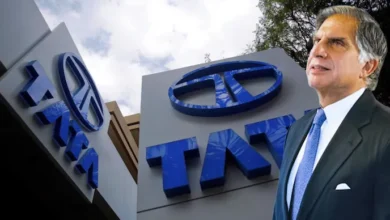
For much of the last three decades, Ratan Tata was not merely the most recognisable face of the Tata Group; he was also the person who gave a sprawling collection of companies, trusts, shareholders and professional managers a common centre of gravity.
The Tata Group was already enormous when he took over as chairman of Tata Sons in 1991, but his tenure was defined by a push towards greater consolidation, a stronger group identity and the creation of a structure in which businesses as different as steel, automobiles, information technology, hotels and consumer products could still be understood as parts of the same institution.
By the time he stepped down as chairman in 2012, and later returned briefly after the Cyrus Mistry episode, Ratan Tata had become closely identified with the idea of the Tata Group itself – large business groups, much like political and historical empires, are rarely held together by ownership alone.
There are formal structures, legal rights and financial arrangements, but there is also the authority of the person sitting at the centre. Ratan Tata’s authority extended beyond the balance sheet. He represented the Tata Trusts, the Tata name and the broader institutional identity of the group, while the day-to-day running of its companies increasingly moved into the hands of professional managers.
The arrangement allowed a vast business house to retain a recognisable centre even as its individual companies developed their own boards, strategies and financial interests.
The history of Indian empires offers a useful, if imperfect, parallel. Large kingdoms did not necessarily become smaller because their rulers woke up one morning and decided to surrender territory. The weakening of a central authority often allowed existing regional, familial, military and financial interests to assert themselves more openly. Succession disputes, competing claims, financial pressures and the ambitions of subordinate powers could turn an apparently unified empire into a collection of smaller centres of influence.
The comparison with Tata Sons ends there, because this is a corporate institution operating under modern company law and financial regulation rather than a sovereign empire. But the underlying issue of what happens to a large structure when its central figure is no longer there is relevant.
Ratan Tata died in October 2024, after having spent decades as the person most closely associated with the Tata name and its institutional character. By then, the question of succession was not new. His age had made the issue unavoidable for years, and the group had already gone through one highly consequential leadership rupture when Cyrus Mistry was removed as chairman of Tata Sons in 2016.
What followed Ratan Tata’s death was therefore never going to be simply about replacing one chairman with another.
Tata Sons sits at the centre of a much larger arrangement involving the Tata Trusts, operating companies, professional management, minority shareholders and the Shapoorji Pallonji Group, which owns a substantial minority stake.
Each has a different relationship with the holding company and, consequently, a different interest in what happens to it. For years, those interests existed within a structure whose most powerful symbolic and institutional figure was Ratan Tata. With him gone, the arrangements around Tata Sons have had to operate without the person who had come to embody the larger whole.
That transition is now playing out in public, with the RBI, Tata Trusts, the Tata Sons board, N Chandrasekaran and the Shapoorji Pallonji Group all becoming important players in a dispute that extends well beyond the question of who occupies the chairman’s office.
Tata Sons After Ratan Tata
At the centre of the current dispute is Tata Sons, the principal holding company of the Tata Group and the entity through which the Tata Trusts exercise their controlling ownership position.
The Trusts hold roughly 66% of Tata Sons, while the Shapoorji Pallonji Group owns about 18.4%. The remaining shares are held by other Tata-related entities and shareholders. That ownership structure has historically allowed the Tata Trusts to remain the dominant shareholder while Tata Sons itself has been run through a professional board and management structure.
The distinction between ownership and management is important to what has unfolded over the past few weeks. The Tata Trusts may control the majority of Tata Sons, but the company has its own board, its own Articles of Association and its own regulatory obligations. The present dispute has brought all three into the open. The board has taken positions on the future of Tata Sons that do not fully align with the position of the Trusts, while the Trusts have relied on provisions in the company’s Articles to challenge decisions taken by the board.
The financial architecture underneath Tata Sons makes the situation even more consequential.
The holding company sits above a group that now stretches across information technology, automobiles, steel, aviation, electronics, consumer businesses, digital commerce, defence, batteries and infrastructure.
Established businesses generate substantial cash, while newer businesses require large amounts of capital as the group expands into areas such as semiconductor manufacturing, batteries, aviation and electronics. TCS, in particular, has historically been an important source of dividends flowing up to Tata Sons, giving the holding company the financial capacity to support businesses elsewhere in the group.
That structure means Tata Sons is not simply another Tata company. It is the point at which ownership, capital allocation, governance and the wider identity of the group intersect. A change to the structure of Tata Sons can therefore have consequences beyond the holding company itself. The possibility of restructuring it, listing it or altering the way its capital is distributed across the group has implications for businesses that may have little connection with the immediate dispute over the boardroom.
There is also a separate financial interest sitting within the ownership structure. The Shapoorji Pallonji Group’s 18.4% stake in Tata Sons represents one of its most valuable assets, but the group also carries a substantial debt burden and has been seeking ways to unlock liquidity from its Tata Sons holding.
The Trusts had proposed a mechanism through which the SP Group could receive at least ₹25,000 crore without necessarily requiring Tata Sons to become publicly listed. The SP Group has subsequently backed the possibility of a Tata Sons listing, giving the question of Tata Sons’ future an additional financial dimension.
Against this backdrop, the Tata Sons board has been forced to deal with two separate but increasingly connected questions: what happens to the company’s regulatory status and whether it must move towards a public listing, and who should lead the company while that transition is taking place.
Those questions came together in September, when the RBI rejected Tata Sons’ request to surrender its Core Investment Company registration and the board subsequently voted to reappoint N Chandrasekaran for another five years, despite his having announced weeks earlier that he intended to step down at the end of his existing term.
The RBI Puts The Tata Sons Listing Back On The Table
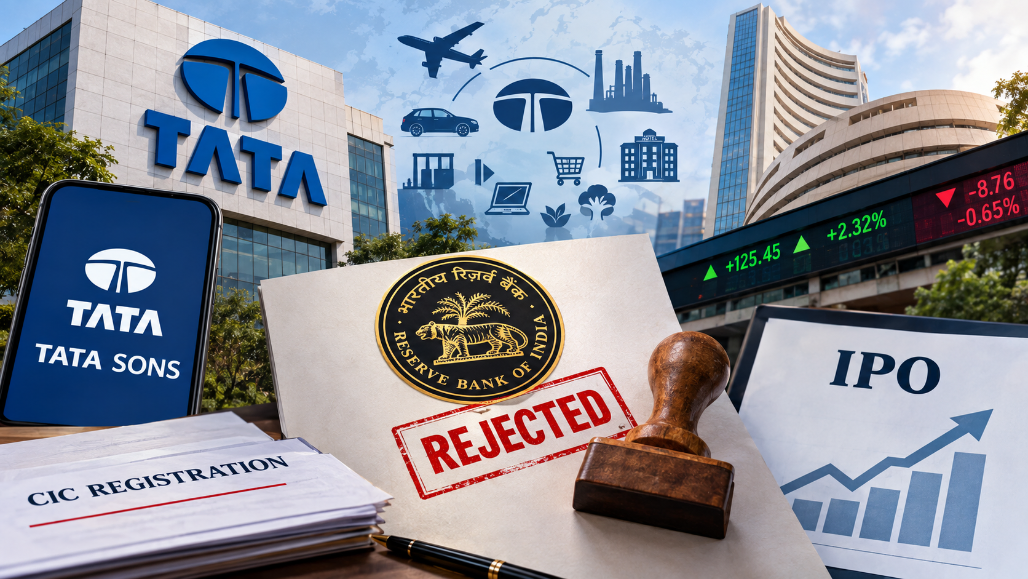
The immediate trigger for the latest Tata Sons upheaval came from the Reserve Bank of India. On September 11, the central bank rejected Tata Sons’ application to surrender its registration as a Core Investment Company, or CIC.
Tata Sons had argued that it had repaid its debt and therefore no longer needed to remain registered under the framework. The RBI did not accept that position, leaving Tata Sons within the regulatory framework applicable to an upper-layer NBFC and, with it, the requirement to move towards a public listing.
The decision effectively put an issue that Tata Sons had spent years trying to avoid back at the centre of the group. The company had previously maintained that it should be allowed to remain privately held, and in March 2024 its board had supported that position. The RBI’s refusal changed the regulatory equation. Tata Sons could no longer simply rely on its repayment of debt as a reason for stepping outside the upper-layer NBFC framework, and the possibility of a listing once again became a live corporate issue.
The RBI’s position also comes with a wider regulatory context. Tata Sons sits above a collection of businesses whose operations extend across sectors with significant public-market and financial-system exposure. The central bank has previously applied the upper-layer NBFC framework to systemically important holding structures, and Tata Sons’ relationship with its operating companies has remained relevant to the regulator’s assessment.
Reports following the September decision indicated that the RBI continued to have concerns around Tata Sons’ links with public funds through its group companies.
For Tata Sons, the consequence was immediate. The listing question was no longer something that could be dealt with through a preference for remaining private. The company had to consider how it would respond to a regulatory requirement that potentially changes the ownership, governance and valuation structure of the holding company itself.
The RBI has also moved to protect its position in any legal proceedings that may arise from the listing dispute. The central bank filed a caveat in the Bombay High Court in relation to the Tata Sons matter, ensuring that it would have an opportunity to be heard before any court passed an order affecting the RBI’s decision.
The regulatory dispute therefore established one of the two legal tracks now surrounding Tata Sons.
—The first concerns the company’s status as an upper-layer NBFC and the requirement to list.
—The second concerns the internal governance of Tata Sons and the authority of its board and shareholders.
The two matters are legally separate, but they have unfolded almost simultaneously.
Tata Sons Changes Course On The IPO
The RBI’s decision was followed by a significant change in Tata Sons’ own position. In March 2024, the board had supported keeping the company private. After the September 11 RBI decision, four directors backed moving towards a listing, marking a reversal from the position the board had taken two years earlier.
The shift was significant because a Tata Sons listing would not be an ordinary corporate IPO. Tata Sons sits above some of India’s largest companies and holds interests across businesses ranging from information technology and automobiles to steel, aviation, consumer products and newer ventures in electronics and batteries.
A public listing would therefore expose the holding company itself to market valuation, disclosure requirements and a shareholder base outside the existing Tata structure.
Reports have indicated that Tata Sons has begun preparations for a possible listing, with February 2027 emerging as a reported internal target. That remains a reported target rather than a confirmed IPO date, and the company still has to deal with the regulatory, legal and structural questions surrounding the listing.
The prospect of an IPO has also brought the competing positions of Tata Trusts and the Shapoorji Pallonji Group into sharper focus. Tata Trusts, which own approximately 66% of Tata Sons, have opposed the idea of taking the holding company public.
The Trusts’ position is that Tata Sons already follows many governance practices associated with listed companies, including the presence of independent directors and board committees, related-party transaction controls and insider-trading provisions. Their objection therefore extends beyond compliance and into the effect that a public listing could have on the way the Tata structure operates.
Noel Tata, chairman of Tata Trusts, has subsequently proposed an alternative to a conventional listing. The proposal, made at the September 17 board meeting but not put to a vote, reportedly involves restructuring Tata Sons, potentially by splitting it into multiple entities.
Possible mechanisms include demergers, moving assets into subsidiaries, mergers or broader schemes of arrangement. The objective would be to alter the structure of Tata Sons rather than simply take the existing holding company public.
Such a restructuring would itself face regulatory questions. Tata Sons’ application to surrender its CIC registration has already been rejected, and any restructuring that involves changes in control or is viewed as an attempt to circumvent the RBI’s listing requirement could require regulatory approval.
There is also a financial consideration: Tata Sons uses dividends from TCS to support businesses elsewhere in the group. Changing the structure of the holding company could therefore alter how capital moves through the Tata Group and affect the financing arrangements of businesses currently supported through that structure.
The listing debate has consequently moved beyond a straightforward disagreement over whether Tata Sons should sell shares to the public. The board has moved towards preparing for a listing, the Tata Trusts have opposed it and proposed restructuring instead, and the RBI continues to hold the position that Tata Sons remains subject to the regulatory framework that brought the listing requirement back into focus.
Chandrasekaran Was Leaving. Then The Board Changed Its Mind
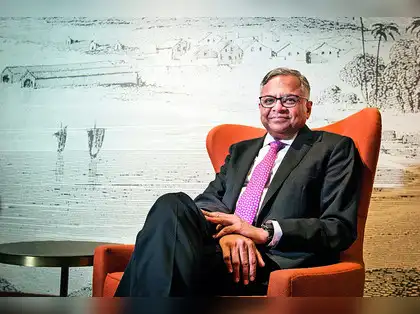
The listing question was followed by an equally consequential development inside Tata Sons. On August 12, N Chandrasekaran announced that he intended to step down as chairman when his existing term ended in February 2027.
The Tata Trusts accepted the decision and were expected to begin the process of identifying a successor. For a company already facing a regulatory decision over its future structure, the impending change at the top appeared to set up a separate succession process.
That changed on September 17.
The Tata Sons board voted 4–1 to reappoint Chandrasekaran for another five years, effectively reversing the position that had emerged after his August announcement. The directors participating in the decision included Chandrasekaran, Noel Tata, Venu Srinivasan, Saurabh Agrawal, Harish Manwani and Anita Marangoly George. Noel Tata voted against the reappointment, while the other participating directors backed the resolution.
The timing was significant. The vote came just six days after the RBI had rejected Tata Sons’ application to surrender its CIC registration and after the board had moved towards a listing. The succession question, the listing question and the regulatory question had therefore converged within a matter of days.
The decision also created a disagreement between the Tata Sons board and the Tata Trusts. The Trusts had accepted Chandrasekaran’s decision to leave and expected a succession process to follow. The board’s decision instead sought to keep him in place for another five years.
The dispute did not end with the 4–1 vote. The composition of the vote itself became the basis for the next stage of the conflict, because the two directors representing the Tata Trusts did not vote the same way.
The 1–1 Vote That Has Become A Legal Fight
The central legal issue surrounding Chandrasekaran’s reappointment is not simply the overall 4–1 board vote. It is the fact that the two Tata Trust-nominated directors split evenly.
Noel Tata voted against Chandrasekaran’s reappointment. Venu Srinivasan, the other Trust-nominated director, voted in favour. The Trusts have argued that this 1–1 split matters because Tata Sons’ Articles of Association contain a separate requirement relating to affirmative votes from directors nominated by the Tata Trusts.
The Trusts’ position is that the overall board majority cannot override that requirement. Their interpretation is that the necessary affirmative support from the Trust nominees was absent because one of the two voted against the resolution. They have also argued that the chairman’s casting vote cannot be used to cure that absence of affirmative support.
On September 20, Tata Trusts formally stated that the September 17 resolution reappointing Chandrasekaran was not validly passed and therefore had no legal effect. The Trusts also referred to Tata Sons’ Articles of Association and to the company’s earlier reliance on those Articles during the Supreme Court proceedings involving Cyrus Mistry.
The dispute has now brought senior legal figures into the matter. Abhishek Manu Singhvi is representing or advising the Tata Trusts side, while Harish Salve is advising Tata Sons. A legal opinion attributed to former Chief Justice of India D.Y. Chandrachud has reportedly supported the Trusts’ interpretation of the affirmative voting provisions, while Salve has challenged that interpretation.
The significance of the disagreement lies in the specific governance structure of Tata Sons. The Tata Trusts hold the majority of the company’s equity, but their rights under the Articles are not necessarily identical to the rights exercised by an ordinary majority shareholder. The present dispute therefore concerns how those rights operate when the two Trust nominees themselves disagree.
The issue could now move into the courts. Reports have indicated that Tata Trusts is considering legal action, with the NCLT and Bombay High Court among the possible forums depending on the route taken. The Trusts have described the resolution as void ab initio, while the validity of the board’s decision remains contested.
At the same time, the RBI has separately filed a caveat in the Bombay High Court concerning the Tata Sons listing matter. That means any legal challenge involving the regulatory decision could develop independently of the dispute over Chandrasekaran’s reappointment.
The result is two parallel areas of contention around the same company: one over Tata Sons’ regulatory status and potential listing, and another over the authority of its board and the rights attached to the Tata Trusts’ representation on it.
The SP Group Has ₹25,000 Crore Of Its Own Reasons To Care
The Shapoorji Pallonji Group brings another set of interests into the Tata Sons dispute. The group owns approximately 18.4% of Tata Sons, making it the largest shareholder outside the Tata Trusts. That stake is also one of the most valuable assets available to the SP Group as it deals with a substantial debt burden and seeks to generate liquidity.
The group’s financial position has therefore made the value and eventual monetisation of its Tata Sons holding an important issue. The SP Group had proposed unlocking at least ₹25,000 crore from its stake. The structure discussed involved Tata Sons buying a portion of the SP Group’s shares through a selective capital reduction, with the transaction proposed to take place in two tranches over 18 months.
The proposal would have allowed the SP Group to obtain significant liquidity without requiring Tata Sons itself to immediately become a publicly traded company. It also offered a potential solution to a financial problem that exists independently of the dispute between Tata Trusts and the Tata Sons board.
The situation subsequently changed. The SP Group moved towards supporting the idea of a Tata Sons public listing, which would create a transparent market valuation for its holding and potentially provide a route through which the group could monetise the stake.
The financial pressure on the SP Group is substantial. Reuters reported on September 21 that investors were offering SP Group bonds at a premium amid expectations that the group’s Tata Sons stake could eventually be monetised.
One SP Group entity had raised ₹21,350 crore through three-year zero-coupon bonds at a yield of 18.95% in July, with those bonds subsequently being offered at around 18.70–18.75%, according to bankers cited by Reuters. The report also put the SP Group’s high-interest debt at more than ₹50,000 crore.
That makes the Tata Sons stake more than a passive investment for the SP Group. Its value and liquidity are directly relevant to the group’s financial position.
The competing approaches therefore produce two different possibilities. Under the earlier proposal, Tata Sons could have provided liquidity to the SP Group through a structured purchase of part of its holding while remaining privately held. Under a public listing, the SP Group could potentially sell or otherwise monetise its shares in a market where Tata Sons would have a publicly established valuation.
The SP Group’s position consequently adds a financial dimension to the Tata Sons debate that is separate from the Tata Trusts’ concerns over governance and control. For the Trusts, the central issue is the future structure and character of Tata Sons. For the SP Group, the value locked inside its 18.4% holding has a direct relationship with its ability to manage its own financial obligations.
The Money Inside Tata Sons
The dispute over Tata Sons is also a dispute over a holding company that sits at the centre of a very large and increasingly capital-intensive business group. Tata Sons itself remains highly profitable on a standalone basis. In FY26, its profit after tax rose 21.8% to ₹31,961 crore from ₹26,232 crore in the previous year, while standalone revenue increased 9.1% to approximately ₹42,367 crore.
The picture changes considerably when the wider group of unlisted subsidiaries is considered. According to Business Standard, Tata Sons’ unlisted subsidiaries together reported a combined net loss of ₹27,854 crore in FY26, with seven of the 16 major unlisted businesses reporting losses. Some of these companies are established businesses dealing with difficult operating conditions, while others are newer ventures in which Tata Sons has been investing heavily with an expectation of future growth.
Air India accounted for the largest portion of those losses. Its net loss more than doubled to ₹22,238 crore in FY26 from ₹10,859 crore in the previous year, while revenue fell 9% to ₹71,870 crore. The airline has required substantial investment since its acquisition by the Tata Group, and its losses now represent a significant part of the financial burden carried by the wider group.
Other unlisted businesses also recorded losses.
Tata Digital reported a loss of ₹4,974 crore, Tata Electronics ₹1,611 crore, Agratas ₹1,101 crore, Tata Projects ₹891 crore, Tata Play ₹552 crore and Tata Realty and Infrastructure ₹456 crore. At the same time, some of these businesses are expanding rapidly. Tata Electronics, for example, almost doubled its revenue to ₹1.31 lakh crore, an increase of 97%, even as its loss widened from ₹70 crore to ₹1,611 crore.
These numbers reflect the different stages of the businesses sitting under the Tata umbrella. Some companies generate substantial cash and dividends, while others are consuming capital as the group builds positions in industries that require large upfront investments. Aviation, electronics, batteries and digital commerce are all areas in which Tata Sons has committed significant resources.
This is where the structure of Tata Sons becomes important. The holding company is able to receive dividends from profitable businesses and deploy capital elsewhere within the group. TCS is particularly important in this respect. Its cash generation and dividend payments provide Tata Sons with a source of funds that can be used to support businesses at different stages of development.
A restructuring of Tata Sons could therefore affect more than the legal form of the holding company. If assets were separated, businesses merged or the existing structure substantially altered, the way capital moves between the established and newer businesses could also change. The financing arrangements of companies that currently benefit from the group’s central structure would have to be considered alongside the legal and regulatory implications of any restructuring.
The financial numbers also explain why the question of Tata Sons’ future cannot be separated entirely from the future of the businesses beneath it. A public listing could create a market valuation for the holding company and provide shareholders with liquidity, while a restructuring could preserve a privately controlled structure but potentially change the way the group allocates capital. Neither option exists in isolation from the businesses Tata Sons is already funding.
The Tata Empire After Ratan Tata
The developments of the past few weeks have brought several separate interests around Tata Sons into the same frame. Tata Trusts control approximately 66% of the company and have opposed a public listing, while Noel Tata has proposed restructuring Tata Sons as an alternative.
The Tata Sons board has moved towards a listing and voted to reappoint N Chandrasekaran for another five years. The Shapoorji Pallonji Group, which owns approximately 18.4%, has its own financial reasons for wanting to unlock the value of its holding.
Above all of them sits the RBI, whose September decision has brought the listing requirement back into focus.
None of these interests is identical.
—The Trusts’ concerns centre on the ownership and governance structure of Tata Sons and the preservation of the way the Tata system operates.
—The board is dealing with the company’s regulatory obligations and the practical question of how Tata Sons responds to the RBI’s decision. Chandrasekaran’s position has become intertwined with that transition after the board reversed course on his departure.
—The SP Group has a substantial financial interest in the value and liquidity of its stake. The RBI’s concern is the regulatory status of Tata Sons as an upper-layer NBFC.
That leaves Tata Sons at the centre of several decisions that were once capable of being dealt with separately. Its regulatory status affects the listing question. The listing question affects the interests of its shareholders. The ownership structure affects governance. Governance affects the question of who leads the company. And the structure of the holding company affects how capital moves through the businesses beneath it.
This is also where the absence of Ratan Tata becomes part of the story again.
The question at the end of all this is therefore larger than whether Tata Sons eventually lists in February 2027 or remains privately held through some form of restructuring.
It is whether the Tata Group can preserve the same balance between ownership, professional management, philanthropy, capital allocation and institutional identity after the departure of the man who, for decades, represented the centre of that balance.
Ratan Tata held the empire together for a very long time. The institutions he left behind now have to decide what holding it together actually means.