Anthropic’s ₹7 Crore Lobbying Payment In Washington To India’s Electoral Bonds, The Revolving Door Of Money And Power And How Lobbyists, Billionaire Business Houses And Political Funding Are Reshaping Democracies
At what point does corporate power become so intertwined with political power that policymaking in the public interest becomes difficult to distinguish from decisions serving private interests? From Anthropic's lobbying in Washington to India's electoral-bond controversy, the growing influence of corporate money raises urgent questions about who shapes democratic decisions.

The growing influence of corporate money over political decision-making in the United States has come under scrutiny after artificial intelligence company Anthropic reportedly paid $740,000 (approximately ₹7 crore) to Washington-based lobbying firm Continental Strategy LLC.
What makes the disclosure particularly interesting is the firm’s political connections, including Alberto Martinez, its Washington managing partner and a former chief of staff to US Secretary of State Marco Rubio. Federal lobbying disclosures show that Martinez was among the registered lobbyists working on Anthropic’s account, with the firm identifying AI development and national security as areas of its lobbying activity.
The disclosures, which cover multiple quarterly reporting periods beginning in 2025, also identify government offices approached by the firm, including the Treasury Department, Commerce Department, Executive Office of the President and, in relevant reporting periods, the National Security Council and State Department.
The NSC is particularly significant given its role in coordinating national security policy at the White House. The filings establish that these offices were listed as lobbying targets, although they do not identify individual officials contacted or establish that Rubio personally participated in any discussions involving Anthropic.
The development raises questions about the growing importance of political access for companies operating in strategically sensitive industries such as artificial intelligence, where government decisions concerning national security, technology exports, defence applications and regulation can have enormous commercial consequences.
For Anthropic, the engagement comes at a time when the company is facing an increasingly complicated relationship with the US government over how its AI technology can be deployed.
From Ballard Partners To The White House, Anthropic’s Expanding Network Of Political Connections
Continental Strategy was not the only politically connected lobbying firm engaged by Anthropic. The AI company also hired Ballard Partners, a Washington lobbying powerhouse founded by Republican fundraiser Brian Ballard, which reportedly received $890,000 (approximately ₹7.8 crore) for its work on the company’s behalf.
The engagement is particularly noteworthy because Anthropic hired the firm on March 9, 2026, just four days after the Pentagon designated it a supply-chain risk to US national security, according to the disclosures and subsequent reporting.
Ballard Partners has a history of operating close to the Republican political establishment. Susie Wiles, who served as Donald Trump’s White House chief of staff, previously worked at the firm as a managing partner for nearly a decade before leaving in 2019.
Another prominent figure associated with the firm is Micah Ketchel, a lobbyist on Anthropic’s account who previously served as chief of staff to Congressman Mike Waltz, a special assistant to President Trump and a senior adviser to the National Security Adviser.
The firm’s third-quarter 2026 disclosure also listed Amaryllis Fox Kennedy, whose previous positions included service as a CIA officer and Deputy Director of National Intelligence.
The government offices identified in Ballard’s lobbying disclosures are equally significant. Its initial engagement involved the White House Office and the Executive Office of the President, while subsequent filings added the National Security Council.
By the July–September 2026 reporting period, the firm had also listed the Department of Defense and the Office of the Director of National Intelligence, alongside the White House and both chambers of Congress. Its stated lobbying brief had expanded to include advocacy concerning US policy on artificial intelligence.
Taken together, the engagements with Continental Strategy and Ballard Partners represent $1.63 million (approximately ₹14 crore) in reported lobbying income since April 2025.
The significance lies not merely in the money involved, but in the concentration of political and national security experience among the people representing the company.
Both firms brought individuals with previous government positions and established connections to the Washington policy establishment into Anthropic’s lobbying efforts. While the disclosures do not establish that these connections translated into favourable government decisions, they illustrate how companies increasingly rely on people who understand the workings of government and have experience operating close to its centres of power.
What Was Anthropic Actually Lobbying For? AI Regulation, Defence, Export Controls And National Security
Behind Anthropic’s growing expenditure on political lobbying lies a range of policy decisions that could directly influence the future of the artificial intelligence industry, from the development of advanced AI models and their military applications to semiconductor exports, data-centre infrastructure and the government’s ability to regulate powerful technology companies.
The company’s federal lobbying disclosures reveal that its engagement with Washington was not restricted to general discussions about artificial intelligence. It extended to specific pieces of legislation concerning export controls, national security, energy costs and the commercial deployment of AI.
Anthropic’s third-quarter 2026 lobbying disclosure, filed on October 20, reported $2.11 million in in-house lobbying expenses for the July–September period. Among the legislative proposals identified in the filing were the AI OVERWATCH Act, the MATCH Act, the Chip Security Act and the National Defense Authorization Act for Fiscal Year 2027.
The filing also identified the Ratepayer Protection Act, which contains provisions concerning artificial intelligence, data centres and energy, alongside legislation dealing with cybersecurity, online safety and biosecurity.
The legislation is particularly relevant because it touches several commercially sensitive areas of the AI business. The AI OVERWATCH Act and MATCH Act, for instance, involve provisions concerning export controls and the distillation of AI models.
Export controls determine the conditions under which advanced computing hardware and certain technologies can be transferred across international borders. For companies developing frontier AI systems, access to advanced chips and computing infrastructure is essential to training and operating increasingly sophisticated models. Restrictions in this area can therefore affect the cost, availability and international competitiveness of AI technology.
The Chip Security Act adds another dimension to the debate by bringing advanced semiconductor technology and its security implications into the legislative discussion.
Meanwhile, the National Defense Authorization Act is an important annual defence legislation package through which Congress authorises funding and establishes policies governing the US military. Its AI-related provisions matter to companies such as Anthropic because the federal government’s defence and national security requirements could become significant markets for advanced AI systems.
The Ratepayer Protection Act, meanwhile, draws attention to a different but increasingly contentious aspect of the AI expansion: the enormous energy requirements of data centres.
As technology companies invest billions in computing infrastructure, questions concerning electricity consumption, grid capacity and the allocation of energy costs between data-centre operators and ordinary consumers have become increasingly important. These are not merely technical questions. They could influence the economics of AI development and determine how much of the infrastructure burden is ultimately borne by businesses, utilities and the public.
Taken together, the disclosures show why lobbying has become an important part of the AI industry’s engagement with Washington.
Decisions concerning semiconductor access, export restrictions, military procurement, data-centre energy costs and AI oversight can influence which companies are able to develop advanced systems, how they compete internationally and how much freedom they have to deploy their products.
Anthropic’s filings establish that these subjects formed part of its lobbying agenda, although they do not disclose the company’s preferred position on every individual legislative provision or establish that its lobbying changed the outcome of any proposed legislation.
Anthropic’s Lobbying Expenditure Surges As The AI Industry Races To Influence Washington
Anthropic’s engagement with Washington is part of a much larger spending trend across the artificial intelligence industry, where companies that have spent years competing to build increasingly powerful AI systems are now investing heavily in influencing the political and regulatory environment in which those systems will operate.
The scale of this activity becomes clearer when Anthropic’s expenditure is examined alongside that of OpenAI and Nvidia, two other major players whose commercial interests are closely tied to the future of AI regulation, computing infrastructure and advanced semiconductor technology.
According to Anthropic’s federal lobbying disclosures, the company reported $1.04 million in in-house lobbying expenditure in 2024, followed by approximately $3.13 million in 2025. Its expenditure for the first three quarters of 2026 had already reached approximately $5.64 million, including $2.11 million in the July–September quarter alone.
The third-quarter figure was more than double the approximately $1.01 million reported for the corresponding period in 2025. These figures relate to Anthropic’s own reported lobbying expenses and should be distinguished from payments separately reported as income by its outside lobbying firms.
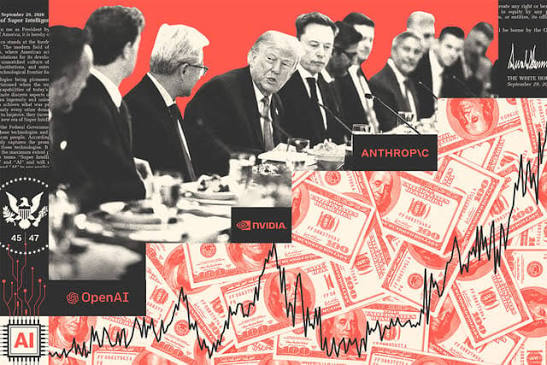
The increase is not limited to Anthropic. An investigation by the Project On Government Oversight (POGO), published on October 21, 2026, found that Anthropic, OpenAI and Nvidia collectively spent approximately $7.5 million on federal lobbying during the third quarter of 2026. This represented a 23% increase over the preceding quarter and a 61% increase compared with the same period in 2025.
Their combined federal lobbying expenditure since the beginning of 2024 had reached approximately $37 million, with nearly half of that amount spent during 2026 alone.
The individual figures are equally revealing. During the July–September 2026 quarter, Nvidia spent approximately $2.2 million on federal lobbying, Anthropic reported $2.11 million, while OpenAI spent approximately $1.5 million.
All three companies recorded their highest-ever quarterly lobbying expenditures, according to federal disclosures reviewed by The Verge. Their respective lobbying agendas covered issues ranging from AI safety oversight and export controls to copyright, competition policy, cybersecurity and data-centre infrastructure.
The increase comes at a time when the rapid expansion of artificial intelligence is generating concerns across several sections of American society. These include the possibility of widespread job displacement, the environmental consequences of energy-intensive data centres, rising electricity costs, the concentration of computing infrastructure among a handful of technology companies and the risks associated with increasingly powerful AI systems.
POGO’s investigation noted that these concerns have attracted criticism from both political parties, members of the public and even individuals within the technology industry itself.
The growing lobbying expenditure therefore points to an important development in the relationship between the technology industry and government. AI companies are no longer simply developing products and competing for customers; they are also engaging with lawmakers and government agencies over the rules that will determine how their businesses operate.
The same companies whose products may be subject to future regulation are spending substantial sums to participate in shaping that regulatory environment.
This does not, by itself, establish that the companies are exercising improper influence or that their spending has secured favourable legislation. However, it raises an important question about the balance of influence in policymaking.
When a handful of companies possess the financial resources, technical expertise and political access to maintain a continuous presence in legislative discussions, how effectively can the interests of workers, consumers, smaller businesses and the wider public compete for the same attention?
The Pentagon Dispute, Anthropic’s AI Safety Principles And The Contradictions Behind Its Washington Strategy
Anthropic’s growing engagement with Washington becomes particularly interesting when examined alongside its increasingly contentious relationship with the US Department of Defense.
The company, which has positioned itself as a developer of safer and more responsibly deployed artificial intelligence, found itself at the centre of a major confrontation with the Trump administration in February 2026 over the military’s proposed use of its AI systems.
At the heart of the dispute were two restrictions Anthropic was unwilling to remove: prohibitions on using its technology for mass domestic surveillance and fully autonomous weapons systems.
The disagreement escalated on February 27, 2026, when President Donald Trump directed federal agencies to immediately cease using Anthropic’s technology. Defence Secretary Pete Hegseth subsequently moved to designate the company a supply-chain risk to US national security, with the Pentagon seeking to remove its technology from military systems and restrict defence contractors and suppliers from conducting business with it.
On March 4, Anthropic received formal notification of the designation. The following day, chief executive Dario Amodei said the company would challenge the decision in court, arguing that the government’s action was legally unsound.
The disagreement was rooted in a fundamental difference over who should determine the permissible uses of powerful AI systems. Anthropic maintained that its technology should not be used for mass domestic surveillance or fully autonomous weapons that select and engage targets without human involvement.
The Pentagon, however, argued that the military should be able to use AI for all lawful purposes and that restrictions imposed by a private technology supplier could interfere with national security requirements. The dispute was therefore not simply about a commercial contract. It raised a much larger question about whether private AI companies should retain the ability to impose limits on how governments use their technology, particularly in military operations.
The legal battle subsequently produced competing judicial outcomes. On August 27, 2026, a federal district court in California ruled in Anthropic’s favour, finding that the government’s supply-chain designation under one statutory framework was unlawful and that the challenged actions violated the company’s constitutional rights.
The court vacated the designation and restrained the government from enforcing the associated directives. However, the legal position became more complicated on September 25, when a three-judge panel of the US Court of Appeals for the DC Circuit upheld a separate Pentagon procurement exclusion under another federal law.
The majority accepted the government’s argument that restrictions embedded in Claude could create a supply-chain security risk for military systems. Anthropic subsequently sought a rehearing of the appellate ruling on October 13, arguing that the law had been misapplied and that the designation amounted to retaliation for its position on AI safety.
The confrontation exposes an important contradiction in the relationship between the technology industry and the state. Anthropic’s position is that powerful AI systems require safeguards against certain uses, even when those uses are proposed by government customers.
At the same time, the company is investing millions of dollars in lobbying over legislation, national security policy, export controls and government procurement. Its commercial interests are inevitably connected to the same policy decisions that could determine the future of its products and its access to government contracts.
There is, however, a distinction worth making. Lobbying for a regulatory framework that protects AI safety does not automatically contradict a company’s stated principles. Nor does a disagreement with the Pentagon establish that its position is free of commercial considerations.
The more important question is how governments balance national security requirements, the commercial interests of technology suppliers and the public interest in ensuring that powerful AI systems are deployed responsibly. When the companies developing these systems also become influential participants in shaping the rules governing them, the need for independent oversight becomes even more significant.
When Corporate Money Meets Political Power, Where Does Public Interest End And Private Interest Begin?
The Anthropic episode raises a question that extends well beyond artificial intelligence or the politics of Washington. Across modern democracies, the relationship between large corporations and political establishments is becoming increasingly consequential, with businesses seeking greater access to policymakers while governments depend on private enterprises for investment, technology, infrastructure, employment and economic growth.
The relationship is not inherently improper. Corporations have legitimate reasons to engage with governments, communicate regulatory concerns and participate in discussions concerning policies that affect their industries. The problem emerges when financial resources and political connections begin translating into disproportionate influence over decisions that are supposed to serve the wider public.
At the heart of this relationship are three interconnected forms of power: financial resources, political access and regulatory influence.
Large corporations possess the money to employ lobbying firms, retain former government officials, hire legal advisers and maintain a continuous presence in legislative discussions.
Political establishments, meanwhile, make decisions concerning taxation, public procurement, infrastructure contracts, defence spending, industrial policy, market access and regulatory permissions that can significantly affect the commercial fortunes of these businesses. When the two sides become increasingly dependent on each other, the possibility of competing interests becomes difficult to ignore.
The concern is particularly significant because governments are not merely participants in the markets in which corporations operate; they are also responsible for regulating those markets, protecting consumers, maintaining competition and ensuring that public resources are used responsibly.
A government deciding how to regulate artificial intelligence, award defence contracts, allocate infrastructure projects or structure energy policy must consider consequences extending beyond the profitability of individual companies.
Yet, when businesses with enormous financial resources enjoy sustained access to the institutions responsible for making these decisions, questions inevitably arise about whether all stakeholders have an equal opportunity to be heard.
This is where the distinction between corporate participation and corporate influence becomes important. A company presenting technical evidence to lawmakers or explaining the commercial consequences of a proposed regulation is participating in the policymaking process. However, when privileged access, financial relationships and political connections become concentrated among a relatively small group of powerful businesses, the process risks becoming less responsive to the wider public.
The concern is not necessarily that a specific decision has been purchased or that an explicit exchange of favours has taken place. It is that a system can gradually develop in which the interests of those with the greatest resources receive more sustained attention than those of citizens who have no comparable access.
The consequences can extend far beyond individual policy decisions. If governments become excessively dependent on the industries they are supposed to regulate, the independence of regulatory institutions can come under pressure.
Policies intended to promote competition could inadvertently strengthen established players, public contracts could become concentrated among a limited number of businesses, and the costs of commercial expansion could increasingly be transferred to taxpayers and consumers.
This is particularly consequential in industries such as artificial intelligence, defence, telecommunications, banking and infrastructure, where government decisions can shape markets for decades.
The issue, therefore, is not whether corporations should have a voice in policymaking. It is whether their financial strength and political relationships should allow them to exercise an influence that ordinary citizens, smaller businesses and public-interest organisations cannot realistically match.
A democracy can permit businesses to participate in political and regulatory discussions while still insisting on transparency, accountability and independent oversight. The challenge begins when the distance between those who govern and those who stand to profit from government decisions becomes increasingly difficult to establish.
And this is not simply an American concern. India has experienced its own intense debate over the relationship between corporate wealth, political funding and access to the political establishment. The electoral-bond controversy, particularly the disclosures involving companies linked to some of the country’s largest business groups, offers an important case study of how the flow of corporate money into politics can raise questions about transparency, accountability and the public’s right to know.
The Revolving Door Between Governments And Corporations, How Political Connections Become An Instrument Of Influence
The revolving door refers to the movement of people between government positions and private-sector roles, including corporations, lobbying firms and industry associations. Former officials bring with them an understanding of government institutions, regulatory processes and political networks, making their experience commercially valuable to businesses seeking access to policymakers.
The practice is not inherently improper. Governments benefit from technical expertise, and companies have legitimate reasons to hire people familiar with public policy. The concern arises when professional relationships translate into privileged access or when private interests begin influencing public responsibilities.
In Washington, lobbying firms frequently recruit former officials and political advisers who understand how government departments operate and how policy decisions are shaped. Although US law, particularly Section 207 of Title 18, restricts certain post-government lobbying activities, it does not prevent former officials from joining private companies or advisory firms altogether.
Anthropic’s hiring of politically connected lobbying firms illustrates why such experience matters. These connections do not prove preferential treatment or improper conduct, but they demonstrate how political networks can become valuable corporate assets. The deeper concern is whether the prospect of lucrative private-sector employment can influence officials even while they remain in public office. Without adequate safeguards, the revolving door risks blurring the boundary between public duty and private advantage.
Who Gets Heard In A Democracy, Corporations With Millions To Spend Or Ordinary Citizens?
In theory, democracy gives every citizen an equal political voice. In practice, the ability to remain heard between elections is far from equal.
Large corporations can afford government-relations teams, lawyers, researchers and lobbyists to track legislation, commission studies and cultivate policymakers. Ordinary citizens, small businesses and communities rarely have comparable resources, even when decisions affect workers, consumers and residents living near energy-intensive data centres.
Journalism, courts, trade unions and public campaigns can influence governments, but they require time and coordination. The imbalance is especially important in artificial intelligence, where companies provide expertise while also seeking to influence rules on safety, copyright, competition and defence applications.
The Revolving Door And Regulatory Capture
The revolving door describes the movement of people between public office and private-sector roles, including corporations and lobbying firms. Former officials bring knowledge of government institutions, regulatory processes and political networks, making their experience valuable to businesses seeking access to policymakers.
The practice is not inherently improper: governments need expertise, and companies can hire people familiar with public policy. The concern is privileged access or conflicts between public responsibilities and private interests. US law, including Section 207 of Title 18, restricts certain post-government lobbying activities but does not bar former officials from joining private firms.
Regulatory capture occurs when an institution begins serving the industry it oversees rather than the public. It can develop through dependence on industry expertise, close relationships, favourable exemptions or weak enforcement. Governments need private investment, but cooperation can become dependence. Transparency around lobbying and conflicts of interest is essential.
India’s Electoral Bonds And Corporate Political Funding
India’s electoral-bond controversy exposed another dimension of the relationship between corporate wealth and political power. Introduced in 2018, the scheme allowed individuals and companies to purchase bonds through the State Bank of India and donate them to eligible political parties.
SBI recorded purchasers’ identities through KYC procedures, but the information was not made public. Political parties were not required to disclose the identities of donors who contributed through the bonds.
Presented as a way to formalise donations, the scheme followed amendments in the Finance Act, 2017 that removed the corporate contribution ceiling, allowing even loss-making companies to donate.
On February 15, 2024, a five-judge Constitution Bench in Association for Democratic Reforms v. Union of India struck down the scheme. It held that withholding political-funding information violated voters’ right to information under Article 19(1)(a), and that removing the cap on corporate contributions was arbitrary and violated Article 14. The Court directed SBI to stop issuing bonds and disclose purchaser and encashment details.
Between April 2019 and February 2024, the BJP encashed bonds worth approximately ₹6,061 crore, while the Trinamool Congress and Congress received approximately ₹1,609 crore and ₹1,421 crore, respectively. The largest 20 donors accounted for close to ₹5,830 crore, or around 48 per cent of total purchases. These figures do not prove an exchange of donations for policy decisions, but reveal political funding voters had been unable to scrutinise.
The Ambani And Adani-Linked Companies
Among the largest purchasers was Qwik Supply Chain Private Limited, which bought electoral bonds worth ₹410 crore. An investigation by Newslaundry, Scroll and The News Minute reported that one director, Tapas Mitra, also held directorships in several Reliance-linked companies and that his LinkedIn profile identified him as head of accounts (consolidation) at Reliance Industries.
Qwik bought bonds worth ₹225 crore on January 5, 2022, and another ₹10 crore on January 10. On January 14, Reuters reported that Reliance had submitted a bid under the Centre’s battery-cell manufacturing incentive programme. Reliance later won the tender alongside Ola Electric. This sequence does not establish that the bond purchases were connected to the tender or influenced its outcome.
Reliance Industries itself did not appear on the purchaser list. It disputed the characterisation of Qwik Supply Chain as a Reliance group entity, telling Scroll that it was not a subsidiary of any Reliance entity. The ₹410 crore therefore belongs to Qwik Supply Chain, not Reliance Industries.
The disclosures also identified four companies with reported links to the Adani business network that together bought bonds worth ₹55.4 crore. Welspun Enterprises purchased ₹13 crore, Welspun Corporation ₹27 crore and Welspun Living ₹15 crore. ABC India Limited bought another ₹40 lakh.
The reported connections were indirect: a joint venture in which Adani Enterprises held 65 per cent and Welspun 35 per cent, and a 1.2 per cent ABC India stake held by Adani Properties until December 2023.
Of the Welspun companies’ ₹55 crore, ₹42 crore was encashed by the BJP, ₹8 crore by the Congress and ₹5 crore by the Bharat Rashtra Samithi. ABC India’s ₹40 lakh contribution was encashed by the BJP. The Adani Group denied purchasing electoral bonds, directly or indirectly, for political donations. These disclosures establish purchases by companies with reported business links; they do not prove that Gautam Adani or an Adani Group company directed the donations or received government favours in return.
Who Ultimately Governs?
One involves disclosed efforts to influence government; the other concealed political donors from the public. Yet both underline the importance of asking who gets access to decision-makers, whose interests are represented and how citizens can hold those exercising power accountable.
Corporate participation in policymaking is legitimate. Governments need investment, expertise and commercial partners. The danger arises when financial strength translates into disproportionate influence, regulators become dependent on the industries they oversee, or political funding is hidden from voters.
The consequences can include weaker competition, inadequate safeguards and costs passed to taxpayers and workers. That is why independent regulators, transparent political funding and public scrutiny matter.
A democracy is not measured only by whether citizens can vote. When the boundary between corporate advantage and public welfare becomes difficult to distinguish, the question is whether the government remains independent enough to govern in the public interest.