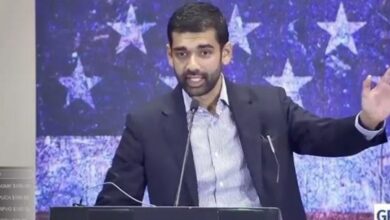
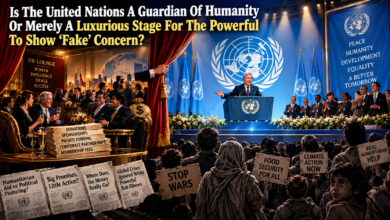
Gaurav Srivastava Case: How Fake Intelligence Connections, Political Access, And Billion-Dollar Defence Deals Have Created A New Breed Of International Conmen?
How does an unproven businessman end up in the room where a $14 billion fighter jet deal is discussed?

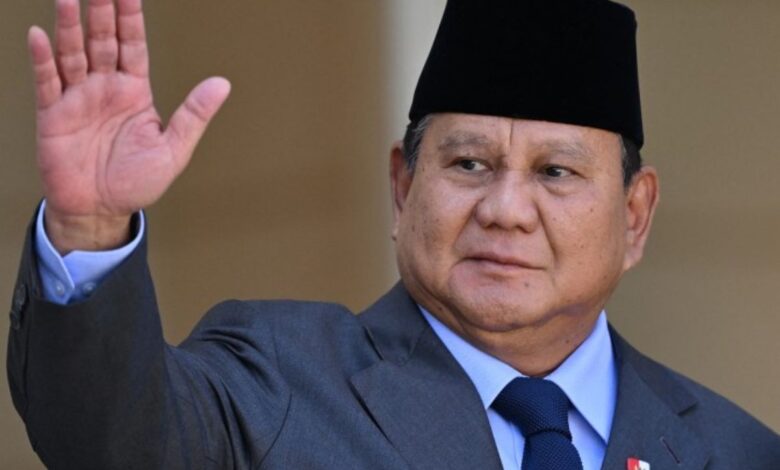
A question is sitting at the center of a recent investigation by the Organized Crime and Corruption Reporting Project (OCCRP), published with Indonesian outlet Tempo. It tells the story of Gaurav Srivastava, an American businessman who allegedly presented himself as a CIA operative while cultivating a relationship with Indonesia’s president, Prabowo Subianto, and his brother, Hashim Djojohadikusumo.
According to the reporting, Srivastava joined Prabowo, then Indonesia’s defense minister, at meetings in Washington and Jakarta in 2020, and over the following two years, companies he controlled secured five preliminary agreements tied to tens of billions of dollars in proposed defense purchases, including F-15 fighter jets, Black Hawk helicopters, C-130 transport planes, and a command-and-control center. None of it turned into an actual sale. The companies involved, it turned out, had no track record in defense procurement, and all were later deregistered for failing to pay taxes.
Gaurav Srivastava denies posing as a CIA agent, calling the allegation a fabrication pushed by a former business partner, Niels Troost, who is suing him in the United States. The claims remain contested in ongoing litigation, and nothing here should be read as a final verdict on any individual’s guilt.
But strip away the specifics of one case, and a familiar shape emerges, one that has repeated itself across capitals, continents, and decades. It is the shape of a man who sells access rather than a product, credibility rather than a manufactured good, and mystique rather than a verifiable résumé. The pattern recurs so often, in so many countries, that it deserves to be treated not as an isolated fraud but as a structural feature of how modern power actually works.
This is the deeper story: the biggest currency in geopolitics today may not be money, oil, or weapons. It may be perceived access to power, and there is a thriving, largely unregulated global market in manufacturing that perception.
Intelligence Agencies Have Become the World’s Most Powerful Brand
Few phrases open doors faster than “I work with the CIA.” The same is true, to varying degrees, of MI6, Mossad, the DGSE, Pakistan’s ISI, or Russia’s FSB. These organizations have accumulated a kind of mythology that operates independently of what they actually do day to day. Popular culture, decades of leaks, and a steady diet of spy fiction have turned them into shorthand for omniscience: the assumption that anyone connected to them has access to information ordinary people cannot get, protection that ordinary rules cannot touch, and a government’s tacit backing behind whatever they are proposing.
That mythology is precisely what makes the claim so useful to exploit. A person who says they represent an intelligence agency is, in effect, asking their counterpart not to verify them, because verification is supposedly impossible, classified, or beside the point. The claim short-circuits the normal instinct to ask for proof. It reframes due diligence itself as a faux pas, even a security risk. Suggesting that someone might be lying about a CIA connection can feel, to a nervous official or an eager businessman, like a diplomatic gaffe rather than prudence. That asymmetry — where skepticism carries a social cost and credulity does not — is the soil in which this kind of fraud grows.
Selling Access Is More Valuable Than Selling Products
Traditional business sells something concrete: an aircraft, a weapons system, a service. The influence economy sells something far more abstract, and often far more lucrative — an introduction, a meeting with the right minister, a “confidential” briefing, a channel into a closed decision-making process. In many international deals, particularly ones with governments, the actual manufacturer is almost incidental to the negotiation. What is actually being purchased, at least at the early stages, is the promise of proximity: the guarantee that someone can get a proposal in front of the person who signs.
This is why, in case after case around the world, the person who ends up brokering a multi-billion-dollar arrangement is not an engineer or an executive from the manufacturing company, but an intermediary whose only visible asset is a network of contacts and a reputation, sometimes real, sometimes invented, for having connections that others don’t. Influence, in other words, can be worth more than the product it is theoretically enabling, because influence is what gets a proposal past the front door in the first place.
Why Defence Procurement Is the Perfect Hunting Ground
Defense deals are uniquely suited to this kind of operator, for a set of structural reasons that have nothing to do with any individual’s honesty.
First, confidentiality is built into the system. National security procurement is, almost by design, opaque — negotiations happen behind closed doors, contract terms are classified, and even legislators may have limited visibility into what is being discussed. That opacity, necessary for legitimate security reasons, also happens to be an ideal environment for someone who wants to exaggerate or fabricate their role.
Second, the deals are enormous and multi-year, which means they invite layers of consultants, brokers, and go-betweens long before an actual contract is signed. Major manufacturers — Lockheed Martin, Boeing, Dassault, Saab, Rafael, and others — routinely rely on local agents, retired officials, and regional fixers to navigate a foreign government’s political terrain, cultural expectations, and procurement bureaucracy. This is not inherently improper; it is how a lot of legitimate defense diplomacy happens. But it also means that governments become accustomed to dealing with intermediaries who are not themselves manufacturers, which lowers the threshold of surprise when yet another intermediary — one without any real credentials — shows up claiming to represent a deal.
Third, urgency and prestige compound the problem. Governments want to appear capable of securing advanced military hardware; officials want credit for landing a marquee deal; and the sheer scale of the numbers involved (tens of billions of dollars, in Indonesia’s case) creates pressure to move quickly rather than cautiously. Preliminary paperwork — a letter of intent, a memorandum of understanding — can be signed with far less scrutiny than a final contract, and yet it can still generate exactly the kind of photograph, press release, and political capital that a well-positioned intermediary needs.
Shell Companies and the Machinery of Prestige
One of the more striking details in the OCCRP investigation is how little corporate substance actually stood behind the deals under discussion. The companies involved reportedly had no defense-industry track record and were later deregistered for failing to pay taxes, yet they had, at various points, secured letters of intent tied to major weapons platforms.
This is a familiar template in influence fraud more broadly. A shell company, a mailbox address, or a hastily assembled consultancy can look, on paper and on a polished website, indistinguishable from a serious defense contractor. A registered entity, an official-sounding name, a professionally designed homepage, and a handful of high-resolution photographs at embassy functions or ministerial meetings can create an impression of legitimacy that outpaces any actual audit of the company’s finances, staff, or history. Corporate registration is cheap and fast in many jurisdictions; credibility built from appearances is even cheaper. The gap between the two is where this kind of fraud lives.
Why Powerful People Also Get Fooled
It would be comforting to think that presidents, ministers, and seasoned executives are simply too sophisticated to fall for this. The evidence suggests otherwise, and the reasons are more psychological than they are about anyone’s intelligence.
Authority bias makes people extend more trust to anyone who appears to carry institutional weight — a claimed government or intelligence affiliation activates this instinct almost automatically. The halo effect means that once someone is seen as credible in one respect (say, wealthy, well-connected, photographed with dignitaries), observers tend to assume competence and honesty in unrelated respects too. Social proof compounds this: once a handful of respected people appear to vouch for someone, or appear in photographs alongside them, others assume the vetting has already been done by somebody else.
Fear of missing out matters especially in high-stakes, fast-moving deals, where the anxiety of losing a marquee opportunity to a rival can outweigh the more mundane instinct to slow down and verify. And in defense and national-security contexts specifically, there is an added layer: officials may feel that questioning someone’s claimed intelligence ties is itself risky, either because it might offend a genuinely connected person or because it strays into territory they feel unqualified to challenge.
Underlying all of this is a simpler, structural truth: powerful people are extremely busy, and busy people routinely outsource trust. They rely on the judgment of aides, the reputations conferred by prior meetings, and the assumption that someone else — a ministry, an embassy, a previous counterpart — has already done the vetting. When everyone assumes someone else checked, no one actually does.
The Billion-Dollar Business of Influence Brokers
None of this means that all intermediaries are frauds. Lobbying, government relations, and strategic advisory work are legitimate, longstanding industries. Washington is full of former diplomats, retired generals, and registered lobbyists who work within legal frameworks — disclosure requirements, registered foreign agent status, formal contracts — to help companies and governments navigate each other. Many of these professionals never claim credentials they don’t have, and their value lies precisely in real relationships built over genuine careers.
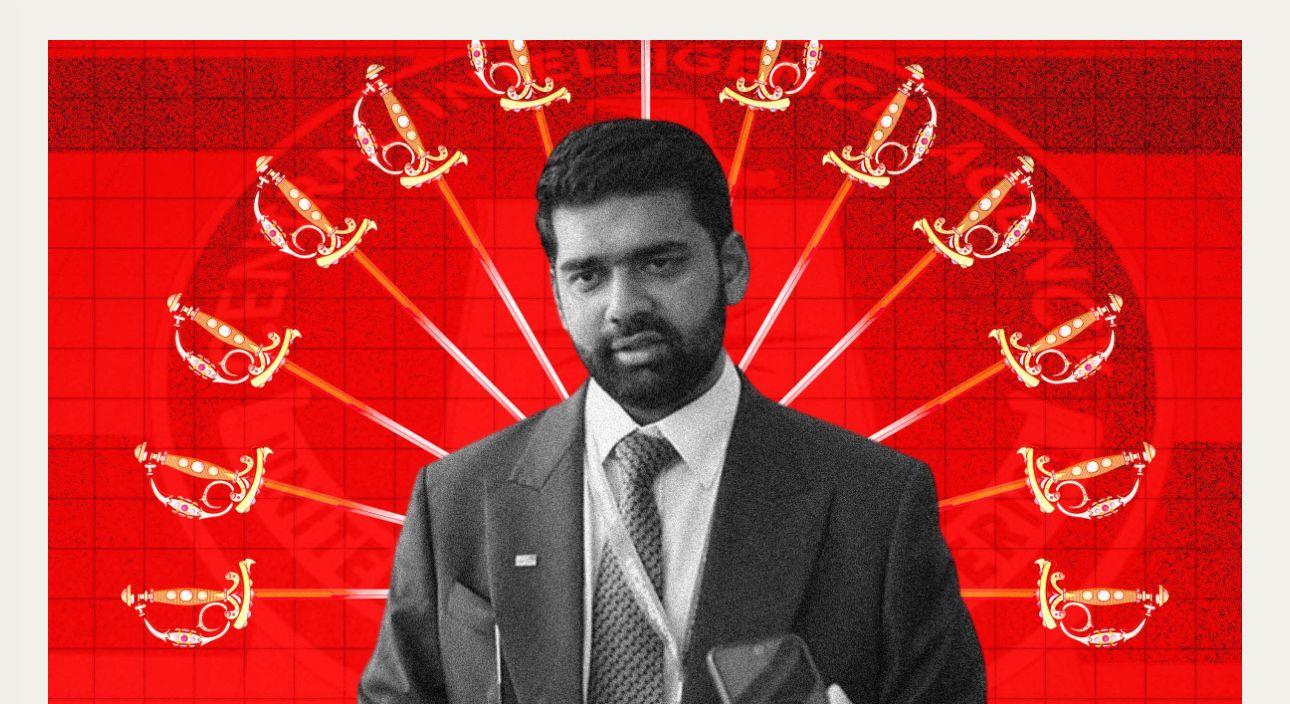
The line that matters is not between “insiders” and “outsiders,” but between disclosed, verifiable influence and fabricated or misrepresented influence. Legal lobbying operates in daylight: registered, disclosed, and open to scrutiny. Illegal influence peddling typically involves concealment — undisclosed payments, hidden foreign principals, or claims of official authority that don’t exist. And outright fraud goes a step further, inventing not just influence but a fictional identity or affiliation altogether, as the allegations against Srivastava describe. The existence of legitimate lobbying is, if anything, part of what makes the illegitimate version easier to pull off: the fraudulent operator can point to the existence of an entire respectable industry of well-connected consultants and ask, in effect, “why would I be any different?”
Historical Echoes
The Gaurav Srivastava case, whatever its ultimate legal resolution, sits within a much longer history of people monetizing real or invented access to power — though each of the following cases involves distinct facts, allegations, and legal outcomes, and none should be read as directly equivalent to the Indonesian episode.
Saudi arms dealer Adnan Khashoggi built an empire in the mid-20th century largely on his ability to broker relationships between Western defense contractors and Middle Eastern governments, becoming, for a time, one of the wealthiest men in the world simply by standing in the middle of transactions. Viktor Bout, the Russian arms trafficker whose story inspired the film Lord of War, built a logistics network that thrived on the same murky zone between legitimate government contracting and outright arms trafficking.
Anna Chapman, part of a Russian sleeper-agent network exposed in the United States in 2010, showed how intelligence mystique itself, the glamor and secrecy associated with espionage, can be weaponized for entirely different purposes, from information gathering to reputation building. Frank Abagnale, whose exploits were dramatized in Catch Me If You Can, built a career in the 1970s on fabricating professional identities, of a pilot, a doctor, a lawyer, showing how media platforms, publishers, and public relations can substitute for actual historic records in the eyes of people who have no easy way to check.
And the Iran-Contra affair of the 1980s demonstrated how intermediaries claiming intelligence-linked credentials can insert themselves into genuinely covert, high-stakes state operations, blurring the line between authorized channels and freelance operators.
What connects these otherwise very different stories is not criminal method but a shared insight: proximity to power is itself a tradable commodity, and the market for it rewards confidence and connections far more than it rewards verifiable qualifications.
The Role of Media and Public Relations
In the internet era, the tools for manufacturing this kind of credibility have become cheaper and more effective. A LinkedIn profile, a professionally built personal website, and a folder of photographs from conferences, embassy receptions, and VIP dinners can now do the work that once required years of actual relationship-building.
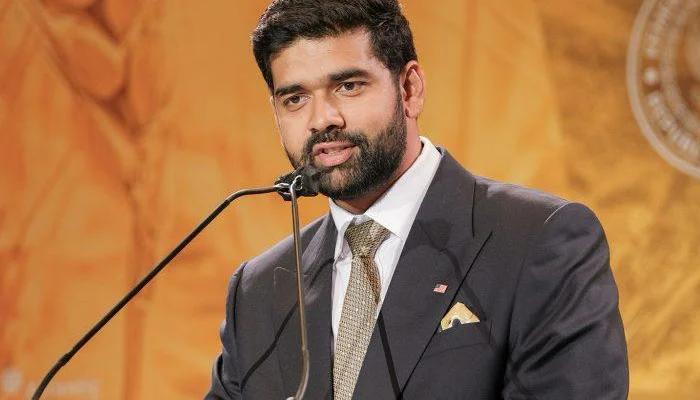
A single photograph standing beside a minister or a president — regardless of the actual substance of that encounter — can be repurposed, captioned, and circulated in ways that imply an endorsement or a working relationship that never existed. In the Indonesian case, images of Gaurav Srivastava alongside Prabowo at official functions became part of the visual language of his claimed legitimacy, reinforcing precisely the kind of impression that made further access easier to obtain.
This is not unique to fraud; it is how modern reputation management works generally, for legitimate consultants and con artists alike. The problem is that the visual evidence of proximity is trivially easy to produce and nearly impossible, from the outside, to distinguish from the real thing.
Why Governments Must Improve Due Diligence
If the psychology and the business model are both well understood, the reform path is at least conceptually clear, even if politically difficult.
Governments and state-owned enterprises engaging in high-value procurement need robust beneficial-ownership verification — knowing not just the name on a company’s letterhead but who actually owns and controls it, and for how long that entity has existed. They need financial intelligence checks that can flag shell companies, recent deregistrations, and unpaid tax histories before those companies are allowed anywhere near a letter of intent.
They need conflict-of-interest screening that looks beyond the individual signing a document to the networks and family relationships around them. National security vetting needs to extend to the intermediaries brokering a deal, not just the end recipients of military hardware. And crucially, procurement processes benefit from independent audit functions — bodies empowered to ask uncomfortable questions before a preliminary agreement becomes a press conference, rather than after a deal collapses and journalists start asking why it was ever signed.
None of this eliminates risk entirely, and legitimate intermediaries will always play a role in defense diplomacy. But institutional friction — the requirement to actually prove who you are and what you’ve done before you’re allowed into the room — is the only real check on a business model built entirely on the assumption that no one will ask.
Conclusion: The World’s Most Valuable, Most Dangerous Currency
Modern geopolitics has produced a commodity that doesn’t show up in trade statistics. It isn’t oil. It isn’t weapons systems. It isn’t proprietary technology. It is access — or, more precisely, the perception of access.
Whoever can convince the world that they possess a secret channel into an intelligence agency, a head of state, or a defense ministry may find that doors open long before anyone thinks to ask for proof. By the time due diligence catches up — if it ever does — preliminary agreements have already been signed, photographs have already been taken, and reputations, both real and manufactured, have already hardened into fact in the public mind.
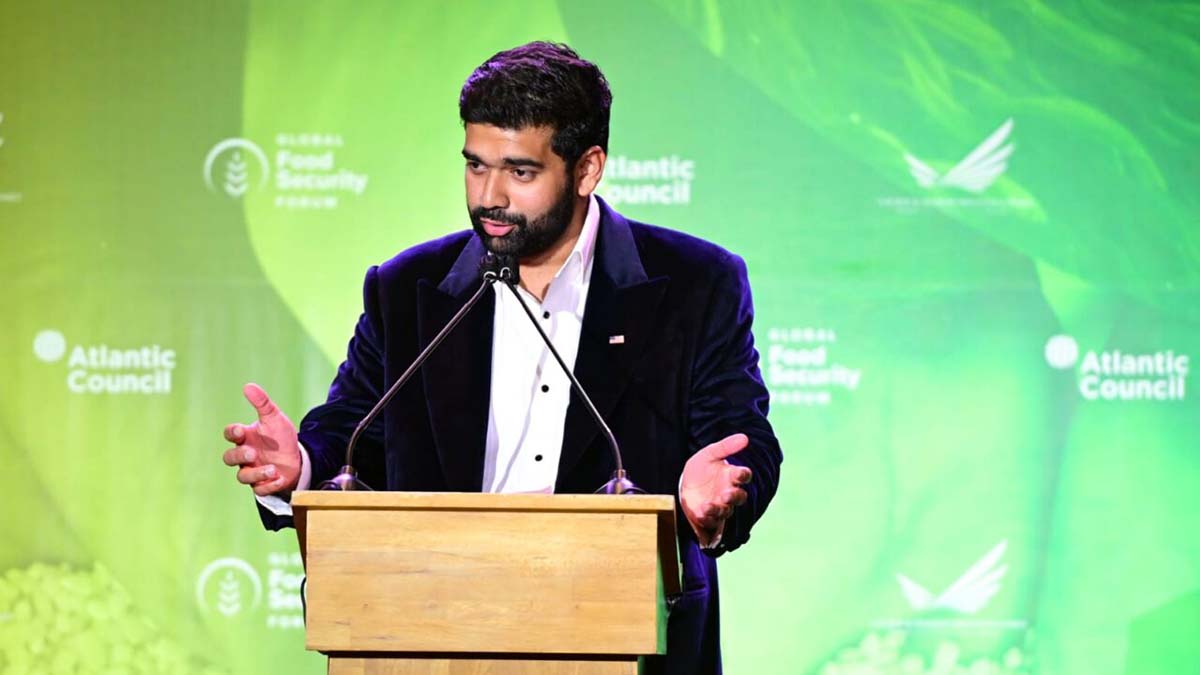
The Indonesian episode described in the OCCRP investigation is, in that sense, more than a story about one businessman and one set of allegations still working their way through the courts. It is a case study in a much larger and more persistent phenomenon: in an era where perception routinely outruns verification, influence itself — real or invented — has become one of the world’s most valuable, and potentially most dangerous, currencies. That broader lesson will remain true regardless of how the specific allegations against any one individual are ultimately resolved.