Cashify’s Shadow Ledger: Stolen Phones, Charge-Sheets, Absconding Managers and a Trail of Ex-Parte Consumer Humiliations

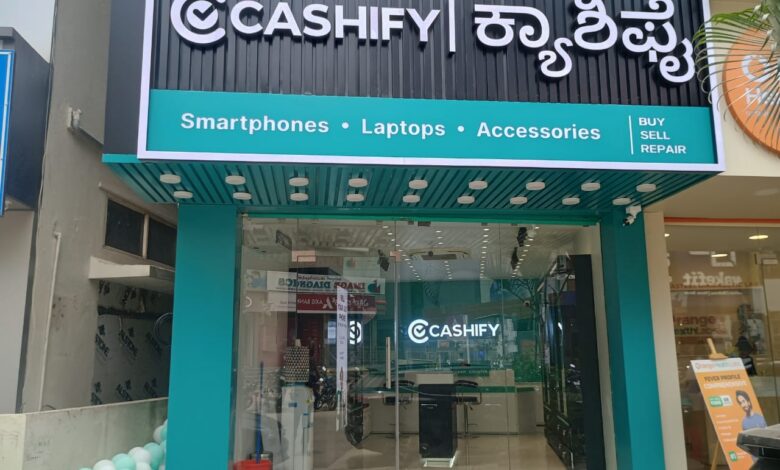
In the glittering marketplace of refurbished smartphones, Cashify has long sold itself as the trusted, tech-savvy redeemer of discarded devices. Yet the public record tells a far uglier story — one of a company whose former corporate identity stands charge-sheeted in a stolen-phone case, whose employee was arrested, whose manager was described by police as absconding, and whose operations have been repeatedly slammed by consumer commissions for deficiency in service and unfair trade practice.
This is not speculation. This is the verified paper trail.
The Bengaluru Crime That Will Not Go Away
On 28 April 2019, Mahalakshmipuram Police Station in Bengaluru registered Crime No. 114/2019 under Sections 392 and 411 of the Indian Penal Code — robbery and dishonestly receiving stolen property. The accused corporate entity was Manak Waste Management Private Limited, the company that later became Cashify Limited (CIN U46524DL2009PLC190441).
A charge-sheet was filed on 28 February 2020. The case was registered as CC No. 8012/2020 before the VII Additional Chief Metropolitan Magistrate, Bengaluru.
Cashify’s then Bengaluru manager, Prathap Reddy S., and the company itself rushed to the Karnataka High Court seeking to quash the FIR (Criminal Petition No. 5371/2019). On 2 June 2026 the High Court disposed of the petition as infructuous. Why? Because the investigation had already been completed and the charge-sheet filed. There was nothing left to quash. The criminal case continues.
Contemporaneous police statements, reported by Bangalore Mirror, painted a damning picture: a 70-year-old man’s stolen phone was allegedly traced through the Cashify application. Police claimed the platform accepted phones without original purchase bills, after which the devices were sold to local shops where fresh or fake bills were generated. One arrested person, 26-year-old Waseem Rehman, was identified by police as a Cashify Bengaluru employee. Two others — Venu and Tabrez Sharif — were also arrested. Prathap Reddy was publicly described by police as “absconding” as of June 2019. No reliable subsequent record of his arrest, bail or surrender has surfaced in the public domain.
The police inspector went further, alleging that more than 1,000 phones without bills or documents had moved through the application. That figure remains an investigative assertion, never elevated to a judicial finding. But the FIR, the charge-sheet, the High Court order and the contemporaneous arrest reports are not assertions. They are hard public records.
Consumer Commissions Deliver Their Own Verdict — Ex Parte and Unforgiving
While the criminal case grinds on in Bengaluru, consumer forums across India have delivered their own blunt assessments of Cashify’s operations.
In April 2024, the District Consumer Disputes Redressal Commission, Kanchipuram, in B.K. Binoy v. Managing Director, Cashify (CC No. 150/2023), held the company liable for non-delivery and non-refund of an iPhone 13 for which the complainant had paid ₹49,224. The Commission found deficiency in service and unfair trade practice. It ordered a full refund with 9% interest from 21 May 2023, ₹2,00,000 as compensation for mental agony and negligence, and ₹10,000 as costs. In its reasoning the Commission stated that Cashify had “conspired with” Retail Fiesta Private Limited — the entity that officially administers Cashify’s refurbished-device platform — in the non-delivery and non-refund episode. The order was ex parte. No indexed appeal or stay has been located.
In July 2024, the Additional District Consumer Disputes Redressal Commission-II, Bengaluru Urban, in Deepak P. v. M/s Cashify (CC No. 343/2023), found the company guilty of deficiency in service and unfair trade practice over a refurbished Samsung Galaxy Z Flip 4 that malfunctioned within warranty. Cashify was directed either to replace the phone or refund approximately ₹60,614 with 6% interest, plus ₹3,000 litigation costs. Again, ex parte. No public record of appeal or stay.
In Thiruvananthapuram, the District Consumer Disputes Redressal Commission in Aravind G.A. v. CEO, “Chashify” (DC/565/CC/388/2023) awarded compensation and costs against the company over a defective refurbished Samsung Galaxy S10 Lite. And in August 2025, the District Consumer Commission, Ganjam, in Amit Kumar Patro v. Cashify Retail Store Partner, ordered refund of ₹3,390 plus ₹7,000 compensation against a Cashify-branded local retail partner after sale proceeds were allegedly transferred to a wrong UPI account and never refunded.
Four adverse consumer orders. All ex parte. All finding deficiency or unfair trade practice. One explicitly using the word “conspired.”
Labour Law, Vendor Claims and the Corporate Shell Game
In Haryana, Manak Waste Management Private Limited faces a pending prosecution under the Factories Act (Case 19/2023, CNR HRGR030569562023) before the Chief Judicial Magistrate, Gurugram. The matter remained pending as of 5 June 2026.
Separately, a February 2026 report detailed a legal notice from an MSME vendor claiming ₹36,24,770 in unpaid invoices against Retail Fiesta Private Limited, with a total claim of ₹92,54,770 including interest, damages and costs. An MSEFC grievance was reportedly filed. No award, arbitral decision or civil decree has been located. The claim stands unadjudicated — but it is on the record.
Cashify’s own corporate disclosures carefully distinguish entities: Cashify Limited (formerly Manak Waste Management) as the principal company, Retail Fiesta as the refurbished-sales vehicle, Refurbind Tech in repair-related litigation, and local “Cashify retail-store partners” as separate operators. The consumer and criminal records, however, refuse to stay neatly inside those corporate boxes.
What the Record Does Not Show — and What That Silence Means
No ED ECIR. No CBI RC. No EOW FIR. No PMLA attachment. No GST or income-tax raid on public record. No SFIO investigation. No RERA action. No insolvency proceeding. No conviction of any Cashify founder or director for fraud, cheating or receiving stolen property. MCA annual returns for several years marked Companies Act penalties as “Nil.”
That absence is real. It does not erase the presence of a live criminal charge-sheet, an employee arrest, a manager once described as absconding, multiple consumer commissions finding unfair trade practice, and a pending Factories Act prosecution. It merely defines the boundaries of what has so far been proven in open court.
Cashify continues to operate, advertise and expand. The Bengaluru charge-sheet continues too. The consumer orders remain unstayed on the public indexes examined. The vendor claim remains unpaid according to the notice that was reported.
For a company that built its brand on trust and transparency in the secondary smartphone market, the verified public record is a ledger of unresolved criminal process, repeated consumer findings of deficiency, and a corporate history that keeps returning to the same uncomfortable name: Manak Waste Management Private Limited.