Is This The End Of Instagram As We Know It? Addictive Feeds, Children, Algorithms And A $1.4 Trillion Threat While India Asks: Who Controls Your Feed?
Instagram is facing a reckoning that could reach far beyond one courtroom. A US trial puts Meta’s addictive design, child safety and $1.4 trillion potential liability under the spotlight. In India, regulators are asking a different question: who controls the algorithm deciding what users see? Meanwhile, Meta is betting billions on AI.

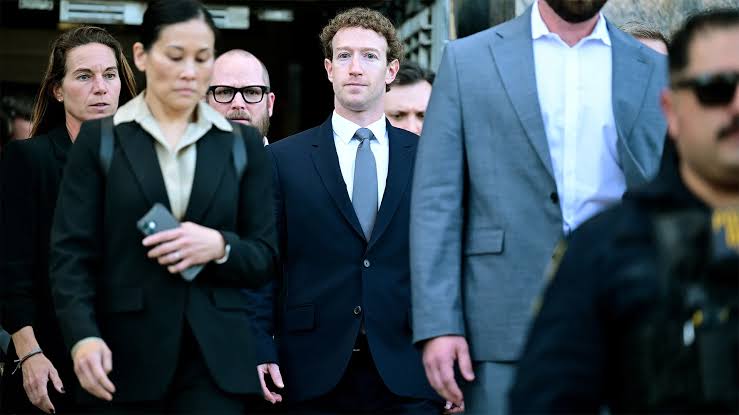
For years, the logic behind Instagram and Facebook has been brutally simple: keep people watching, keep them scrolling and keep them coming back. Now that very formula is at the centre of a courtroom battle that could force Meta to rethink how its platforms work.
A bipartisan coalition of US states is accusing Meta of deliberately designing Facebook and Instagram to encourage compulsive use among young people, while misleading the public about the risks.
At the heart of the case are features that have become almost invisible through familiarity – infinite scrolling, autoplaying videos, algorithm-driven feeds, disappearing content such as Instagram Stories and beauty filters.
The states want the court to force Meta to remove or alter what they describe as addictive design features.
That makes this case different from a conventional fight over an offensive post, a privacy breach or a failure to remove illegal content. The challenge goes much deeper. It asks whether the product itself has been engineered in ways that can harm its youngest users.
California’s deputy attorney general Megan O’Neill argued in opening statements that Meta’s business model prioritised engagement and profit over safety, accusing the company of effectively trying to keep users hooked for as long as possible while harvesting their data.
Meta has rejected the allegations, arguing that the states’ claims are unsupported and that their financial demands are wildly disproportionate.
But the stakes are enormous.
If Meta loses, the consequences could reach far beyond a potential financial penalty. A court order could force changes to the very features that have helped make Instagram and Facebook among the world’s most powerful digital platforms.
That is why the case is already being described as a potential turning point for social media. The question before the court is no longer simply whether Meta did enough to protect children. It is whether the machinery that keeps people scrolling can continue operating the way it always has.

The $1.4 Trillion Question
The most eye-catching number in the Meta case is also the one investors are struggling to price in: $1.4 trillion.
That is roughly the size of Meta’s current market value and the upper end of the potential penalties the company has warned could result if it loses the trial. The figure is so large that it is difficult to treat it as a conventional legal liability.
But the bigger concern for shareholders may not be whether Meta eventually writes a trillion-dollar cheque. It is what a verdict could force the company to change.
Meta’s shares dropped 4.5% when the trial began, after falling another 3.5% the previous day. Although the stock recovered some ground, it remains down about 17% this year – a striking reversal for a company whose advertising business has continued to generate substantial profits.
Investors were already nervous.
Meta has been pouring extraordinary amounts of money into artificial intelligence infrastructure, pushing capital expenditure towards an estimated $139 billion this year, almost twice what it spent in 2025. At the same time, free cash flow is coming under pressure and analysts have been trimming earnings expectations.
Now the social-media business that finances that AI spending is facing a legal challenge. That creates a particularly uncomfortable scenario for shareholders.
If a court forces Meta to alter the mechanics of Instagram and Facebook — reducing the features that maximise engagement, changing recommendation systems or restricting how young users interact with the platforms — the impact may not appear as a single massive penalty.
It could arrive more slowly. Lower engagement. Less time spent on the apps. Fewer young users entering the ecosystem. Reduced advertising inventory. And, ultimately, a different growth trajectory.
That is why the $1.4 trillion figure may actually be a distraction.
The more consequential question for investors is whether a verdict could reset the economics of Meta’s core business.
And that is much harder to put a number on.
The “Tobacco Moment” For Social Media
There is a phrase that keeps surfacing around the Meta case: a tobacco moment.
The comparison is deliberately provocative. Decades ago, cigarette companies faced a wave of lawsuits and mounting evidence over the health consequences of their products. The legal battles did more than impose financial costs. They changed public perceptions, strengthened regulation and permanently altered the way the industry operated.
The argument now being made about social media is that something similar could happen again.
The product is different. The harm is different. But the underlying legal question has a familiar shape: what did companies know about the risks of their products, and what did they do about them?
In Meta’s case, prosecutors are focusing on children and teenagers, arguing that the company knew its platforms could cause harm while continuing to use design choices intended to maximise engagement.
That distinction matters.
A social-media platform does not simply sell access to a product. Its business depends on keeping people on that product for as long as possible. Every additional scroll, video, interaction and return visit can create more opportunities to serve advertising.
The states’ case therefore goes after something fundamental: whether the same mechanisms that make Instagram commercially successful can also make it harmful. And if courts accept that argument, the consequences could extend well beyond Meta.
A verdict could encourage regulators and plaintiffs to pursue similar claims against other platforms. It could also force companies to make changes before they are ordered to do so – particularly when children are involved.
That is why analysts expect rivals such as Snap and YouTube to be watching closely.
The tobacco comparison may ultimately prove too extreme. But there is one part of it that is difficult to ignore. The biggest impact of a landmark case may not be the punishment handed to one company. It may be the rules everyone else starts following afterwards.
Meta May Be First. It Is Not Alone.
Meta is not fighting this battle in isolation.
Across the US, state attorneys general are pursuing social-media companies over allegations that their platforms can cause harm to young users. YouTube and Snap are also facing legal pressure, turning what once looked like a series of separate cases into something closer to an industry-wide reckoning.
California Attorney General Rob Bonta has described Meta as the “first in line”.
That phrase matters.
Because if courts establish that certain platform designs can amount to a form of harmful conduct, the consequences will not stop at Facebook and Instagram. Every company relying on recommendation algorithms, autoplay, notifications and endless feeds could suddenly have a new legal risk to calculate.
Meta has already seen how quickly the argument can move from one courtroom to another.
In March, a Los Angeles jury found Meta and Google liable in a social-media addiction case brought by a young woman who said she became addicted to the platforms as a child. She argued that the design of the apps contributed to severe body dysmorphia, depression and suicidal thoughts.
That verdict came alongside another significant development in New Mexico, where a jury found Meta had misled teenagers about the safety of its social networks.
Separately, governments outside the US have been moving towards tougher restrictions on children’s access to social media.
The direction of travel is becoming harder to miss.
For years, the industry’s basic assumption was that more engagement was almost always better. More users. More time spent. More interactions. More data. More advertising.
Now regulators and courts are beginning to ask whether more is actually the problem. And that changes the calculation for every platform.
If Meta is forced to pull back on the very features designed to maximise engagement, rivals may have little choice but to follow – voluntarily, or because the same legal arguments eventually reach their own doors.
The first company may face the biggest shock.
But the industry could end up living with the verdict.

And Then There Is India
The Meta story does not end in an American courtroom.
Thousands of miles away, India is beginning to ask a different set of questions about the same platforms and some of them lead to the same uncomfortable place.
In recent months, Indian authorities have stepped up scrutiny of Meta over child safety, illegal content and the way Facebook and Instagram handle material that reaches users.
One of the most serious flashpoints involved advertisements on Instagram that were allegedly linked to child sexual abuse material. The issue prompted action from India’s Ministry of Electronics and Information Technology, putting fresh pressure on Meta to explain how such content could enter an advertising system that is supposed to have safeguards in place.
Meta subsequently said it had taken down accounts and content connected to child exploitation and had intensified its enforcement efforts in India. But the significance of the episode goes beyond the individual advertisements.
It raises a question that is becoming increasingly difficult for Meta to avoid: If the platform’s systems are sophisticated enough to decide what millions of people see, how can the company claim that it cannot always control what those systems allow through?
That question becomes even more important when the users involved are children.
India’s concerns are not limited to child safety either. Regulators have increasingly sought greater transparency from Meta over its recommendation systems and the algorithms that determine which posts, videos and accounts receive visibility.
In other words, the scrutiny is moving upstream. It is no longer simply about whether Meta removes something after it appears on Facebook or Instagram. It is about how the machine decides what gets surfaced in the first place.
That brings India’s concerns surprisingly close to the central argument unfolding in the US.
America is asking whether Meta’s products were designed to keep children hooked.
India is increasingly asking what happens when Meta’s systems decide what those users are exposed to.
Different cases.
Different regulators.
But an increasingly similar question about who is actually in control of the feed.
India Wants To Know Who Controls The Algorithm
The most consequential part of India’s scrutiny may not be the individual controversies at all.
It is the algorithm.
Instagram and Facebook do not simply display everything users post in chronological order. Their recommendation systems decide which videos, posts, accounts and advertisements are placed in front of users — and which are effectively buried.
That makes the algorithm the invisible editor of the platform.
Indian authorities have been pressing Meta for greater clarity on how these systems work, particularly around the reach and visibility of content. The demand comes as the government simultaneously deals with concerns over child exploitation, online fraud and harmful material circulating through social platforms.
The issue is bigger than transparency. It goes to the question of responsibility.
A platform that merely hosts a post can argue that it is an intermediary. But what happens when its own technology actively recommends that post to thousands or millions of people?
That distinction is becoming increasingly important in India.
The government has also signalled that Meta cannot simply rely on safe-harbour protections if it fails to comply with Indian law. The message is straightforward: being a technology platform does not necessarily mean being insulated from responsibility for what happens on it.
And that puts the algorithm at the centre of the debate.
The same recommendation machinery that can make Instagram extraordinarily engaging can also determine whether harmful, misleading or illegal material travels further.
In the US, the allegation is that Meta used product design to maximise engagement among young users. In India, the scrutiny is increasingly focused on the systems behind that engagement – how content is selected, amplified and delivered.
That is an important shift.
The Modi Post, The Apology And The Power To Decide What Gets Seen
Then came another controversy that exposed a different side of Meta’s problem in India: content moderation itself.
A post involving Prime Minister Narendra Modi was temporarily restricted on Facebook, triggering a political backlash and renewed questions over how Meta’s systems decide what content is visible — and what gets limited.
The episode quickly became bigger than one post.
Indian authorities also moved against allegedly morphed and objectionable content involving Modi that had circulated on Facebook and Instagram, with police registering a case involving Meta India’s senior leadership.
Meta said it was cooperating with the authorities.
But the controversy reached the company’s global leadership as well.
Meta’s Chief Global Affairs Officer Joel Kaplan later apologised to the Indian government over the restriction of Modi’s post, calling it an operational error.
That apology may have closed one immediate dispute.
It did little to settle the larger question.
Who decides what Indians see on Meta’s platforms?
The answer is not as simple as saying “the user”.
Facebook and Instagram increasingly rely on automated systems to rank, recommend, restrict and amplify content. Human moderators may intervene, governments can issue demands and users can report material — but algorithms remain at the heart of the experience.
That creates a difficult balancing act for Meta.
Too little intervention, and the company can be accused of allowing harmful, illegal or manipulated content to spread. Too much intervention, and it can be accused of suppressing legitimate speech or applying inconsistent standards.
The Modi controversy brought that tension into unusually sharp focus. And it adds another layer to India’s broader scrutiny of Meta. The child-safety cases ask whether the company’s safeguards work.
- The algorithm questions ask how its systems operate.
- The political controversies ask whether those systems can be trusted to make decisions about what people are allowed to see.
- Together, they point towards a much larger confrontation over Meta’s role as the invisible gatekeeper of India’s digital public square.
- And unlike the US case, where the focus is heavily on children and addiction, India’s challenge could ultimately be broader.
It is about the power to recommend, restrict and amplify at enormous scale.

While Meta Is Fighting The Old War, It Is Spending A Fortune On The New One
There is another problem hanging over Meta and this one has nothing to do with Instagram’s scrolling feed.
AI is becoming an extraordinarily expensive bet.
Meta is expected to spend around $139 billion on capital expenditure this year, almost twice the $69.7 billion it spent in 2025. And the bill is expected to climb further, with analyst estimates putting capital expenditure at roughly $197 billion in 2027 and $212 billion in 2028.
For investors, the numbers are difficult to ignore.
Meta’s advertising business has historically provided the cash engine that allows the company to make enormous bets on the future. Now that engine is being asked to finance one of the biggest infrastructure spending programmes in corporate technology.
The timing is awkward.
The company’s core social-media products are facing legal and regulatory scrutiny at precisely the moment Meta needs them to remain powerful cash generators.
That is why comparisons with the metaverse have resurfaced.
Meta once spent billions trying to build a virtual-reality future that failed to deliver the scale many investors expected. AI is a different proposition. The technology is already being used across Meta’s advertising systems, recommendation engines and products, and there is evidence that AI is helping improve the company’s ability to target and monetise users.
Some shareholders therefore see the spending as necessary rather than reckless.
The distinction is important. The metaverse was largely a bet on a future that had yet to arrive. AI is already changing the economics of Meta’s existing business. But that does not make the spending risk-free.
Analysts have already reduced their estimates for Meta’s 2026 and 2027 earnings, while free cash flow is expected to come under significant pressure.
So Meta is effectively asking investors to believe in two things at once.
First, that its enormous AI investment will eventually generate enough returns to justify the cost.
And second, that its social-media business can continue producing those returns even as courts and governments question the very mechanisms that made it so successful.
That is a much harder proposition than simply betting on AI.
It is a bet on whether the old Meta can finance the new Meta before regulators force the old Meta to change.
Investors Are Being Asked To Believe Twice
For now, Meta’s numbers still tell a more complicated story than the headlines suggest.
The company is not collapsing.
Its earnings are still expected to grow strongly in 2026, with analysts forecasting roughly 35% growth in earnings per share. Revenue is projected to rise around 26% this year, although that growth is expected to slow over the following years.
The problem is that Wall Street is beginning to question what comes after that growth. Estimates for Meta’s 2026 earnings have fallen by about 4.1% over the past month, while 2027 estimates have declined 3.8%. That is not the profile of a business suddenly running out of money.
It is the profile of a business whose future is becoming harder to model. And the market has already punished the stock.
Meta now trades at less than 15 times estimated earnings, down sharply from around 22 times in January and below its long-term average of roughly 20 times. It also has the lowest valuation multiple among the so-called Magnificent Seven.
That makes the stock look cheap.
For some investors, that is precisely the opportunity.
The argument is straightforward: Meta still owns two of the world’s biggest social platforms, still has an enormous advertising business and is increasingly integrating AI into the systems that generate that advertising revenue.
If the legal risks ultimately prove manageable, today’s depressed valuation could look attractive.
But there is another way to read the same numbers.
A lower multiple can also mean investors are demanding compensation for risks that were previously considered remote.
The legal threat is difficult to quantify. The regulatory environment is changing. AI spending is enormous. Earnings growth is expected to slow. And a court-ordered redesign of Instagram or Facebook could change the economics of the company’s most valuable products.
That is why the market is no longer asking simply whether Meta can keep growing. It is asking what kind of company Meta will be after all these battles are over. A cheaper stock does not necessarily mean a safer stock.
Sometimes it means the market has started pricing in a different future.
What Happens If Meta Loses?
The most immediate temptation is to focus on the $1.4 trillion figure.
But the more consequential outcome may be much less dramatic and far more disruptive.
A loss could force Meta to change the way Facebook and Instagram are designed and operated, particularly for younger users. Features that have become fundamental to the social-media experience could face restrictions, redesigns or outright removal.
Infinite scrolling could be curtailed. Autoplay could change. Recommendation systems could face greater scrutiny. Young users could receive stronger restrictions and safeguards. And features designed to maximise the amount of time people spend inside the apps could become liabilities rather than assets.
Meta’s rivals would have to take notice.
If a court establishes that particular design choices expose a platform to legal liability, companies such as YouTube and Snap would have a strong incentive to make changes before facing similar lawsuits themselves.
That could create something much bigger than a single verdict. It could produce a new baseline for social media. The irony is that the platforms would probably remain immensely popular.
Instagram would not suddenly disappear. Facebook would not become irrelevant overnight. Meta would still have billions of users and one of the world’s largest advertising businesses.
The change could be much quieter. Young people might spend less time on the platforms. Some may never become heavy users in the first place. Parents could become more cautious about allowing children onto them. Advertisers could eventually have less engagement to buy.
And over several years, that could weaken the pipeline that has historically brought new generations of users into Meta’s ecosystem.
That is why the industry’s biggest fear may not be a sudden collapse. It could be a slow erosion of the habit.
Social media became enormously powerful because each generation entered the ecosystem, adopted its habits and then brought those habits into adulthood.
If that cycle is interrupted, the impact may only become visible years later. And that is the outcome Meta cannot easily solve with a bigger advertising budget or another AI model. Because you can redesign a feature. You can fight a lawsuit. You can spend your way into the next technology wave.
But rebuilding a habit that regulators have forced you to break is much harder.

The Real Existential Threat May Not Be Children
There is an even bigger legal risk hiding behind the current wave of cases.
It is not necessarily what happens if Meta loses this one. It is what happens after it loses.
Analysts have pointed to a scenario that could be far more damaging: adults beginning to bring similar claims against Meta, arguing that the same product design and recommendation systems that allegedly harmed children also affected them.
That would dramatically expand the potential pool of plaintiffs.
The current cases are largely focused on young users because children and teenagers are particularly vulnerable and because the evidence around youth mental health has become an increasingly important area of public concern.
But the underlying allegations are not necessarily limited to children.
If plaintiffs successfully establish that features such as endless feeds, personalised recommendations, notifications and engagement-driven design can amount to a harmful product architecture, there is no obvious reason the legal theory would have to stop at the age of 18.
That is where the tobacco comparison becomes more uncomfortable for Meta.
The biggest transformation in that industry did not come from one lawsuit or one penalty. It came when litigation, regulation, scientific evidence and public opinion began reinforcing one another.
Social media could face a similar feedback loop. One successful case creates a precedent. That precedent encourages another lawsuit. More litigation produces more evidence. More evidence creates greater regulatory pressure.
And eventually, the companies have to change the product itself. For Meta, that would be a fundamentally different problem from paying a fine.
A fine is finite. A change to the underlying business model is permanent.
And if the legal argument expands from “Meta harmed children” to “Meta’s engagement-driven design can harm users generally,” the company’s exposure could move into territory that is almost impossible for investors to model.
That is the scenario that could turn today’s legal headache into a genuine existential threat. Because Meta can survive a bad quarter. It can survive a regulatory fine. It can even survive an expensive strategic mistake.
What would be much harder to survive is a world in which the very mechanics of its most profitable products are treated as the problem.
One Company, Three Futures
Meta is now trying to protect three different versions of itself at the same time.
There is the old Meta – Facebook and Instagram, the platforms that built the company into an advertising powerhouse and still generate the money that pays for everything else.
There is the present Meta – a company trying to keep investors satisfied as growth slows, spending rises and the market demands evidence that its enormous investments will produce returns.
And there is the future Meta – the AI company spending tens of billions of dollars building data centres, buying chips and reshaping its products around artificial intelligence.
The problem is that these three futures are now colliding. The social-media business is facing legal pressure over how its products are designed.
India is increasingly questioning how Meta’s algorithms decide what users see and how the company responds when harmful or controversial content gets through.
And investors are simultaneously asking whether Meta’s extraordinary AI spending will generate enough returns to justify the cost.
None of these problems alone necessarily threatens the company. Together, they create something much harder to manage. Uncertainty.
Meta may win the US case. The potential penalties may ultimately be far lower than the headline $1.4 trillion figure. Its AI investments may produce enormous returns. Its advertising business may continue to grow.
But the old assumption that Meta can simply keep doing more of what it has always done is becoming harder to defend. That is what makes this moment different. The question is not whether Instagram will disappear.
It probably will not.
The question is whether Instagram can remain the same Instagram — one built around infinite scrolling, relentless recommendations, frictionless engagement and the constant pursuit of another minute of a user’s attention.
America is testing whether that model can survive in court. India is increasingly testing who gets to control the machine behind it. And investors are testing whether Meta can finance its next chapter while defending the last one.
If all three pressures continue to build, Meta may not lose its empire. It may simply have to rebuild it. And that could be the real beginning of the end of Instagram as we know it.