Meta Has 72 Hours Before India Changes The Rules. This Could Be The Moment Big Tech Loses India’s Trust
A single “error” has spiralled into a high-stakes showdown between Meta and the Indian government. With a 72-hour deadline and the threat of losing legal protection, the episode goes beyond one post, raising larger questions about platform responsibility, regulatory power and who really controls India’s digital space.

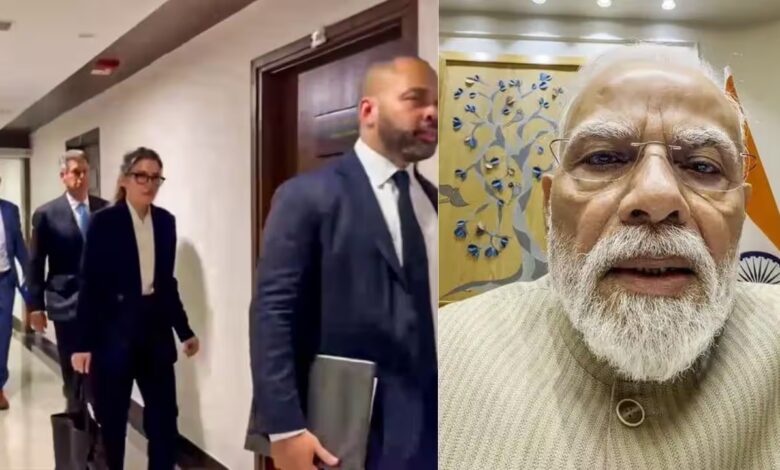
Meta is staring at a deadline it cannot afford to ignore. In a rare and unusually direct move, an Indian parliamentary panel has given the company three days to issue an apology over the temporary restriction of a post by Prime Minister Narendra Modi.
The warning is not symbolic. If Meta fails to comply, lawmakers have threatened to recommend the removal of its safe harbor protection in India – a legal shield that allows platforms to host user content without being held directly liable for it.
For a company that operates at massive scale in India, this is not just a reputational issue. It is an existential one. Losing that protection could fundamentally alter how Meta runs Facebook, Instagram and WhatsApp in the country. What began as a content moderation “error” has quickly escalated into a confrontation that could redefine the relationship between Big Tech and one of its most critical markets.
What Triggered the Crisis
The flashpoint was a Facebook post by Prime Minister Narendra Modi addressing students during the Gen Z protests. The post was briefly restricted by Meta, with initial indications suggesting it had been blocked following a “legal request.” The company later walked this back, calling it an error – but by then, the damage was done.
The incident came at a particularly sensitive moment. Just days earlier, Indian regulators had summoned Meta over concerns related to child sexual abuse content circulating on its platforms. The back-to-back scrutiny turned what might have been a routine moderation mistake into a larger question about platform accountability.
The Modi post, because of who it involved and when it happened, became a trigger point. It fed into an existing issue within regulatory circles – that Meta’s control over content is both immense and, at times, inconsistently exercised. In the space of a few days, a single takedown evolved into a broader challenge to how the company operates in India.
The Government Strikes Back
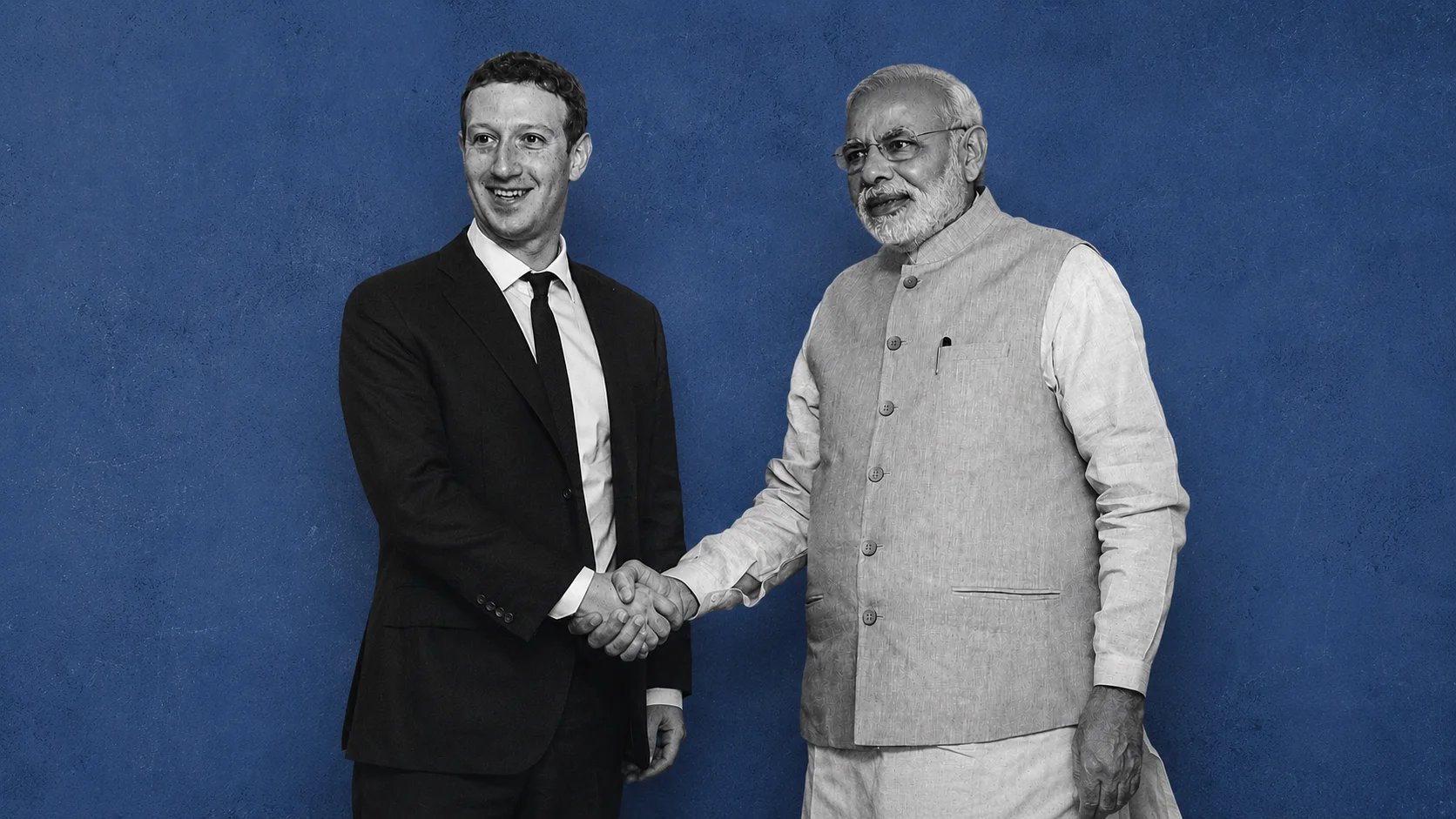
The response from New Delhi was swift and pointed. Nishikant Dubey, who chairs the parliamentary panel on communications and information technology, publicly demanded an apology from Meta CEO Mark Zuckerberg within three days. This was no longer about an internal platform error, but about accountability at the highest level of the company.
Dubey also questioned whether Meta was misusing the protections granted to it under Indian law. He warned that if safe harbor immunity were to be withdrawn, the company could face a surge of police complaints across the country. The implication was hard to miss: without that legal cushion, Meta could find itself exposed to a wave of civil and criminal liability tied to user-generated content.
This marked a shift in tone. What began as regulatory scrutiny had now turned into a direct challenge, with the government signalling that it was willing to escalate if its concerns were not addressed.
Meta’s Response and Damage Control
Meta has moved quickly to contain the fallout, but its response has not been entirely seamless. Joel Kaplan, the company’s chief global affairs officer, met with India’s Information Technology Minister Ashwini Vaishnaw and issued an apology for the restriction of the Prime Minister’s post, describing it as an error.
However, parallel reports from local media suggested that Zuckerberg himself had conveyed an apology – not just for the post, but also for broader issues including child abuse content and deepfake material on the platform. Meta’s official communication did not confirm these claims, leaving room for ambiguity around who said what, and how far the company is willing to go to address regulatory concerns.
At the same time, Meta’s global team has remained engaged with Indian authorities, with multiple follow-up meetings planned to assess compliance with local laws. The effort reflects a company trying to reassure regulators while facing a rapidly escalating situation where clarity and consistency in messaging are becoming just as important as the actions themselves.
Why This Actually Matters
At the heart of the standoff lies a legal concept that underpins the entire internet economy – safe harbor protection. In simple terms, it allows platforms like Meta to host and distribute user-generated content without being held directly liable for every post, video or message shared by users.
This protection, however, is not absolute. It comes with conditions. Platforms are expected to act when flagged about unlawful content, comply with government or court orders, and maintain due diligence in removing harmful material such as child sexual abuse content, deepfakes and hate speech. As long as these obligations are met, the platform retains its immunity.
Strip that away, and the model breaks down. Without safe harbor, Meta could be held legally responsible for millions of pieces of content circulating across its platforms in India every day. The scale alone would make compliance extraordinarily difficult, if not unworkable.
It would force a fundamental rethink of how content is moderated, how quickly it is taken down, and how much risk the company is willing to absorb in one of its largest markets.

Reality Bites, India Is Too Big to Ignore
India is not just another market for Meta – it is central to its global footprint. The country has the largest user base for WhatsApp, along with massive adoption of Facebook and Instagram. For Meta, India represents both scale and future growth, particularly as digital consumption continues to deepen across smaller cities and younger audiences.
But that scale comes with rising complexity. The same factors that make India attractive (a vast user base, high engagement and growing influence of digital platforms) also make it one of the most closely watched regulatory environments. Governments are increasingly unwilling to treat platforms as neutral intermediaries, especially when issues around misinformation, harmful content and political influence come into play.
For Meta, this creates a difficult balancing act. Walking away is not an option. But operating under tighter scrutiny, with the constant risk of regulatory intervention, is becoming the new normal in a market that is too large to lose and too complex to work casually.
Content, Control And the Pressure Points
The immediate trigger may have been a single post, but the underlying concerns run much deeper.
Indian authorities have, in recent weeks, raised alarms over child sexual abuse material, deepfake content and gaps in platform moderation. These are not new issues, but the scale at which they appear on large platforms has made them harder to ignore.
At the same time, platforms like Instagram have become central to public discourse, especially among younger users. During the Gen Z protests, short-form video content turned into a primary channel for mobilisation, commentary and political messaging. That visibility cuts both ways. It increases engagement, but it also places platforms directly in the line of fire when questions of influence, bias or inaction arise.
For Meta, this creates a tightrope. On one side is the expectation of neutrality – allowing open expression without interference. On the other is growing pressure from governments to act decisively, and often quickly, on content that may be deemed harmful or sensitive. Managing that balance is becoming increasingly difficult, particularly in markets where political stakes are high and scrutiny is constant.

The Legal Reality Check
Despite the strong rhetoric, the path to stripping Meta of its safe harbor protection is not straightforward. Legal experts point out that under India’s current framework, the loss of immunity is typically applied to specific instances of non-compliance, rather than to an entire platform.
For a broader withdrawal of safe harbor, changes to the legal framework itself would likely be required. This means legislative amendments, clearer definitions of liability, and potentially a reworking of how intermediary responsibility is structured in Indian law.
In practical terms, this creates a gap between what is being threatened and what can be immediately enforced. However, that gap does not make the situation less serious. Even the possibility of such changes introduces uncertainty for platforms operating in India and signals a willingness by policymakers to revisit the rules that have governed the internet for years.
If This Escalates
If the standoff deepens, the consequences for Meta could extend far beyond a single regulatory dispute. Without the protection of safe harbor, the company could face a surge of legal challenges tied to user-generated content – ranging from civil claims to criminal complaints filed across jurisdictions.
The operational impact would be significant. Content moderation systems would need to become far more aggressive, response times would have to shrink dramatically, and the risk of over-censorship could increase as the company moves to protect itself from liability. The cost of compliance would rise, and so would the complexity of operating at scale.
More broadly, such a move could set a precedent. Other jurisdictions may begin to explore similar approaches, especially as debates around platform accountability intensify globally. What is currently a national issue could quickly evolve into a reference point for how governments choose to regulate large technology companies.
The Last Bit, Meta’s Real Story
This episode is not just about a blocked post or an apology demand. It reflects a larger shift in how governments view the role of technology platforms in shaping public discourse. The idea that platforms can operate as neutral intermediaries is increasingly being challenged, particularly in markets where their influence is both visible and growing.
For India, this moment signals a more assertive approach – one that is willing to question long-standing protections and push for greater accountability. For Meta, it is a reminder that scale alone does not guarantee stability. Operating in one of the world’s largest digital markets now comes with a new set of expectations, where compliance, control and credibility are all under constant scrutiny.
What happens next will not just determine how Meta addresses concerns in India. It will offer a glimpse into how the balance of power between governments and technology platforms is evolving in real time.