The Buy Now Pay Later Trap Catching 49% Of Gen Z As Concerts And Groceries Push A Generation To Live On Credit
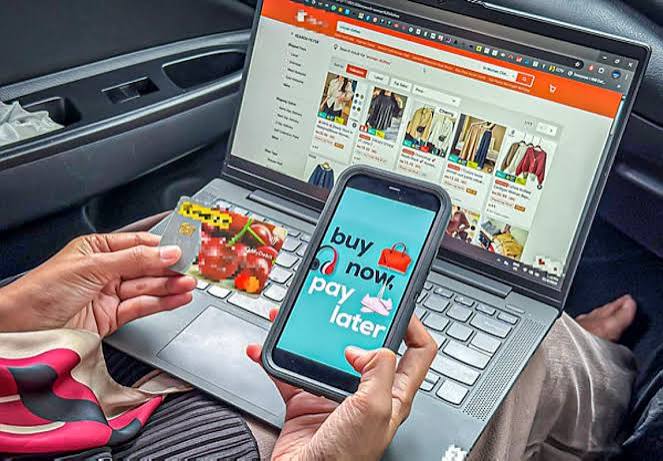
Buy Now Pay Later was supposed to make big purchases easier. Instead, credit is becoming a way for Gen Z to finance everyday life, from concerts and holidays to groceries and gas. With 49% planning to use BNPL for large purchases and 36% for essentials, the bigger question is what this habit costs a generation with decades of saving ahead.

For older generations, entering the credit system usually came later in life. Consumers born in the 1960s and 1970s typically took their first loan in their late 30s or early 40s, often through secured borrowing such as home or auto loans. Those born in the 1990s entered the credit ecosystem earlier, generally in their mid-20s, through credit cards, personal loans and consumer durable loans.
For consumers born after 2000, that entry point has moved forward again. Their credit journey is beginning around the age of 22, often through small-ticket loans and buy-now-pay-later products.
That shift matters because the first interaction with credit is no longer necessarily tied to a home, a car or another large asset. For a growing number of younger consumers, it is happening through smaller purchases and short-term borrowing.
India Is Already Seeing The Shift
India’s household debt is changing in composition, and regulators are watching the shift closely. Non-housing retail loans, much of it linked to consumption, accounted for 58.4% of total household borrowings in March 2026, up from 54.9% a year earlier.
The increase has been particularly visible in personal borrowing. Loans against gold jewellery rose sharply to Rs 4.61 lakh crore in March 2026 from Rs 74,738 crore in March 2022, while other personal loans almost doubled over the same period, reaching Rs 17.32 lakh crore from Rs 9.02 lakh crore.
The RBI has said household debt accumulation, particularly among lower-rated borrowers, requires close monitoring. Unsecured retail loans remain more stressed than secured lending, with gross NPAs of 1.7% at the end of March 2026 compared with 0.7% for secured retail loans.
The concern becomes sharper in small-ticket borrowing. Loans below Rs 50,000 have seen fintech firms capture a 56.8% market share after 41.6% credit growth, while delinquencies stood at 6.4%. Around half of fintech firms’ unsecured lending is going to borrowers under 35.
The Younger The Borrower, The More Normalised Consumption Credit Becomes
The expansion of credit is not happening evenly across age groups. Younger consumers are becoming a larger part of India’s credit-active population, while consumption borrowing has become a much bigger part of the credit mix. Nearly half of credit-active consumers now have a consumption loan, including credit cards, personal loans or consumer durable loans.
The numbers have changed sharply over the past decade. The share of over-leveraged consumers rose from 5% in FY17 to 18% in FY24, before easing to 15% in FY26. At the same time, younger consumers increased their share of the country’s credit-active base from 33% in 2017 to 39% in 2026.
The concern is not simply that younger consumers are borrowing. It is what they are borrowing for. Consumption credit has increasingly been used for immediate spending rather than asset creation, with credit card debt crossing Rs 3 lakh crore last fiscal and delinquencies rising more than 40% year-on-year.
A credit bureau executive cited in the report pointed specifically to younger borrowers, warning that higher leverage raises questions about their ability to repay, particularly in consumption lending where lenders may not always be able to fully assess income.
And Then There Is The Lifestyle Bill
The shift is not limited to borrowing for emergencies or basic consumption. Credit is increasingly finding its way into the lifestyle spending of younger consumers, particularly around concerts, travel and experiences.
Economists at Bank of Baroda estimated that music concerts over the past 24 months could have generated a spending push of Rs 1,600-2,000 crore. A significant share of concert-goers are Gen Z consumers, with some spending supported by multiple credit cards.
The same pattern is visible in travel. Airbnb’s January 2026 Experience-Led Travel Insights found that 62% of Gen Z respondents planned to travel around concerts and music festivals this year, while 76% had travelled to a city for the first time to attend such an event. Their most recent event-led trip cost an average Rs 51,000.
More tellingly, six in 10 young travellers said they were willing to put 21-40% of their monthly income towards music-led travel and experiences, while one in 10 was willing to spend as much as half.
Travel is increasingly being financed the same way. More than a quarter of personal loans taken in India during the first half of 2025 were for travel, according to Muthoot Finance, pointing to a broader shift towards a “live now, pay later” approach among millennials and Gen Z.
America Shows Where The Pattern Could Go Next
The US data offers a sharper look at where this shift can lead when installment payments move beyond discretionary purchases and into everyday spending.
Buy Now Pay Later services have become a significant payment method for Gen Z. According to Northwestern Mutual’s 2026 Financial States of America data, 49% of Gen Z plan to use BNPL for large purchases this year, while 36% plan to use it for daily essentials such as groceries and gas.
The distinction between those two figures is important. Financing a large purchase through instalments is hardly new. Using the same mechanism to pay for groceries or fuel points to something different: a growing willingness to turn ordinary household spending into scheduled debt payments.
That is happening against a difficult financial backdrop. Consumer prices remain elevated, financial sentiment is subdued and the personal savings rate has fallen over the past two years even as disposable income has continued to rise.
For Gen Z, BNPL is therefore emerging not simply as another way to pay, but as a way to stretch current income across future paydays.
Credit, When Even Groceries Go On Four Payments
The 36% figure is the one that deserves closer attention. Financing a large purchase through four instalments is one thing. Financing groceries, fuel and other daily essentials is something else entirely.
For younger consumers facing higher living costs and thinner savings cushions, splitting an everyday purchase into several payments can begin to look less like a warning sign and more like a practical way to make the monthly budget work. But that also changes the role of BNPL. It is no longer simply helping consumers spread the cost of something they want. It is helping them manage things they need.
That distinction matters because repeated use can gradually make instalment debt part of ordinary household spending. A grocery bill that once disappeared from a bank account on the day it was paid can instead become another payment waiting in the weeks ahead.
The result is a financial cycle in which today’s income is increasingly committed before the next paycheque arrives.
BNPL Does Not Replace Debt. It Adds To It.
The problem with BNPL is that it does not necessarily exist instead of other forms of debt. It can sit alongside them.
The same Northwestern Mutual data shows that credit cards remain the largest source of personal debt, at more than twice the level of car loans and roughly four times medical debt. Among Americans carrying personal debt, the average balance is $21,700, while 65% of US adults carry some form of personal debt outside a mortgage. BNPL payments can then be layered on top of those existing obligations.
That makes the headline 49% more significant. The issue is not simply that almost half of Gen Z may use BNPL for large purchases. It is that these instalments are entering the financial lives of consumers who may already have credit cards, personal loans and other monthly commitments.
The individual payments can look manageable when viewed separately. The problem becomes clearer when they are added together.
And that is where the question shifts from how Gen Z pays for things to how much of its future income has already been spoken for.
The Real Cost Is Not The Four Payments
The more important question is what those payments prevent consumers from doing with the same money.
Among US adults with debt, 62% say paying down debt takes priority over saving, compared with 38% who prioritise saving. For a 22-year-old, that trade-off carries a different cost than it does for someone nearing retirement. Money that is not invested in the early years is also money that loses the longest possible period of compounding.
That does not mean every BNPL purchase directly costs someone retirement savings. The data does not establish that. But when instalment payments become a recurring part of everyday spending, they can leave less of each paycheque available for building savings or investments.
And for Gen Z, time is the one financial advantage it has in abundance. The question, then, is no longer whether four payments are affordable today. It is what happens when today’s small payments keep pushing tomorrow’s saving further away.
What The Cycle Costs Decades Out
The 49% and 36% figures describe a payment habit. The bigger question is what that habit can cost over time.
Gen Z has the longest investment horizon of any working generation. That gives early savings more time to compound, but it also means that money repeatedly directed towards instalment payments is money that cannot be invested at the same time.
The sequence matters. Income comes in, instalments are paid, credit card balances are serviced and only then does whatever remains become available for savings. The longer that pattern continues, the more difficult it becomes to build the financial cushion that early adulthood is supposed to create.
The data does not show that BNPL alone is preventing Gen Z from saving for retirement. It does show a broader pattern of households consuming a larger share of disposable income while the savings rate has declined, alongside a generation increasingly comfortable using instalments for both large purchases and everyday essentials.
That leaves the bigger question behind the 49% figure. Is BNPL simply a temporary response to higher prices and tighter budgets, or is installment debt becoming a permanent part of how Gen Z manages ordinary life?