When Connaught Place Falls Silent On A Saturday…
The decision by the New Delhi Traders Association to keep Connaught Place closed on Saturday in the face of a Cockroach Janata Party demonstration at Jantar Mantar has once again laid bare the fragile balance between the constitutional freedom to protest and the right of citizens to earn a living. Traders speaking through the Chamber of Trade and Industry have placed the economic damage at around two thousand crore rupees. This figure is not an abstract number. It represents lost sales for shopkeepers who had stocked for the festive season, unpaid wages for daily workers, and a cascading effect on suppliers already strained by earlier disruptions. The question that hangs over every closed shutter is simple yet urgent. How long can a city of this scale tolerate such self inflicted commercial wounds before the cumulative human cost becomes impossible to ignore.

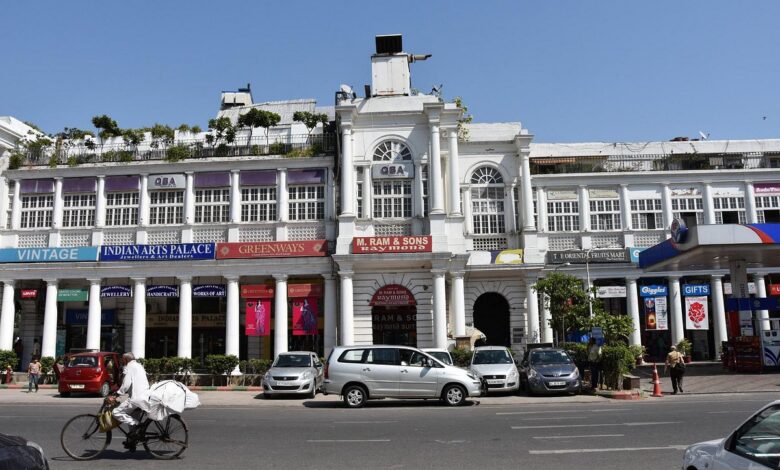
The announcement that Connaught Place would remain shut on Saturday arrived with a familiar sense of resignation among the traders who depend on the circular market for their survival. The New Delhi Traders Association issued the decision after weighing concerns over public safety and the real possibility of property damage once crowds began to move from the designated protest site at Jantar Mantar.
Joint Secretary Amit Gupta explained that thousands of people ordinarily visit the complex on weekends and that the association could not risk lives or inventory when the atmosphere around central Delhi had already grown tense. The statement was carried by multiple outlets including the Moneycontrol report that first drew attention to the scale of the expected loss.
Chairperson of the Chamber of Trade and Industry Brijesh Goyal placed a precise monetary figure on the disruption. He stated that the proposed protest and the resulting market closures would cost traders around two thousand crore rupees. That single number demands examination rather than acceptance at face value. Two thousand crore rupees is not a casual estimate thrown into the air for effect. It reflects the combined turnover of one of India’s most valuable commercial districts on a peak shopping day during the run up to the festive season.
When a market of this density closes its shutters the loss is not limited to the shops that face the colonnades. It travels outward to the suppliers who had already delivered stock, to the transporters who had scheduled deliveries, and to the temporary staff who rely on daily wages. Each of these layers receives no compensation when the market is forced into silence by events beyond its control.
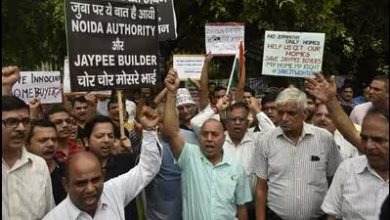
The protest that triggered the shutdown was called by the Cockroach Janata Party against Chief Election Commissioner Gyanesh Kumar. The group has alleged voter list manipulation during the Special Intensive Revision of electoral rolls and changes relating to Form six which is used for voter registration. Delhi Police had already denied permission for the gathering at Jantar Mantar. That denial did not prevent the traders from preparing for the worst. Experience from earlier weeks of agitation had taught them that even a denied protest can still generate barricades, traffic diversions, and sudden surges of people into commercial zones. The Economic Times recorded the same sequence of events and the same two thousand crore estimate.
What makes the two thousand crore figure particularly concerning is the timing. The festive season is the period when Delhi’s retail trade recovers a substantial portion of its annual revenue. Shopkeepers in Connaught Place and the surrounding markets of Khan Market, Karol Bagh, Sadar Bazaar and Chawri Bazaar had already stocked inventory in anticipation of higher footfall. When the shutters stay down the inventory continues to incur storage costs, interest on working capital, and in the case of perishable goods actual spoilage.
Khan Market traders separately estimated that a single day’s closure costs each shop between one lakh and one and a half lakh rupees. Multiplied across the hundreds of establishments affected the aggregate loss climbs rapidly toward the figure cited by the Chamber of Trade and Industry. The Live Mint report that captured these per shop estimates leaves little room for doubt about the daily haemorrhage.
The human impact of these numbers is rarely examined with the same intensity that the political demands of the protest receive. Behind every closed shop stands a proprietor who still pays rent, electricity, and staff salaries whether customers arrive or not. Behind the proprietor stand sales assistants, security guards, cleaners and delivery workers whose daily earnings vanish when the market does not open. Many of these workers travel long distances by metro or bus.
When metro stations near the protest zone are restricted or when roads are barricaded the journey itself becomes uncertain. Employees then face a choice between risking personal safety and forgoing a day’s wage. The Economic Times later reported that footfall in Connaught Place and Khan Market had already fallen by as much as ninety percent over three consecutive days of disruption. That collapse in customer presence turns even an open shop into a loss making exercise.
The pattern of repeated disruption raises a deeper question about the allocation of public space in the capital. Jantar Mantar has long been the default venue for demonstrations. Its proximity to Connaught Place means that any large gathering immediately affects the commercial district. Traders have repeatedly asked for designated protest sites that sit farther from the city’s economic core. The New Delhi Traders Association has urged the government to shift demonstrations to larger open spaces where crowds can assemble without choking arterial roads or commercial arteries.
The Delhi High Court has now agreed to examine petitions seeking standard operating procedures that would regulate the manner and location of protests so that commercial activity is not brought to a standstill. Business Standard recorded the court’s decision to hear the matter after petitioners claimed losses of around two thousand crore rupees from recent demonstrations.
The court’s intervention arrives after weeks in which markets have oscillated between partial opening and forced closure. Earlier in the year Connaught Place had already been subjected to early shut down orders when previous rounds of agitation spilled beyond Jantar Mantar. On one occasion tear gas was used inside the Inner Circle. Traders still recall the loss of confidence that followed. Customers who once regarded the market as a safe weekend destination began to stay away.
Premium brands that maintain flagship stores in the complex started to reconsider the reliability of the location. The cumulative effect is a slow erosion of the market’s reputation as a premier retail destination. Once that reputation is damaged recovery takes far longer than the duration of any single protest.
The two thousand crore estimate itself invites further scrutiny. Is the figure an extrapolation based on average daily turnover multiplied by the number of affected establishments or does it incorporate secondary losses to the supply chain. The Chamber of Trade and Industry has not released a detailed methodology in the public domain. Yet the consistency with which the number has been repeated across independent reports suggests that traders on the ground regard it as a realistic assessment of the damage.
When the same figure appears in Moneycontrol, Economic Times, Business World and News18 the probability that it is pure invention diminishes. What remains is the uncomfortable reality that a single day of protest related closure can erase economic value equivalent to the annual budgets of several smaller municipal corporations.
The security response that accompanied the protest only deepened the commercial paralysis. More than twenty five thousand police and paramilitary personnel were deployed across central Delhi. Roads leading into Connaught Place were sealed. Metro stations were either closed or subjected to heavy checks. Internet services in the immediate vicinity were restricted. Each of these measures, while justified in the name of public order, simultaneously removed the last remaining avenues through which customers might have reached the market.
Traders who had hoped to remain open found themselves without staff, without digital payment systems, and without any realistic prospect of footfall. The Hindustan Times described the heart of the capital as emptied of everyone except security personnel, anti riot vehicles and journalists.
The question that must now be asked is whether the current framework for managing protests adequately weighs the economic consequences against the political expression. The right to assemble is fundamental. Yet the right to livelihood is equally fundamental. When the exercise of one systematically extinguishes the other the balance has tilted too far.
The Delhi High Court’s decision to examine the need for standard operating procedures is a belated recognition of this imbalance. Petitioners have pointed out that lawyers and traders both suffer when the central business district becomes inaccessible. The court has directed the Centre and the police to seek instructions before the next hearing. Whether that process yields enforceable guidelines or merely another round of discussion remains to be seen.
Meanwhile the festive season continues its calendar. Every closed Saturday subtracts from the window in which retailers can recover their yearly margins. Every day of reduced footfall pushes smaller establishments closer to the edge of viability. The workers who clean the corridors, the security staff who guard the entrances, and the delivery personnel who supply the shops do not appear in the political slogans that echo around Jantar Mantar. Their absence from the narrative does not diminish the reality of their losses. When a market of Connaught Place’s scale falls silent the silence is paid for by people who never asked to become collateral in someone else’s campaign.
The repeated nature of these disruptions compounds the damage. Earlier phases of agitation had already forced early closures and produced footfall declines of seventy to ninety percent. The latest shutdown arrives before those losses have been absorbed. Inventory purchased on credit remains unpaid. Rental cycles continue. The cumulative burden begins to reshape decisions about whether to remain in the market at all. Some proprietors have begun to explore alternative locations or to reduce the size of their operations. Once that migration gathers momentum the commercial character of the district itself begins to change. The loss then becomes structural rather than temporary.
Authorities have now designated alternative protest venues at Ramlila Ground, Burari Ground and CBD Ground. The shift is intended to move large gatherings away from the commercial core. Whether the Cockroach Janata Party and other groups will accept these sites or continue to press for access to Jantar Mantar will determine whether the next weekend brings another round of shuttered shops. The traders have already signalled that they will remain vigilant and may choose to close again if the risk of spillover remains high.
The New Delhi Traders Association has advised shopkeepers near Janpath and Regal crossing to weigh safety carefully before deciding to open. That advisory itself is an admission that the ordinary expectation of a functioning market can no longer be taken for granted.
The two thousand crore figure continues to circulate because it captures a truth that is otherwise difficult to quantify. It is the price of uncertainty imposed on a commercial ecosystem that requires predictability to function. When protest organisers announce a gathering and security agencies respond with blanket restrictions the market is left with only one rational choice. Close the shutters, protect the inventory, and absorb the loss. That choice is rational for the individual trader yet catastrophic when multiplied across an entire district. The result is a collective economic wound that no single political demand can justify.
The interrogative that remains unanswered is how many more such wounds the city is prepared to accept. Each successive protest that forces commercial closure chips away at the resilience of the trading community. At some point the cumulative damage will exceed the capacity of smaller businesses to recover. When that threshold is crossed the empty colonnades of Connaught Place will stand as a permanent reminder that the right to protest was exercised without any corresponding duty to minimise harm to those who never chose to participate.
The court may eventually craft procedures that restore a measure of balance. Until those procedures exist and are enforced the pattern of shutdown, loss, and slow recovery will continue to define the commercial calendar of the capital.
The human cost extends beyond the shop owners who calculate their daily shortfall. Daily wage earners who work in the restaurants and cafes of the Inner and Outer Circles lose income that cannot be recovered. Many of these workers support families in the National Capital Region. A single lost Saturday can mean delayed school fees, postponed medical treatment, or reduced household consumption.
The secondary effects ripple through the informal economy that surrounds the formal retail trade. Street vendors who sell outside the market, autorickshaw drivers who ferry customers, and small transporters who move goods all experience reduced demand. The two thousand crore estimate, even if confined to formal retail turnover, understates the total economic contraction once these informal layers are included.
The security deployment of more than twenty five thousand personnel itself carries a fiscal cost that is never placed against the commercial losses. Public resources are diverted from other policing duties to manage a protest that was never granted permission. The opportunity cost of that diversion is borne by citizens who require ordinary law and order services elsewhere in the city. When the same pattern repeats across multiple weekends the cumulative public expenditure becomes another unexamined component of the overall burden.
Traders have begun to articulate a clearer demand. They seek designated venues that can accommodate large gatherings without paralysing the commercial heart of the city. They seek advance notice and coordination so that businesses can plan around known disruptions rather than react to sudden barricades. They seek accountability when protest spillover causes actual damage to property. These demands are not a rejection of the right to assemble. They are a request that the exercise of that right be structured in a way that does not systematically destroy the livelihoods of non participants. The Delhi High Court’s willingness to examine the need for standard operating procedures is the first institutional acknowledgment that the current arrangement is unsustainable.
Whether the eventual guidelines will carry the force of enforceable regulation or remain advisory remains an open question. Past experience with similar recommendations suggests that implementation often lags behind intention. If the designated venues at Ramlila Ground, Burari Ground and CBD Ground are not accepted by protest organisers, or if organisers continue to attempt entry into the restricted zones around Jantar Mantar, the cycle of closure and loss will simply resume. The traders of Connaught Place have already demonstrated that they will prioritise safety over sales when the risk becomes too high. That prioritisation is rational. It is also an indictment of a system that repeatedly forces them into such a choice.
The festive season will not wait for the resolution of these institutional questions. Every day that footfall remains depressed is a day of irreversible loss for the current retail cycle. Inventory that was purchased for the peak period will either be sold at discounted rates or carried into the next season at additional cost. The margin compression that follows will be felt for months. Smaller establishments with limited working capital are particularly vulnerable. Some will not reopen after prolonged disruption. Their absence will further thin the commercial fabric of the district.
The narrative that surrounds the protest focuses almost exclusively on the political grievances that animate the demonstrators. The economic grievances of the traders receive far less sustained attention. This imbalance in public discourse itself contributes to the continuation of the problem. When the human and commercial costs remain peripheral to the dominant story the pressure to design better systems remains weak. The two thousand crore figure should have triggered an immediate and public conversation about the terms on which protest can coexist with commerce in a dense urban capital. Instead it has been treated as a secondary detail in reports that prioritise the political theatre.
The silence of Connaught Place on a Saturday that should have been one of its busiest days is therefore more than a temporary inconvenience. It is a visible symptom of an unresolved conflict between two sets of rights that the current administrative framework has failed to reconcile. Until that reconciliation is achieved the pattern will continue. Markets will close. Losses will mount. Workers will go unpaid. And the interrogative that hangs over every shuttered shop will grow more insistent. How many more days of commercial death will the capital endure before the true cost of unrestricted street agitation is finally confronted and constrained.