When The Son Of A Suspended IAS Officer Appears In A ₹2 Crore Hawala Trail, The IDFC FIRST Bank Fraud Case Raises One Terrifying Question. Who Else Got The Money?
Hundreds of crores in government money allegedly diverted. ₹45.45 crore reportedly returned in cash. And now, a ₹2 crore hawala trail leading to the son of a suspended IAS officer. The IDFC FIRST Bank fraud investigation is getting bigger. The question is no longer just where the money went, but who else got it.

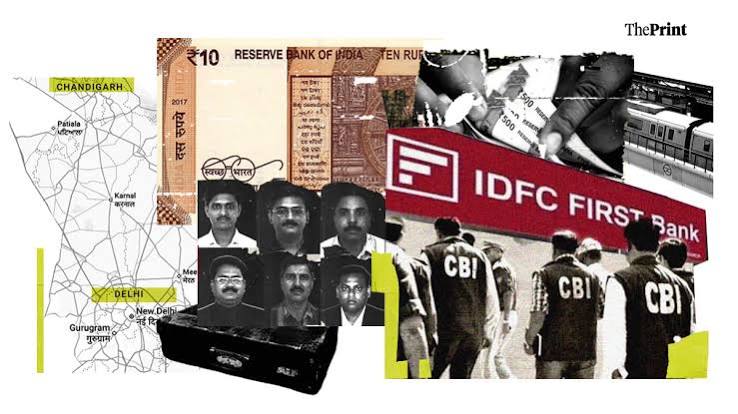
The latest development in the IDFC FIRST Bank fraud investigation takes the case beyond missing government deposits and suspicious bank transfers. The Central Bureau of Investigation (CBI) is now examining an alleged hawala transaction involving ₹2 crore, reportedly routed to the son of a suspended IAS officer.
The development raises a bigger question: if public money was allegedly diverted through banking channels and moved through cash networks, who ultimately benefited, and how much of the trail remains unexplained?
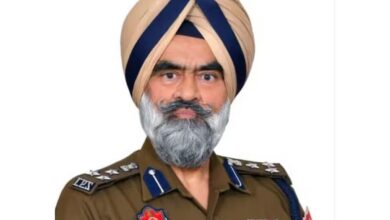
According to the latest reports, CBI alleges that ₹2 crore originating from funds diverted from the Kalka Municipal Council was routed through hawala operators to the son of suspended IAS officer R.K. Singh on January 22, 2026.
Businessman Mohit Goyal was arrested in connection with the alleged transaction, bringing another set of individuals and financial movements into an investigation that began with discrepancies in Haryana government accounts.
The ₹59.50 Crore Trail, ₹45.45 Crore In Cash And The Businesses Under Scrutiny
The alleged ₹2 crore hawala payment is only one part of the money trail investigators are examining.
According to the CBI’s allegations, Mohit Goyal and his associated businesses received ₹59.50 crore from two entities, RS Traders and CAPCO Fintech Services, between October 11, 2023, and January 28, 2026. Investigators allege that these entities were linked to Ribhav Rishi, the former IDFC FIRST Bank branch manager accused of facilitating the diversion of government funds.
The crucial detail is what allegedly happened after the money arrived. Of the ₹59.50 crore received, ₹14.05 crore was returned through banking channels, while the remaining ₹45.45 crore was allegedly returned in cash. The CBI is now trying to establish how that cash was arranged, who collected it, who received it and whether further payments were made to public servants or other individuals.
The investigation has also examined transactions involving Chandigarh Mega Store, one of Goyal’s businesses. The CBI alleges that approximately ₹54.04 crore out of ₹58.68 crore credited to the firm’s account was transferred to various individuals and jewellers without corresponding purchases of goods or jewellery. The reported recipients include Sawan Jewellers, MB Gold and Sham Jeweller, among others.
These figures describe different parts of the transaction trail and should not be added together as if they represent separate losses. The same funds may have moved through multiple accounts before being withdrawn, transferred or returned.
That is what makes the cash component particularly important. Bank transfers leave records that investigators can examine. Once money is withdrawn and passed between individuals, establishing the complete chain becomes more difficult. The CBI’s task is to reconstruct those movements and determine which transactions were legitimate, which were allegedly designed to disguise the money’s origin, and who ultimately benefited.
The unanswered question is whether the ₹2 crore hawala transaction was an isolated payment or one identifiable part of a wider network through which allegedly diverted public funds reached their intended beneficiaries.
The Missing ₹50 Crore That Exposed The Alleged Fraud
The case began with a discrepancy that should never have arisen in the first place.
In February 2026, Haryana’s Development and Panchayats Department sought to move its funds from IDFC FIRST Bank to another bank. The department had deposited ₹50 crore under the Mukhyamantri Gramin Awas Yojana scheme, but when officials attempted to transfer the money, the bank reportedly moved only ₹1.27 crore. The remaining balance had to be accounted for.
The mismatch triggered an inquiry into the department’s accounts. What emerged was more troubling than a simple accounting error. Investigators reportedly found transactions supported by cheques and debit notes bearing suspected forged signatures, along with transfers that did not match the department’s established procedures.
One transaction stood out. A cheque reportedly mentioned ₹2.5 crore in figures but stated only “Rupees Twenty-Five” in words. Despite this glaring discrepancy, ₹25 crore was allegedly transferred from the department’s account. Investigators also examined transfers totalling approximately ₹46.56 crore to AU Small Finance Bank that were allegedly processed using disputed cheques and debit notes.
The department’s inquiry did not stop there. Other Haryana government entities began checking their own accounts and fixed deposits, and further discrepancies emerged. The issue was no longer confined to one department or one disputed transaction. It had become a wider investigation into whether government funds held in bank accounts and fixed deposits had been diverted without authorisation.
That is how a request to transfer government money exposed a suspected fraud involving hundreds of crores. And it left investigators with a far bigger task: establishing how the transactions were authorised, where the money went, and whether the same methods had been used across multiple accounts.
Forged Documents, Suspicious Transfers And A Network Of Accounts
As investigators widened their examination, the alleged method of diversion began to take shape. The case was not simply about money missing from government accounts. It involved questions about how transactions were processed, whether banking procedures were bypassed, and how funds allegedly moved from government-linked accounts into accounts controlled by other individuals and businesses.
The investigation brought at least 391 suspicious transactions across more than 170 accounts under scrutiny. These included accounts associated with businessmen, real-estate firms and other entities, while investigators examined the possible involvement of bank employees and government officials.
The alleged use of forged cheques, disputed debit notes and questionable fixed-deposit records is central to understanding the case. Government departments believed that substantial sums were held in their accounts or fixed deposits, but investigators were examining transactions suggesting that money had been transferred elsewhere without proper authorisation.
The Enforcement Directorate’s investigation subsequently identified several alleged beneficiary entities, including Swastik Desh Projects, CAPCO Fintech Services and Maa Vaibhav Laxmi Interiors. Its March 2026 search operations also covered former bank employees, their associates, jewellers and real-estate-linked individuals. These searches were part of an effort to trace the suspected proceeds of the alleged diversion.
The bank, for its part, said its preliminary assessment indicated the involvement of certain current and former employees, potentially acting with external parties. It appointed KPMG to conduct an independent forensic review examining potentially unauthorised transactions, possible staff involvement, potential beneficiaries and the scale of the suspected activity.
The central question, therefore, is not merely whether individual transactions were fraudulent. It is how those transactions were able to pass through the relevant processes, whether controls that should have detected irregularities failed, and how far the alleged chain of beneficiaries extended.
The ₹504 Crore Case, The ₹645 Crore Figure And The Government Departments Caught In The Middle
The IDFC FIRST Bank investigation is not confined to one department, one account or one alleged beneficiary. The CBI’s case centres on the alleged diversion of approximately ₹504 crore belonging to eight Haryana government departments and public bodies, while the Enforcement Directorate has investigated a broader figure of approximately ₹645 crore.
The eight bodies named in the CBI investigation include the Development and Panchayats Department, the Municipal Corporations of Panchkula and Kalka, Haryana School Shiksha Pariyojna Parishad, the Haryana Labour Welfare Board, the Haryana State Agricultural Marketing Board, the Haryana State Pollution Control Board and Haryana Power Generation Corporation Limited.
These are public institutions entrusted with money meant for government programmes, municipal functions, welfare activities and other public responsibilities. The alleged diversion therefore raises questions beyond the losses recorded in bank accounts. It raises questions about the safeguarding of public funds and the systems used to verify that deposits and fixed deposits actually exist as recorded
The CBI And ED Investigations Are Moving In Different Directions
The investigation has expanded well beyond the initial discovery of missing government funds. The Central Bureau of Investigation (CBI) is examining the alleged criminal conspiracy behind the diversion, while the Enforcement Directorate (ED) is tracing the suspected proceeds of crime and the people and businesses through which the money allegedly moved.
The CBI has filed multiple chargesheets in the Haryana government funds case. In September 2026, it chargesheeted five IAS officers and 14 other individuals, alleging that public servants, bank officials and private parties conspired to divert government funds. The agency has also sought prosecution sanction against five serving or suspended IAS officers and a former IAS officer, a necessary step before proceedings under the Prevention of Corruption Act can begin against the relevant public servants. These allegations remain subject to judicial proceedings.
The ED, meanwhile, has been examining how the alleged proceeds were routed through intermediary accounts and presented as business transactions. On September 30, it conducted searches at 14 premises across Chandigarh, Mohali and Panchkula as part of its investigation into the alleged ₹645-crore diversion. The searches included premises associated with jewellers and related entities suspected of receiving or handling funds.
The latest CBI action involving businessman Mohit Goyal adds another dimension. Investigators are now examining the alleged return of ₹45.45 crore in cash, the reported ₹2-crore hawala transaction and whether cash was arranged for other public servants. The agency has also arrested additional individuals in connection with the alleged network, seeking to establish how the transactions were organised and who ultimately benefited.
₹94 Crore Linked To Jewellers And The Search For The Final Beneficiaries
The investigation has now extended beyond the accounts of government departments and intermediary companies to businesses allegedly used to move and convert the diverted funds. The latest CBI action has brought several businessmen and other intermediaries under scrutiny, with investigators examining whether transfers presented as commercial transactions were actually part of a mechanism to return siphoned money in cash.
According to The Tribune, the CBI is investigating approximately ₹93.99 crore transferred to jewellers and associated businesses in transactions allegedly linked to the wider fraud. Malik Jewellers reportedly received ₹58.47 crore across 80 transactions, while three KLG-related firms received ₹28.55 crore. Sunder Jewellers reportedly received ₹3.16 crore. The agency alleges that these entities received money from intermediary firms without corresponding legitimate transactions explaining the transfers.
The alleged pattern is important. According to investigators, some payments were made on the same day that the intermediary companies received government funds. That timing could help establish whether the transfers were part of a coordinated process rather than ordinary business activity. The CBI is examining how much money was returned, who arranged the cash, and whether the transactions were used to conceal the original source of the funds.
The latest arrests have also widened the investigation into the people allegedly facilitating these movements. Alongside businessman Mohit Goyal, the CBI arrested businessman Gaurav Kansal, chartered accountant Siddharath Narula and another accused identified as Manoj. Their alleged roles and the transactions linked to them are now part of the agency’s efforts to reconstruct the financial chain.
The Warning Signs Inside The Bank And The Questions Nobody Can Ignore
One of the most consequential questions in the IDFC FIRST Bank case is whether the alleged fraud could have been detected earlier. The investigation is examining the conduct of bank employees and government officials, but reporting has also raised questions about whether warning signs were identified before the discrepancies became a criminal case.
According to reports, Anish Kapur, IDFC FIRST Bank’s regional head for government banking, emailed two superiors on March 29, 2025, flagging concerns about the Chandigarh branch’s government-banking operations. His concerns reportedly included interest rates that he said had not been approved by the bank, procedural issues, risks and possible influence. The report said his account had become part of the CBI case record.
That detail raises a difficult question about the bank’s internal response. If concerns had been raised months before the February 2026 FIR, what action followed?
Were the transactions investigated, were the relevant accounts reviewed, and were the authorities informed?
The bank has commissioned a forensic review and has identified the involvement of certain current and former employees and external parties as a focus of its investigation.
Its own review, disclosed in May 2026, examined unauthorised transactions, possible beneficiaries and the movement of funds into accounts held at other banks. The report also noted that tracing ultimate beneficiaries would require access to records from other financial institutions and cooperation from law-enforcement agencies.
Who Else Got The Money, And Can Investigators Trace Every Rupee?
The IDFC FIRST Bank case now rests on a question that is much harder to answer than identifying a suspicious transfer: where did the money ultimately go?
The original discrepancy exposed the alleged diversion of government funds.
The subsequent investigation uncovered disputed banking transactions, transfers through intermediary companies, payments to businesses and jewellers, and allegations of cash returns. The latest hawala findings add another layer, raising the possibility that some money moved beyond conventional banking records before reaching its alleged recipients.
But tracing a transaction is not the same as establishing criminal responsibility. Investigators must determine whether each transfer involved money originating from the alleged fraud, whether the recipient knew its source, and whether the transaction was part of a deliberate attempt to conceal or distribute the proceeds.
They must also distinguish the people who may have knowingly facilitated the alleged diversion from those whose accounts or businesses may simply have received payments that require explanation.
The reported ₹2 crore hawala transaction is therefore important not just because of the identity of the alleged recipient, but because it may help investigators establish how funds were moved after leaving the banking system. The alleged ₹45.45 crore in cash returns presents a related challenge: identifying the people who handled that money and establishing where it eventually went.
Five IAS Officers, Prosecution Sanctions And The Question Of Accountability
‘The investigation has also moved closer to a crucial test of accountability: whether the evidence gathered against public servants will translate into criminal proceedings and establish who was responsible for the alleged diversion.
In October 2026, the CBI sought prosecution sanction against five IAS officers and a former IAS officer in the ₹504-crore Haryana government funds case.
The officers named in the report include Vineet Garg, Pankaj Agarwal, Mohammad Shayin, Saket Kumar and R.K. Singh, who had already been suspended following his arrest.
The CBI’s earlier chargesheet, filed in September, named five IAS officers and 14 other individuals. According to the agency, public servants allegedly acted in connivance with officials of IDFC FIRST Bank and AU Small Finance Bank to divert funds belonging to eight Haryana government departments and public bodies. The alleged offences include criminal conspiracy, cheating, forgery, criminal breach of trust and corruption-related offences.
IDFC FIRST Bank has also sought to be treated as a victim in the CBI case, with the court’s decision on that request awaited at the time of its report.
The Last Bit, The Money Trail Is Expanding. The Answers Are Still Incomplete
The IDFC FIRST Bank fraud investigation began with a discrepancy between the balance a Haryana government department expected to hold and the money that could actually be transferred. It has since expanded into an alleged network involving bank employees, government officials, intermediary companies, businessmen, jewellers, cash transactions and a hawala channel.
The latest findings are particularly significant because they take the investigation closer to the alleged recipients of the money. The CBI’s account of the ₹59.50-crore transaction trail, the ₹45.45 crore reportedly returned in cash and the alleged ₹2-crore hawala payment provides investigators with specific transactions to reconstruct.
There is also an important distinction between the different figures associated with the case. The CBI’s Haryana government case concerns an alleged ₹504-crore diversion, while separate investigations and broader disclosures have referred to higher totals involving other public bodies.
The most consequential questions remain unanswered.
How much of the allegedly diverted money can be recovered? Who ultimately retained the funds? Did the cash and hawala transactions extend to other public servants? And will the evidence establish whether the alleged diversion depended on isolated acts of wrongdoing or a coordinated network operating across institutions?
The CBI and ED investigations may eventually answer these questions, but arrests and allegations are only stages in that process. The final picture will depend on the evidence, the financial trail and the findings of the courts.
For now, the central issue is difficult to ignore: if hundreds of crores in public money could allegedly be diverted through banking channels and then move through businesses, cash and hawala networks, how many of the ultimate beneficiaries have investigators yet to identify?