Vatika, TDI, And 21 CBI Chargesheets: How Many Homebuyers Have To Lose Their Life Savings Before India Treats Builder Mafia Fraud As Organized Crime?
From the arrest of Vatika’s promoters and the civil-imprisonment order against TDI directors to the CBI’s 21st chargesheet against Acme Realties, India’s real-estate disputes increasingly resemble a story of delayed accountability. Across decades, homebuyers have paid life savings, EMIs, interest and sometimes the emotional price of living between rented homes and unfinished promises. Supreme Court proceedings involving Amrapali, Jaypee and Unitech show how complex and prolonged these disputes can become, while the CBI’s nationwide investigation has now produced dozens of cases and multiple chargesheets. The disturbing question is not whether laws exist, but whether enforcement can arrive before an entire generation of homebuyers loses hope.

From Vatika Founders in ED Custody to TDI Directors Facing Civil Jail: When Will India Finally Make Builder Accountability Real?
There is something profoundly unsettling about the chronology of India’s real-estate crisis.
A family buys a flat. A father spends his retirement savings. A young couple takes a thirty-year home loan. A middle-class employee pays rent and EMI simultaneously because possession has not arrived. A senior citizen watches years pass while the house for which he paid remains unfinished. A buyer approaches the regulator. Then the consumer forum. Then the High Court. Then perhaps the Supreme Court. Years later, the developer may face an investigation, an attachment, a prosecution complaint, a chargesheet—or, in exceptional cases, even arrest.
But the house may still not exist.
That is the uncomfortable context in which the September 2026 arrest of Vatika Group’s Chairman-cum-Managing Director Anil Bhalla and promoter Gautam Bhalla must be viewed.
The Enforcement Directorate arrested the two on September 28, 2026 under Section 19 of the Prevention of Money Laundering Act. The agency’s case arises from Delhi Police Economic Offences Wing FIRs alleging fraudulent inducement, non-delivery of residential plots and related offences.
According to the ED, seven purchaser entities paid approximately ₹260 crore between 2010 and 2012 for residential plots in Vatika India Next and Vatika India Next-2 in Gurugram. Yet in Vatika India Next-2, the agency says not a single plot out of approximately 1.10 lakh square yards purchased for about ₹90 crore had been delivered even after around 14 years. Approximately ₹140.73 crore worth of plots remained undelivered across the projects under investigation.
The two accused were produced before the Special Court under PMLA in Gurugram and remanded to ED custody until October 3, 2026.
But the numbers themselves are difficult to ignore.
The ED says the money received from purchasers was not used exclusively for the projects for which it was collected. Instead, funds were allegedly transferred to other group companies and promoter-linked entities. The agency further identified approximately 22 group companies holding project land, describing them as entities without employees or separate business activity that were primarily used for corporate guarantees and management of the land bank. The ED has quantified the proceeds of crime in the present case at approximately ₹154.36 crore.
And this is not the first time the Vatika matter has reached the enforcement stage.
In January 2025, the ED said it had provisionally attached nine immovable properties, including approximately 27.36 acres of agricultural land valued at around ₹68.59 crore, in a Vatika builder-investor case. That investigation concerned allegations that investors were attracted through promises of assured returns and lease rentals but allegedly did not receive promised payments or possession. The agency said more than 600 investors had invested approximately ₹248 crore in four projects, some of which had remained incomplete or deferred for eight to twelve years.
In August 2026, the ED also searched seven premises linked to Vatika and its promoter-directors and said it seized or froze assets worth approximately ₹33 crore.
The question therefore becomes much larger than one builder.
How many years can a homebuyer reasonably be expected to wait before a failed promise becomes a serious legal consequence?
And if criminal law, PMLA proceedings, regulatory orders and judicial interventions eventually become necessary, what does that say about the effectiveness of the ordinary civil and regulatory remedies that were supposed to protect the buyer in the first place?
TDI: When a Regulator Actually Talks About Sending Directors to Civil Jail
The TDI Infrastructure case makes the question even more uncomfortable.
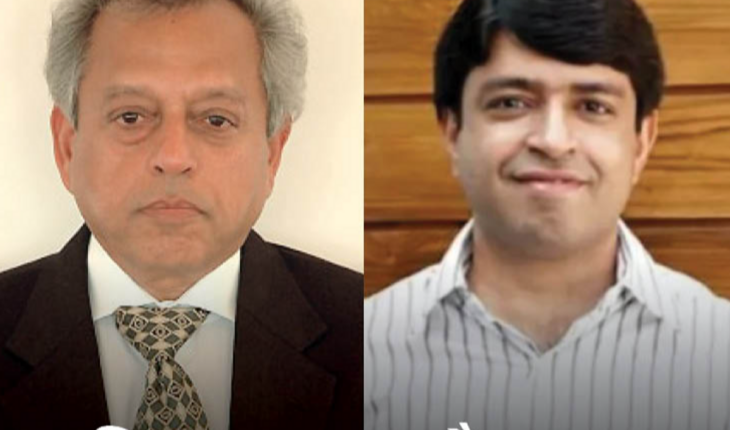
In May 2026, the Haryana Real Estate Regulatory Authority, Panchkula, ordered civil imprisonment for five directors of TDI Infrastructure in an execution matter arising from a homebuyer complaint. The directors named were Managing Director Kamal Taneja and directors Devki Nandan Taneja, Ravinder Kumar Taneja, Renu Taneja and Ved Prakash. HRERA ordered three months’ civil imprisonment in connection with repeated non-compliance with its directions.
The matter arose from Complaint No. 2950 of 2019 and Execution No. 1208 of 2024. According to reporting on the HRERA order, the authority concluded that repeated opportunities had been provided, yet the directors had not complied with the execution process. The authority treated the conduct as intentional non-compliance and rejected attempts to delay execution through recall applications.
The TDI story becomes still more serious when viewed alongside the ED investigation.
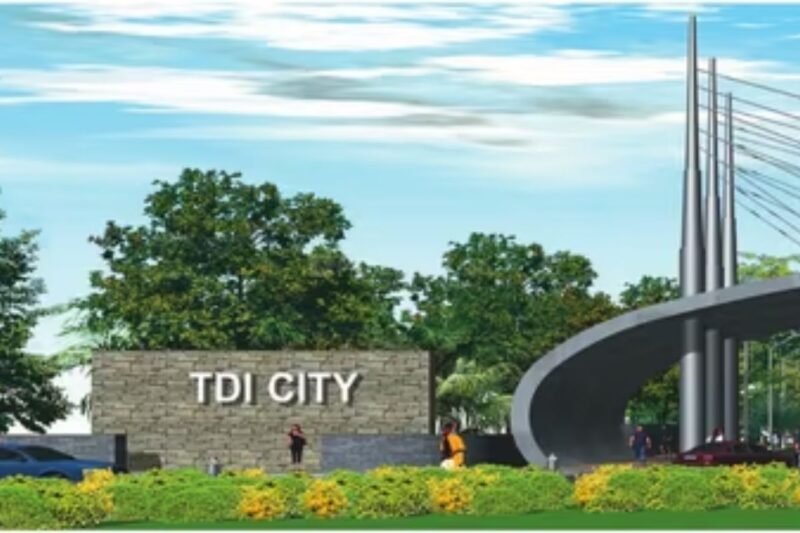
In May 2026, the ED filed a prosecution complaint against TDI Infrastructure and its directors under the PMLA. According to the agency’s case, TDI had allegedly failed to deliver promised flats and units, in some instances after delays of 16–18 years. The investigation concerns projects in Haryana and alleges that approximately ₹4,619.43 crore was collected from more than 14,100 customers across 26 residential and commercial projects launched between 2005 and 2014. The ED further alleged diversion of customer funds toward land purchases, loan repayments and investments unrelated to the projects for which the money had been collected.
If those allegations are ultimately established in court, the human dimension is enormous.
Fourteen thousand people are not an accounting entry.
- They represent families.
- They represent decades of salaries converted into down payments.
- They represent children whose education, marriages and household finances may have been planned around the expectation of finally owning a home.
- They represent people who may have paid rent while simultaneously servicing loans for houses that remained incomplete.
- And the most disturbing element is the passage of time.
- A construction delay of several months is a commercial inconvenience.
- A delay of five years changes a person’s financial life.
- A delay of fifteen or eighteen years can change an entire generation.
The CBI’s 21st Chargesheet: Acme Becomes Another Name on a Growing List
On September 28, 2026, the Central Bureau of Investigation filed its 21st chargesheet in its nationwide homebuyer-fraud investigation.
The latest chargesheet concerns five erstwhile promoters and directors of Acme Realties Private Limited and its holding company Acme Housing India Private Limited in relation to the Acme Boulevard project at Jogeshwari East, Mumbai.
According to the CBI, the accused allegedly induced homebuyers through false assurances and fraudulent representations and obtained financial benefits through illegal and deceptive means. The chargesheet invokes offences relating to criminal conspiracy, cheating, criminal breach of trust and dishonest receipt of stolen property.
But the scale of the investigation is itself significant.
The CBI says that it is still investigating another 32 cases registered pursuant to Supreme Court directions against various builder companies and unidentified officials of financial institutions in matters concerning alleged cheating and diversion of funds involving homebuyers. Before Acme, the agency had filed 20 chargesheets against various builder companies and associated individuals, including Rudra Buildwell Constructions, Dream Procon, Jaypee Infratech, AVJ Developers, CHD Developers, Sequel Buildcon, Logix City Developers, Manju J Homes, Shubhkamna Buildtech, Ninex Developers and others.
This is not a single builder dispute.
It is a national enforcement exercise.
And it began because homebuyers repeatedly approached the Supreme Court alleging a broader problem involving builders and financial institutions.
In April 2026, the CBI said it had registered 22 new cases pursuant to Supreme Court directions, taking its total to 50 cases in the builder-financial-institution investigation. Searches were conducted at 77 locations across eight States/UTs. The agency said the cases concerned alleged diversion of funds, financial irregularities and fraudulent practices affecting homebuyers.
That figure—50 cases—should force a much larger question.
If the problem were simply a few dishonest individuals or isolated failed projects, why has the Supreme Court-directed investigation produced such a broad national enforcement footprint?
Twenty Developer Names in the CBI’s Homebuyer-Fraud Investigation
The CBI’s chargesheet trail provides an unusually concrete way of understanding the scale.
The following are 20 developer entities that have appeared in the Supreme Court-directed CBI homebuyer-fraud investigation through chargesheets or the latest Acme filing.
1. Rudra Buildwell Constructions
Rudra Buildwell Constructions was among the first cases in which the CBI completed investigation and filed a chargesheet. The Supreme Court’s record specifically identifies the Rudra Buildwell Constructions case concerning the KBNOWS Apartments project in Greater Noida as one of the first completed investigations.
The significance is less about one project and more about the mechanism under investigation: the Court’s proceedings examined allegations of systemic misuse of builder-financing arrangements and the consequences for homebuyers.
2. Dream Procon
Dream Procon’s Victory Ace project in Noida was another of the first cases in which the CBI completed investigation and filed a chargesheet. The Supreme Court record identifies Dream Procon alongside Rudra Buildwell and Jaypee Infratech as the first three completed investigations in the Court-monitored process.
The project therefore became part of a larger investigation into the alleged misuse of housing-finance arrangements rather than remaining merely a private consumer dispute.
3. Jaypee Infratech
Jaypee is perhaps one of the clearest illustrations of how a real-estate crisis can become a national judicial problem.
The Supreme Court’s proceedings concerning Jaypee were initiated specifically to protect homebuyers. Jaypee Infratech entered insolvency proceedings after default, while thousands of buyers faced uncertainty over unfinished projects. The Court subsequently dealt with complex questions concerning Jaypee’s holding company, mortgages, insolvency and the rights of homebuyers.
What does it tell the ordinary buyer when purchasing a home requires the Supreme Court to intervene years later to determine how the project can be completed?
4. AVJ Developers
The CBI’s investigation into AVJ Developers allegedly identified a builder-bank arrangement involving proxy buyers and loans that allegedly bypassed banking norms. The agency filed a chargesheet against AVJ Developers, its directors and officials associated with Bank of India, ICICI Bank and UCO Bank.
The allegation is particularly significant because it moves beyond a simple builder-versus-buyer dispute.
It raises the uncomfortable possibility of a financing ecosystem in which the buyer, the builder and financial institutions may become intertwined in transactions whose consequences ultimately fall upon the purchaser.
5. CHD Developers
CHD Developers is another company against which the CBI has filed a chargesheet in the nationwide investigation. It was among the entities named in the CBI’s earlier chargesheet list and in the original Supreme Court-directed builder-bank probe.
The wider investigation concerns allegations that homebuyers were induced through representations and financing structures and that funds were allegedly diverted or misused.
6. Sequel Buildcon
Sequel Buildcon, associated with the Belvedere project, was also named in the CBI’s builder-bank investigation. It was among the entities against which chargesheets were filed in the first phase of the nationwide probe.
The recurring issue across these cases is striking: buyers were not merely purchasing bricks and concrete. They were entering financial structures in which delayed or diverted funds could leave them carrying liabilities long after construction stopped.
7. Logix City Developers
The CBI filed a chargesheet against Logix City Developers and its directors, while bank officials were also named. The agency alleged conspiracy to cheat homebuyers and financial institutions in connection with a Noida housing project.
Logix’s inclusion is important because it again brings banks into the picture.
If a buyer takes a loan because a developer says a project is legitimate and progressing, and the project subsequently collapses, who bears the consequences?
The buyer frequently remains the weakest party.
8. Manju J Homes India
Manju J Homes India was among the companies named in the CBI chargesheet list and also appears in NCLT records involving insolvency proceedings. The company is associated with Red Apple Homez in the CBI’s FIR listing.
This illustrates another recurring problem: insolvency may create a legal mechanism for resolution, but for an individual buyer, insolvency can mean yet another period of uncertainty.
9. Shubhkamna Buildtech
Shubhkamna Buildtech appears in the CBI’s chargesheeted cases and has also featured in insolvency proceedings. NCLT records show insolvency proceedings involving the company and a resolution plan approved in 2022.
The question for buyers is obvious: does a resolution plan necessarily mean immediate restoration of the life they had planned around their homes?
10. Ninex Developers
The CBI’s 11th chargesheet in June 2026 concerned Ninex Developers and one of its directors. The agency alleged that the company and director induced buyers through false assurances and deceptive promises, collected funds and failed to honour commitments.
At that point, the CBI said it was investigating 50 cases involving real-estate developers and unidentified bank or financial-institution officials.
Again, the significance is cumulative.
One case can be dismissed as one company’s failure.
Fifty cases demand institutional scrutiny.
11. Decent Buildwell
Decent Buildwell, associated with Shri Radha Aqua Gardens, was among the companies named in the CBI’s nationwide builder-fraud investigation.
The case forms part of the same examination of alleged deceptive financing, fund diversion and builder-bank relationships.
12. Rudra Buildwell Projects
Rudra Buildwell Projects, associated with Rudra Palace Heights, was separately identified from Rudra Buildwell Constructions in the CBI investigation.
That distinction matters because the proliferation of project-specific corporate entities can make accountability complicated.
For a buyer, however, the distinction may feel meaningless.
The person who purchased the apartment does not experience a corporate structure.
He or she experiences one thing: the house is either there or it is not.
13. Ithaca Estate
In July 2026, the CBI filed a chargesheet against Ithaca Estate and its director in Bengaluru, also naming officials of HDFC Bank, ICICI Bank and Indiabulls Housing Finance in the relevant investigation. The agency alleged that builders, directors, bank officials and other private persons conspired to induce homebuyers through false assurances and deceptive representations.
The Bengaluru case demonstrates that the phenomenon is not restricted to the NCR.
14. LGCL Urban Homes
LGCL Urban Homes was another Bengaluru developer named in the CBI’s July 2026 chargesheeting action. Bank officials were also named in the investigation.
The recurrence of banks across these investigations raises a question larger than builder misconduct:
Was the homebuyer adequately protected when the financial system itself helped finance the transaction?
15. Saha Infratech
In July 2026, the CBI filed its 16th chargesheet against Saha Infratech and its directors, as well as officials associated with HDFC Bank and ICICI Bank, in connection with an alleged Noida housing-project fraud. The CBI alleged false assurances, fraudulent representations and illegal means of obtaining financial benefits. The agency’s action again demonstrates that the investigation is examining the entire ecosystem rather than merely asking whether construction stopped.
16. Ozone Urbana Infra Developers
In July 2026, the CBI filed a chargesheet against Ozone Urbana Infra Developers and its director in Bengaluru. According to the agency’s allegations, buyers were allegedly induced by promises that the builder would bear pre-construction EMIs, but funds were allegedly misappropriated without delivery of the apartments. This is precisely the type of promise that can make an apparently affordable purchase financially devastating when the promise collapses.
17. MKHS Housing
MKHS Housing also appears in the later stages of the CBI investigation into the builder-bank nexus. The wider cases examine alleged fraudulent housing transactions involving developers and financial institutions.
18. Earthcon Universal Infratech
Earthcon Universal Infratech, associated with the Casa Royale project, was among the developers named in the Supreme Court-directed CBI investigation. It was subsequently among the companies against which the agency filed chargesheets.
19. Ajnara India
Ajnara India, associated with projects including Ajnara Ambrosia, was among the developers named in the CBI’s original builder-bank FIRs and later chargesheet list.
20. Acme Realties
And then came Acme.
The CBI’s 21st chargesheet concerns Acme Boulevard in Mumbai’s Jogeshwari East and five former promoters/directors. The agency alleges false assurances and fraudulent representations to homebuyers. Twenty-one chargesheets later, the uncomfortable question is no longer whether enforcement agencies have noticed the problem.
But This Crisis Did Not Begin With the CBI
The most important cases in India’s housing crisis predate the current CBI investigation by many years.
The Amrapali saga is perhaps the starkest example.
In its 2019 judgment, the Supreme Court recorded that buyers had paid substantial portions—sometimes 50% to 100%—of the purchase price while possession remained undelivered. The Court also dealt with allegations and findings concerning diversion of homebuyer funds, irregularities and the relationship between the developer, authorities and banks.
The Court’s observations were extraordinary.
It recorded that there had been bogus allotments, serious failures toward buyers and substantial diversion of money paid by homebuyers. It also held that the Amrapali group’s registration under RERA deserved cancellation in view of the violations and failure to fulfil obligations toward buyers.
This was not simply a delayed possession case.
- It became a judicial reconstruction of an entire real-estate ecosystem.
- And that is precisely why Amrapali remains so important.
- A homebuyer ordinarily expects the law to operate invisibly in the background.
- Approvals should already exist.
- Money should be used for the project.
- The developer should construct.
- Authorities should monitor.
- Banks should conduct due diligence.
And if something goes wrong, the legal system should correct it quickly.
Instead, in cases like Amrapali, the Supreme Court itself became part of the machinery needed to rescue the homebuyer.
Jaypee: When Insolvency Becomes a Homebuyer’s Life Sentence of Waiting
Jaypee illustrates another problem: insolvency.
The Supreme Court’s Jaypee proceedings were initiated specifically to protect homebuyers. Jaypee Infratech had entered insolvency proceedings, while questions emerged concerning mortgages and transactions involving the developer’s holding company, Jaiprakash Associates.
The Supreme Court later dealt with the position of homebuyers in the insolvency process and insisted upon protecting their interests.
- But what does insolvency mean to a family?
- To a financial institution, it is a resolution process.
- To an insolvency professional, it is a corporate restructuring.
To a buyer, it can mean:
Where is my house?
That difference between legal vocabulary and human experience is central to India’s builder crisis.
Unitech: When the Supreme Court Has to Manage the Housing Project Itself
Unitech demonstrates perhaps even more painfully what prolonged litigation can do to homebuyers.
In 2025, Unitech’s own portal recorded that 12,130 homebuyers had registered, of whom 4,576 had opted for refund through the process created pursuant to Supreme Court directions.
The Supreme Court has continued to monitor the matter.
In April 2024, the Court observed that it had been monitoring the Unitech homebuyer issue for years and warned that, without judicial intervention, the matter risked remaining in limbo. The Court noted that buyers had undertaken financial liabilities and that their concerns required protection.
In October 2022, the Court approved the refund of ₹83.80 crore to 220 homebuyers on medical-exigency grounds.
By February 2025, the Supreme Court was still directing procedures for refunds to senior citizens aged 75 years and above.
Think about what that means.
Someone could have bought a house while still working.
Then retired.
Then grown old.
And still be fighting over the money or home that was supposed to secure that retirement.
At what point does delay cease to be procedural?
At what point does delay itself become a form of injustice?
Supertech: Even a Demolition Order Does Not End the Story
Supertech’s twin-tower saga showed another extraordinary dimension.
The Supreme Court ordered demolition of the illegally constructed towers at Emerald Court in Noida. The subsequent proceedings also required protection of the homebuyers’ financial interests and refund arrangements. By March 2022, Supertech had reportedly settled refund claims concerning 652 of the 711 sold units in the twin towers, while 59 remained with outstanding principal amounts.
The case demonstrated that a homebuyer can become collateral damage in a dispute over construction permissions, development rules and corporate obligations.
- The buyer does not control the sanction.
- The buyer does not control the plan approval.
- The buyer does not control the construction.
- The buyer does not control the financing.
Yet the buyer may ultimately bear the uncertainty.
Parsvnath: When the Supreme Court Says “Another Device” to Delay
The Parsvnath story shows that the problem has not disappeared even after RERA and years of judicial precedent.
In 2024, the Supreme Court considered a Parsvnath case where the NCDRC had directed refund of the amount deposited by homebuyers with 9% interest.
More recently, in September 2026, the Supreme Court rejected a Parsvnath proposal that sought to resolve homebuyer claims through possession or repayment over a year. Reporting on the proceedings said the Court considered the proposal an apparent mechanism that would prolong the proceedings and required a fresh proposal covering the claims of allottees.
That raises one of the most important questions in the entire debate:
How many “final” proposals can a homebuyer be expected to survive?
The List Does Not End There
The broader universe of allegations and proceedings involving major developers includes companies such as Ansal Properties & Infrastructure, Parsvnath Developers, Amrapali, Jaypee Infratech, Unitech, Supertech, TDI Infrastructure, Vatika, Ajnara India, CHD Developers, Logix City Developers, Ninex Developers, Rudra Buildwell, Shubhkamna Buildtech, Saha Infratech, Earthcon Universal, AVJ Developers, Ozone Urbana, LGCL Urban Homes and Acme Realties.
The Most Dangerous Feature of the Builder Crisis Is Not Delay—It Is Time
The Indian homebuyer often enters the real-estate market with one assumption:
the law will protect me if something goes wrong.
But the real-world experience documented by these cases suggests a more complicated reality.
The buyer may first approach the developer.
Then customer care.
Then the authority.
Then RERA.
Then NCDRC.
Then a High Court.
Then the Supreme Court.
Then insolvency proceedings.
Then execution.
Then enforcement.
Then refund.
Then another application.
Then another hearing.
Years can disappear inside this chain.
The homebuyer, however, cannot suspend life while litigation continues.
Children grow up.
Parents die.
Jobs change.
Interest accumulates.
Rent continues.
Medical emergencies occur.
Retirement arrives.
And the promised home remains a legal file.
This is why describing the issue merely as a “real-estate dispute” can sound almost sterile.
For a family, it can be a life crisis.
Is the Builder Stronger Than the Buyer Because the System Is Fragmented?
- India has RERA.
- India has consumer protection law.
- India has civil courts.
- India has criminal law.
- India has the Insolvency and Bankruptcy Code.
- India has economic-offence investigations.
- India has the ED.
- India has the CBI.
- India has financial regulators and development authorities.
On paper, the architecture appears extensive.
But a builder dispute can cross all of them.
That creates a dangerous possibility: every authority may have a piece of the problem while no authority has complete responsibility for solving the buyer’s problem quickly.
The Supreme Court’s intervention in the builder-bank investigation is therefore particularly significant.
The Court did not merely ask whether construction had stopped.
The investigation was expanded into allegations concerning builders, financial institutions, fund diversion and alleged systemic misuse of subvention arrangements. The CBI’s April 2026 nationwide search operation involved 77 locations across eight States/UTs and followed the registration of 22 additional cases, bringing the total number of CBI cases in the exercise to 50.
That is an extraordinary scale for a sector that routinely markets itself as the vehicle through which ordinary Indians achieve their dream of home ownership.
What Does “Justice” Actually Mean for a Homebuyer?
This is where the debate about punishment becomes complicated.
- Is justice the arrest of a promoter?
- Is it a chargesheet?
- Is it attachment of property?
- Is it imprisonment?
- Is it a refund?
- Is it completion of construction?
- Is it interest for the years of delay?
- Is it compensation for rent?
- Is it criminal conviction?
- Or is it simply the ability of the buyer to finally enter the front door of the home he paid for?
The answer cannot be identical in every case.
But one proposition should be non-negotiable:
The system should not allow the passage of time itself to become a weapon against the homebuyer.
If a developer can delay a project for ten years, litigate for five more, enter insolvency, restructure companies and continue appeals while the buyer continues paying rent and loan interest, the practical balance of power becomes deeply unequal.
How long can that ecosystem survive?
The recent chronology is striking.
Vatika: promoters arrested by the ED in September 2026 in a PMLA investigation concerning alleged fraudulent inducement, non-delivery and alleged diversion of purchaser funds.
TDI: five directors subjected to an HRERA civil-imprisonment order, alongside a separate ED prosecution complaint involving allegations concerning more than 14,100 customers and ₹4,619.43 crore collected across projects.
CBI: 21st chargesheet filed against Acme Realties, with another 32 cases still under investigation according to the agency’s latest account.
Nationwide CBI probe: 50 cases registered following Supreme Court directions, with searches spanning 77 locations in eight States/UTs.
Amrapali: Supreme Court intervention after findings concerning serious violations, diversion of homebuyer money and failures toward buyers.
Jaypee: Supreme Court intervention to protect homebuyers amid insolvency and disputes concerning the developer and its holding company.
Unitech: thousands of buyers still involved in a Supreme Court-monitored process, including refund and possession mechanisms years after the original purchases.
Parsvnath: continued Supreme Court intervention over delayed housing obligations and proposed solutions for buyers.
This is no longer a collection of disconnected anecdotes.
It is a warning about the vulnerability of the ordinary Indian homebuyer.
The Real Test Is Not How Many Builders Are Arrested
- Arrests make headlines.
- Chargesheets create headlines.
- Property attachments create headlines.
- But the true test is what happens afterward.
- Does the homebuyer receive the home?
- Does the money come back?
- Does the buyer receive meaningful interest and compensation?
- Are diverted assets recovered?
- Are culpable individuals convicted after due process?
- Are banks and officials held accountable where evidence establishes wrongdoing?
- Are corporate structures prevented from becoming shields against personal accountability?
- Are promoters who allegedly misuse customer money prevented from simply restarting under another entity?
- Are regulatory orders actually enforceable?
And, most importantly:
Can the next middle-class family buy a home without wondering whether its life’s savings will disappear into a court case lasting longer than the family itself?
The question is whether the action will arrive early enough, consistently enough and forcefully enough to change the economics of delay.
Because if delay remains cheaper than compliance, some developers may continue to treat litigation as another business expense.
And if the buyer’s only weapon is another case, another hearing and another adjournment, then the balance remains profoundly unequal.
The Indian homebuyer does not merely purchase square feet.
He purchases security.
He purchases a future.
He purchases a place where his children will grow up, where his parents may spend their final years, where retirement was supposed to become peaceful.
When that promise collapses, the damage cannot always be measured in rupees.
- Sometimes the real cost is fifteen years.
- Sometimes it is twenty.
- Sometimes it is an entire working life.
And that is why the story of Vatika, TDI, Acme, Amrapali, Jaypee, Unitech, Supertech, Parsvnath and the many other developers appearing across regulatory, civil, insolvency and criminal proceedings is ultimately not merely a story about builders.
It is a story about whether the Indian legal system can make the dream of owning a home something more than a promise that a citizen must spend decades fighting to enforce.
The CBI has now filed its 21st chargesheet in the Supreme Court-directed homebuyer-fraud investigation. Dozens of cases remain under investigation.
The ED has arrested senior Vatika promoters.
HRERA has ordered civil imprisonment against TDI directors.
The Supreme Court has repeatedly intervened in some of India’s most consequential housing failures.
The machinery has begun moving.
But for thousands of homebuyers, the question remains brutally simple:
When will the machinery finally move faster than the collapse of their lives?