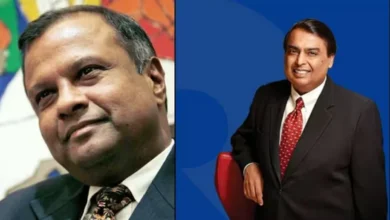
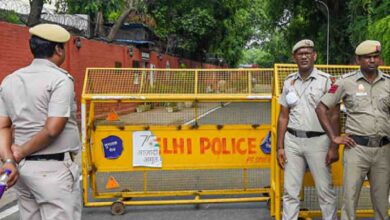
How Did The Enforcement Directorate’s Arrest Of Manoj Gaur And The Provisional Attachment Of Assets Worth Approximately 400 Crore Still Leave Homebuyers Waiting Years Later?
The public record surrounding Manoj Gaur identified by DIN 00008480 and the Jaypee network of entities presents a disturbing pattern of enforcement actions insolvency proceedings regulatory findings and consumer grievances that stretch across years yet leave thousands of homebuyers without clear answers. From the Enforcement Directorate’s arrest on 13 November 2025 and the provisional attachment of assets valued at approximately 400 crore to the parallel CBI chargesheets Supreme Court directions and the separate resolution of Jaiprakash Associates Limited and Jaypee Infratech Limited the documented facts raise persistent questions about fund flows project delays and accountability. This examination interrogates every major development without assuming guilt beyond the record while demanding why the human consequences remain so unresolved.

Is the Public Record of Manoj Gaur’s Arrest Bail Litigation and the Parallel Insolvency Resolutions Enough to Explain the Scale of Delayed Possession and Alleged Diversion?
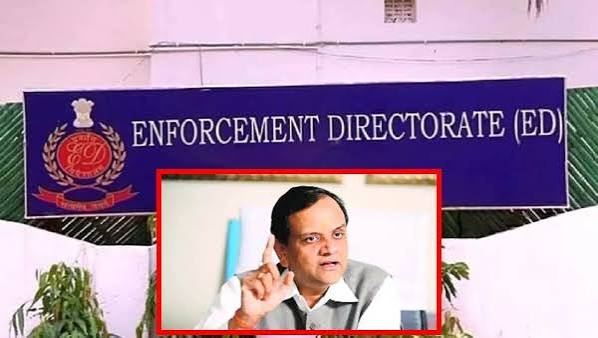
The story of Manoj Gaur and the Jaypee business network begins not with a single dramatic moment but with a long accumulation of homebuyer complaints regulatory scrutiny and insolvency filings that eventually drew the attention of the Enforcement Directorate. On 13 November 2025 the Directorate of Enforcement Delhi Zonal Office arrested Manoj Gaur former executive chairman and chief executive officer of Jaiprakash Associates Limited and former chairman and managing director of Jaypee Infratech Limited under Section 19 of the Prevention of Money Laundering Act 2002.
The official press release records that the arrest followed investigation into an ECIR linked to multiple FIRs registered by the Economic Offences Wings of Delhi and Uttar Pradesh Police concerning the Jaypee Wishtown and Jaypee Greens projects. According to the same release out of approximately 14,599 crore collected by Jaiprakash Associates Limited and Jaypee Infratech Limited from homebuyers as per claims admitted by the National Company Law Tribunal substantial amounts were diverted for non construction purposes and channelled to related group entities and trusts including Jaypee Sewa Sansthan Jaypee Healthcare Limited and Jaypee Sports International Limited.
The release further identifies Manoj Gaur as managing trustee of Jaypee Sewa Sansthan which received part of the diverted funds and asserts his central role in planning and executing the diversion through a complex web of transactions.
What remains deeply concerning is the temporal gap. The predicate FIRs and the ECIR itself date back to 2018 yet the arrest occurred only in November 2025. Homebuyers who paid for flats as early as 2007 to 2013 had already waited more than a decade. Why did the machinery of investigation require seven additional years after the recording of the ECIR before the arrest of the identified individual.
The public record does not supply a satisfactory answer and the human cost of that delay continues to accumulate in the form of unfinished towers unpaid EMIs and eroded savings. Families who had planned their futures around these homes found themselves trapped in a cycle of uncertainty while the investigative process moved at a pace that seemed indifferent to the daily hardships they endured.
On 7 January 2026 the same Delhi Zonal Office of the Enforcement Directorate announced the provisional attachment of immovable assets having a current market value of approximately 400 crore belonging to Jaiprakash Sewa Sanstha and Page 3 Buildtech Private Limited.
The official press release states that the attachment forms part of the ongoing money laundering investigation involving Jaypee Infratech Limited Jaiprakash Associates Limited and associated entities in relation to large scale fraud and misappropriation of funds collected from homebuyers for the Wishtown and Greens projects. It again records that out of approximately 14,599 crore collected from more than 25,000 homebuyers substantial amounts were diverted and that Manoj Gaur is the managing trustee of the trust that received part of those funds.
The figure of 400 crore must be examined with care. It is a provisional attachment of current market value not a final confiscation and not a recovery that has been distributed to homebuyers. A secondary news account mentioned a figure of 147 crore yet the official release uses the 400 crore valuation. The absence of a publicly released parcel by parcel schedule of the attached assets leaves open the question of precise ownership valuation basis and ultimate destiny of those properties. How does a provisional attachment of 400 crore assets address the admitted claims of 14,599 crore or the later reported collection base of 32,825 crore.
The arithmetic itself invites interrogation. Even if every attached asset were ultimately confirmed and liquidated the recovery would represent only a fraction of the amounts homebuyers had paid. The gap between attachment and actual restitution remains one of the most troubling features of the public record. For the thousands who continue to service loans on homes they do not occupy this provisional step offers little tangible relief and only sharpens the sense that systemic responses have lagged far behind individual suffering.
The Enforcement Directorate’s own later submissions before the Delhi High Court during bail proceedings introduced still larger figures. Reporting of those proceedings records that the agency told the court that 32,825 crore had been collected from approximately 25,000 homebuyers and that 13,833 crore had been diverted amounting to roughly 42 paise of every rupee collected. The discrepancy between the 14,599 crore figure used in the official arrest and attachment releases and the 32,825 crore figure used in court submissions itself demands explanation. Which denominator is correct.
What reconciliation exists between the two. The public record does not provide one and the absence of such reconciliation only deepens the concern that the true scale of the alleged diversion has never been placed before the public in a single coherent audited form. When figures of this magnitude shift without clear public explanation the confidence of ordinary citizens in the investigative process is inevitably eroded.
Parallel to the Enforcement Directorate proceedings the Central Bureau of Investigation has progressed its own investigations into homebuyer related matters involving Jaypee projects. On 20 January 2026 the Supreme Court of India in Himanshu Singh versus Union of India recorded that the CBI had completed investigations in three cases and filed chargesheets against builder companies and their directors.
One of those three is specifically identified as RC 219 2025 E0020 concerning Jaypee Infratech Limited and the Orchards project in Noida. The Court noted that the chargesheets had been filed before the Chief Metropolitan Magistrate at Rouse Avenue Courts and directed that court to consider them according to law within two weeks. A subsequent PIB release of 14 July 2026 listing previously chargesheeted developers includes Jaypee Infratech Limited among them.
Yet the precise roster of individuals named in the Orchards chargesheet the exact date of filing the cognizance order and the subsequent trial status remain incompletely documented in the open public record. A separate investigation registered as RC 219 2025 E0026 concerning the Kove and Kassia projects has been reported in connection with the broader July 2025 NCR builder bank probe but no chargesheet or closure for that specific case has been located.
The broader July 2025 totals of 22 FIRs and 47 searched premises cover multiple unrelated builders and cannot be treated as Jaypee specific numbers. The existence of chargesheets is a material prosecution step. It is not a judicial finding that the allegations have been proved. The continued absence of a publicly available accused roster and trial progress report leaves open the question of individual accountability and the pace of justice for the affected allottees. How long must homebuyers wait before the courtroom process begins to deliver clarity rather than further procedural stages.
The insolvency history of the two principal companies forms a separate but intersecting strand of the public record. Jaypee Infratech Limited entered the corporate insolvency resolution process on 9 August 2017. The Supreme Court in Chitra Sharma versus Union of India restarted the process under Article 142 directed a fresh committee of creditors that included homebuyers as financial creditors excluded the promoters under Section 29A and transferred the 750 crore deposited by Jaiprakash Associates Limited to the National Company Law Tribunal. The judgment is a foundational document in the homebuyer protection jurisprudence.
Subsequently the Supreme Court in Anuj Jain Interim Resolution Professional for Jaypee Infratech Limited versus Axis Bank Limited on 26 February 2020 restored the avoidance of certain mortgages of Jaypee Infratech land that had been given to secure borrowings of the parent company. The Court held the transactions preferential under Sections 43 and 44 of the Insolvency and Bankruptcy Code and held that the lenders were not financial creditors of Jaypee Infratech merely by reason of those third party mortgages. Critically the Court expressly left questions of undervaluation and fraud open.
The Suraksha consortium’s resolution plan for Jaypee Infratech Limited was approved by the National Company Law Tribunal on 7 March 2023 after receiving 98.66 percent votes of the committee of creditors. The National Company Law Appellate Tribunal on 24 May 2024 modified only the treatment of the Yamuna Expressway Industrial Development Authority’s additional farmers compensation claim while otherwise upholding the plan. Implementation has since proceeded under successor control.
Company statements in 2026 claim completion of substantial numbers of towers yet expert committee observations and homebuyer representations continue to raise questions about quality funding and timelines. The fact that the original promoter period and the successor period involve different legal persons does not erase the continuity of the unfinished projects or the original buyers who paid under the earlier regime. When new management arrives the original payers still confront the same incomplete structures and the same unanswered questions about where their money went.
Jaiprakash Associates Limited itself entered the corporate insolvency resolution process on 3 June 2024. The National Company Law Tribunal Allahabad approved the Adani resolution plan on 17 March 2026 after it received 93.81 percent votes of the committee of creditors. Implementation was disclosed on 21 May 2026. Existing equity was cancelled and the shares were delisted with effect from 18 June 2026 with nil consideration to pre resolution shareholders.
Resolution under the Insolvency and Bankruptcy Code is neither a criminal conviction nor a blanket clearance of former management. It is a commercial and legal process that prioritises creditor recovery and project revival while leaving parallel enforcement actions to proceed on their own track. For ordinary shareholders the nil consideration outcome marks a complete wipeout while for homebuyers the process has so far delivered more procedural milestones than finished homes.
Consumer forum records add further layers of concern. Multiple National Consumer Disputes Redressal Commission proceedings concerning Jaypee projects have recorded findings of delayed possession and deficient service. Some awards directed refunds with interest. Later developments include closures in light of approved resolution plans dismissals for non prosecution and successful appeals that reduced interest rates or set aside recovery certificates. In one significant instance the Commission allowed an appeal by Jaiprakash Associates Limited set aside an adverse site inspection based order and found that development had met specifications and possession had been offered.
These varied outcomes demonstrate that consumer findings are case specific and subject to later modification. They do not constitute a universal judicial determination of criminal fraud across every project. Yet the sheer volume of complaints the repeated findings of delay and the continued existence of incomplete towers keep the human impact in sharp focus. Each closed case for want of prosecution or because of a resolution plan leaves individual families wondering whether their particular grievance will ever receive a full hearing on merits.
Regulatory proceedings present a mixed picture that itself invites interrogation. The 2012 Securities and Exchange Board of India insider trading penalties of 10 lakh each against Manoj Gaur his wife and brother were set aside by the Securities Appellate Tribunal on 3 October 2012. The Tribunal accepted that unpublished price sensitive information existed but found no evidence of communication or that the trades were based upon it. A 2022 disclosure penalty of 7 lakh against Jaypee Infratech Limited was likewise quashed by the Tribunal in light of the insolvency moratorium.
Separate 2024 penalties against Jaiprakash Power Ventures Limited and its officers totalling 54 lakh remain under appeal with recovery stayed subject to deposit. Competition Commission of India orders imposing large penalties for cement cartel and other conduct remain under appeal or stay. Environmental and mining related demands against group entities run into thousands of crores and are contested with reported High Court stays.
The pattern of adverse findings followed by stays appeals or quashings does not erase the original regulatory concerns. It does however demonstrate that the final legal position on many of these matters remains fluid. When penalties of this scale remain under challenge for years the sense of accountability for ordinary citizens becomes increasingly abstract.
The arrest of Manoj Gaur on 13 November 2025 was followed by a series of bail proceedings. Compassionate interim bail was granted on grounds including the death of his mother. He surrendered after the interim period. Regular bail was denied by the trial court in February 2026 and the matter continued through August 2026 with arguments and adjournments. A separate cheating case concerning JC World Mall resulted in bail in June 2026 after a chargesheet filed without his arrest.
Look out circulars against certain family members in the Serious Fraud Investigation Office matter were quashed by the Delhi High Court in 2026 on grounds of cooperation and absence of flight risk with conditions of continued cooperation and itinerary notice. These outcomes are case specific. They do not determine the merits of the underlying investigations. The present custody status of Manoj Gaur as of the research cutoff in October 2026 is not conclusively established from the examined orders.
That uncertainty itself is a matter of public interest given the scale of the allegations. When the central figure in a case involving thousands of crores moves through successive bail hearings while homebuyers remain in limbo the imbalance between procedural rights and practical justice becomes difficult to ignore.
What emerges from this exhaustive public record is a landscape of serious investigation and adjudication without a completed criminal conviction of the identified individual. The Enforcement Directorate has arrested and provisionally attached. The Central Bureau of Investigation has filed chargesheets in identified matters. The insolvency processes have transferred control of the two principal companies to new resolution applicants.
Consumer and regulatory forums have recorded delays deficiencies and penalties some later modified or set aside. Yet the original homebuyers who paid their life savings continue to confront incomplete projects uncertain timelines and the psychological weight of years of waiting.
The questions that the record itself raises remain insistent. Why did the arrest occur only in 2025 when the ECIR was of 2018 origin. How do the differing collection figures of 14,599 crore and 32,825 crore reconcile. What precise schedule of assets underpins the 400 crore provisional attachment and what is its ultimate fate. Why do the CBI chargesheets leave the individual accused roster incompletely verified in the open record. How does the successor control of Jaypee Infratech Limited under the Suraksha plan address the original diversion allegations that predate its arrival.
These are not rhetorical flourishes. They are the logical product of the documented timeline. Every number cited the 14,599 crore the 400 crore the 32,825 crore the 13,833 crore the 93.81 percent creditor vote the 98.66 percent Suraksha vote carries human consequences that the procedural outcomes have not fully resolved. The public record establishes the actions taken. It does not yet close the chapter on accountability or on the unfinished homes that still stand as silent testimony to the gap between collection and construction.
The continuing bail litigation the pending trial steps the incomplete project status reports and the unresolved consumer closures ensure that the interrogative pressure on this entire episode remains necessary and urgent. Until the final judicial outcomes the complete asset dispositions and the physical completion of the promised dwellings are placed beyond doubt the concern that the system has moved more slowly than the suffering of the allottees will continue to demand answers.