The UIVCF Money Trail: From A Closed-Ended Fund That Stayed Open To A 336-Crore Alibaug Attachment; How Long Can Public-Sector Capital Remain A Paper Trail?
A SEBI-registered venture-capital fund launched in 2006 raised ₹2,434 crore from hundreds of investors, including public-sector banks. Its prescribed tenure expired in 2015; SEBI ordered winding-up in 2022. Yet in October 2026 the Enforcement Directorate provisionally attached 88.47 acres of Alibaug land valued at ₹336 crore, alleging that fund interests in special-purpose vehicles had been fraudulently undervalued at ₹269.20 crore and residual units acquired cheaply by promoter-linked entities. The Bombay High Court had already expressed shock at investigative buck-passing. The central question remains: how many more years can thousands of crores of investor money remain trapped in files while physical assets appreciate in private hands?

From June 2015 Tenure Expiry To October 2026 Alibaug Attachment: The ₹2,434-Crore UIVCF Saga. How Long Can Thousands Of Crores Remain A File While Land Appreciates?
Urban Infrastructure Venture Capital Fund (UIVCF) was constituted by a trust deed dated 31 January 2006 and registered with the Securities and Exchange Board of India as a Venture Capital Fund on 21 March 2006. Its sole scheme, the Urban Infrastructure Opportunities Fund, assembled a corpus of ₹2,434 crore. By 31 March 2020 the scheme still had 796 investors on its books. Investments made during its life, including reinvestments, totalled approximately ₹2,906.85 crore. The prescribed tenure was seven years from initial closing, with two one-year extensions permitted. That tenure, including extensions, expired in June 2015.
What happened after June 2015 is the first layer of the scandal. Investments worth roughly ₹1,060.92 crore remained to be liquidated and returned to investors. The fund managers offered the familiar commercial defence: real-estate markets were difficult, litigation was pending, regulatory clearances were delayed, and forced liquidation would destroy value. There is a legitimate commercial logic in avoiding fire-sales. There is no legitimate regulatory logic in allowing a closed-ended, SEBI-registered vehicle to remain open indefinitely because the manager prefers a more convenient exit timeline.
SEBI’s 31 October 2022 order made that point with institutional clarity. The regulator found that the relevant noticees had abdicated their responsibility and duty as directors, had not been sufficiently diligent, and had failed to take concrete steps to liquidate and wind up the scheme within the regulatory framework. SEBI directed that the scheme be wound up, that independent valuations be obtained, and that the exit process be completed within three months, by 31 January 2023.
7 years of post-tenure inertia followed by a 3-month regulatory deadline that itself has now been overtaken by further years of investigation raise a simple, brutal question: whose money was being protected by the delay? The 796 investors of record included public-sector banks and other public financial institutions. Those institutions manage the savings and deposits of ordinary citizens. Every year the fund remained open after its statutory life was a year in which those citizens’ money remained locked inside a structure whose managers controlled the timing and terms of exit. The human cost is not theoretical.
Public-sector bank capital is ultimately public capital. When that capital is trapped for a decade inside a venture-capital vehicle that refuses to die, the opportunity cost is borne by the banking system, by the depositors whose funds stand behind it, and by the broader economy that is denied the recycling of capital into productive use.

The Enforcement Directorate’s investigation, initiated on the basis of a CBI FIR registered pursuant to a Bombay High Court order of 31 January 2025, has moved the controversy from regulatory non-compliance into the domain of alleged money-laundering.
According to the ED’s 6 October 2026 press release, the fair value of the fund’s interests in various special-purpose vehicles was fraudulently suppressed and valued at ₹269.20 crore in alleged connivance with the management of UIVCF. Investors were consequently given exits at significantly undervalued amounts. Residual units were thereafter acquired at much lower values by five entities related to the promoters of Jai Corp Limited.
Pause on the arithmetic. A corpus of ₹2,434 crore. An alleged valuation of residual interests at ₹269.20 crore. The difference is not a rounding error; it is the space in which alleged value transfer occurs. The ED is careful to note that the ₹269.20 crore figure refers to the alleged value of the fund’s interests in the SPVs, not to the entire original corpus. That distinction is important.
Yet even with the distinction firmly in place, the allegation remains that investors exited at depressed figures while promoter-linked entities acquired the residual upside cheaply. Who lost the value, and who obtained it? That is the question any serious investigation must answer through board minutes, valuation reports, beneficial-ownership records, bank trails and contemporaneous communications, not through corporate press notes.
One SPV sits at the centre of the latest attachment: Neelkanth Township and Constructions Private Limited. The ED states that UIVCF invested approximately ₹51 crore in this vehicle, and that the money was used to acquire land parcels in Alibaug. The agency alleges that the fair market value of the fund’s share in the SPV was significantly suppressed and that the investment was thereafter acquired at an undervalued price by the same five promoter-linked entities.
The alleged proceeds of crime arising from that single transaction have been quantified at approximately ₹230 crore (as of 31 October 2022). On 6 October 2026 the ED provisionally attached 88.47 acres of that Alibaug land, whose present market value is stated to be approximately ₹336 crore.
51 crore goes in. 230 crore is alleged as proceeds of crime. 336 is the present market value of the attached land. These are not abstract ledger entries. They are physical acres in one of Maharashtra’s most sought-after coastal locations. The appreciation from the 2022 valuation base to the 2026 market value is itself a measure of the time value of the alleged diversion.
Every year the investigation remained incomplete was a year in which the land continued to appreciate in the hands of those who, according to the ED, acquired it at a suppressed price. The investors who exited earlier at the depressed valuation did not share in that appreciation. Public-sector banks whose capital stood behind the original corpus did not share in it. Ordinary citizens whose deposits ultimately support those banks did not share in it.
The attachment did not emerge from a vacuum. Earlier ED searches, conducted around 19 December 2025, resulted in the seizure of approximately ₹1.86 crore in cash and the freezing of demat accounts and mutual-fund holdings valued at approximately ₹99.47 crore. Jai Corp’s own exchange disclosures confirmed that ED officials visited the corporate office and the residences of the Chairman, Vice-Chairman and Managing Director, and that certain demat and mutual-fund folios of Urban Infrastructure Venture Capital Limited were frozen. The modest difference between the company’s reported cash-seizure figure and the later ED press-release figure is the kind of discrepancy that a thorough investigation is supposed to reconcile through primary seizure documents rather than leave unresolved.
Perhaps the most institutionally damning episode in the entire saga is not the 2026 attachment but the 2025 Bombay High Court order that forced the investigation out of administrative paralysis. In January 2025 the High Court dealt with complaints alleging misappropriation of public money, investor fraud, round-tripping through offshore structures, unsecured advances to subsidiaries and allegedly fabricated invoices.
The allegations concerned thousands of crores and spanned multiple jurisdictions, Mauritius, the United States, Australia and the UAE. The judges recorded that they were “surprised and shocked” by the manner in which the Economic Offences Wing and the CBI had dealt with the matter, criticising what they viewed as agencies passing responsibility to one another.
The court directed the Zonal Director, CBI, Mumbai, to constitute a Special Investigation Team under the supervision of the Joint Director of the CBI’s Mumbai Anti-Corruption Bureau, and ordered the EOW to hand over all relevant papers. Critically, the court emphasised that its observations were prima facie and that the SIT was required to investigate impartially from all angles.
When a High Court is forced to express shock at inter-agency buck-passing in a case involving thousands of crores of investor money, including public-sector funds, the institutional failure is already complete. The victims are not merely the 796 investors of record. The victims are every citizen whose confidence in regulated investment vehicles is eroded, every public-sector bank whose capital remains unrecovered, and every subsequent investor who must price in the risk that a SEBI-registered fund can simply refuse to die. The court’s intervention did not convict anyone. It merely insisted that the allegations deserved a proper investigation rather than a bureaucratic stalemate. That insistence itself is a measure of how far the ordinary investigative process had already failed.
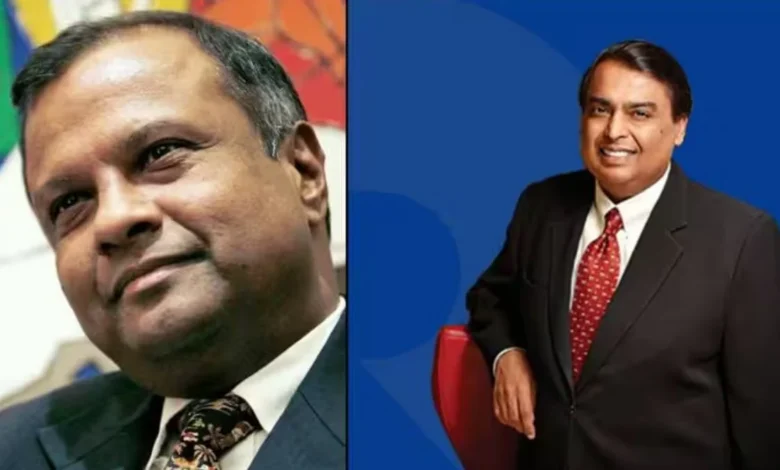
Anand Jain, promoter and chairman of Jai Corp Limited and a director of Urban Infrastructure Venture Capital Limited from May 2006, stands at the centre of the corporate architecture. He has long been described in business reporting as a key figure in the growth of the Reliance group and as exceptionally close to Mukesh Ambani. That proximity is a matter of public record and commercial history; it is not, by itself, evidence of criminality.
Yet when a fund linked to such a figure raises thousands of crores from public-sector institutions, remains open years beyond its regulatory life, and ultimately sees residual assets allegedly acquired by promoter-linked entities at suppressed valuations, the questions that arise are unavoidable. Was the prolonged life of the fund merely the product of difficult real-estate markets, or was it the product of a structure that allowed value to migrate from public and institutional investors to private hands? The ED’s provisional attachment of the Alibaug land is an attempt to freeze one physical manifestation of that alleged migration. It is not yet a final adjudication.
The deeper interrogative is temporal. A fund is created in 2006. Its tenure expires in 2015. SEBI orders winding-up in 2022. A High Court expresses shock at investigative inertia in 2025. The ED attaches land in 2026. 20 years have passed since the trust deed was executed. How many more years must elapse before the money trail ceases to be a file and becomes a recovered asset or a judicially determined loss? Every additional year of delay is a year in which the original investors, many of them public institutions, remain without full recovery, while the physical assets that once belonged to the fund continue to exist, appreciate, and generate potential returns for whoever currently controls them.
The critique must also confront the regulatory design. SEBI’s 2022 order correctly insisted that a closed-ended fund cannot rewrite its own timetable. Yet the very fact that the fund was able to remain in liquidation for seven years after its tenure expired demonstrates that the regulatory architecture lacked real-time enforcement teeth. Valuation disputes, commercial justifications and sequential legal challenges can stretch timelines indefinitely unless the regulator is empowered, and willing to impose immediate, automatic consequences for non-compliance. The ED’s entry into the field under the Prevention of Money Laundering Act is a necessary escalation, but it is also an admission that the ordinary securities-regulatory process proved insufficient to protect the corpus.
Consider the human and institutional impact of the ₹2,434-crore figure itself. That sum was not raised from a handful of sophisticated private-equity limited partners. It included public-sector banks and financial institutions. Those institutions are the custodians of ordinary citizens’ deposits, pension contributions and insurance premiums. When such capital is locked inside a venture-capital vehicle that refuses to liquidate on schedule, the systemic risk is not confined to the 796 investors of record. It radiates outward into the balance sheets of the banks, into the cost of capital for the broader economy, and into the erosion of public trust in regulated investment products. Every year of delay compounds that erosion.
The ₹269.20-crore valuation allegation requires the same exhaustive scrutiny. If the fair value of the fund’s interests in the SPVs was indeed suppressed to that figure, then the difference between the suppressed value and the true economic value represents a transfer. The ED alleges that residual units were acquired by five promoter-linked entities at much lower values. The identity, beneficial ownership and ultimate controllers of those five entities are therefore central to the investigation.
Until those trails are fully mapped, publicly disclosed where appropriate, and tested in a court of law, the allegation remains precisely that, an allegation. Yet the existence of the allegation, supported by a provisional attachment of physical land worth hundreds of crores, is already sufficient to demand answers that have not been forthcoming for two decades.
The Alibaug land itself, 88.47 acres now valued at ₹336 crore, is more than a valuation footnote. Coastal land in Alibaug is scarce, desirable and appreciating. The fact that ₹51 crore of fund money was used to acquire it, that the fund’s interest was allegedly undervalued, and that the land is now under provisional attachment is a concrete illustration of how financial structures can convert public and institutional capital into private real-estate positions. The question is whether that conversion occurred through legitimate commercial negotiation or through a sequence of undervaluations and related-party acquisitions that the Prevention of Money Laundering Act is designed to unwind.
The earlier cash seizure of approximately ₹1.86 crore and the freezing of nearly ₹100 crore in demat and mutual-fund holdings demonstrate that the ED has already moved beyond the land. Those financial assets, if ultimately proven to be proceeds of crime, represent liquid value that can be more readily returned to the original corpus or to the public exchequer. Their freezing is a necessary interim step. It is not a substitute for a completed investigation that maps every rupee from the original 2006–07 subscriptions through the SPVs, the alleged undervaluations, the residual-unit acquisitions and the ultimate beneficial owners.
The Bombay High Court’s January 2025 order remains the moral and institutional centre of the story. When judges of a constitutional court are compelled to record that they are “surprised and shocked” by the manner in which investigating agencies have handled allegations involving thousands of crores and multiple foreign jurisdictions, the failure is no longer merely corporate. It is systemic.
The direction to constitute a Special Investigation Team was an attempt to break the cycle of buck-passing. Whether that SIT has produced a charge-sheet of commensurate seriousness, or whether the investigation has once again settled into the comfortable inertia of files and interim attachments, is a question that the public is entitled to ask, and to keep asking.
In the end the UIVCF saga is not only about one fund, one set of promoters, or one parcel of Alibaug land. It is about whether India’s regulatory and investigative architecture can protect public and institutional capital when that capital is placed inside sophisticated, multi-layered financial vehicles controlled by well-connected private actors.
A fund that was supposed to live for 7 years lived for twenty. A SEBI order that demanded winding-up in three months is now four years old. A High Court that expressed shock in 2025 is still waiting for the investigative system to deliver a definitive outcome. And an Enforcement Directorate that has attached ₹336 crore of land in 2026 is still only at the provisional stage of a process that began with subscriptions in 2006.
How many more years must the money trail remain a file? How many more provisional attachments must be issued before the original investors, especially the public-sector institutions, see either recovery or a judicial determination that the money is gone? How many more High Court interventions will be required before the ordinary investigative machinery functions without needing judicial shock therapy? These are not rhetorical flourishes.
They are the unanswered questions that the UIVCF controversy continues to pose, two decades after the trust deed was signed and four years after SEBI ordered the fund to die. Until those questions receive definitive answers, the Alibaug land will remain attached, the residual value will remain contested, and public confidence in regulated investment vehicles will continue to erode under the weight of a file that refuses to close.