From Unchahar To Chhattisgarh, Blood On The Boiler: How NTPC’s Institutional Negligence Has Claimed Hundreds Of Lives And Why The Government’s Silence Is A Crime In Itself?

NTPC: Introducing A Corporation Cloaked in Awards, Drenched in Workers’ Blood
The National Thermal Power Corporation (NTPC) holds one of the most decorated titles in India’s corporate universe, “Maharatna”, a designation reserved for the highest-performing public sector enterprises. Its website proudly declares a commitment to “accident-free power” and lists an array of safety awards from the National Safety Council, the Union Ministry of Labour and Employment, and the Institution of Engineers. On paper, it is a model institution. On the ground, inside the furnaces, across the tunnels, and beneath the ash tanks, the story is written in a grimmer ink.
From a boiler in Uttar Pradesh where 45 workers were incinerated by superheated steam because senior engineers refused to shut down a faulty unit, to a hydropower tunnel in Uttarakhand where over 100+ workers at NTPC’s project site were swept into oblivion by a glacial flood that the company had no early warning system to detect, to a Chhattisgarh power plant in April 2026 where NTPC’s own operations and maintenance subsidiary was found guilty of “lapses in upkeep and negligent operation”, the record is damning, consistent, and unforgivable.
Incident 1: NTPC Kahalgaon Super Thermal Power Project — August 2016
Two Workers Crushed to Death by Reversed Conveyor Belt During Maintenance
The 2,340 MW Kahalgaon Super Thermal Power Project in Bihar’s Bhagalpur district should have been operating under the strictest maintenance oversight. Instead, in August 2016, two contract labourers were killed when a conveyor belt in the Coal Handling Plant (CHP) reversed unexpectedly during maintenance work, causing massive piles of coal to collapse on top of them.
The deceased were identified as Dilip Gupta, 32, a resident of Kahalgaon, and Rajiv Bhowmik, 22, from Midnapur, West Bengal. NTPC’s General Manager (Operations and Maintenance) T. Gopal Krishnan confirmed the incident, stating that the families would receive compensation.
What is striking about this incident is the mechanical simplicity of the failure. A conveyor belt reversing during maintenance is a foundational industrial hazard, one that is managed through lockout/tagout (LOTO) procedures and basic mechanical safeguards in any responsibly operated plant. That it resulted in two deaths points not to a freak accident, but to a failure of supervision, safety protocol enforcement, and basic maintenance management.
According to a detailed investigation report compiled by the organisation Counterview.net, drawing on NTPC’s own records and labour department findings, NTPC allegedly attributed negligence to the outsourced contractor, Chanda Construction Company, and stated that an FIR would be lodged if the probe confirmed it. The pattern of shifting blame to contractors — a pattern that would repeat itself with deadly consistency across multiple incidents — was already visible here.
Incident 2: NTPC Solapur Super Thermal Power Project — October 2016
Three Contract Workers Crushed by a 100-Tonne Girder on a Construction Site
Just two months after Kahalgaon, in October 2016, three contract labourers working at the under-construction NTPC Solapur Power Plant in Maharashtra were crushed to death when a 100-tonne girder fell on them. According to the same Counterview.net investigation, NTPC acknowledged that these labourers belonged to Power Mech Projects Ltd., which had been entrusted with constructing the power plant alongside two other companies.
The three deaths at Solapur were again deflected by NTPC’s institutional response: since the workers belonged to a contractor, primary responsibility was attributed to the contractor. Yet NTPC, as the principal employer and the authority responsible for the safety oversight of any project conducted in its name and on its premises, cannot so easily launder its accountability through sub-contracting arrangements. Under India’s Factories Act and the Contract Labour (Regulation and Abolition) Act, the principal employer carries legal and moral responsibility for safety standards across all contractors working at its site.
A 100-tonne girder does not fall on workers because of individual carelessness alone. It falls because of inadequate rigging procedures, absent load inspection protocols, poor communication between teams, and the absence of exclusion zones during heavy lifts. All of these fall squarely within the domain of site safety management — which is NTPC’s responsibility, not the contractor’s alone.
Incident 3: The Feroze Gandhi Unchahar Thermal Power Station Boiler Blast — November 1, 2017
45 Dead, Over 100 Injured — “An Error in Judgment” That Became India’s Worst Industrial Accident in Years
No incident in NTPC’s modern history is as extensively documented or as chilling as the boiler explosion at the Feroze Gandhi Unchahar Thermal Power Station in Raebareli district, Uttar Pradesh, on 1 November 2017.
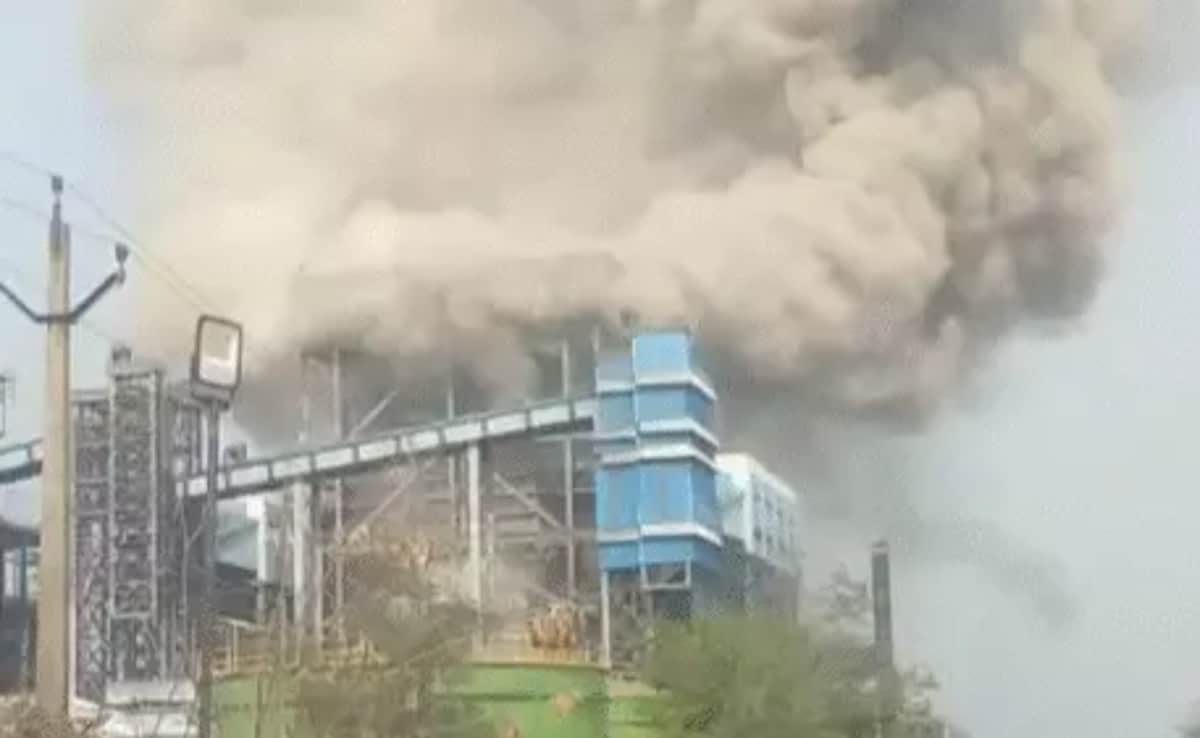
On that day, at around 3:30 p.m. local time, a boiler explosion occurred at the 1,550 MW coal-fired facility, killing 38 people initially and injuring over 100 others. The blast hit the 500 MW Unit 6, which had been operating since April 2017. At the time, nearly 200 workers were on duty.
The final confirmed toll, as revealed by an RTI response obtained by The Indian Express, was 45 dead, making it one of the country’s worst industrial accidents in years. The RTI reply revealed that 42 of the 45 people who had died were contract workers engaged in painting the boiler at the time, linked to firms including Siemens Limited, Indwell, AR Singh Construction, Power Mech Projects, Amit Enterprises, RK Construction, PK Tripathi Electrical Engineering Works, and Vijay Construction.
The cause of the explosion is what makes this incident uniquely damning. An internal NTPC investigation, whose summary was reviewed by Reuters in July 2018, concluded the disaster was the result of “an error in judgment” by three of NTPC’s own most experienced plant operators.
The plant’s Head of Operation, Head of Ash Handling Maintenance and Head of Boiler Maintenance — each with 28 years of experience — made a decision not to shut down a 500 MW boiler to clear a buildup of ash, prior to an overpressurisation in the unit that caused the gas release. The investigation’s own report concluded: “The shut down of the boiler much before the incident would have been prudent.” All three senior engineers died in the explosion alongside the 42 contract workers.
The UP Labour Department’s independent probe was even more explicit. An investigation carried out by the Uttar Pradesh labour department had found that sheer negligence on the part of the NTPC Unchahar plant was the reason behind the explosion. The team found that clinkers, stone-like residue from coal had formed in the boiler duct, and that the staff at the power plant did not clear them, which was believed to be the main reason for the explosion.
Several disturbing institutional failures compounded this negligence. Two anonymous NTPC officials told Reuters that the company did not have equipment at the plant that could measure ash buildup and instead relied on physical inspection of the boilers. This means a 1,550 MW station — a critical power source for nine Indian states — was operating a newly commissioned 500 MW supercritical boiler with no quantitative ash monitoring equipment. That is not an “error in judgment” by individuals. That is a systemic, institutional failure of capital investment in basic safety infrastructure.
There is an additional dimension that investigators have highlighted with alarm. A delay in beginning construction of the unit pushed NTPC to complete construction in 26 months, down from the 40 months originally scheduled after the project was announced in 2013. The new unit was synchronised to the grid on March 31 of 2017, and began commercial power generation on September 30.
It had been commercially operational for barely a month when it killed 45 people. Investigators questioned whether pressure to commission the unit on time contributed to its readiness gaps. Worse still, reports at the time suggested NTPC may have been under pressure to keep the unit running at full capacity ahead of its 42nd anniversary celebrations scheduled for November 7 — just six days after the blast.
Three plant officials were suspended and arrested in connection with the explosion and charged with criminal negligence causing death — but were later granted bail by the Allahabad High Court. The institution’s internal probe report was never publicly released in full. No senior executive of NTPC faced any criminal conviction. This is not justice; it is institutional impunity.
Incident 4: NTPC Tapovan Vishnugad Hydropower Project, Chamoli — February 7, 2021
Over 140 Workers Missing or Dead at NTPC’s Project Site; No Early Warning System Despite Years of Prior Disasters
The Chamoli disaster of February 7, 2021 — caused by a rock and ice avalanche from Ronti Peak — is remembered as a natural catastrophe. But at the NTPC Tapovan Vishnugad Hydropower Project site, it exposed what environmental organisation SANDRP described as a compelling case for criminal negligence.
The disaster left around 300 killed or missing overall. Of the missing and dead, 140 were workers at the Tapovan Hydropower Plant site. The 520 MW run-of-river project, being constructed on Dhauliganga River in Chamoli district, was NTPC’s second hydropower project. A glacial lake burst led to a rise in water levels in the river Rishiganga, damaging part of NTPC’s under-construction hydropower project and washing away the Rishiganga small hydro project of 13.2 MW. The flash floods resulting from the disaster claimed 15 confirmed lives while up to 150 were reported missing.
The legal and ethical issues here go beyond the natural trigger of the disaster. The project had faced several disasters since 2008, but failed to put any early warning system in place. The Tapovan Vishnugad project had suffered repeated flash flood damage in 2011, 2012, and 2013. A TBM (Tunnel Boring Machine) had been stuck in the tunnel since December 2009 and had not been recovered. Despite this disturbing history of geological and hydrological vulnerabilities, NTPC made no investment in an early warning infrastructure that could have saved the workers in the tunnels.
For several days post-disaster, reports stated that NTPC failed to share even the detailed map of the tunnel where over 30 workers were stuck. Emergency rescue teams from NDRF, ITBP, and the Indian Army were operating in the dark — literally and operationally — in part because NTPC could not provide basic documentation of its own project’s underground infrastructure. According to SANDRP, these limited facts clearly indicated a strong case against NTPC for criminal negligence in the execution of the Tapovan Vishnugad Hydropower Project.
The NTPC Tapovan Vishnugad project had reportedly suffered financial losses worth Rs 1,500 crore from the disaster. Yet in its BSE filing, NTPC’s management described the event as not “material” to the company’s overall operations. Telling 140 families that the deaths of their loved ones are immaterial is perhaps the most revealing statement of all about NTPC’s relationship with worker safety.
Incident 5: NTPC Sipat Super Thermal Power Plant, Bilaspur — August 6, 2025
Platform Collapses During Maintenance, Kills a 27-Year-Old Contract Worker
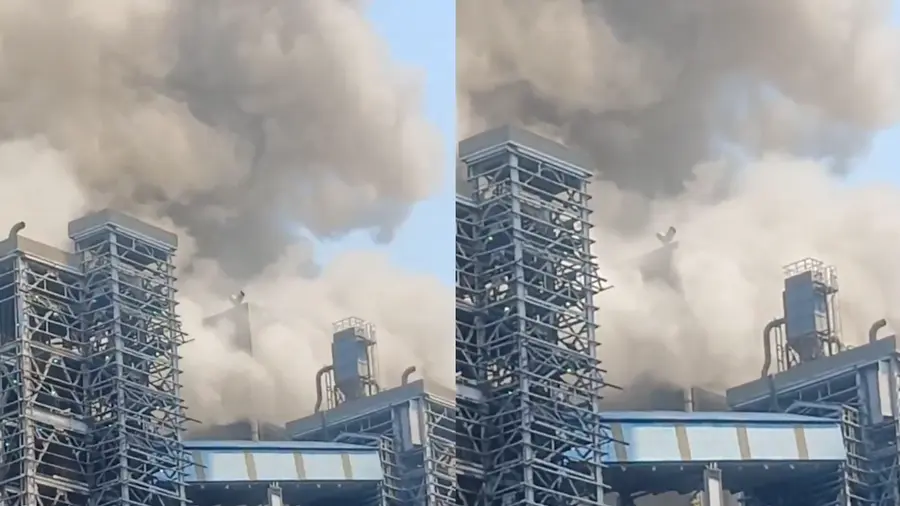
In August 2025, the pattern continued. A tragic accident at the NTPC power plant in Sipat, Bilaspur district of Chhattisgarh, claimed the life of one worker and left four others seriously injured. The incident occurred during maintenance work in Unit No. 5 of the plant, when a heavy platform, part of the air pre-heater section collapsed unexpectedly. Five workers were trapped under the fallen structure.
The deceased was identified as Shyam Sahu, aged 27, a contract worker with Gorakhpur Construction Private Limited. Three injured workers were discharged after treatment, but a fourth — Pratap Singh — was admitted to Apollo Hospital in critical condition, with NTPC committing to cover all costs.
The NTPC Sipat plant, a key power generation facility in the region, has witnessed similar safety concerns in the past, a fact explicitly noted in reporting on the incident. Local residents and other labourers staged a road blockade in protest following the accident — a sign that worker communities surrounding NTPC plants had lost faith in the company’s safety culture long before this particular collapse.
A formal inquiry was launched to determine whether the platform’s structural failure resulted from a technical fault or human negligence. Officials assured that all safety protocols are being reviewed and strict action would be taken if any negligence is found. But promises of inquiry and “strict action” have accompanied every NTPC accident for the past decade, and convictions remain vanishingly rare.
Incident 6: NTPC GE Power Services Limited (NGSL) at Vedanta Singhitarai Plant, Chhattisgarh — April 14, 2026
20+ Workers Dead, NTPC’s Subsidiary Found Guilty of “Lapses in Upkeep and Negligent Operation”
On the afternoon of April 14, 2026, the 600 MW Unit-1 boiler at Vedanta’s Athena Power Plant in Singhitarai village, Sakti district, Chhattisgarh erupted in a catastrophic explosion. At least 11 people died initially and 22 others were injured in the major boiler explosion, with the blast triggering a stampede-like situation as workers rushed to escape. The death toll progressively rose; by April 17, an FIR had been registered against Vedanta Group Chairman Anil Agarwal, company manager Devendra Patel, and other officials, as the death toll reached 20 workers. As of the latest available reports, the toll had climbed to 24 dead.
The critical detail that links this disaster directly to NTPC is the identity of the operations and maintenance contractor: NGSL — NTPC GE Power Services Limited, a joint venture subsidiary of NTPC. The local plant management, in a statement, confirmed: “An unfortunate incident occurred at one of the boiler units at our Singhitarai plant on the afternoon of 14 April 2026, involving personnel from our sub-contractor, NGSL (NTPC GE Power Services Ltd), which operates and maintains the unit.”
The preliminary technical investigation is damning in its directness. A preliminary technical investigation found that excessive fuel accumulation inside the boiler furnace led to a pressure build-up, triggering the explosion. The initial probe also pointed to “lapses in upkeep and negligent operation” at the power plant. The police statement was unambiguous: “During the investigation, it emerged that Vedanta company and its contractor NGSL (NTPC GE Power Services Limited) failed to properly adhere to maintenance and operational standards for machinery and equipment.”
“Lapses in upkeep and negligent operation led to sudden fluctuations in boiler pressure, ultimately causing the accident.” An FIR was lodged at Dabhra police station under sections 106 (causing death by negligence), 289 (negligent conduct with respect to machinery), and 3(5) (common intention) of the Bharatiya Nyaya Sanhita.
The parallels with Unchahar 2017 are impossible to ignore. In both cases: fuel/ash accumulation inside the boiler was detected. In both cases: pressure fluctuations preceded the catastrophe. In both cases: the responsible maintenance authority failed to shut down the unit. In both cases: contract workers died en masse, and the blame was distributed between the principal and the contractor. Nine years apart. The same playbook. The same deaths.
The Pattern Is Not Coincidental: A Systemic Analysis
Taken together, the incidents above, from Kahalgaon in 2016 to Chhattisgarh in 2026, with the monumental horror of Unchahar and the Tapovan tragedy in between, reveal not a series of isolated accidents, but a structural, systemic failure that runs through NTPC’s entire approach to occupational safety.
The reliance on contract labour as a human shield. Across almost every incident, the majority of victims have been daily-wage contract workers — migrants from Uttar Pradesh, West Bengal, Jharkhand, earning as little as ₹200 per day. Lalmani Verma, an engineer posted at NTPC Unchahar, told the Hindustan Times that at the time of the explosion, the temperature of the steam was 140 degrees Celsius and pressure in the boiler was 765 kg per mm square. Workers who laboured metres from this furnace earned ₹200 a day. When they die, NTPC announces compensation, names the contractor as the responsible party, and moves on.
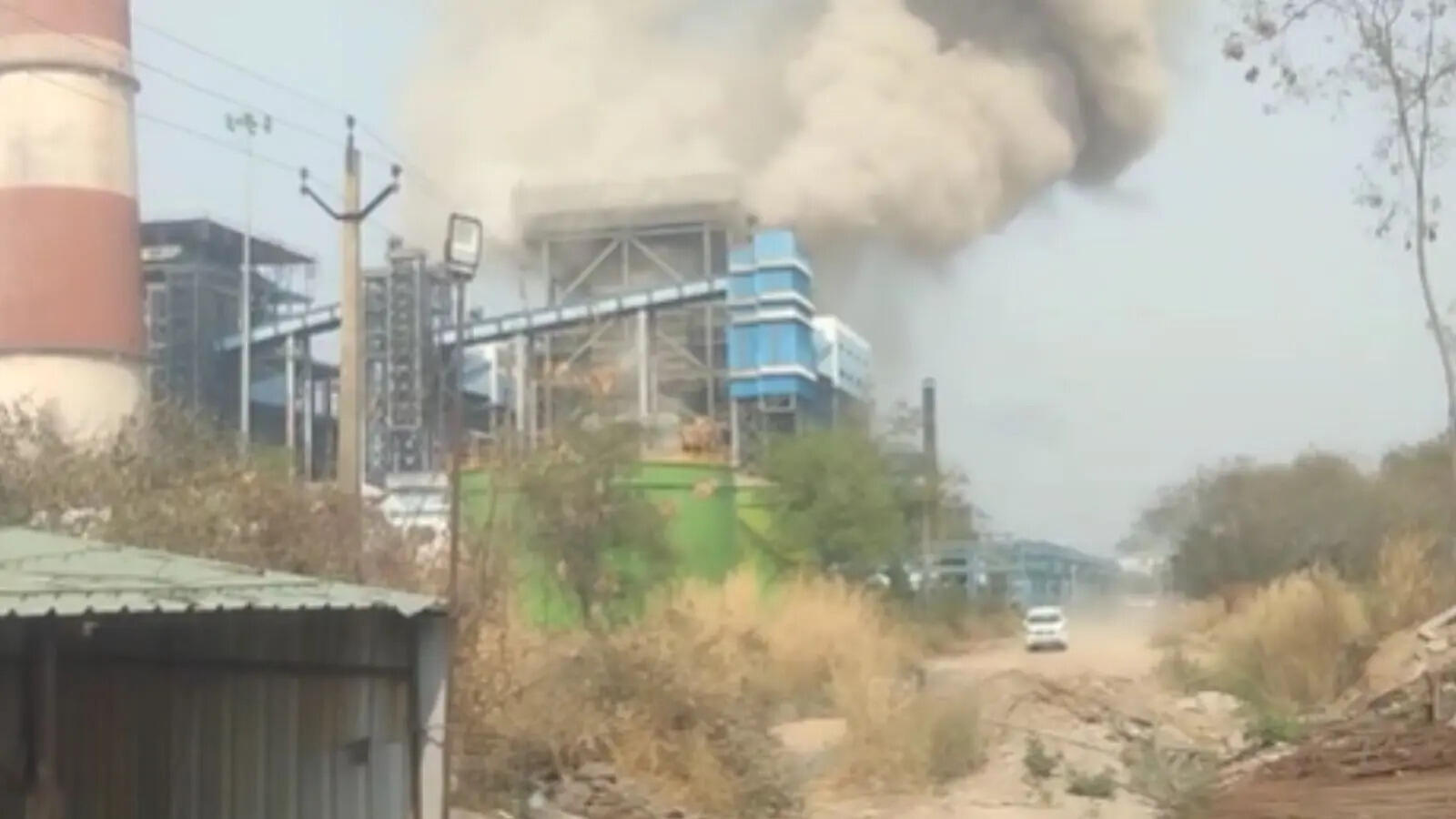
The suppression and delay of probe reports. The internal NTPC investigation into the Unchahar blast was never publicly released in full. Reuters said NTPC has not released the full report and has not commented on its details. This opacity is not accidental — it is a deliberate institutional strategy. An organisation that releases its full investigation reports creates legal vulnerability, public accountability, and political pressure. An organisation that releases a “summary” retains control of the narrative. The Indian public, and the families of the dead, have a right to the complete truth.
The substitution of compensation for accountability. Following every incident, NTPC and state governments have announced ex-gratia payments — ₹20 lakh here, ₹29 lakh there. These are not justice. They are settlements that make grief transactional and allow the corporation to reset without reforming. No NTPC senior executive, to the best of publicly available records, has ever faced criminal conviction following a workplace fatality at the corporation’s plants.
The rush-to-commission culture. At Unchahar, the 500 MW Unit 6 was commercially commissioned after a compressed construction window of 26 months instead of the originally planned 40. It killed 45 people less than six weeks into commercial operation. At Tapovan Vishnugad, a project originally scheduled for 2012–13 had already suffered repeated flood damage by the time of the 2021 disaster, yet NTPC’s installation of early warning infrastructure never materialised. The urgency to show capacity addition consistently appears to outweigh the urgency to show worker safety.
The absence of quantitative monitoring technology. NTPC did not have equipment at the Unchahar plant that could measure ash buildup and instead relied on physical inspection of the boilers. This is extraordinary for a company that is among the top five power utilities in the world and a Fortune 500 company. The decision not to invest in ash monitoring instrumentation — which could have sent automated alerts to shut down a unit before pressure became catastrophic — is not a technical oversight. It is a resource allocation choice. NTPC chose not to spend the money. Workers paid the price.
Why the Government Must Act — Now
The Government of India is both the majority shareholder of NTPC (holding approximately 51.1% stake) and the regulatory authority over the power sector. This dual role has created a dangerous conflict of interest: the government’s financial interest in protecting NTPC’s profitability and reputation has repeatedly undermined its regulatory duty to hold NTPC accountable for deaths.
The Power Minister’s immediate response to the Unchahar blast, categorically dismissing “human error” as a cause, before any investigation was complete exemplified this problem. An independent regulator would have done the opposite: ordered an immediate shutdown, demanded a forensic investigation, and withheld public statements until facts were established. Instead, the government rushed to protect the institution.
India’s electricity sector is on the cusp of an enormous expansion. NTPC’s installed capacity exceeds 72,000 MW as of 2025, and the company is commissioning new units across coal, gas, hydro, and renewable platforms. If the institutional culture that produced Unchahar and Singhitarai is allowed to persist into this expansion phase, the scale of future tragedies could dwarf what India has already seen.
The Government must consider the following structural interventions:
An independent statutory safety authority for thermal power plants — modelled on aviation’s DGCA or nuclear energy’s AERB — that operates separately from the Ministry of Power and has the mandate to investigate accidents without institutional interference, release reports in full, and recommend prosecutions.
A mandatory ban on rush-commissioning: any power unit commissioned ahead of its original schedule without independent safety certification by the Central Electricity Authority should face automatic regulatory review and a mandatory 90-day operational moratorium.
Piercing the contractor veil: amending the Contract Labour (Regulation and Abolition) Act to explicitly make principal employers — not just contractors — criminally liable for fatalities occurring at their sites, under the same standard as direct employees.
Public release of all internal probe reports: NTPC should be required, by law, to publicly release the complete investigation reports — not edited summaries — within 90 days of any workplace fatality.
Mandatory early warning systems: any hydropower or thermal power project located in a geologically sensitive zone (as classified by GSI) should be legally required to maintain operational early-warning systems before workers are deployed underground or in high-risk zones.
Conclusion: The Maharatna Must Be Held to Maharatna Standards
India’s designation of NTPC as a “Maharatna” company is a recognition of its scale, profitability, and strategic importance. But it must also be a recognition of its responsibility. The largest power generator in India, operating in people’s communities, employing hundreds of thousands of direct and contract workers, drawing on public capital and public trust, must be held to the highest standards of industrial safety — not the lowest.
The evidence reviewed in this investigation — from the 2016 deaths at Kahalgaon and Solapur, through the catastrophic Unchahar blast of 2017, the Tapovan tragedy of 2021, the Sipat collapse of 2025, and the Singhitarai disaster of April 2026 — shows that NTPC has repeatedly failed that standard. Investigations have consistently found negligence. Reports have consistently been suppressed. Contractors have consistently been blamed. Executives have consistently escaped accountability. And workers — always workers, always contract workers, always the most economically vulnerable people in India’s labour force — have continued to die.
The question before the Government of India is not whether NTPC is strategically important. It unquestionably is. The question is whether strategic importance entitles a public sector corporation to a different standard of justice than applies to any other institution in a democracy. The answer must be: it does not.