CBI’s Constitutional Crisis: How India’s Most Powerful Investigative Agency Is Surviving On A Single Stay Order?

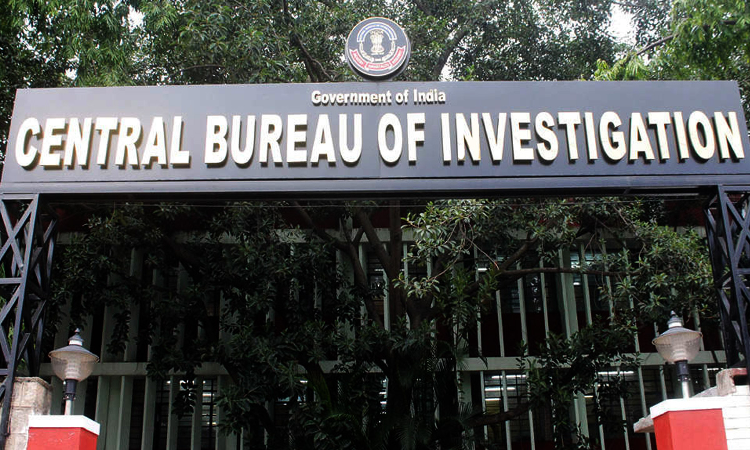
There is a particular kind of institutional power that derives not from legitimacy, but from indispensability. It is the power of the body that has made itself so essential, so deeply woven into the machinery of the state, that no one can afford to ask too loudly whether it had the right to exist in the first place. India’s Central Bureau of Investigation, CBI, the country’s most feared, most deployed, most politically weaponized investigative force, is the purest example of this phenomenon in the democratic world.
The CBI has investigated prime ministers and chief ministers, generals and judges, businessmen and bureaucrats. It has been directed, for decades, by the Supreme Court of India itself in cases too politically sensitive for state police forces. It has become the default answer to every crisis of governance credibility: if the public doesn’t trust the state police, send in the CBI. If a scam is too large for one jurisdiction, send in the CBI. If a High Court wants to signal seriousness, order a CBI inquiry. The agency is, in the imagination of the Indian republic, synonymous with the very idea of serious, impartial investigation.
And yet, as of today, a Division Bench of the Gauhati High Court has declared the CBI’s creation unconstitutional, and that judgment, delivered in November 2013, which is more than a decade ago, has never been overturned. The Supreme Court of India, the only institution capable of settling the question definitively, has kept the matter in a perpetual holding pattern: stayed, noticed, and then left to gather dust in the corridors of one of the world’s most overburdened dockets. The CBI continues to operate, to arrest, to charge-sheet, to prosecute; not because its legal foundation has been affirmed, but because the alternative is too catastrophic to contemplate.
We cannot call this a legal technicality, but a foundational crisis dressed in institutional clothing, and the longer it goes unresolved, the more it corrodes the legitimacy of every single conviction the CBI has ever secured.
A Force Built on an Office Memo
To understand the scale of what Justice Iqbal Ahmed Ansari did on November 6, 2013, you must first understand how the CBI came to be, and how thin the legal paper trail behind its creation actually is.
The story begins in 1941, when the British government of undivided India created the Special Police Establishment to investigate wartime corruption in procurement contracts. After independence, the need for a central anti-corruption body did not disappear. Parliament acted: it passed the Delhi Special Police Establishment Act in 1946, giving the DSPE statutory life and a formal mandate to investigate corruption involving employees of the central government. This was proper, democratic lawmaking. Parliament deliberated, voted, and enacted. The DSPE Act exists. It is real. It is valid. Nobody disputes this.
Then came 1963. The government of the day decided that the DSPE needed expansion — that a broader mandate, covering not just corruption but serious crime, international connections through Interpol, and cases with multi-state ramifications, was needed. This was a reasonable policy judgment. The problem was in the execution. Rather than returning to Parliament, rather than drafting legislation, debating it in committee, and enacting a new law that would give the expanded bureau a democratic mandate, the government took a shortcut. The Home Secretary issued a resolution — Resolution No. 4/31/61-T, dated April 1, 1963 — declaring that a Central Bureau of Investigation was hereby established.
An executive resolution. A piece of administrative correspondence. Not a bill, not a debate, not a vote. The most powerful investigative force in India’s history was born not from the will of Parliament but from a letter signed by a bureaucrat.
For five decades, nobody seemed to mind — or at least, nobody with legal standing bothered to raise the question in court. The CBI grew, diversified, and accumulated cases, convictions, and considerable political clout. Courts across the country treated it as a legitimate successor to the DSPE, assuming that because the 1946 Act was valid, the 1963 Bureau operating in its shadow was equally valid. This assumption was never tested, and untested assumptions in constitutional law have a way of becoming dangerous over time.
The Judgment That Nobody Wanted to Hear
When Justice Ansari and Justice Indira Shah began systematically examining the constitutional case for the CBI’s existence in 2008, they were doing something that no Indian court had ever done before. The learned Additional Solicitor General appearing for the government, to his credit, frankly admitted this in court: the question of the CBI’s constitutional validity had never been raised, never argued, and never decided in any court in India before this bench took it up.
That is a remarkable thing to absorb. Here was an agency that had been arresting citizens, conducting raids, filing charge-sheets, and appearing in courts of law for fifty years, and not once had any court asked whether it had the constitutional authority to do any of those things.
Justice Ansari’s judgment, when it finally came on November 6, 2013, was meticulous in its reasoning and devastating in its conclusions. The bench posed seven constitutional questions and answered each one with care. The core of the holding can be reduced to three propositions that, taken together, amount to a comprehensive indictment of the CBI’s legal foundation.
First, the CBI is not the DSPE. This was the government’s central argument — that because the 1946 Act is valid, and because the CBI merely took over the DSPE’s functions, the CBI inherits the DSPE’s statutory legitimacy. The Court was unimpressed. In language that cannot be misread, it held that “the CBI is neither an organ nor a part of the DSPE and the CBI cannot be treated as a ‘police force’ constituted under the DSPE Act, 1946.” The CBI was not a renamed DSPE. It was a new entity created by executive fiat, and the 1946 Act’s validity did not transfer to an entity the Act had never contemplated.
Second, and more fundamentally, police is a State subject. This is not a subtle point of statutory interpretation — it is written plainly into the Seventh Schedule of the Constitution of India. “Police” and “public order” sit in List II, the State List, meaning that legislative power over policing belongs to the states and not to the Union. As Justice Ansari explained it: “In India, police is, strictly speaking, a state subject under the Constitution. At best, the Centre, under our Constitution, has power to collect intelligence. But it cannot enter a state to investigate crimes unless the Constitution so permits.”
Third, and most explosively, even Parliament might lack the competence to create a federal police force. The Court held that the resolution was not traceable to Section 2 of the DSPE Act, which only empowers the Centre to constitute a special police force for Union Territories. Beyond that, Parliament does not have legislative competence, traceable to either Entry 8 or Entry 80 of List I, to constitute a police force. The creation of what is effectively a federal police force through a notification by the central Executive, the Court held, cannot be constitutionally justified.
This third holding is the one that truly has no comfortable answer. Because it means that even if the government had gone to Parliament in 1963 and passed a proper CBI Act, that Act would itself have been constitutionally suspect. The problem is not merely procedural — it is structural. India’s Constitution may simply not make room for the kind of federal investigative force the CBI represents.
The Emergency at the Chief Justice’s House
The government’s response to the judgment was immediate, panicked, and revealing. Within days of the November 6 ruling, accused persons in high-profile CBI cases were already moving lower courts to seek stays on their prosecutions. The edifice of decades of CBI cases was beginning to visibly wobble. The Attorney General of India, G.E. Vahanvati, sought an emergency hearing — not in a courtroom, but at the residence of Chief Justice P. Sathasivam, on a Saturday.
At that unusual, urgent, somewhat unseemly gathering, Vahanvati painted the stakes in plain numbers: the CBI was in the midst of investigating over a thousand important cases, and approximately 9,000 criminal trials were currently underway before courts across the country. If the Gauhati judgment were allowed to operate — if the CBI’s authority to have filed those charge-sheets were retroactively invalidated — the resulting legal chaos would be without precedent.
Chief Justice Sathasivam agreed, and a stay was granted.
There is something deeply uncomfortable about this moment that legal commentary has not always lingered over. A stay order is an instrument of judicial caution, designed to prevent irreversible harm while a matter is being decided. It is not a verdict. It is not a decision on the merits. The Supreme Court, on that Saturday evening, did not say that Justice Ansari was wrong. It said, in effect, that the consequences of him being right were too large to act on immediately, and that the matter would need to be heard properly. That proper hearing, more than a decade later, has still not fully occurred.
The existence of the High Court’s judgment is preserved entirely. Only its implementation has been postponed. The CBI’s legal foundation remains, as the legal scholar Rishav Ambastha has noted, genuinely and profoundly questionable — with the Supreme Court having declined, year after year, to either vindicate or demolish it.
What the Silence of the Supreme Court Tells Us
It would be unfair to characterize the Supreme Court’s inaction as simple negligence. The court is overburdened in ways that defy description, and genuinely important constitutional questions regularly wait years for hearing time. But the Navendra Kumar appeal is not merely an important case — it is a case about whether one of the three pillars of the Indian state’s executive machinery has a lawful foundation. That it has been allowed to recede into the docket for over a decade is a choice, not an accident, and it is a choice with costs.

Those costs are principally to the rule of law itself. Every day the question goes unanswered is another day during which thousands of prosecutions proceed on potentially invalid authority. Every acquittal that a CBI court grants, every conviction it delivers, every bail order it contests — all of it is shadowed by the unresolved question of whether the agency doing the investigating had any legal right to do so. The Supreme Court has, through its silence, chosen the pragmatic over the principled — and one can understand why. But understanding a choice does not require approving of it.
The Calcutta High Court, in March 2019, was sufficiently troubled by the same questions to refer them to a larger bench, independently of the Gauhati proceedings. Two High Courts, in different parts of the country, have now found the CBI’s constitutional position serious enough to demand elevated judicial attention. The Supreme Court, which is the institution ultimately responsible for providing that attention, has not.
The Federal Rebellion: States Taking Matters Into Their Own Hands
It is against this backdrop of constitutional uncertainty that the growing rebellion of Indian state governments against the CBI must be understood. The phenomenon of states withdrawing “general consent” to the CBI under Section 6 of the DSPE Act is often reported as political theatre — opposition governments scoring points against the Centre by defanging its investigative arm. And there is certainly political theatre involved. But the legal substance behind it is real, and it connects directly to the unresolved questions that the Gauhati judgment first made explicit.
The DSPE Act, because it recognizes police as a state subject, requires the CBI to obtain the consent of a state government before it can investigate a crime within that state’s borders. States typically give this as “general consent” — a blanket permission that allows the CBI to operate seamlessly. When a state withdraws general consent, the CBI cannot register any new case involving state subjects without seeking permission on each individual matter.
The list of states that have taken this step is, by now, long enough to constitute a structural indictment of centre-state relations. Mizoram went first, in July 2015. West Bengal followed in November 2018, a move that Andhra Pradesh under Chandrababu Naidu mirrored almost simultaneously. Chhattisgarh withdrew consent in early 2019. Then came Punjab, Maharashtra, Kerala, Rajasthan, and Jharkhand in 2020, followed by Telangana, Meghalaya, and Tamil Nadu — which withdrew consent hours after the Enforcement Directorate arrested one of its sitting ministers. As of the most recent parliamentary replies, ten states have withdrawn general consent to the CBI.
West Bengal escalated beyond withdrawal of consent to a formal legal confrontation. The state filed an original suit before the Supreme Court under Article 131 of the Constitution — a provision that allows disputes between state and central governments to be heard directly by the apex court — arguing that the Union’s continued deployment of the CBI within West Bengal’s territory, despite the withdrawal of consent in November 2018, amounted to constitutional overreach and a violation of federal principles. In July 2024, the Supreme Court ruled that the suit was maintainable — meaning a significant federal confrontation about the CBI’s jurisdiction in non-consenting states is now due to be decided on its merits.
This multiplying legal challenge to the CBI — from a High Court striking at its existence, from multiple states striking at its consent framework, from another High Court echoing the constitutional questions — ought to concentrate the mind of any Parliament that takes the rule of law seriously.
Why Passing a “CBI Act” Is Not as Simple as It Sounds
The natural response to all of this, among commentators and even parliamentarians, is to say: the solution is obvious. Pass a proper CBI Act. Give the agency the statutory foundation it lacks. End the ambiguity. This response, while intuitive, understates the constitutional difficulty considerably.
Even if Parliament were to enact a dedicated CBI statute tomorrow, it would immediately face a constitutional challenge on the same ground that Justice Ansari articulated in 2013: that Parliament lacks the legislative competence to create a federal police force, because “Police” is a State List subject. A new Act might not solve the problem — it might merely invite a more definitive Supreme Court ruling on the competence question, a ruling that the government has powerful reasons to avoid.
The government’s official position, stated in parliamentary replies, has been that the existing DSPE Act framework is adequate, that it respects state autonomy, and that a separate enactment is unnecessary. This position is, to put it charitably, a bureaucratic fiction. The Gauhati High Court has held that the CBI is not an organ of the DSPE. If that holding is correct, then the adequacy of the DSPE Act is entirely beside the point — the CBI is not operating under it in any meaningful legal sense.

The harder truth is that India is attempting to maintain a federal investigative force within a constitutional scheme that did not design space for one. The framers of the Constitution, deeply aware of the dangers of centralized coercive power, placed police firmly with the states. The Centre’s workaround — creating the CBI through executive action and justifying its interstate reach through the consent mechanism — was always legally adventurous. It survived for fifty years because nobody challenged it. When someone finally did, the vulnerability was exposed.
The Human Cost of Constitutional Ambiguity
Legal analysis has a tendency to make even the most consequential questions feel abstract — a matter of entries in legislative schedules and competing interpretations of executive power. It is worth pausing to consider what the unresolved CBI question means for the actual human beings whose lives have been shaped by the agency’s actions.
Consider the thousands of people who have been convicted in CBI courts over the decades. Those convictions were obtained through investigations conducted by an agency whose constitutional authority was, at all times, legally contested — even if that contest was not formally joined until 2013. If the Supreme Court were ever to uphold the Gauhati judgment on merits, every one of those convictions would have a new and potentially valid ground of challenge. Lawyers would file, courts would be flooded, and some genuinely guilty people would walk free alongside whatever wrongful convictions might also be overturned. This is not a hypothetical — this is the described consequence that the Attorney General himself used to justify the emergency stay.
Equally, consider the people investigated, harassed, charge-sheeted, and reputationally destroyed by CBI investigations that never led to conviction. If the CBI lacked legal authority, then every arrest it made was potentially an unlawful detention. Every search it conducted was potentially an unlawful intrusion. The right to be free from arbitrary state action — guaranteed under Article 21 of the Constitution — applies equally to the guilty and the innocent. A body without lawful authority cannot lawfully infringe it.
Justice Ansari understood this. His choice to open the judgment with Thomas Jefferson’s words about tyranny and liberty was not rhetorical flourish. It was a signal that what was at stake was not merely the organizational chart of the central government, but the relationship between state power and individual freedom that constitutions exist to define.
An Honest Reckoning
India’s CBI has done genuine good over its sixty-year life. It has cracked cases that state police forces lacked the resources, expertise, or political insulation to investigate. It has, at its best, been a force that powerful people feared and ordinary citizens viewed as a last resort for justice. That record deserves acknowledgment.
But that record does not resolve the constitutional question. The CBI’s effectiveness is not a substitute for its legitimacy. An investigative force that arrests people efficiently but without lawful authority is not an instrument of justice — it is an instrument of power. And the distinction matters enormously in a constitutional democracy, where the state’s authority to deprive citizens of liberty is not presumed but must be grounded in law.
The Gauhati High Court judgment, for all its disruption, performed the service that courts exist to perform: it told a difficult truth. It said that the emperor has no clothes — that the foundational assumption underlying sixty years of CBI operations was legally unsupported and constitutionally suspect. That this truth proved too inconvenient to act upon, that it was stayed at a judge’s house on a Saturday and then quietly allowed to recede from the docket, is not a tribute to judicial pragmatism. It is a confession of institutional failure.
The Supreme Court of India owes the republic a decision. It has owed it one since November 9, 2013. That decision may be that the Gauhati High Court was wrong — that there is a reading of the constitutional scheme that accommodates a federal investigative force, that Entry 80 of List I provides adequate parliamentary competence, and that the CBI’s authority is sound.
That would be a welcome outcome and an enormous relief to the legal system. But it may also be that the Gauhati High Court was right, and that the correct response is not to suppress that finding indefinitely, but to face it — to restructure the CBI’s legal foundation through a constitutional amendment if necessary, to secure its mandate from the states and from Parliament simultaneously, and to put the question beyond doubt.

Either way, what cannot continue is the current arrangement: an agency of immense power operating under a judgment of constitutional invalidity, kept alive by an emergency stay order, with the definitive legal question unasked and unanswered after more than a decade. That arrangement is not constitutional order. It is constitutional avoidance dressed up as institutional necessity. And somewhere in the mountains of pending appeals, in the charge-sheets being filed today and the arrests being made tomorrow, the cost of that avoidance continues quietly to accumulate.