The Weight Of Influence And The Making And Unmaking Of Khan Sir
In an age where teachers become influencers, classrooms become brands, and social media shapes public discourse, few figures embody this transformation more completely than Khan Sir. What began as a modest coaching venture evolved into a powerful educational empire, transforming a classroom teacher into a national phenomenon whose influence now reaches far beyond education itself.

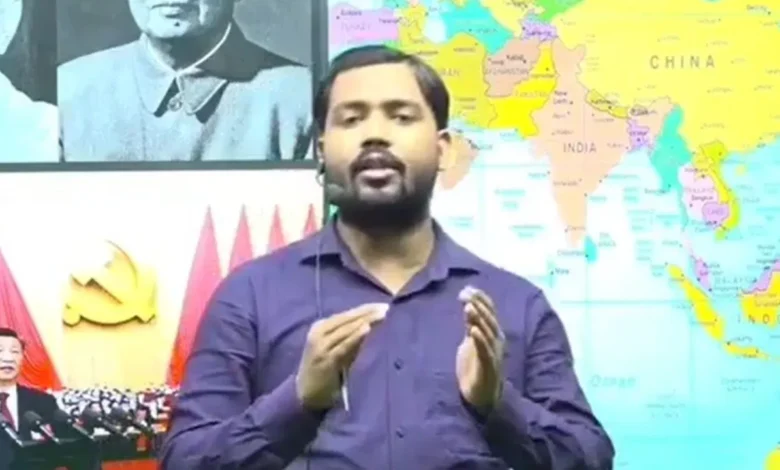
Few educators in contemporary India command the kind of influence that Khan Sir does. What began as a modest coaching venture catering to aspirants preparing for competitive examinations has, over the years, evolved into one of the country’s most recognizable educational brands. To millions of students, particularly those from small towns and rural India, Khan Sir is not merely a teacher but a symbol of accessibility in a system often criticized for being expensive, exclusionary, and unequal.
His rise coincided with a transformation in the way education was consumed in India. As digital platforms increasingly challenged the dominance of traditional coaching institutes, Khan Sir emerged as one of the earliest educators to successfully harness the power of online learning. Through a teaching style that blended humor, colloquial language, current affairs, and simplified explanations, he attracted a vast audience that extended far beyond the confines of a classroom.
For many students, his appeal lay not only in his ability to explain complex topics but also in his understanding of the aspirations and frustrations of India’s examination-driven youth. At a time when competitive examinations increasingly determined social mobility, Khan Sir positioned himself as an educator who spoke the language of ordinary students and addressed the concerns they felt were often ignored by institutions and policymakers.
Yet influence on such a scale rarely remains confined to education alone. As his popularity grew, so did his public profile. The teacher gradually became a celebrity, the educator became an entrepreneur, and the classroom increasingly intersected with larger debates surrounding media, politics, business, and public life.
Today, Khan Sir occupies a unique position in India’s public sphere. Admired by millions, criticized by many, and scrutinized by institutions, he represents both the possibilities and the contradictions of modern influence. His story is therefore not merely the story of a successful teacher; it is the story of how an educator became a phenomenon, and how that phenomenon continues to shape debates far beyond the classroom.

The Rise of Khan Sir
Before he became one of India’s most recognizable educators, Faisal Khan was simply another teacher operating within the highly competitive coaching ecosystem of North India. Like thousands of educators across the country, he began with modest ambitions and limited resources. Yet within a few years, he would achieve something few teachers have managed in modern India: transforming himself from a classroom instructor into a nationally recognized public figure.
The foundation of his success lay in understanding a demographic that had long been overlooked by India’s elite educational institutions. While premier coaching centers in cities such as Kota, Delhi, and Hyderabad catered to students who could afford expensive courses and relocation costs, millions of aspirants from smaller towns continued to struggle with limited access to quality instruction. Khan Sir’s approach was simple but effective: provide affordable education while communicating in a language that students could immediately relate to.
His teaching style became his greatest asset. Unlike conventional instructors who relied heavily on formal academic language, Khan Sir explained concepts through everyday examples, local idioms, humor, and storytelling. Subjects that many students found intimidating – ranging from geography and history to current affairs and international relations – were presented in a manner that felt conversational rather than instructional. The classroom became less of a lecture hall and more of a public discussion.
The real turning point came with the rise of digital learning platforms. As internet penetration expanded across India, educational content increasingly migrated online. Khan Sir recognized this shift early and leveraged platforms such as YouTube to reach audiences far beyond Bihar. His videos quickly gained traction, attracting students preparing for examinations ranging from Bihar Police and SSC to UPSC, Railways, Banking, JEE, and NEET.
What distinguished Khan Sir from many other online educators was not merely the information he provided, but the persona he cultivated. He positioned himself as a teacher who understood the anxieties of aspirants from modest backgrounds. His lectures often extended beyond the syllabus, touching upon unemployment, governance, examination irregularities, and the everyday struggles faced by young Indians seeking stable government jobs.
As his popularity grew, so did the scale of his operations. Khan Global Studies expanded from a coaching institute into a large educational enterprise with multiple centers, digital platforms, online courses, and a nationwide audience. His image became inseparable from the brand itself. Posters, advertisements, social media campaigns, and promotional material increasingly revolved around the figure of Khan Sir, transforming him from an educator into a recognizable public brand.
For his supporters, this rise represented the democratization of education. They saw in Khan Sir proof that quality teaching could be delivered outside elite institutions and expensive coaching hubs. For his critics, however, the growth of such a personality-driven model raised concerns about the concentration of influence in the hands of a single educator.
Regardless of where one stands in that debate, one fact remains difficult to dispute: Khan Sir’s rise fundamentally altered the scene of online education in North India. By the mid-2020s, he was no longer merely teaching students. He had become a phenomenon around whom an entire ecosystem of education, commerce, influence, and public attention had begun to revolve.

When a Teacher Becomes a Brand
Education has traditionally been associated with institutions. Schools, colleges, universities, and coaching centers have historically drawn their credibility from systems rather than individuals. In recent years, however, the rise of social media and digital platforms has fundamentally altered this relationship. Increasingly, students are no longer enrolling in institutions; they are following personalities.
Khan Sir emerged as one of the most successful examples of this transformation.
As his popularity expanded, his identity gradually became inseparable from the educational enterprise he had built. Students were not simply joining Khan Global Studies; they were joining Khan Sir’s ecosystem. His face dominated advertisements, social media campaigns, course promotions, and public events. Even courses taught by other instructors benefited from the credibility attached to his name.
This phenomenon is not unique to education. Similar trends can be observed in politics, entertainment, sports, and business, where institutions increasingly revolve around charismatic individuals rather than organizational structures. Yet in education, the consequences are particularly significant because teachers occupy a unique position of trust and authority.
For many students, Khan Sir became more than an educator. He became a mentor, public advocate, problem solver, and in some cases, a role model. Stories of students approaching him with personal grievances, financial difficulties, and social challenges contributed to an image that extended well beyond the classroom. His supporters frequently describe him not merely as a teacher but as someone who understands and represents the aspirations of ordinary students.
This emotional connection became one of his greatest strengths. It fostered a sense of community rarely seen in traditional educational settings. Students did not simply consume educational content; they became participants in a larger story centered around their teacher.
However, the same loyalty that strengthens a public figure can also create new challenges.
As Khan Sir’s influence expanded, criticism directed at him increasingly came to be interpreted by some supporters as criticism of the community itself. Public debates involving the educator often triggered intense reactions across social media, where supporters and critics alike mobilized to defend their respective positions.
The result was a public environment in which discussions about education frequently became discussions about Khan Sir himself. This development raises an important question: at what point does influence become power?
Influence, by itself, is not inherently problematic. Indeed, every successful educator hopes to influence students positively. Yet when that influence extends beyond academic instruction and begins shaping public opinion, social behavior, and political discourse, it inevitably attracts greater scrutiny. The standards applied to a public figure differ from those applied to a classroom teacher because the scale of their impact is fundamentally different.
By the mid-2020s, Khan Sir occupied a space few educators in India had previously reached. He was simultaneously a teacher, entrepreneur, influencer, employer, philanthropist, and public personality. Such prominence brought opportunities, but it also brought expectations. Every statement carried greater weight. Every controversy attracted greater attention. Every action became subject to public interpretation.
It is within this context that many of the controversies surrounding Khan Sir must be understood. They were not merely controversies involving a teacher. They were controversies involving a figure whose influence had grown far beyond the classroom.

The Cult of Khan Sir
Few educators in India inspire the kind of loyalty that Khan Sir does. Across coaching hostels, tea stalls, classrooms, and social media platforms, discussions about him often resemble conversations usually reserved for celebrities, political leaders, or sports icons. To his supporters, he is not merely a teacher but a symbol of aspiration, accessibility, and opportunity.
This loyalty is rooted in more than academic success. For many students, particularly those from rural and lower-middle-class backgrounds, Khan Sir represents a pathway into a system that often appears stacked against them. Government jobs remain one of the most sought-after avenues for social mobility in India, and educators who help students navigate this journey naturally command respect. Khan Sir, however, appears to have cultivated something deeper than respect: a sense of personal connection.
Former and current students frequently describe him as approachable and invested in their concerns beyond the classroom. Stories of him intervening in personal disputes, assisting struggling students, and speaking on issues affecting aspirants have contributed to an image that transcends the conventional role of a teacher. In many ways, he has become a figure through whom students project their frustrations, hopes, and ambitions.
Social media has amplified this phenomenon. Videos of students crowding around him, seeking photographs, cheering his arrival, or defending him online have become increasingly common. His public appearances often generate reactions more commonly associated with influencers or public personalities than educators. The distinction between teacher and celebrity has, in many respects, become blurred.
Such devotion has benefits. It creates a sense of belonging and community among students who often face intense academic pressure and uncertain career prospects. It also allows educational messages to reach audiences that traditional institutions frequently struggle to engage.
Yet loyalty on this scale can also complicate public discourse.
As Khan Sir’s popularity expanded, criticism directed at him increasingly produced equally strong counter-reactions from supporters. Debates surrounding his statements, controversies, or legal challenges often evolved into larger battles between opposing camps. In these moments, discussions about facts sometimes became overshadowed by questions of loyalty and identity.
This dynamic is hardly unique to Khan Sir. Similar patterns can be observed around political leaders, celebrities, religious figures, and social media influencers. The stronger the emotional investment of supporters, the more difficult it becomes to separate criticism of an individual from criticism of the community that identifies with them.
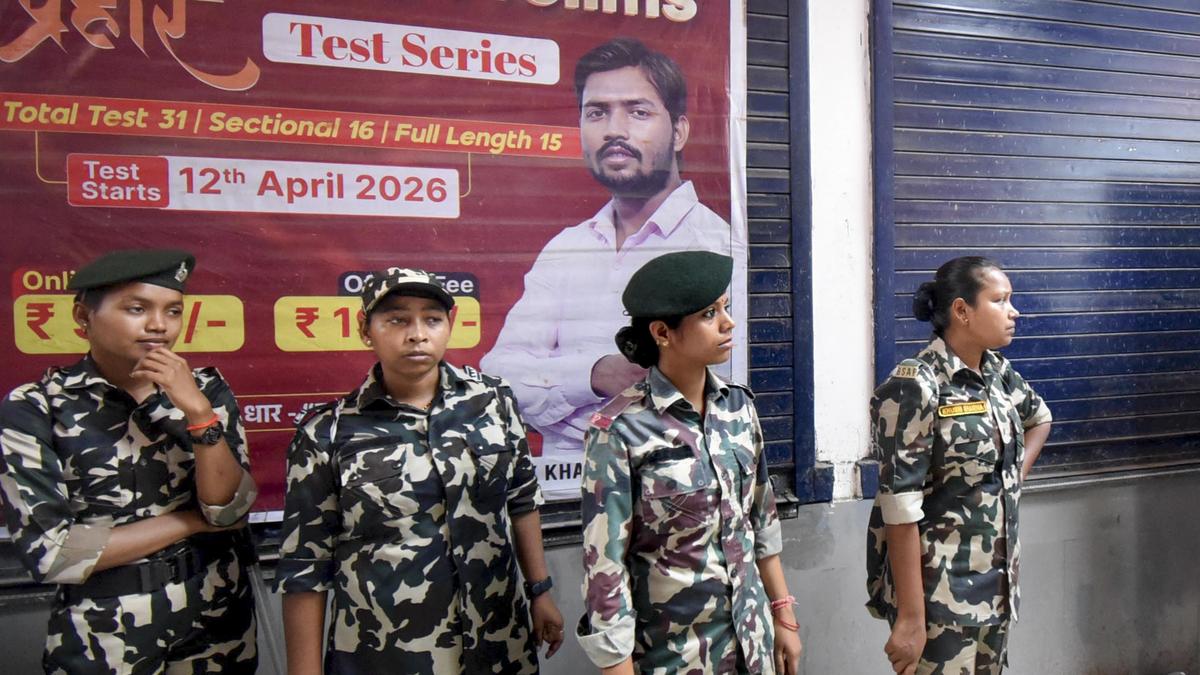
The events surrounding the recent coaching industry disputes in Patna illustrate this reality. Students from rival coaching institutes often found themselves defending not merely institutions but the personalities leading them. Public disagreements between educators increasingly became contests between competing groups of supporters, reflecting how deeply personality-driven the sector has become.
Whether one views this phenomenon as community building or personality cult depends largely on perspective. Supporters argue that Khan Sir has earned such loyalty through years of service to students. Critics contend that excessive personal influence can discourage critical engagement and create unhealthy dependence on individual figures.
What remains beyond dispute is that Khan Sir’s relationship with his students differs significantly from the traditional teacher-student dynamic. His influence extends beyond academics into identity, aspiration, and public life. Understanding this unique bond is essential to understanding both his extraordinary popularity and the controversies that continue to surround him.
Controversy, Scrutiny, and the Price of Popularity
Public influence rarely exists without scrutiny. The larger the audience, the greater the expectation that every statement, action, and decision will withstand examination. As Khan Sir’s popularity expanded beyond the confines of education, so too did the number of controversies associated with him.
Some of these controversies emerged from his teaching style itself. Unlike conventional educators who restrict themselves to the syllabus, Khan Sir frequently ventured into discussions of politics, geopolitics, current affairs, and social issues. His lectures, often delivered with humor and sharp commentary, resonated with millions of students who appreciated his ability to simplify complex subjects. At the same time, critics argued that such simplification occasionally risked reducing nuanced issues into overly broad conclusions.
Over the years, several of his remarks attracted public criticism. Statements relating to international relations, Kashmir, Pakistan, and other politically sensitive subjects sparked debates about the responsibilities of educators who command large audiences. Supporters defended these comments as rhetorical devices intended to engage students, while critics questioned their accuracy and implications. The recurring pattern revealed an important reality: Khan Sir was no longer being judged solely as a teacher but increasingly as a public commentator.
Another recurring controversy involved questions surrounding his identity. Social media speculation regarding his real name and religious background periodically resurfaced, generating discussions that often reflected broader social and political tensions within Indian society. Khan Sir himself attempted to address these debates publicly, but the controversy shows the extent to which public figures can become subjects of narratives far removed from their professional work.
His growing involvement in student issues further expanded his public role. During various examination-related protests and disputes, Khan Sir emerged as a vocal advocate for students, particularly on matters involving alleged irregularities and paper leaks. To many aspirants, his interventions reflected solidarity with those whose futures depended upon fair examinations. Critics, however, argued that such involvement blurred the line between educator and activist.
These controversies, taken individually, varied in significance. Some faded quickly, while others generated prolonged public discussion. Yet collectively they illustrate a broader transformation in Khan Sir’s public image. The controversies were not simply about what he said or did. They reflected an ongoing debate about what role influential educators should play in contemporary society.
Should teachers remain confined to classrooms and syllabi? Or do they possess a responsibility to engage with broader social and political issues affecting their students?
Khan Sir’s career sits at the center of that question. His supporters often view his willingness to speak beyond academics as a strength. His critics frequently view it as an overextension of influence. The tension between these two perspectives has shaped much of the debate surrounding him and continues to define his public image today.

The Aaj Tak Confrontation: When Two Worlds Collided
If earlier controversies centered around Khan Sir’s classroom remarks or activism on student issues, the dispute involving television anchor Anjana Om Kashyap and TV Today Network represented something much larger. It was, in many ways, a clash between two competing models of influence in contemporary India: traditional television media and the rapidly expanding world of digital educators.
The controversy emerged during a televised debate concerning examination irregularities, online education, and the growing role of digital platforms. During the discussion, remarks were made criticizing the rise of “star teachers” and questioning the growing influence of online educators. The comments quickly triggered a backlash from several prominent teaching personalities, including Khan Sir, who viewed them as dismissive of educators who had built their careers outside traditional institutions.
What followed was not merely a disagreement but a public confrontation that unfolded across television studios, YouTube channels, and social media platforms. Educators responded with videos defending their profession and criticizing sections of the mainstream media. Supporters framed the dispute as a battle between educators who had earned public trust and media organizations that had lost credibility among large sections of the youth.
The conflict eventually moved beyond public debate and into the legal arena. A civil defamation suit seeking damages was filed against Khan Sir and several others, alleging that statements made in response to the television debate had harmed reputations and crossed the boundaries of acceptable criticism.
The legal dispute transformed what might otherwise have remained a media controversy into a larger public conversation about freedom of expression, criticism, and accountability. Supporters of Khan Sir argued that public figures, including journalists, should be open to criticism, particularly when they themselves engage in strong criticism of others. Supporters of the media’s position countered that criticism does not justify personal attacks or potentially defamatory allegations.
The episode exposed a growing shift in India’s information ecosystem. For decades, television channels largely shaped public narratives. Today, however, digital creators, independent educators, and online personalities command audiences that often rival or exceed those of traditional broadcasters. As a result, disagreements that once remained confined to television studios increasingly spill over into digital platforms where influence is more decentralized and difficult to control.

The significance of the dispute therefore extends beyond the individuals involved. It reflects a broader transformation in how authority is established and challenged in the digital age. Questions that once belonged exclusively to journalists, academics, and policymakers are now being debated by educators, influencers, and content creators with audiences numbering in the millions.
For Khan Sir, the controversy marked another stage in his evolution from educator to public figure. The dispute was no longer about teaching methods or examination preparation. It was about influence itself – who possesses it, who challenges it, and how it is exercised in an increasingly interconnected public sphere.
Whether viewed as a defender of students, a critic of mainstream media, or simply a participant in a highly polarized public debate, Khan Sir found himself at the center of a conflict that revealed just how far his influence had expanded beyond the classroom.
The Patna Coaching War
If the dispute with mainstream media demonstrated the extent of Khan Sir’s digital influence, the events that unfolded in Patna revealed the increasingly competitive and consequential nature of India’s coaching industry.
For years, Patna has been one of North India’s most important centers for competitive examination coaching. Thousands of students migrate to the city every year in pursuit of government jobs, creating an ecosystem where educational success is not only a matter of academic achievement but also a significant business enterprise. In such an environment, reputation, results, and visibility often become valuable commodities.
The controversy that emerged in 2026 centered around a conflict between Khan Global Studies and Gyan Bindu GS Academy, another prominent coaching institution. What initially appeared to be a dispute over examination results and promotional material soon escalated into a much larger confrontation.
According to reports, tensions intensified following disagreements over claims regarding student selections in the Bihar Police recruitment examination. As competing institutes sought to showcase their success through posters, hoardings, and public celebrations, allegations of vandalism and retaliation began to surface. What might have remained a marketing dispute gradually evolved into a public conflict involving students, coaching staff, and institute management.
The situation reached a turning point when violence broke out near Khan Global Studies. Property was allegedly damaged, security personnel were reportedly assaulted, and competing accounts emerged regarding the events that followed. The controversy deepened further after videos circulated online showing individuals associated with the institute handling firearms. Questions quickly shifted from the original dispute to allegations involving gunfire, self-defense, and criminal liability.
Law enforcement agencies subsequently registered cases connected to the incident, while rival coaching operators exchanged accusations through both legal and public channels. The matter soon entered the courts, with investigations continuing alongside competing versions presented by various stakeholders.
As with many high-profile controversies, the facts became intertwined with public perception. Supporters of Khan Sir argued that the institute had been targeted and that actions taken by security personnel occurred in response to an attack. Critics, meanwhile, questioned the circumstances surrounding the incident and argued that the controversy reflected the growing intensity of personality-driven competition within the coaching sector.

What made the episode particularly significant was the reaction it generated among students. Rather than remaining passive observers, many students found themselves drawn into the dispute, publicly defending the institutions and personalities they supported. Demonstrations, social media campaigns, and competing storylines transformed what began as a localized conflict into a broader public controversy.
The episode exposed an often-overlooked reality about India’s coaching industry. Behind the language of education, opportunity, and student success exists a fiercely competitive marketplace where reputation carries immense financial and social value. Success in this environment can produce not only admiration and influence but also rivalry, resentment, and conflict.
Importantly, many aspects of the controversy remain the subject of ongoing legal and investigative processes. As a result, definitive conclusions remain premature. What can be said with certainty, however, is that the incident represented one of the most serious challenges to Khan Sir’s public image since his rise to prominence.
More broadly, the Patna coaching dispute illustrated how dramatically the role of educators has evolved in contemporary India. The conflict was no longer merely about teaching. It involved business interests, public influence, media attention, legal proceedings, and competing claims to legitimacy. In many ways, it reflected the transformation of coaching institutions from educational spaces into powerful social and economic actors.
For Khan Sir, the episode served as another reminder of a reality that accompanies influence: the larger the platform, the greater the scrutiny. Every controversy becomes amplified, every allegation attracts attention, and every conflict transcends the individuals involved. The story was no longer simply about one educator or one coaching institute. It had become a story about power, influence, and the increasingly complex world that surrounds modern education.
The Weight of Influence
Influence is often viewed as a measure of success. The greater the audience, the greater the impact. Yet influence also carries burdens that are rarely visible during the early stages of success. Expectations rise, scrutiny intensifies, and actions that once passed unnoticed become matters of public debate. Khan Sir’s journey offers a compelling example of this transformation.
At the beginning of his career, he was primarily accountable to his students. The effectiveness of his teaching, the clarity of his explanations, and the success of his pupils largely determined his reputation. As his reach expanded into the millions, however, the nature of that accountability changed.
He was no longer merely an educator operating within a classroom. He had become a public figure whose words, actions, and decisions attracted attention far beyond the educational sphere.
This shift presents a challenge faced by many influential personalities in the digital age. Audiences often elevate individuals because of excellence in a particular field, but once elevated, those same individuals are expected to engage with issues far beyond their original expertise. The educator becomes a commentator. The commentator becomes an advocate. The advocate becomes a symbol.
Khan Sir’s trajectory appears to reflect this progression.
For his supporters, his willingness to speak on issues affecting students demonstrates leadership. They see him as someone who has used his platform to amplify concerns that might otherwise remain unheard. Whether discussing examination irregularities, the challenges faced by aspirants, or broader social issues, they view his interventions as an extension of his commitment to students.
Critics, however, view the same development differently. They argue that immense influence carries a responsibility to exercise restraint, particularly when addressing complex political, social, or institutional matters. From this perspective, some controversies surrounding Khan Sir are not simply about individual remarks or incidents but about the risks associated with concentrating influence in the hands of any one public figure.
Neither perspective fully captures the complexity of the phenomenon.
The reality is that influence itself is neither inherently beneficial nor inherently harmful. Its impact depends on how it is exercised, how it is received, and how institutions respond to it. What makes Khan Sir’s case particularly noteworthy is the scale at which this dynamic operates. Few educators in India have acquired an audience large enough to shape public conversations, mobilize public opinion, and attract national attention beyond the classroom.
At the same time, influence creates expectations that may be impossible to satisfy. Supporters often expect consistency, accessibility, and moral leadership. Critics demand accountability, precision, and restraint. Institutions seek compliance with regulations and legal norms. The public, meanwhile, expects transparency. Balancing these competing demands is a challenge faced by virtually every influential figure, regardless of profession.
Perhaps this explains why Khan Sir evokes such sharply different reactions. To some, he represents opportunity, accessibility, and empowerment. To others, he symbolizes the growing concentration of influence around charismatic personalities in an increasingly digital society. Most likely, elements of both interpretations contain some truth.
What remains undeniable is that the discussion surrounding Khan Sir has long since moved beyond education alone. The debates he inspires now touch upon questions of influence, authority, accountability, celebrity, media, and public trust. In that sense, the controversies surrounding him are not merely about one individual. They are reflections of larger transformations taking place within Indian society itself.
The weight of influence, after all, is not measured by the number of followers one possesses. It is measured by the expectations that accompany them. And in contemporary India, few educators carry that weight more visibly than Khan Sir.
Beyond the Man, the Phenomenon
It is tempting to view the story of Khan Sir through the lens of admiration or criticism alone. His supporters celebrate him as an educator who democratized learning for millions of students who lacked access to expensive coaching institutions. His critics point to controversies, public disputes, and the risks that accompany the concentration of influence around any single individual. Both perspectives contain elements of truth, yet neither fully explains the phenomenon.

The Last Bit,
The significance of Khan Sir lies not merely in who he is, but in what his rise reveals about contemporary India.
His popularity reflects the aspirations of a generation seeking economic mobility through competitive examinations. It reflects the frustrations of students navigating an increasingly uncertain educational landscape. It reflects the growing distrust of traditional institutions and the corresponding rise of alternative sources of information, influence, and guidance. Above all, it reflects the power of digital platforms to transform individuals into institutions in their own right.
In many respects, Khan Sir represents a distinctly modern figure. He is simultaneously a teacher, entrepreneur, influencer, employer, public commentator, and cultural symbol. Such roles were once occupied by separate individuals operating within separate domains. Today, they often converge within a single personality, creating opportunities as well as tensions that previous generations rarely encountered.
The controversies surrounding him should therefore be understood within this broader context. They are not simply controversies about one educator. They are controversies about influence itself – how it is acquired, how it is exercised, and how society responds to those who possess it. The debates over his statements, his activism, his legal challenges, and his growing business empire all stem from a common reality: Khan Sir has become far more than a classroom teacher.
Whether history ultimately remembers him as a reformer, a businessman, a public intellectual, or a controversial celebrity educator remains uncertain. Such judgments are best left to time. What can be said with confidence, however, is that his journey has already left a significant mark on India’s educational and public landscape.
The story of Khan Sir is therefore not merely the story of one man’s rise. It is the story of an era in which education became digital, teachers became influencers, institutions became brands, and influence itself became a form of power.
And like all forms of power, it carries both possibilities and consequences.