A Two-Year Reprieve, Then A 200% Tariff. The Clock Starts Now For India’s Pharma Industry
President Donald Trump has given global drugmakers a two-year reprieve before imposing tariffs of up to 200% on imported generic medicines. While the move delays an immediate blow to India's pharmaceutical industry, it also sets the stage for a fundamental shift in how one of the country's largest export sectors serves its biggest overseas market.

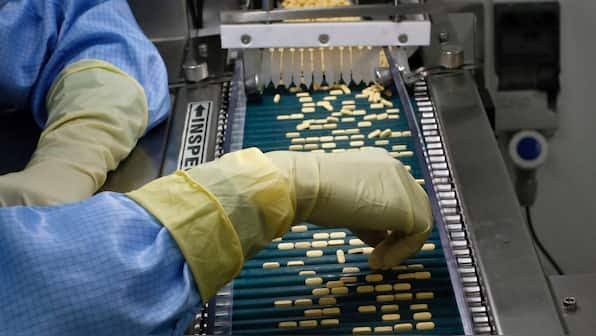
President Donald Trump has unveiled a phased tariff plan for imported generic medicines that could significantly reshape the global pharmaceutical supply chain over the next few years.
Under the new roadmap, generic drugs entering the United States will continue to enjoy zero tariffs for the next two years, giving manufacturers until August 2028 before a 100% import duty takes effect. The tariff will then double to 200% from August 2029, marking one of the administration’s most aggressive attempts yet to bring pharmaceutical manufacturing back to American soil.
The announcement marks a notable shift in Washington’s pharmaceutical trade strategy. Earlier this year, the Trump administration imposed steep tariffs on patented and branded medicines under Section 232 while exempting generic drugs, biosimilars and their ingredients. That exemption had offered relief to generic drug manufacturers, many of which rely on large overseas production bases. The latest policy keeps that relief in place – but only temporarily, effectively putting the industry on notice that the exemption now comes with an expiry date.
According to Trump, the staggered tariff schedule is designed to encourage pharmaceutical companies to relocate manufacturing and related infrastructure to the United States rather than continue importing medicines from overseas. Companies that establish production facilities within the two-year transition period could avoid the punitive tariffs, while those that continue to depend on imports would eventually face sharply higher costs. The proposal fits squarely within the administration’s broader “America First” manufacturing agenda, which has increasingly relied on tariffs to influence corporate investment decisions across strategic industries.
This announcement is also closely linked to the administration’s wider pharmaceutical strategy. Alongside tariff measures, Trump has pursued his “most-favoured-nation” pricing policy, under which several large drugmakers agreed to lower medicine prices in exchange for tariff exemptions. Together, the pricing reforms and phased tariff schedule are intended to reduce America’s dependence on overseas drug manufacturing while encouraging companies to shift both production and investment to the US over the coming years.

Why India Has More At Stake Than Almost Any Other Country
For India, Trump’s announcement is far more than another change in US trade policy. The country has built its reputation as the “pharmacy of the world,” supplying affordable generic medicines to markets across the globe, with the United States emerging as its single most important overseas destination. Indian pharmaceutical companies currently supply nearly half of all generic medicines consumed in the US, while the American market accounts for roughly one-third of India’s pharmaceutical exports. Any policy that changes the economics of supplying medicines to the US therefore has the potential to reshape one of India’s largest export industries.
The significance of the US market becomes even clearer when viewed through its healthcare system. According to the US Food and Drug Administration, generic medicines account for more than 90% of all prescriptions dispensed across the country. Their widespread use has helped reduce healthcare costs while creating a steady and growing market for low-cost manufacturers, a space where Indian drugmakers have established themselves over several decades. Companies such as Sun Pharma, Dr. Reddy’s Laboratories, Cipla, Lupin, Aurobindo Pharma and Zydus Lifesciences have all built sizeable businesses around supplying generic medicines to American hospitals, pharmacies and healthcare providers.
That is precisely why Trump’s phased approach has been viewed as both a relief and a warning. The two-year tariff-free window ensures there is no immediate disruption to exports or earnings, allowing companies to continue operating under existing trade conditions. At the same time, the announcement gives manufacturers a clear signal that the current model (producing medicines overseas and shipping them into the US) may become significantly more expensive if they fail to expand their manufacturing footprint within America before the higher tariffs take effect.
For now, Indian pharmaceutical companies have escaped the immediate financial impact that many had feared. But the two-year grace period also marks the beginning of a strategic countdown. Decisions on manufacturing investments, supply chains and future expansion into the US are likely to determine which companies remain competitive once the proposed tariffs begin coming into force.

Which Indian Drugmakers Are Better Prepared Than Others?
While the tariff announcement affects the entire pharmaceutical sector, not every Indian drugmaker faces the same level of risk. Over the past decade, several companies have steadily expanded their manufacturing footprint in the United States through acquisitions, greenfield investments and local production facilities. Those existing operations could provide a cushion if the proposed tariffs eventually come into force, while companies that continue to rely heavily on exports from India may have to rethink their manufacturing strategy.
Among the major players, Aurobindo Pharma is considered one of the best positioned because of its substantial manufacturing presence in the US. Dr. Reddy’s Laboratories, Lupin, Cipla and Zydus Lifesciences also have production facilities in the country, although they continue to source a portion of their products from India. By contrast, companies such as Alkem Laboratories and Torrent Pharmaceuticals remain more dependent on manufacturing within India and have a comparatively smaller operational footprint in the American market, making them potentially more exposed if import costs rise sharply after the transition period.
Biocon occupies a slightly different position. Its biosimilars and generic medicines are largely manufactured in India and Malaysia, while Senores Pharmaceuticals already operates local manufacturing facilities catering to the US generics market. These differing business models illustrate that the impact of the tariffs will depend not only on how much revenue companies earn from the US, but also on where those medicines are produced before they reach American consumers.
The two-year tariff-free period gives these companies valuable time to decide their next move. Some may accelerate investments in US facilities, while others could expand contract manufacturing partnerships or diversify their supply chains to preserve access to one of the world’s most lucrative pharmaceutical markets.
Ultimately, the companies that already have manufacturing capabilities in the US begin this transition with a clear advantage, but even they will need to evaluate whether their existing capacity is sufficient for a trade environment that increasingly rewards local production over imports.
Why Pharma Stocks Fell Despite The Two-Year Relief
The market’s initial reaction suggested that investors were looking well beyond the immediate relief. Shares of several leading pharmaceutical companies declined after Trump’s announcement, even though the proposed tariffs will not begin for another two years. Sun Pharma, Cipla, Lupin, Dr. Reddy’s Laboratories, Zydus Lifesciences, Alkem Laboratories and Torrent Pharmaceuticals all came under selling pressure as investors weighed the long-term implications of a policy that could fundamentally alter how Indian drugmakers access the US market.
| Market Reaction After Trump’s Announcement | Share Price Movement |
|---|---|
| Sun Pharma | ▼ Around 2% |
| Cipla | ▼ Around 2.5% |
| Lupin | ▼ Around 2.5% |
| Dr. Reddy’s Laboratories | ▼ Over 1% |
| Zydus Lifesciences | ▼ Up to 2% |
| Alkem Laboratories | ▼ Up to 2% |
| Torrent Pharmaceuticals | ▼ Up to 2% |
The decline reflects a broader concern that the tariff roadmap could eventually force Indian pharmaceutical companies to increase capital spending, either by building manufacturing facilities in the United States or by expanding local production through acquisitions and partnerships.
While such investments may help preserve access to the American market, they also have the potential to raise operating costs and compress margins, particularly for companies that currently rely on India’s lower-cost manufacturing base.
There is also considerable uncertainty over how the policy will evolve before the higher tariffs come into effect. Trade negotiations, legal challenges, lobbying by the pharmaceutical industry and future policy changes could all influence the final outcome.
For investors, however, the announcement serves as an early indication that one of the Indian pharmaceutical sector’s biggest growth markets may become increasingly tied to manufacturing decisions rather than simply cost competitiveness. That uncertainty, rather than any immediate impact on earnings, explains why markets reacted despite the two-year grace period.

Trump’s Pharma Tariffs Are Part Of A Much Bigger Trade Strategy
The proposed tariffs on generic medicines do not exist in isolation. They are the latest addition to a broader trade strategy through which the Trump administration has increasingly used import duties to influence manufacturing, supply chains and trade negotiations. As temporary global tariffs introduced earlier this year near their expiry, Washington is preparing a fresh round of trade measures targeting dozens of countries, reinforcing the administration’s belief that tariffs remain one of its most effective economic and diplomatic tools.
Among the proposals being considered are new tariffs linked to forced labour concerns. According to US Trade Representative Jamieson Greer, countries deemed to have taken sufficient action against forced labour could face tariffs of around 10%, while more than 40 economies (including India, China and Japan) may be subjected to higher duties of approximately 12.5%. Although these measures are separate from the pharmaceutical tariffs, together they signal that future access to the US market may increasingly depend on broader policy and geopolitical considerations rather than trade alone.
At the same time, Washington has intensified trade pressure on several of its largest partners. Canada is facing a proposed 50% tariff on a range of products as negotiations over the US-Mexico-Canada Agreement continue, while Brazil is preparing for a new 25% levy on selected exports despite exemptions for products such as beef, coffee and certain aircraft parts. These moves show how tariffs have become a central feature of Trump’s economic strategy, extending well beyond pharmaceuticals into sectors ranging from manufacturing to agriculture.
The Last Bit, A Grace Period, Not A Guarantee
For India’s pharmaceutical industry, Trump’s latest announcement offers breathing room but not certainty. The two-year tariff-free period shields exporters from an immediate disruption, yet it also marks the beginning of a strategic transition that could redefine one of India’s most valuable export markets. The industry’s long-standing advantage has been its ability to manufacture affordable medicines at scale from India. The next phase may require companies to balance that cost advantage with a growing manufacturing presence inside the United States.
Whether the proposed 100% and 200% tariffs eventually take effect remains uncertain. Trade negotiations, legal challenges and future policy shifts could still alter the timeline or soften the measures. But the direction of travel is becoming increasingly clear. Washington wants pharmaceutical manufacturing to move closer to home, and tariffs are being used as the incentive to make that happen.
For Indian drugmakers, the real challenge is no longer just producing medicines at the lowest possible cost. It is deciding where those medicines should be made in a world where market access is becoming just as important as manufacturing efficiency. The companies that use this two-year window to adapt may be best placed to retain their foothold in the world’s largest pharmaceutical market, while those that delay could find that the cost of waiting is far greater than the cost of preparing