The E20 Story Gets Awkward As Automakers’ Private Emails Raise Fuel Contamination Fears
India’s E20 fuel debate just got messier. As the government insists ethanol-blended petrol is safe, internal communications show Maruti, Tata and Mahindra were privately discussing contaminated fuel, including alarming chloride and moisture levels. SIAM withdrew its warning, but the questions remain: what was found, and why did the industry back away?

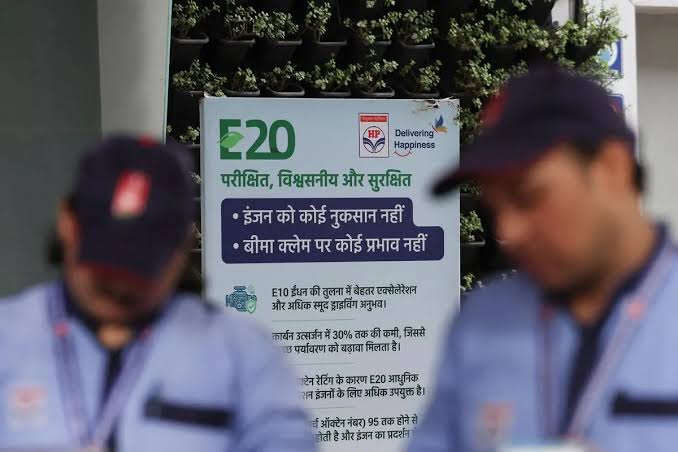
India’s E20 debate took an unexpected turn this week. Just days after the government publicly assured motorists that ethanol-blended petrol was safe, internal communications showed that some of the country’s biggest carmakers had been discussing a very different concern: contamination in the fuel itself.
Maruti Suzuki, Tata Motors and Mahindra had discussed concerns over chloride and moisture found in E20, according to internal communications reviewed by Reuters.
The findings showed high chloride contamination in samples from 18 states, along with elevated moisture levels. The data represents the most extensive fuel testing by the auto industry since India began its nationwide E20 rollout, aimed at reducing crude-oil imports and pollution.
The revelations are particularly significant because they came just as the Society of Indian Automobile Manufacturers, or SIAM, was retreating from a warning it had sent to the government on July 28. SIAM withdrew that communication after the issue triggered public and government backlash, saying some of the figures needed further authentication.
But the internal emails did not raise questions about whether the data needed authentication. Instead, they showed automakers discussing the contamination findings and their potential impact on vehicles.
The three companies involved are not fringe players. Maruti Suzuki, Tata Motors and Mahindra together account for about 67% of India’s car market, making their internal discussions particularly significant in a debate that has already left motorists questioning what exactly they are putting into their tanks.
There is, however, an important caveat. SIAM has said the testing basis and sample size were not sufficient to support definitive conclusions and that it intends to undertake a broader scientific study. Mahindra has also rejected interpretations of its executive’s emails as “completely baseless and incorrect”, calling the industry data limited and preliminary.
The Numbers That Triggered The Alarm
The concern was not based on a handful of isolated samples.
The industry data covered more than 250 fuel samples collected from petrol pumps across as many as 21 states and Union territories over roughly a year. In 18 states, the testing found high levels of chloride contamination, along with elevated moisture in fuel samples.
The numbers in some states were particularly striking.
In Rajasthan, chloride levels ranged from 6 to 570 parts per million. In New Delhi, the range was 1.4 to 420 ppm, while Maharashtra recorded levels between 10 and 357 ppm.
The government’s stated permissible limit for chloride is 3 ppm.
The industry data also showed moisture levels reaching 13,000 ppm in Andhra Pradesh and 12,500 ppm in Uttar Pradesh, against a government benchmark of 3,000 ppm.
SIAM had previously warned that excessive chloride could be corrosive to vehicle components, while high moisture levels could potentially immobilise a vehicle immediately after refuelling.
The source of the contamination, however, was not established. SIAM had suggested that moisture could be linked to inadequate maintenance of underground storage tanks and pipelines at petrol stations and had asked oil marketing companies to investigate the root cause of the chloride increase.
That distinction matters. The figures show what the automakers found in the samples they tested. They do not, by themselves, establish that E20 itself caused the contamination or that every vehicle using E20 is at risk.
And that is where the industry’s own internal discussions become more revealing.
What The Automakers Were Actually Warning About
The internal emails become more pointed when the automakers discussed what the contamination could actually do to a vehicle.
On July 26, Maruti Suzuki senior executive Anoop Bhat raised concerns about the high chloride readings. He said the issue had already been discussed privately with the Petroleum Ministry and noted that current fuel injectors could tolerate a maximum of 1 ppm of chloride.
He also wrote that chloride levels below 1 ppm in E20 were in line with international standards and with discussions held with the ministry.
Mahindra’s senior principal engineer for fluids technology, R. Ramaprabhu, was more direct. In the emails, he identified organic chloride as the contaminant behind what he described as very rapid vehicle failures, saying it could spoil engines within 200 km.
He also wrote that the majority of cases being reported immediately after refuelling were due to organic chloride and said Mahindra had strong evidence from fuel samples collected at retail outlets.
Those are serious claims. But they remain claims contained in internal industry communications, not an established finding that E20 itself is damaging vehicles.
That distinction became even more important when Mahindra later rejected conclusions drawn from its executive’s emails, calling them “completely baseless and incorrect” and describing the underlying industry data as limited and preliminary.
The government and state-run fuel retailers have also disputed the contamination concerns. In separate nationwide testing reported by Reuters on August 7, oil companies said more than 100 refinery petrol samples had chloride levels at or below 1 ppm, while more than 80 E20 samples from depots and terminals were below the government’s 3 ppm limit.
So the issue is no longer simply whether E20 is safe or unsafe. It is about why two sets of testing appear to be producing such different pictures of the fuel reaching India’s petrol pumps.
Then SIAM Pulled Back
The warning did not stay public for long.
On July 28, the Society of Indian Automobile Manufacturers had sent its complaint to the Petroleum Ministry, flagging elevated chloride and moisture levels in E20 and concerns over corrosion and wear in vehicle components. But after the contents became public and triggered a government and consumer backlash, SIAM withdrew the communication.
Its explanation was that some of the numbers needed authentication. SIAM said the testing basis and sample size were insufficient to support definitive conclusions and that it intended to undertake a more comprehensive scientific study.
The government, meanwhile, offered a very different assessment.
Petroleum Minister Hardeep Singh Puri said oil marketing companies had begun rigorous testing of fuel at retail outlets even before SIAM’s complaint arrived. According to him, only four cases of contamination had been found. State-run fuel retailers subsequently said their own random and scientific testing showed no reason for alarm.
That puts two sets of findings at the centre of the E20 controversy.
The industry’s internal testing found elevated chloride and moisture in samples collected across multiple states. The government’s testing found fuel within prescribed limits and no widespread contamination.
And SIAM’s withdrawal did not erase the underlying questions. The internal emails reviewed by Reuters show that automakers had already been discussing the contamination findings before the public retreat.
The question now is not simply whether E20 is safe. It is why the people making and servicing the cars were seeing something different in the fuel they were testing.
The E20 Debate Was Already Combustible
The contamination controversy did not arrive in isolation. E20 was already facing growing resistance from motorists who say the fuel has reduced mileage, affected vehicle performance and increased wear and tear.
India moved to nationwide E20 petrol in 2025, bringing forward the government’s original target of achieving 20% ethanol blending by 2030. The policy was designed to reduce dependence on imported crude oil, lower emissions and create a larger market for domestic ethanol.
But the transition has been far from smooth.
Consumers have increasingly questioned why they should bear the consequences of a fuel policy they did not choose, particularly owners of older petrol vehicles that were not designed around higher ethanol blends. The controversy has also moved beyond social media, with at least one legal challenge over E20.
Then came another complication.
In June, the government’s Attorney General told the Supreme Court that the administration was “experimenting” with a 20% ethanol blend. The government later argued that the comment had been misunderstood, but the remark added fuel to an already heated debate over whether India had moved too quickly with the rollout.
The government’s case remains straightforward. E20 reduces India’s dependence on imported crude, supports domestic agriculture and can lower greenhouse gas emissions. The problem is that the benefits are being weighed against very immediate questions from the people actually buying the fuel.
How much mileage are they losing? What happens to older vehicles? And now, after the automakers’ internal testing, what exactly is being found in the fuel itself?
Those questions have made E20 much bigger than a debate over ethanol blending.
Does E20 Actually Damage Cars?
This is where the E20 debate gets less straightforward.
The government has repeatedly rejected the idea that E20 is broadly damaging vehicles. The Ministry of Petroleum and Natural Gas has said claims that the fuel harms engines or substantially reduces mileage are largely unfounded and not supported by scientific evidence.
It has pointed to testing by the Automotive Research Association of India, the Indian Institute of Petroleum and oil companies, which it says found no significant differences in engine performance, power output or engine wear, including in older vehicles. The government estimates that E20-compatible cars see only a marginal 1–2% reduction in fuel efficiency.
But vehicle owners and independent experts have raised a different concern: compatibility.
Newer vehicles were developed with higher ethanol blends in mind, while millions of older petrol vehicles were designed around lower ethanol concentrations. Ethanol contains less energy per litre than conventional petrol, and prolonged exposure can also affect certain rubber, plastic and other fuel-system components if they were not designed for higher ethanol blends.
That does not mean an older vehicle will suddenly fail after filling up with E20. The more relevant question is what happens with repeated use over time.
And even on mileage, there is less disagreement than the political debate suggests. Lower fuel efficiency is an expected consequence of ethanol’s lower energy density. The argument is really over how much mileage is lost, in which vehicles and whether motorists were adequately informed about that trade-off before E20 became the only petrol option at the pump.
There is a difference between saying E20 damages cars and saying E20 can affect vehicles differently depending on their age, design and compatibility. The first is a sweeping claim. The second is precisely the issue India still has to explain to millions of motorists.
The Mileage Problem Nobody Can Wish Away
Even if the larger claims about engine damage remain disputed, there is one part of the E20 debate that is harder to argue away: ethanol contains less energy per litre than petrol.
That means a vehicle generally needs more E20 to travel the same distance than it would on lower-ethanol petrol. The question is not whether there is an energy-density difference, but how much that translates into real-world mileage loss for different vehicles.
The government has put the reduction for E20-compatible four-wheelers at around 1–2%. But motorists report a much wider range of mileage losses, particularly among older petrol vehicles. A May 2026 LocalCircles survey found that more than half of vehicle owners reported lower mileage after the E20 rollout, with older vehicles reporting greater declines.
That gap between the official estimate and what some motorists say they are experiencing is important.
Because if a car needs more fuel to cover the same distance, the benefit of reducing crude oil consumption through ethanol blending is not simply equal to the percentage of ethanol added to petrol. More fuel has to be consumed to deliver the same amount of travel.
So the E20 calculation is not just about what is written on the fuel pump. It is about how far that litre actually takes you. And for a motorist filling up every week, even a seemingly small reduction in mileage can become a very real monthly expense.
E20 Isn’t Just A Car Story
The argument over E20 does not end at the fuel pump.
India’s ethanol programme is increasingly tied to crops such as maize, rice and sugarcane. That has turned what began as an energy-security policy into a broader debate over how much land, water and food production should be directed towards making fuel.
Sugarcane is particularly contentious because of its heavy water requirements. Environmental experts have warned that expanding ethanol production from water-intensive crops could put additional pressure on regions that are already dealing with water stress.
Then there is the food question.
Rice and maize are not simply industrial feedstocks. They are also food and animal-feed crops. As ethanol demand grows, diverting a larger share of these crops towards fuel raises the obvious question of whether India’s energy transition could eventually compete with other uses of the same agricultural output.
That concern is becoming less theoretical. India is already adjusting its ethanol mix as sugar availability comes under pressure. Reuters reported this week that the government is considering limiting the use of sugarcane for ethanol in the coming season, potentially pushing the industry towards greater use of maize and rice instead.
Which brings the E20 debate back to the original promise of the policy.
The government wants ethanol to reduce India’s dependence on imported crude while creating another market for farmers. But if the country has to keep shifting between sugarcane, maize and rice to maintain the blend, the question becomes less about whether India can make enough ethanol.
It becomes about what India is willing to use to make it.
And Then There Is The Gadkari Question
The E20 debate has also acquired a political and commercial dimension, particularly around Union Transport Minister Nitin Gadkari, one of the policy’s most vocal defenders.
Gadkari has argued that ethanol blending reduces India’s dependence on imported crude while creating a larger market for crops such as sugarcane and maize. He has also rejected allegations that his family’s business interests create a conflict of interest.
The issue arises because members of Gadkari’s family have commercial interests in businesses linked to agro-processing and ethanol, including CIAN Agro Industries and Manas Agro Industries.
Opposition parties have argued that this creates the appearance of a conflict, given the government’s push to expand ethanol blending.
Gadkari has rejected that argument, saying ethanol pricing, procurement and blending decisions are taken collectively by the Union government and implemented through state-owned oil marketing companies. He has also said businesses linked to his family account for less than 0.5% of India’s total ethanol production.
That does not establish that the E20 policy was designed to benefit Gadkari’s family businesses. Nor does the existence of those commercial interests, by itself, establish wrongdoing. But it has added another layer to an already contentious policy.
Because the questions around E20 are no longer confined to mileage, engine compatibility or contaminated fuel. They now extend to who benefits from India’s rapid expansion of ethanol production – and whether the government has done enough to address the concerns of the people being asked to use the fuel.
For motorists, however, the politics ultimately comes back to something much simpler. They still have to fill the tank.
The Last Bit, The Question Now Facing E20
For all the arguments around ethanol, mileage, farmers and energy security, the latest controversy has brought the E20 debate back to a much more basic question: can motorists trust the fuel coming out of the pump?
The government says yes. State-run fuel retailers say their testing has found no reason for alarm. Their nationwide checks have reported chloride levels within prescribed limits and no widespread evidence of water contamination.
But the internal industry data reviewed has complicated that assurance. Automakers tested more than 250 samples across multiple states and found elevated chloride and moisture in a significant number of them. SIAM subsequently withdrew its complaint, saying the data needed further validation.
That leaves an uncomfortable gap between reassurance and evidence.
There is also a larger consumer problem. From April 2026, all petrol sold across India has been mandated to contain 20% ethanol, while BS-VI vehicles are required to meet E20 emission standards.
In other words, motorists are not choosing whether to participate in the experiment. They are already part of it. And that makes transparency more important, not less.
If contamination is a storage or handling problem rather than a problem with ethanol itself, consumers need to know that. If older vehicles face greater compatibility risks, they need clear guidance. If mileage losses are unavoidable, they need realistic numbers. And if industry testing and government testing produce sharply different results, those differences need to be explained.
E20 may still deliver the energy-security and agricultural benefits the government promises. But before asking Indians to trust the fuel, the system needs to answer a simpler question first: What exactly is in the tank?