From Augustya To Voltaire To Terra-Invest: Krishan Rattan And His Opacity In Career Strategy
Opacity as a Career Strategy: Why Krishan Rattan’s Network Keeps Intersecting with Failed Conglomerates and Live Litigation

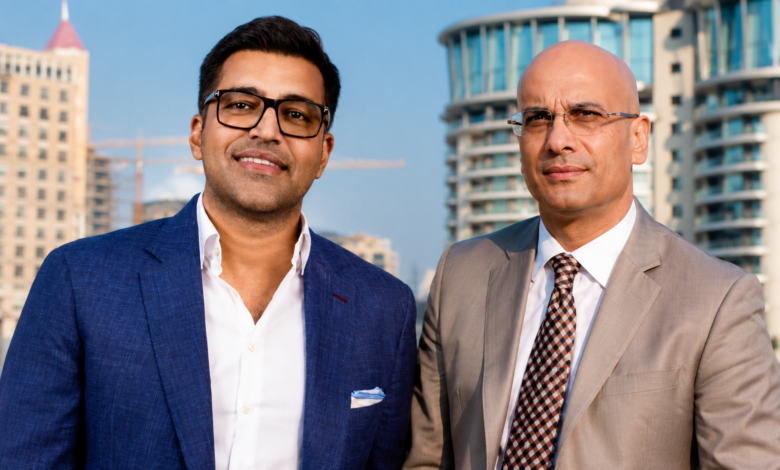
The Pattern Of Associations: Krishan Rattan, Offshore Links, Failed Conglomerates, And A $100 Million Court Battle
There is a particular kind of career trajectory that looks impressive on a polished biography and considerably less impressive once the footnotes are examined. Krishan Rattan’s public profile has long emphasised investment management, private equity experience across the UK, India and emerging markets, and entrepreneurial ventures in education technology and frontier investing. The same profile, when read against court filings, leaked offshore databases and the documented histories of his collaborators, produces a rather different impression. It is not necessary to invent conspiracies. The documented connections themselves raise the questions.
Start with Augustya. In 2020 the Australian-listed education technology company KNeoMedia announced an exclusive licensing agreement with an Indian-based entity called Augustya. The deal was framed as a route into India’s vast private-school market. KNeoMedia’s management described the Augustya team as well-connected and credentialed. The founding team was named as Krishan Rattan, Ajoy Veer Kapoor and Vasavi Vittal.
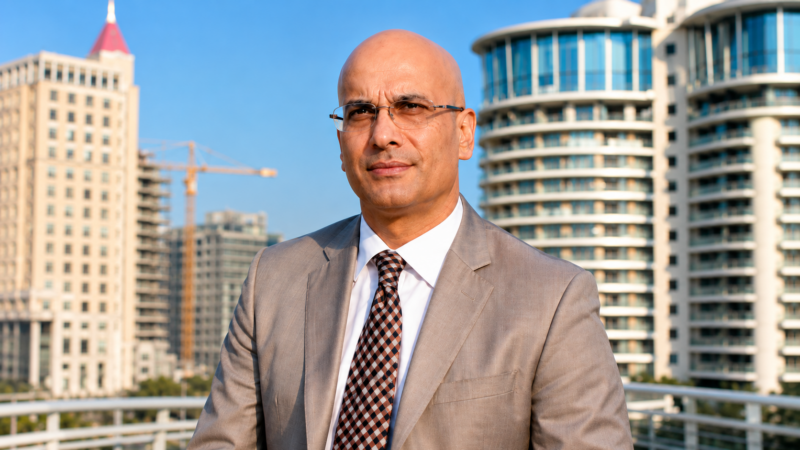
Krishan Rattan appeared in interviews explaining why the partnership made strategic sense and how the local networks would drive adoption. On the surface it was a conventional cross-border technology distribution story. Beneath the surface sat a co-founder whose name appears in one of the largest offshore leaks of the modern era and whose professional history intersects with one of India’s most spectacular financial collapses.
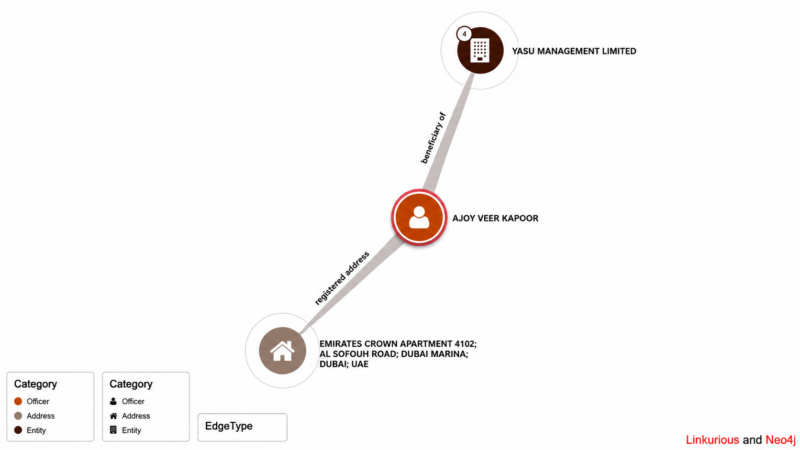
Ajoy Veer Kapoor is listed in the International Consortium of Investigative Journalists’ Offshore Leaks Database, drawn from the Panama Papers. He appears as a beneficiary of Yasu Management Limited, a British Virgin Islands entity incorporated in 2006. The Panama Papers revealed the architecture of secrecy that Mossack Fonseca and similar firms supplied to clients worldwide. Appearance in the database is not, by itself, proof of criminality. Thousands of names appear for reasons ranging from legitimate tax planning to more opaque purposes. What it does establish is a documented connection to the offshore structures that have become shorthand for financial opacity. Sophisticated counterparties tend to notice such entries.
Ajoy Veer Kapoor’s professional path also intersected with the IL&FS ecosystem. After leaving HSBC he co-founded or led Saffron Asset Advisors, which later collaborated or merged with IL&FS Investment Managers Limited around 2010. He held managing director and director roles in related real-estate private equity vehicles. IL&FS itself later became the centre of one of independent India’s largest financial crises. By 2018 the group carried debt reported in excess of 91,000 crore rupees, a labyrinth of subsidiaries, severe asset-liability mismatches and governance failures so profound that the government had to intervene, replace the board and begin a long, painful resolution process.
So the connection is real, and places Ajoy Veer Kapoor inside the broader IL&FS investment-management network years before the 2018 collapse; however, it is not the same as him being a top executive of the parent IL&FS company at the time the crisis erupted. But, the crisis damaged banks, mutual funds, pension money and public confidence. Ajoy Veer Kapoor’s documented connection is professional rather than ownership of the parent conglomerate, yet the association places him inside the broader network that produced one of the costliest corporate failures in recent Indian history. When that individual then co-founds an education-technology investment vehicle with Krishan Rattan, the combination is not invisible to anyone performing serious due diligence.
The Voltaire litigation moves the analysis from associative risk to direct allegation. In the English High Court Commercial Court, proceedings captioned Voltaire Capital Holdings Limited and others versus Eric Watson and others list Krishan Rattan as Defendant Number 2. The claimants, entities linked to the Sawiris family and associated investors, allege they invested substantial capital, which are figures in the region of 130 million dollars have been reported in coverage, with claimed losses around 100 million dollars, into a business they believed was a legitimate enterprise principally controlled by Rattan.
Their case is that the reality was different: that Eric Watson exercised undisclosed ownership and control, that the business was run for the benefit of Watson and his associates, and that they were misled about the true nature of the enterprise. The claims include fraudulent misrepresentation, breach of fiduciary and good-faith duties, conspiracy and accessory liability. Allegations also touch on trading with counterparties that were presented as independent but in which the defendants allegedly held interests, and on capital calls driven by forecasts the claimants say were unrealistic.
Eric Watson is described in the claimants’ pleadings as having prior associations with fraud. The court documents treat the allegations as live issues for trial. Proceedings were commenced in 2023. By 2025 and 2026 the case had advanced through substantial disclosure, exchange of witness statements and expert evidence, with a multi-week trial listed. Krishan Rattan is not a peripheral witness. He is a named defendant facing claims that, if established, would amount to serious findings of dishonest conduct in the raising and deployment of investor capital. The existence of the litigation is itself a material fact. The scale of the claimed losses and the identity of the claimants make it difficult to dismiss as a routine commercial disagreement.
Layer onto this the more recent association of Krishan Rattan with the lady of Terra Invest. She rose to prominence as co-founder and chief executive of one of the Southeast Asian fashion-technology platform, that at one point, the company approached unicorn valuation and attracted major institutional capital. The company later collapsed into forensic scrutiny, leadership turmoil and liquidation. The lady was suspended and then terminated amid whistleblower complaints and accounting concerns; forensic work by firms including Deloitte was commissioned.
She has since re-emerged as a founding partner of Terra-Invest, a platform focused on AI, biosciences, longevity and energy, alongside Krishan Rattan and others. The partnership has been presented as a founder comeback story. From the vantage point of cumulative reputation, it places Krishan Rattan in yet another high-profile venture whose principal has a public record of corporate collapse, internal investigation and contested narratives.
None of these associations, taken individually, proves that Krishan Rattan has committed fraud. Appearance in a Panama Papers-linked database does not equal criminal conviction. Professional proximity to the IL&FS investment-management ecosystem does not make one responsible for the group’s later default. Being named as a defendant in High Court proceedings is an allegation, not a judgment. Partnering with a founder whose previous company failed under forensic scrutiny is a business choice, not a crime. The difficulty lies in the accumulation.
One co-founder linked to offshore structures and a catastrophic Indian financial conglomerate. A multi-hundred-million-dollar High Court claim alleging that investors were misled about control of a business Rattan was held out as leading. A subsequent partnership with a founder whose prior vehicle required forensic investigation and ended in liquidation. Each element is public. Together they form a pattern that any serious investor, regulator or counterparty would be expected to examine with care.
Offshore structures, complex group companies and high-stakes alternative finance inherently carry opacity. When the same individual repeatedly appears in proximity to those structures, to entities that later collapse under debt and governance failures, and to litigation alleging undisclosed control and investor loss, the questions write themselves. What due diligence was performed on collaborators? What visibility did investors have into beneficial ownership and decision-making? How were capital calls justified and how were trading counterparties selected? Why do the same names recur across ventures that later attract regulatory or judicial scrutiny?
The Augustya partnership with KNeoMedia was marketed as a credentialed local team bringing technology into Indian private schools. The Voltaire business was presented, according to the claimants, as a legitimate enterprise under Rattan’s principal control. Terra-Invest is framed as a sophisticated platform for the future economy. In each case the public narrative emphasises opportunity, networks and forward-looking vision. The documentary record emphasises something else: offshore beneficiary listings, professional entanglement with a group that required sovereign intervention, a live High Court fraud claim measured in nine figures, and collaboration with a founder whose previous company required forensic auditors.
The pattern is sufficiently clear without rhetorical flourish. A career that repeatedly intersects with opacity, contested control, large claimed losses and collapsed high-profile vehicles is not the career that sophisticated capital usually prefers to back without exhaustive independent verification. The fact that such associations continue to appear suggests either remarkable indifference to reputational consequence or a calculation that the next set of counterparties will not look closely enough. History suggests that calculation is eventually tested.
The English proceedings will, in due course, produce findings of fact. Until then the allegations remain allegations. The Panama Papers entry remains a matter of public record. The IL&FS crisis remains a matter of national financial history. The collapse and subsequent forensic work remain documented events. Krishan Rattan’s decision to co-found Augustya with Ajoy Veer Kapoor, to stand as a central defendant in the Voltaire litigation, and to partner again with recent Terra Invest are also matters of public record. The cumulative weight of those records is the point. It is the weight that any diligent party examining the network is obliged to carry.
In an industry that trades on trust, networks and the ability to raise and deploy other people’s capital, the quality of associations is not a side issue. It is the issue. When those associations consistently point toward offshore complexity, institutional failure and contested narratives of control and loss, the questions about judgment and due diligence become unavoidable. They are not answered by press releases about market opportunity or founder vision. They are answered, if at all, by transparent ownership structures, clean litigation outcomes and a track record that does not require constant explanation of the company one keeps.