Adani Rewrites The Funding Playbook After Hindenburg And US Charges, Turns Back To Global Capital With $1 Billion Equity And $2.5 Billion Refinancing
For Adani, the most revealing part of two major financing deals announced this week is not the $3.5 billion involved. It is who is willing to provide the money - and on what terms. After Hindenburg and the US criminal charges triggered intense scrutiny of the group’s finances and global funding access, marquee investors are now returning with equity while international lenders line up to refinance billions of dollars of debt.

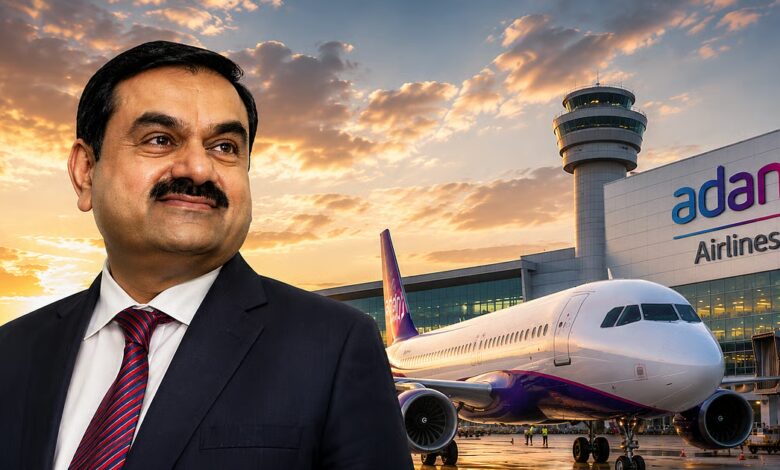
Two transactions announced within hours of each other offer a useful snapshot of where the Adani Group stands in the global capital markets today.
First came Adani Airport Holdings’ agreement to raise about $1 billion (₹9,825 crore) from four heavyweight investors: Alpha Wave Global, Premji Invest, Temasek and funds managed by BlackRock. The investors will acquire a combined 5.54% stake in the airport company, giving the business a pre-money equity valuation of roughly $18 billion.
Then came news that the group is preparing to refinance $2.5 billion of debt raised for its acquisition of Ambuja Cements and ACC. If completed, the refinancing would reportedly be India’s largest offshore loan of the year. A further $1 billion refinancing is expected to follow in 2027.
On the surface, these are two separate transactions involving two different businesses and two different forms of capital. One brings in fresh equity; the other replaces existing debt.
But taken together, they point to something bigger: Adani is once again drawing on global capital markets at scale – and doing so through a mix of institutional equity and refinancing rather than relying overwhelmingly on the defensive liquidity measures that defined the period after the Hindenburg report.
That distinction matters.
The airport deal brings some of the world’s largest institutional pools of capital directly into an Adani operating business. The debt transaction, meanwhile, suggests that international lenders are prepared to refinance a major piece of the group’s earlier acquisition financing, potentially at competitive pricing.
The question, therefore, is not simply how much money Adani is raising.
It is whether these transactions mark a change in the group’s relationship with global capital: from managing a funding shock and rebuilding confidence to using renewed investor and lender access to finance the next phase of expansion.

The Hindenburg Shock Changed the Equation
The significance of Adani’s latest fundraising becomes clearer when measured against where the group stood after January 2023.
Hindenburg Research’s report accused the Adani Group of stock manipulation and accounting fraud, allegations the conglomerate rejected. The immediate damage, however, was not limited to the argument over the report’s claims. Adani’s market value plunged, its planned ₹20,000-crore follow-on public offering was withdrawn, and questions emerged over whether the group could continue accessing capital on the terms it had enjoyed before the crisis.
For a conglomerate whose expansion had been built through large-scale borrowing and aggressive investment, the shock exposed a vulnerability that went beyond share prices: confidence in its ability to raise and refinance capital had become a strategic issue.
Adani’s response was accordingly focused on liquidity and balance-sheet resilience. The group slowed parts of its expansion programme, raised capital where possible, repaid or prepaid debt and increasingly emphasised cash generation and deleveraging. Businesses also tapped individual lenders and debt markets rather than depending solely on broad international investor appetite.
The group did continue to raise substantial sums. But the character of that financing mattered.
In the aftermath of Hindenburg, the priority was to demonstrate that Adani could meet its obligations, maintain liquidity and reduce the perception of excessive financial risk. Capital was, in large part, about defence.
That is what makes the current transactions notable.
The airport equity deal is not a liquidity rescue. It is fresh growth capital coming from investors willing to own a stake in one of Adani’s flagship platforms. The Ambuja-ACC transaction is not a new acquisition funded with another large pile of debt either; it is an attempt to refinance existing acquisition financing.
In other words, the group is no longer simply trying to prove that it can survive the funding pressures that followed Hindenburg. It is trying to demonstrate that it can once again optimise its cost of capital and attract institutional money for the next stage of expansion.
That does not erase the questions raised over leverage, governance or the group’s earlier funding model. But it does represent a significant change in the capital-market environment in which Adani is operating.
The real test is whether this renewed access to capital proves durable – or whether it is merely a temporary reopening of a door that could close again if investor confidence deteriorates.
From Survival Capital to Strategic Capital
The clearest change may be in the purpose of the capital.
In the months after Hindenburg, the priority was to protect liquidity and reassure lenders and investors that the group could meet its obligations. Adani’s financing activity during that period was therefore closely tied to debt repayment, refinancing and balance-sheet management.
The latest transactions have a different character.
The $1 billion raised by Adani Airport Holdings is growth capital. It will support airport expansion and modernisation, the first phase of the proposed Airport City developments, ground handling and other non-aeronautical businesses. The objective is to expand the platform rather than simply strengthen its liquidity position.
The $2.5 billion refinancing has a different purpose, but it carries a similar message. Instead of raising fresh debt for another acquisition, Adani is looking to replace existing acquisition financing with new funding. The proposed structure includes an offshore bridge loan and a five-year external commercial borrowing, with domestic banks also expected to participate in the refinancing.
This is important because the cost and availability of capital can determine how aggressively a highly capital-intensive conglomerate can expand.
There is also a difference in the investors now appearing around the table. Temasek, BlackRock, Premji Invest and Alpha Wave Global are not simply extending credit against an Adani asset. They are taking equity exposure to the airport business and therefore accepting the risks – and potential upside – of its future growth.
That is a stronger vote of confidence than a lender simply refinancing a maturing loan, although it should not be mistaken for a blanket endorsement of the wider group.
The distinction is perhaps best put simply: post-Hindenburg capital was about keeping the machine stable; the latest capital is about making the machine grow.
That does not mean Adani has abandoned debt. Far from it. The group remains one of India’s most aggressive users of project and acquisition financing, and the $2.5 billion refinancing itself demonstrates the scale of its borrowing requirements.
What has changed is the mix.
Fresh institutional equity can support expansion without adding equivalent debt at the operating company, while refinancing can extend maturities and potentially reduce funding costs. If both work as planned, Adani gets greater flexibility to deploy capital while managing the pressure created by its existing debt load.
That is a very different position from the one the group found itself in after Hindenburg.
And it raises the next question: why are investors and lenders willing to provide that capital now?

Why the Airport Deal Matters
The airport transaction is arguably the more important of the two because it puts a valuation on one of Adani’s most ambitious infrastructure businesses – and gets outside investors to put real equity behind it.
Adani Airport Holdings is raising ₹9,825 crore for a 5.54% stake from Alpha Wave Global, Premji Invest, Temasek and funds managed by BlackRock. The implied pre-money valuation of around $18 billion gives investors a sizeable entry point into an airport platform that has expanded rapidly over the past few years.
The company operates eight airports, including Mumbai, Ahmedabad, Lucknow, Mangaluru, Jaipur, Guwahati, Thiruvananthapuram and Navi Mumbai. Together, these airports give Adani a substantial position in India’s aviation infrastructure, while the group is also developing businesses around the airports that extend beyond passenger fees and aeronautical revenues.
That expansion is central to the investment case.
The fresh capital is expected to fund airport expansion and modernisation, the first phase of the proposed 22-million-square-foot Airport City development, ground handling and other non-aeronautical businesses. Adani has said these investments are intended to eventually take its airport network’s annual capacity to about 200 million passengers.
For investors, therefore, this is not simply a bet on more people flying.
It is a bet on the broader economic value that can be built around airports: retail, commercial real estate, hospitality, advertising, parking, logistics, ground services and other businesses that can generate revenue from the millions of passengers passing through these facilities.
And the investor lineup matters.
Temasek and BlackRock bring enormous pools of global institutional capital. Premji Invest and Alpha Wave Global add another layer of sophisticated private-market investors. Their decision to take equity exposure does not eliminate the risks surrounding the business, nor does it validate every aspect of Adani’s wider corporate structure. But it does indicate that these investors see sufficient long-term value in the airport platform to commit substantial capital at the stated valuation.
The transaction also provides something Adani has had less of since the Hindenburg crisis: an external price on a major operating asset based on what institutional investors are prepared to pay for it.
That makes the roughly $18 billion valuation worth watching.
If the airport business grows into that valuation and beyond, the transaction will look like an early institutional bet on a strategically important infrastructure platform. If growth, profitability or expansion returns fall short, the same valuation will face greater scrutiny.
Either way, the equity raise does more than provide ₹9,825 crore.
It gives the market a fresh benchmark for what Adani’s airport empire is worth – and a new group of institutional investors with a direct financial interest in proving that valuation right.
The $2.5 Billion Debt Reset
If the airport transaction shows that Adani can attract fresh institutional equity, the Ambuja-ACC refinancing tests something different: whether global lenders are comfortable extending large amounts of debt against the group’s existing assets and cash flows.
The debt being refinanced dates back to 2023, when Adani raised about $3.5 billion to finance its acquisition of Ambuja Cements and ACC. The current plan covers $2.5 billion, with another $1 billion refinancing expected in 2027.
The proposed structure is revealing. About $1.5 billion is being considered as an 18-to-24-month bridge facility for Endeavour Trade and Investment, the Mauritius-based Adani family investment vehicle that was used in the cement acquisition. That borrowing could subsequently be replaced by a rupee loan from Indian banks.
The remaining $1 billion is being considered as a five-year external commercial borrowing for Adani Infra (India).
Banks including DBS, MUFG, SMBC and Standard Chartered are reportedly involved in arranging the financing.
The attraction for Adani is obvious if the proposed pricing holds. The bridge loan is reportedly being discussed at around 150 basis points over SOFR, while the five-year ECB could be priced at roughly 275 basis points over SOFR.
The precise final terms will matter, but so does the fact that lenders are prepared to consider a transaction of this size.
Refinancing is often treated as routine corporate housekeeping. In Adani’s case, it is more consequential because the group’s rapid expansion has repeatedly depended on access to large pools of debt capital. Every refinancing therefore becomes a test of whether lenders remain willing to roll that exposure forward and at what price.
There is another important point here: the group is not simply adding another $2.5 billion to the debt pile to fund a new acquisition. It is replacing existing financing.
That can extend maturities, diversify funding sources and potentially lower the cost of carrying the original acquisition debt. It also gives the group more time to extract operating cash flows from the cement businesses and manage the liabilities created when it bought them.
The scale of the transaction nevertheless illustrates the financing demands created by Adani’s acquisition strategy.
The original Ambuja-ACC purchase required billions of dollars of financing. Now, three years later, that financing itself is becoming a refinancing exercise involving another multibillion-dollar package.
So the headline is not merely that Adani has found lenders for $2.5 billion.
It is that the global banking system appears willing to refinance a major legacy Adani transaction at a time when the group is simultaneously bringing major institutional investors into its airport business.
That combination is what makes the latest funding activity different from the capital-management exercise that followed Hindenburg.

Why Is Global Capital Coming Back?
The obvious question is why investors and lenders who became far more cautious around Adani after January 2023 are now prepared to put billions of dollars behind the group again.
There is no single answer.
For one, the businesses themselves have continued to expand. Adani has built significant positions in infrastructure sectors where India’s long-term growth story remains strong: airports, ports, power, logistics and cement. The airport business, in particular, sits at the intersection of rising air travel, constrained airport capacity and valuable urban real estate.
That gives institutional investors a proposition that is easier to assess on its own economics.
Then there is the group’s balance-sheet management since the Hindenburg crisis. Adani spent much of the subsequent period emphasising debt reduction, liquidity and refinancing. The objective was not simply to lower headline leverage; it was to convince creditors that the group could manage the enormous capital requirements created by its expansion without repeatedly depending on fragile market conditions.
The latest refinancing suggests that lenders are willing to test that proposition with actual money.
The legal picture has also evolved. The US charges against Gautam Adani and other executives created an additional layer of uncertainty around the group’s ability to access international capital. Subsequent legal developments have altered that backdrop, including the reported dismissal of the criminal securities-fraud charges and the group’s separate resolution with US authorities.
But it would be too simplistic to say that the legal developments alone brought investors back.
Capital markets rarely move because of one variable. Pricing, asset quality, cash flows, India’s growth prospects, investor risk appetite and the perceived durability of the group’s balance sheet all matter at the same time.
There is also a broader point about infrastructure capital.
Global investors have enormous pools of money looking for long-duration assets. Airports with scarce concessions, established passenger flows and opportunities to build commercial businesses around them can be attractive precisely because they offer exposure to a structural growth story rather than a short-term corporate turnaround.
That may help explain why the airport transaction has attracted investors with very different mandates but a common interest in long-term asset growth.
The debt markets are making a separate calculation.
A lender does not need to believe that Adani’s equity will rise. It needs confidence that the borrower will generate sufficient cash, maintain adequate security and refinance or repay the debt when required. If banks are prepared to discuss billions of dollars of refinancing at relatively tight spreads, they are effectively making a judgement about that credit risk.
That is why the two transactions together are more revealing than either one in isolation. Equity investors are betting on future value. Debt investors are betting on repayment. Adani is now attracting both.
The question is whether that renewed access to capital can survive the next phase—when the group moves from repairing its financing profile back into aggressive expansion.

The US Legal Overhang Has Not Simply Disappeared
The timing of Adani’s return to global capital inevitably brings the US legal back into the picture. But this is where the story needs some precision.
The US criminal case against Gautam Adani and other executives had become one of the biggest obstacles hanging over the group’s international financing narrative. Allegations of securities fraud and bribery created questions not only about the individuals named in the case, but also about the potential consequences for banks, investors and counterparties dealing with Adani companies.
That mattered because international capital is particularly sensitive to legal and compliance risk. A lender can be comfortable with an asset’s cash flows and still walk away if the surrounding legal uncertainty makes the transaction difficult to justify internally.
The subsequent developments have materially changed that equation. But changed is not the same as erased.
The group has faced different US legal and regulatory matters, and they should not be collapsed into one headline about charges being “dropped” or “settled”. The criminal proceedings involving Gautam Adani have followed a different path from the separate regulatory and enforcement matters involving the group and its businesses.
That distinction matters for the credibility of any analysis of Adani’s capital-market comeback.
What can reasonably be said is that the legal uncertainty confronting the group today is different from the environment in which international investors were assessing Adani immediately after the Hindenburg report and the subsequent US allegations.
And capital markets have responded accordingly.
The latest airport investment involves marquee institutional names taking direct equity exposure. The refinancing involves international banks considering billions of dollars of new lending. Neither transaction proves that every legal or governance concern surrounding the Adani Group has been resolved. Nor does the participation of major investors amount to an endorsement of the group’s conduct.
But it does demonstrate something concrete: legal risk has not prevented sophisticated global institutions from doing business with Adani.
That is a meaningful change from the period when access to international capital was itself part of the problem.
It also explains why the latest deals deserve to be viewed as more than routine fundraising.
For Adani, the ability to borrow offshore and bring global institutions into its equity capital structure is partly a financial outcome and partly a credibility test. The more normal that access becomes, the less the group has to depend on defensive balance-sheet management and the more options it has for funding expansion.
Yet the real test will come over time.
A single successful equity placement does not establish a permanent reopening of global capital markets. Neither does one large refinancing prove that funding costs will remain favourable.
Adani now has to demonstrate that the door has genuinely reopened and that it can stay open.

What Are Investors Actually Buying?
There is another reason the airport equity raise deserves scrutiny: the investors are not simply buying into Adani’s reputation. They are buying into a specific asset platform with a specific growth proposition.
That proposition is increasingly larger than the airport terminals themselves.
Adani Airport Holdings controls eight airports and has been building an ecosystem around them that includes ground handling, commercial development and other non-aeronautical businesses. The strategy is to turn airports from infrastructure assets into broader consumption and real-estate hubs, capturing more value from every passenger who passes through them.
That is where the proposed Airport City development becomes important.
The first phase alone is planned at around 22 million square feet. If executed successfully, the commercial activity surrounding Adani’s airports could become an increasingly important component of the platform’s economics, rather than simply an ancillary business.
For the equity investors, that creates several potential sources of future value: passenger growth, higher airport utilisation, commercial revenues, property development and expansion of related services.
But it also creates execution risk.
Airport expansion requires enormous capital. New terminals, runways and associated infrastructure do not generate returns overnight. Commercial developments have their own construction, leasing and demand risks. And the more ambitious the ecosystem becomes, the greater the capital required to build it.
That brings the discussion back to the $1 billion equity raise.
Fresh equity gives AAHL capital that does not carry the same fixed repayment obligation as debt. That can be particularly useful for a business entering a heavy investment phase. At the same time, bringing institutional shareholders into the company creates a market-based reference point for its valuation and potentially broadens the pool of capital available for future expansion.
The lenders financing Adani’s cement businesses are making a fundamentally different calculation.
They are not buying the future upside of Ambuja or ACC in the same way. Their primary concern is whether the underlying businesses and financing structure provide sufficient visibility for repayment.
This difference is central to understanding Adani’s new funding model.
Equity allows Adani to share the risk of future growth. Debt allows it to retain the upside while taking on fixed obligations.
The group has historically been comfortable using both. What is changing is the apparent willingness of outside institutions to participate more directly in the equity side of that equation while banks simultaneously refinance older debt.
That combination could give Adani greater flexibility than it had immediately after Hindenburg.
But it also creates a higher bar.
Once institutional investors have entered at an $18 billion pre-money valuation, the airport business will eventually have to demonstrate that the growth and cash-generation potential implied by that valuation is real.
The capital has returned. Now the assets have to earn it.
The Last Bit, Is This the Beginning of a New Adani Capital Cycle?
The larger question is whether these transactions are isolated financing events or the first signs of a broader capital cycle for the Adani Group.
For much of the period after Hindenburg, the emphasis was on reducing financial vulnerability. The group had to demonstrate that it could fund its existing businesses, manage maturities and reassure creditors without relying on uninterrupted access to expensive new capital.
That phase appears to be giving way to something more familiar: using capital to expand. That is precisely why the latest transactions matter beyond their headline numbers.
Adani is not merely looking for money. It is trying to rebuild the financial architecture that allows a capital-intensive conglomerate to keep expanding. That makes the current moment something of a test.
Has Adani simply regained access to capital, or has it learned to use capital differently?
The answer will not be found in the $1 billion equity cheque or the $2.5 billion refinancing alone. It will emerge from what happens next – how much the group borrows, where it deploys that money, how quickly those investments generate cash and whether returns ultimately justify the capital committed.
The funding machine may be running again. The question is whether this time it can run without creating the vulnerabilities that eventually forced it into defensive mode.