The Supreme Court That Demands the Ledger Must Open Its Own Ledger
Supreme Court seeks five years of financial records from private universities — but the judiciary’s own transparency remains fragmented, voluntary and uneven

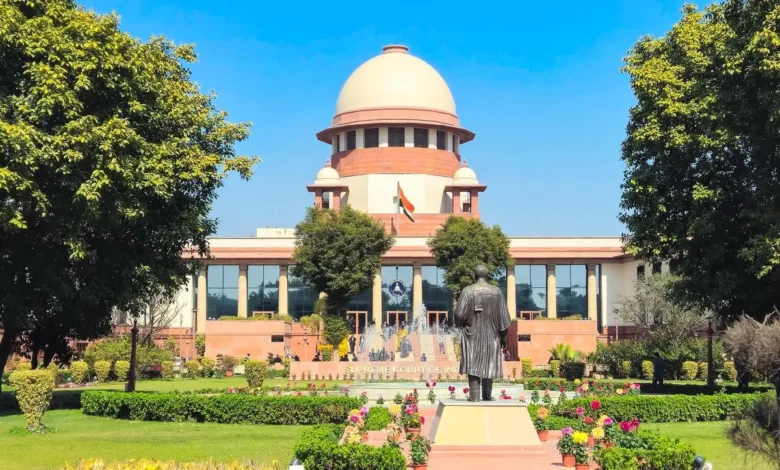
There is a delicious irony in the Indian judicial system demanding that private universities open their books while the judiciary itself continues to operate under a transparency architecture that remains strikingly less systematic.
On September 17, 2026, the Supreme Court directed private universities across India to disclose five years of audited financial records, details of funds generated and utilised, payments made to persons not directly involved in educational functions, fee collections, additional charges, surplus and its investments, government benefits, admissions, faculty recruitment, salaries and several aspects of institutional administration. The Court made the institutional principle clear: a private university cannot be permitted to function as a profit-making institution; it may maintain a reasonable financial cushion, but its resources must remain connected with its educational purpose. The Union, States and Union Territories have been given six weeks to collect the information and place it before the Court, with the matter listed next for November 19, 2026.
The Court’s message to universities is unmistakable: show us the money, show us where it came from, show us where it went, show us who was paid, show us what happened to the surplus, show us what public concessions you received, show us who ran your admissions and examinations, show us your faculty records, and show us the regulatory inspections.
Fair enough.
But the question that now stares back from the mirror is uncomfortable:
Where is the equivalent five-year transparency exercise for the judiciary itself?
Where is the judiciary’s consolidated national ledger of judges’ assets and liabilities? Where is the uniform annual disclosure regime applicable across the Supreme Court and all 25 High Courts? Where is the comprehensive public database? Where are the comparable institutional disclosures? Where is the nationally standardised mechanism by which a citizen can see, year after year, what a constitutional court judge has disclosed, what changed, what was acquired, what was sold and whether the declaration was complete?
The point is not that judges should be presumed corrupt because disclosure is incomplete.
The point is considerably more basic:
An institution that exercises extraordinary public power cannot demand maximum transparency from everybody else while tolerating a transparency system for itself that remains patchy, historically voluntary and institutionally uneven.
That is not an allegation of wrongdoing.
It is a question of institutional symmetry.
And it is a question the judiciary cannot reasonably expect the public to stop asking.
The Supreme Court has discovered the virtues of financial X-rays — at least for universities
The Supreme Court’s September 17 order goes far beyond asking whether universities charge high fees.
It reaches into the financial bloodstream of private higher education.
The Court has sought five years of audited accounts and information concerning the generation and utilisation of funds, payments to people who are not directly involved in educational functions, treatment of surplus, investment of surplus, fees collected from students, additional charges, government benefits and concessions. The exercise also extends to admissions, examination processes, faculty recruitment, salaries, service conditions and regulatory inspections. Professional regulators have been asked to provide inspection information and details of the faculty and support staff on the basis of which recognition or affiliation was granted.
The underlying philosophy is perfectly understandable.
A university may be private, but education has a public dimension. Students and parents hand over large sums of money. Universities may receive land, exemptions, regulatory concessions and other governmental benefits. And therefore, according to the Court’s approach, the public is entitled to know whether educational resources are actually being used for educational purposes.
That logic is difficult to disagree with.
But precisely because the logic is so powerful, it becomes impossible not to ask:
Why should the principle stop at the gates of the university?
Universities educate.
Courts adjudicate.
Universities control institutional resources.
Courts exercise constitutional power.
Universities affect the financial lives of students and parents.
Courts can affect liberty, property, reputation, business, political rights, government action and fundamental rights.
Universities must disclose their financial architecture.
Judges are asked to disclose their personal financial interests.
The analogy is not perfect — and it does not need to be. The point is the principle:
the greater the public power, the stronger the justification for transparent accountability.
Yet India’s judicial disclosure system remains nowhere near as uniform and comprehensive as the standard the Supreme Court is now demanding from universities.
Twenty-one out of 33 — the number that became a symbol of judicial transparency
On May 6, 2025, when the Supreme Court first published judges’ asset details on its website, the widely reported figure was 21 out of 33 sitting Supreme Court judges. That meant roughly 63.6% of the then sitting judges had their asset information publicly available at that stage.
At the time, the remaining declarations were said to be in the process of being received and uploaded.
There has since been progress.
The Supreme Court’s official website now lists 27 judges with publicly viewable asset declarations under its April 1, 2025 Full Court resolution. That is approximately 81.8% of a 33-judge bench strength, leaving six names absent from the current public list.
That improvement should be acknowledged.
But it also exposes the deeper problem.
The transparency regime exists because the judiciary itself decided to create it through a Full Court resolution. It did not emerge from a comprehensive statute imposing one nationally uniform, independently verifiable annual disclosure regime across the constitutional judiciary.
The Department of Justice told Parliament in August 2024 that, under the Supreme Court Judges and High Court Judges service laws and the rules made under them, there was no statutory provision requiring judges of the Supreme Court and High Courts to declare assets. The same parliamentary answer explained the judicial resolutions governing declarations and noted that publication had historically been voluntary.
Read that again.
For ordinary public servants, asset-declaration regimes are commonplace.
For judges of constitutional courts, Parliament was still being told in 2024 that there was no statutory provision requiring such declarations.
That is not a minor administrative wrinkle.
That is a structural accountability question.
And then there are the High Courts — the transparency black hole is much larger there
The Supreme Court at least moved toward a centralised public disclosure system.
The High Courts are a different story.
An April 2025 national snapshot reported that out of 769 judges serving across India’s 25 High Courts, only 95 — 12.35% — had publicly disclosed their assets and liabilities on their respective court websites. In other words, roughly 87.65% had not done so publicly in that snapshot.
The regional disparities were striking.
The reported data put Kerala at 41 out of 44 judges, or approximately 93.18%, and Himachal Pradesh at 11 out of 12, or 91.66%. By contrast, the reported figures for Chhattisgarh were 1 out of 16 and Madras 5 out of 65. Delhi was reported at 7 out of 38, compared with 29 out of 35 in an earlier 2018 disclosure exercise.
A judiciary that insists private universities explain every rupee cannot sensibly pretend that a disclosure regime this uneven is the final word on institutional transparency.
Again, this does not prove misconduct.
It proves something less dramatic but arguably more important:
the architecture of transparency is inconsistent.
And institutional inconsistency is precisely where public confidence begins to fray.
Parliament already saw the problem. The system did not solve it.
This is not a newly invented newspaper complaint.
Parliament’s Department-related Standing Committee on Personnel, Public Grievances, Law and Justice has already examined the issue.
The committee recommended legislation making annual asset declarations by Supreme Court and High Court judges mandatory. The argument was straightforward: judges hold public office, receive public remuneration and exercise enormous public power, and greater disclosure would strengthen trust and credibility.
Yet the statutory architecture did not immediately follow.
The Department of Justice subsequently told Parliament that there was no statutory provision requiring such declarations under the governing service legislation.
This is where the irony becomes almost theatrical.
A constitutional institution can insist that a private university reveal five years of accounts, fee collection, fund utilisation, investments and payments.
But when Parliament asks whether judges themselves should be subject to a mandatory annual asset-disclosure law, the answer, at least as formally recorded in 2024, was that such a statutory requirement did not exist.
**Transparency for the regulated.
Self-regulation for the regulator.**
That is the uncomfortable contrast.
The judiciary’s own rule book acknowledges accountability — but accountability should not depend on institutional mood
The Department of Justice records that the Supreme Court adopted the Restatement of Values of Judicial Life in 1997 and an in-house procedure for dealing with judicial misconduct.
Those principles recognise that judicial office is not an ordinary job. It carries obligations of integrity, propriety and conduct commensurate with the power entrusted to judges. The Government’s own documents also note that the 2010 Judicial Standards and Accountability Bill lapsed after dissolution of the Lok Sabha.
In other words, the problem has been recognised for decades.
The judiciary has recognised it.
Parliament has recognised it.
Government departments have recognised it.
Committees have discussed it.
Yet a completely standardised, statutory, nationally searchable annual disclosure system for the higher judiciary has still not become the obvious institutional norm.
How long is a problem supposed to remain “under consideration” before it becomes a governance failure?
Then came Yashwant Varma — and the accountability debate became impossible to ignore
The Yashwant Varma episode made judicial transparency an issue impossible to bury under procedural language.
On March 14, 2025, a fire broke out at the official residence of Justice Yashwant Varma, then a Delhi High Court judge. Following the incident, currency notes were reportedly found in a storeroom at the premises. The controversy triggered an in-house inquiry and subsequently proceedings under the Judges (Inquiry) Act, 1968. Justice Varma was transferred to the Allahabad High Court and later resigned on April 9, 2026, while parliamentary proceedings concerning his removal were underway.
The parliamentary inquiry did not merely brush the matter aside.
The three-member committee’s report, tabled on August 12, 2026, found all three articles of charge proved. It concluded that substantial unexplained currency was found at the official premises, that material evidence was not properly preserved and that Justice Varma’s explanations were evasive and misleading. At the same time, the report did not establish the personal ownership of the cash in the criminal-law sense and did not quantify the total amount.
That distinction is critical.
A parliamentary inquiry finding is not a criminal conviction.
The committee’s report is not a criminal court judgment.
Justice Varma has disputed the allegations and maintained that the cash was planted.
But the larger institutional question does not disappear merely because criminal guilt was not adjudicated.
In fact, it becomes sharper.
If the judiciary itself can become the subject of such extraordinary allegations, shouldn’t the institution have an exceptionally rigorous, standardised and easily accessible system for financial disclosure?
Why should transparency become a subject of institutional improvisation only after a controversy erupts?
Why not before?
“Cheap publicity”: when the demand for criminal investigation itself gets treated as the problem
The controversy took another turn in August 2026.
Advocate Ghanshyam Upadhyay approached the Supreme Court seeking registration of an FIR and a court-monitored SIT probe concerning the allegations surrounding the cash discovered at Justice Varma’s official residence.
On August 7, 2026, a bench of Justices P.S. Narasimha and Alok Aradhe refused to entertain the plea. During the hearing, the bench said, “All cheap publicity. We are not inclined to entertain this.”
That remark deserves to be reported accurately.
The Supreme Court did not conduct a criminal trial and acquit Justice Varma.
It did not determine the ultimate truth of the cash controversy in that proceeding.
It declined to entertain the petition seeking the requested criminal process.
The distinction matters.
Yet the public is entitled to ask a larger question: when allegations concern one of the most powerful constitutional offices in the country, should the institutional instinct be to first interrogate the motives of the person asking for investigation — or to ensure that the underlying facts are placed beyond doubt through the appropriate legal mechanism?
The answer should not depend on who happens to be standing in the courtroom.
And then Delhi High Court used an even sharper phrase: “wild witch hunt”
The story did not end there.
On September 21, 2026, the Delhi High Court heard another plea by Upadhyay seeking an FIR and a CBI or SIT investigation in relation to the Varma matter.
Justice Amit Bansal questioned the petitioner’s locus and pointed to alternative remedies, including approaching the Delhi Police and then the competent magistrate. The court refused to entertain the writ petition and described it as a “wild witch hunt.”
Again, precision matters.
The High Court did not conduct a criminal adjudication of whether Justice Varma was guilty.
It did not pronounce that the allegations surrounding the cash had been conclusively disproved.
It decided that the petitioner was invoking the wrong procedural route and that alternative remedies were available.
That is the formal legal answer.
But journalism is allowed to ask the institutional question behind the procedural answer.
And that question is this:
Why is judicial accountability still so heavily dependent on internal procedures, parliamentary mechanisms, judicial resolutions and route-specific litigation rather than a transparent, standardised system that makes the relevant information available before a scandal occurs?
The most uncomfortable comparison is the one the Supreme Court has now created itself
The September 2026 private-university directions offer a remarkably detailed template of what institutional transparency looks like when the Court wants it.
Five years of audited accounts.
Five years of financial records.
Fund generation.
Fund utilisation.
Payments to individuals outside educational functions.
Surplus.
Investment of surplus.
Fees.
Additional charges.
Government benefits.
Land and concessions.
Admissions.
Examinations.
Faculty recruitment.
Salaries.
Service conditions.
Classroom allocation.
Regulatory inspections.
Hospitals attached to colleges.
The Court has effectively ordered a forensic institutional X-ray.
And that is precisely why the judiciary’s own disclosure system deserves the same level of scrutiny.
Where is the judiciary-wide five-year financial equivalent?
Where is the uniform public database?
Where is the standardised annual format?
Where is the mechanism that allows a citizen to compare year-on-year changes?
Where is the independent verification mechanism?
Where is the public record of whether every judge complied?
Where is the consequence for non-compliance?
Where is the equivalent of the six-week national disclosure exercise?
These are not attacks on individual judges.
They are questions about institutional design.
And institutions as powerful as constitutional courts should be strong enough to survive questions about their own transparency.
The defence that judges are different is precisely why disclosure should be stronger
The standard institutional response is that judges are different.
Of course they are.
They are constitutional office-holders.
Their independence must be protected.
They cannot be treated like ordinary government employees.
Their judicial discretion cannot be reduced to bureaucratic supervision.
All true.
But independence and opacity are not synonyms.
Judicial independence protects judges from improper interference.
Transparency protects the public from reasonable suspicion.
The two concepts are not enemies.
They are supposed to reinforce each other.
A judge who discloses assets is not surrendering judicial independence.
A High Court that publishes an annual disclosure system is not becoming subordinate to the executive.
A national database does not determine judicial outcomes.
What it does is remove unnecessary secrecy around matters that have no legitimate connection with adjudicative independence.
That is precisely the standard the judiciary is now applying to private universities.
The Supreme Court’s university order may eventually become a benchmark — including for the Court itself
The great significance of the September 2026 order may ultimately lie beyond universities.
It has articulated a broader governance principle:
Public-facing institutions that receive money, exercise influence, use institutional resources and affect large numbers of citizens must be able to account for what they do with those resources.
That principle should not become a one-way street.
If financial surplus must be explained in a university, public accountability should explain judicial financial disclosures.
If payments to people outside educational functions deserve scrutiny, financial interests and related disclosures within public institutions deserve similarly rigorous transparency.
If universities must explain government benefits and concessions, public institutions should be equally willing to explain their own systems of financial accountability.
And if the Supreme Court demands that universities place five years of records on the table, there is nothing unreasonable about asking whether the judiciary is prepared to place its own five-year transparency record on the table.
That is not contempt.
That is not an attack on judicial independence.
That is the basic democratic demand of accountability.
The judiciary cannot permanently occupy the role of auditor while resisting being audited
This is the heart of the matter.
India needs an independent judiciary.
India needs an uncompromising judiciary.
India needs judges who can tell universities, corporations, governments and powerful individuals: open the books.
But the credibility of that command becomes infinitely stronger when the institution issuing it is equally willing to open its own books.
The public should not have to discover judicial asset-disclosure statistics through scattered court websites, old press reports, individual High Court pages and episodic controversies.
There should be one national, searchable, machine-readable system.
Every judge.
Every year.
Assets.
Liabilities.
Major changes.
Disclosure date.
Compliance status.
No ambiguity.
No scavenger hunt.
No dependence on a controversy to trigger transparency.
And where disclosure is required, non-disclosure should be visible.
That is the kind of institutional architecture that would make judicial transparency boring.
And boring transparency is exactly what India should want.
Because the best accountability system is not the one that springs into action after a scandal.
It is the one that makes scandals harder to hide in the first place.
Before demanding transparency from everyone else, the institution must survive its own mirror
The Supreme Court’s intervention in private universities may be entirely justified.
Students deserve protection.
Parents deserve clarity.
Public benefits require public accountability.
Institutional money should serve institutional purposes.
But those principles become more persuasive, not less, when applied consistently.
The judiciary cannot reasonably demand an exhaustive financial autopsy of private universities and then treat questions about the judiciary’s own disclosure architecture as somehow improper.
As of the May 2025 snapshot, 21 of 33 Supreme Court judges had made their asset details public; the Supreme Court’s official website now lists 27 declarations. In the April 2025 High Court snapshot, only 95 of 769 serving judges across 25 High Courts had publicly disclosed assets and liabilities — 12.35%.
The improvement at the Supreme Court should be recognised.
The gap in the High Courts should be confronted.
And the absence of a comprehensive statutory national framework should no longer be treated as an obscure technicality.
The judiciary is powerful enough to examine everybody else.
It is therefore powerful enough to withstand examination of itself.
The Supreme Court has told private universities, in substance: show us your money, your records, your payments, your surplus, your investments, your admissions, your staff and your regulatory history.
The public is entitled to respond with one deceptively simple question:
Your Lordships, when does the same standard begin at home?
Because accountability cannot mean that the courtroom is always the examiner and never the examined.
And transparency cannot be a principle invoked most loudly when somebody else is standing in the witness box.
A judiciary asking the nation to trust it should not be afraid of the nation’s demand to see the ledger.
The Court has asked universities to open their books. Now the mirror is asking the Court to open its own.