Great Nicobar Project Cleared By The Centre Questioned In Court And Now The Court Is The Problem. Quite A Turn By The Modi Govt!
The Great Nicobar Project was backed by the Centre, cleared by its own ministries and defended as strategically vital. Now, the same Centre wants the Supreme Court to stop a High Court from hearing questions about whether the tribal-rights process behind those approvals was legally followed.

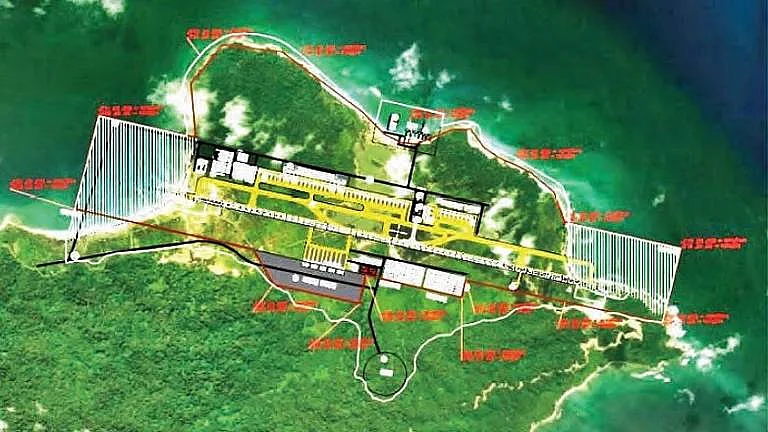
For a project that has been in the works for years, crossed multiple regulatory hurdles and been repeatedly presented by the government as a strategic priority, the latest legal move adds an unexpected wrinkle.
The Centre is now asking the Supreme Court to intervene in proceedings that could examine how the rights of Great Nicobar’s indigenous communities were dealt with before the project moved ahead.
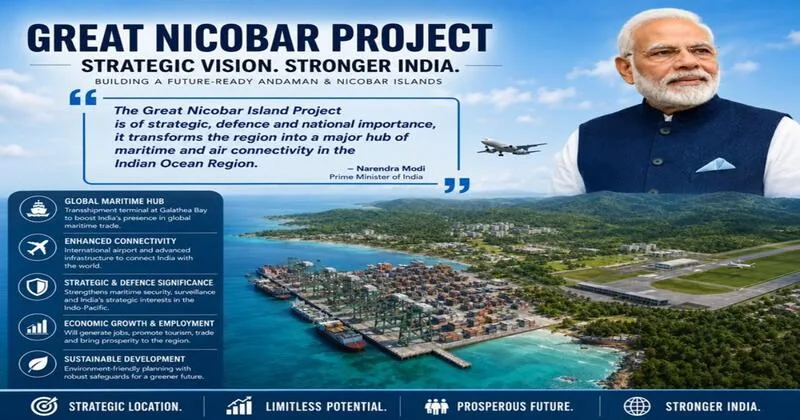
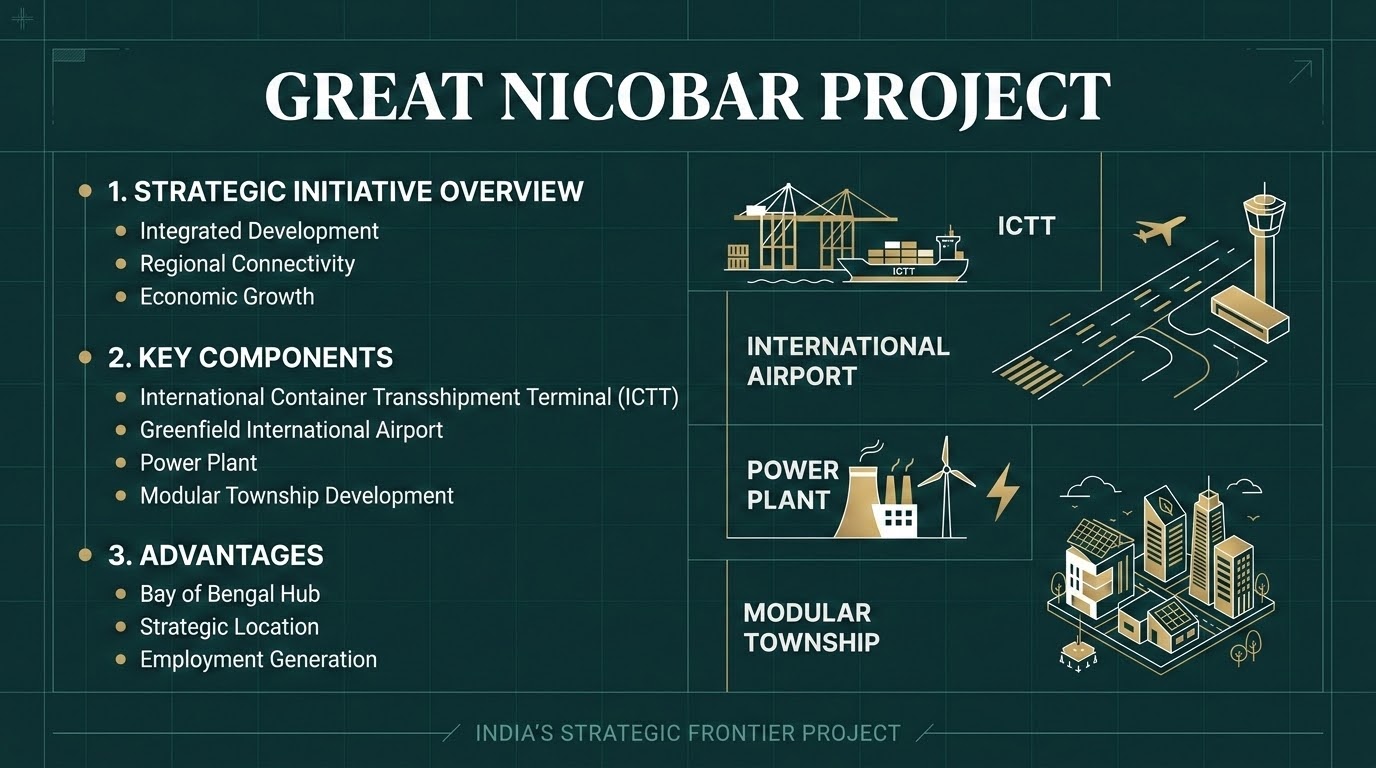
The question is not whether the Centre supports the Great Nicobar Project; it very clearly does. The project has been presented by the government as a major piece of strategic and economic infrastructure, one that could transform Great Nicobar into a significant maritime hub while adding an international airport, power infrastructure and a new township to an island that is currently anything but a conventional development zone.
The more interesting question is what happens when someone asks whether the legal process that made that development possible was followed to the letter.
That is now where the Calcutta High Court comes in, with a challenge questioning aspects of the process under the Forest Rights Act, including whether the rights of forest-dwelling tribal communities were properly recognised and settled before the diversion of forest land.
And instead of allowing that challenge to proceed to its substantive hearing, the Centre has now approached the Supreme Court seeking to put those proceedings on hold.
That, rather conveniently, moves the story away from the familiar argument over whether Great Nicobar should be developed at all and towards a more uncomfortable question: if the government is confident that the statutory process was properly followed, why is it seeking to stop the court from examining the challenge?
So What Exactly Is The Centre Building In Great Nicobar?
The scale of the project explains why the government has repeatedly defended it as something considerably bigger than an ordinary infrastructure proposal.
The Great Nicobar Island Holistic Development Project envisages an international container transshipment terminal at Galathea Bay, a greenfield international airport, a township and area-development component and a power plant, with the overall project now being described as having a cost of around ₹92,000 crore.
The numbers are equally difficult to ignore. The project covers roughly 16,610 hectares, or about 166.10 square kilometres, while the environmental and regulatory records identify around 130.75 square kilometres of forest land for diversion.
The government has maintained that the project comes with environmental safeguards and that a substantial portion of the proposed diversion area would remain under green development rather than being subjected to unrestricted tree felling.
But this is where the Great Nicobar story becomes more complicated than a simple development-versus-environment argument. The Centre has already taken substantial regulatory steps to enable the project to proceed.
Environmental clearances were granted in 2022, while Stage-I, or in-principle, approval for the diversion of forest land was also granted that year. The government has subsequently defended those decisions, pointing to the project’s strategic location, its potential role in international shipping and the broader national-security and economic rationale behind developing the island.
The project has also already travelled through environmental litigation, including proceedings before the National Green Tribunal, which in 2026 declined to interfere with the environmental clearance after considering the safeguards and the findings of a High-Powered Committee.
So, on the face of it, a considerable amount of the regulatory machinery has already moved in the project’s favour.
And yet, another legal question remains open – one that is not quite about whether Great Nicobar needs an airport or a transshipment terminal, but whether the people whose forest rights could be affected were dealt with in accordance with the law.
That Is The Question Now Sitting Before The Calcutta High Court.
And apparently, the Centre would rather the court not get that far.
Then came the question nobody could simply clear away
The legal challenge before the Calcutta High Court is not asking the court to decide whether India needs a major port, whether Great Nicobar has strategic importance or whether development should happen on the island.
Those are questions the government has already answered in the affirmative. The petition instead goes after something much more basic – whether the statutory process protecting the rights of forest-dwelling tribal communities was properly completed before the project moved ahead.
At the centre of the challenge is the Forest Rights Act, 2006, which provides a legal framework for recognising and settling the forest rights of Scheduled Tribes and other traditional forest dwellers. The petition raises questions around the process through which those rights were identified and settled in Great Nicobar, the role of the Gram Sabha and the validity of the official certification relied upon before the forest land was diverted.
Among the documents under challenge is an August 2022 certificate issued by the Deputy Commissioner of Nicobar district stating that the relevant forest rights had been identified and settled. The petition also questions proceedings involving the Sub-Divisional Level Committee constituted under the Forest Rights Act and the manner in which the consent process was carried out.
This is an important distinction because the case is not, at this stage, a judicial finding that the Centre violated the Forest Rights Act. The Calcutta High Court has not reached that conclusion. What it has said, in effect, is that the questions raised by the petitioner deserve to be heard rather than being dismissed before the court gets to the substance.
And that petitioner is not an entirely random name that appeared from nowhere.
The PIL was filed by Meena Gupta, a former senior bureaucrat who has served as Secretary in both the Environment and Tribal Affairs Ministries and who has also been associated with the drafting of the Forest Rights Act. Her challenge therefore brings the tribal-rights question into sharper focus, particularly because Great Nicobar is home to indigenous communities including the Shompen and Nicobarese.
The Centre, however, had another problem with the petition before the court could even get into all of this. First, the Centre questioned who was asking the questions
The government’s initial battle in the Calcutta High Court was not really over whether the Forest Rights Act had been followed. It was over whether Meena Gupta was entitled to bring the challenge in the first place.
The Centre questioned her locus standi, pointing, among other things, to the fact that she was not a resident of the islands and arguing that she was not authorised by the local tribal communities to bring the proceedings. In other words, before getting to the question of whether the statutory process was properly followed, the government wanted the court to decide whether Gupta had the standing to raise the question at all.
The Calcutta High Court did not agree.
In its May 2026 order, the court rejected the preliminary objection and allowed the PIL to proceed. It considered Gupta’s earlier connection with the Andaman and Nicobar Islands, her experience in government and her involvement with issues surrounding the Forest Rights Act while assessing whether she had sufficient interest to approach the court.
The court also made an important point about the project’s scale and importance. The fact that a project involves enormous expenditure or has been described as strategically significant does not, by itself, place it beyond judicial scrutiny where a legally permissible challenge has been raised.
That did not mean the court had ruled against the Great Nicobar Project.
It meant something considerably narrower and, for the Centre, potentially more inconvenient. The challenge had survived the preliminary gatekeeping stage and could now move towards the substantive questions about the Forest Rights Act process.
The case was subsequently moving towards a final hearing, with November 25 and 26 listed for the matter.
Which brings us to the part that makes the chronology rather difficult to ignore.
The Centre, having failed to get the case stopped at the preliminary stage, has now taken that fight to the Supreme Court and is asking it to stay the High Court proceedings.
The project can proceed. The approvals can stand. The government’s strategic argument remains intact. But the court hearing that could examine whether one part of the statutory process behind those approvals was properly followed?
That is the proceeding the Centre now wants put on hold.
And Then The Centre Took The Question To The Supreme Court
Having failed to get the Calcutta High Court to dismiss the case at the threshold, the Centre has now taken the dispute to the Supreme Court, challenging the High Court’s decision that allowed the PIL to proceed and seeking a stay on the proceedings that are currently headed towards a substantive hearing, which means the immediate legal battle is no longer simply about whether the Forest Rights Act process was followed in Great Nicobar, but whether a court should be allowed to examine that question in the first place.
The Centre’s Supreme Court petition challenges the High Court’s approach to the maintainability of the PIL and reiterates its objections to Meena Gupta’s locus, while also arguing that the proceedings should not be allowed to become a means of obstructing a project that the government considers important for India’s strategic and economic interests; these are the government’s arguments, however, and they remain arguments at this stage rather than a judicial finding that the PIL is either frivolous or an abuse of process.
The timing is what makes the move particularly interesting, because the Calcutta High Court had already moved the matter towards a final hearing, and according to the latest reporting, the Centre had agreed on September 24 to the petitions being listed for November 25 and 26, before subsequently seeking Supreme Court intervention to stay those very proceedings.
That leaves a rather awkward sequence on the record: the Centre challenged the petitioner’s standing, the High Court rejected that preliminary objection, the matter moved towards a substantive hearing, the Centre agreed to dates for that hearing and then approached the Supreme Court asking that the High Court proceedings be stopped.
The Supreme Court is now the next courtroom in this particular story, with the Centre’s Special Leave Petition reportedly listed for consideration on October 5, and the immediate question therefore being whether the Calcutta High Court will actually get the opportunity to examine the substantive challenge in November or whether those proceedings will be paused while the Supreme Court considers the Centre’s objections.
None of this, it is worth stressing, amounts to a finding that the Centre has violated the Forest Rights Act, nor does the Supreme Court’s consideration of the Centre’s plea amount to a finding that the High Court challenge is without merit; at this stage, the dispute is fundamentally procedural, even though the questions sitting underneath that procedure could have significant implications for a project involving thousands of hectares of land and some of the country’s most sensitive ecological and tribal-rights concerns.
But Hasn’t The Great Nicobar Project Already Survived A Legal Challenge?
This is where the story can easily become confusing, because anyone following the Great Nicobar project could reasonably ask why there is yet another court battle when the project has already been through environmental scrutiny and the National Green Tribunal has already declined to interfere with the environmental clearance, but the answer lies in the fact that the two proceedings are not examining precisely the same legal question.
The NGT proceedings centred on challenges to the project’s environmental clearance and the ecological safeguards surrounding the proposed development, including concerns relating to forest diversion, biodiversity, protected areas and the potential impact on the island’s fragile ecosystem, and after considering the government’s responses, the High-Powered Committee’s examination and the safeguards attached to the project, the tribunal in February 2026 found no sufficient ground to interfere with the clearance.
The government has relied heavily on that regulatory and judicial history while defending the project, pointing to the NGT’s decision, the environmental safeguards and the strategic importance of the proposed infrastructure, particularly the transshipment terminal and airport, as evidence that the project has already undergone considerable scrutiny before being allowed to move forward.
But the Calcutta High Court case is different, because the petition before it is focused on the Forest Rights Act process and the recognition and settlement of tribal forest rights, including questions concerning the Gram Sabha process and the official certification that those rights had been dealt with, meaning that a decision upholding the environmental clearance does not automatically answer the separate question of whether every statutory requirement relating to tribal and forest rights was properly satisfied.
That distinction matters because the government can simultaneously maintain that the environmental clearance is valid, that the project is strategically important and that extensive safeguards are in place, while still having to answer a separate legal challenge over whether the statutory process involving forest rights was correctly followed, and it is precisely that second question which the Centre is now asking the Supreme Court to prevent the High Court from examining.
So the Great Nicobar Project has not suddenly found itself without approvals, nor has any court ordered that construction or development must stop.
What has happened is considerably more specific, and perhaps more revealing, because a project that has been steadily moving through the government’s approval machinery has now reached a point where the government itself is asking the country’s highest court to pause a judicial examination of one of the processes that underpinned those approvals.
Quite a turn, indeed.