DHFL’s Bandra Book, How Fake Loans Became Real Money, Who Got It And How Accounting Entries Kept The Alleged Diversion Running For Years
How could a housing financier create hundreds of thousands of apparently legitimate borrowers, move thousands of crores through them, record interest investigators say was never received, and keep the system running for years? The numbers are staggering: 181,664 fictitious accounts, 87 Bandra Book entities, ₹11,309 crore in alleged unsecured lending and a ₹34,615 crore bank-fraud case.

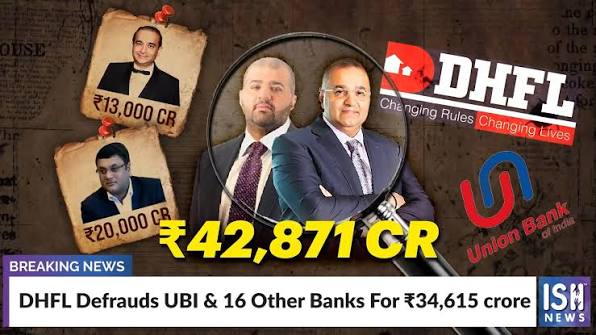
The Bandra Book was not just a list of bad loans. The easiest way to understand the DHFL case is to start with what the Bandra Book was allegedly not. It was not simply a collection of loans that had gone bad, borrowers who had defaulted or properties that had lost value.
Investigators described something much more fundamental: loan accounts that allegedly did not represent genuine lending in the first place.
DHFL, once one of India’s largest housing finance companies, built its business around lending to homebuyers and property borrowers. But investigators later alleged that a parallel set of transactions had been recorded in the company’s books under what became known as the “Bandra Book”. At the centre of the allegations were fictitious borrowers, fictitious loan accounts and a network of entities through which money was allegedly moved.
That distinction matters. A bad loan means the money was actually lent and the borrower subsequently failed to repay it. A fictitious loan raises a very different question: was there ever a genuine borrower or genuine underlying transaction at all?
According to the investigations, the problem was not merely that money had allegedly left DHFL. It was that the accounting records could make those transactions appear to be part of an ordinary lending business. That is what makes the Bandra Book central to understanding the larger DHFL case.
The question, therefore, is not simply how much money was allegedly diverted. It is how a financial institution could create the appearance of legitimate lending on such a large scale, record the resulting transactions in its books and allow the system to continue operating for years.

So What Exactly Was The Bandra Book?
The term “Bandra Book” refers to a set of loan accounts and transactions that investigators alleged were maintained through a supposed Bandra branch or virtual lending operation of DHFL.
The alleged structure gave the appearance of a large portfolio of housing loans, even though the underlying borrowers and transactions were, in numerous cases, allegedly fictitious.
The basic mechanism was deceptively simple. Loan accounts were created in DHFL’s records in the names of supposed borrowers. Those accounts could then carry the familiar characteristics of a loan portfolio – sanctioned amounts, disbursements, outstanding balances and interest calculations. On paper, therefore, the numbers could resemble the ordinary business of a housing finance company.
But investigators alleged that many of these borrowers did not actually exist or had not received the loans attributed to them. The issue was therefore not merely one of repayment. It went to the existence of the underlying transaction itself.
The alleged system also involved entities that were not ordinary retail homebuyers.
SEBI’s proceedings refer to 87 entities associated with the Bandra Book and allege that DHFL extended more than ₹11,309 crore in unsecured loans to them. Investigators further alleged that fictitious interest income was recorded against portions of this lending, creating another layer of accounting entries around the underlying transactions.
This is where the Bandra Book becomes more than a collection of questionable loan accounts. If the alleged loans were recorded as genuine assets, and interest was being recognised against them, the books could present a picture of a functioning loan portfolio even when the underlying economic activity was allegedly very different.
In other words, the alleged mechanism had two sides. Money moved out, while accounting entries helped explain where that money supposedly belonged. The critical question is what happened between those two points – who received the funds, which entities were involved, and how the transactions were subsequently reflected in DHFL’s books.
That is also why the different figures surrounding the DHFL case need to be treated carefully. The 181,664 fictitious loan accounts identified in one forensic finding, the 2,60,315 fictitious borrowers referred to in the CBI proceedings, the 87 Bandra Book entities and the ₹11,309 crore of alleged unsecured lending do not necessarily describe the same pool of transactions.
They represent different parts of a much larger alleged system – one that investigators have been attempting to reconstruct from DHFL’s books, transaction records and the movement of funds.

The Numbers Behind The Fictitious Loans
One reason the DHFL story can become confusing is that several very large numbers appear in the various investigations, and they are sometimes presented as though they describe the same thing. They do not.
One forensic examination identified 181,664 fictitious loan accounts, representing around ₹14,095 crore. The CBI proceedings have referred to an even larger figure of 2,60,315 fictitious borrowers. Separately, SEBI’s proceedings have focused on 87 entities linked to the so-called Bandra Book, involving alleged unsecured lending of ₹11,309.12 crore.
There is another number that sits above all of these: the CBI’s much larger bank-fraud and fund-diversion case, involving allegations running into roughly ₹34,000 crore.
These figures should not simply be added together. They relate to different elements of the alleged transactions, different investigative findings and, in some cases, different ways of measuring the underlying activity.
—The ₹11,309 crore figure, for instance, relates specifically to the alleged unsecured loans extended to the 87 Bandra Book entities in the SEBI proceedings.
—The fictitious-account figures relate to alleged borrowers or loan accounts identified through forensic and investigative examination.
—The much larger ₹34,000-crore figure concerns the broader allegations against DHFL and its promoters, rather than the Bandra Book alone.
But the numbers do establish the scale of the problem investigators were trying to reconstruct. This was not a handful of questionable accounts buried inside a large loan book. The allegations describe a system involving hundreds of thousands of supposed borrowers, thousands of crores in lending and accounting entries running into tens of thousands of crores.
And that leads to the more important question.
If these loans were fictitious, where did the money actually go?

But Where Did The Money Actually Go?
A fictitious loan account, by itself, does not explain a diversion. The crucial part of the investigation is what happened after money was allegedly shown as having been disbursed.
According to the investigative case, funds were routed through entities associated with the Bandra Book and other connected structures rather than being used in the way a conventional home loan would be expected to be used. The alleged transactions therefore have to be understood as a chain: money was recorded as lending, moved to an entity or account, and was then allegedly transferred or deployed elsewhere.
This is also where the 87 Bandra Book entities become important. They were not simply names appearing in a spreadsheet. SEBI’s proceedings examine alleged unsecured lending to these entities and the subsequent treatment of those transactions in DHFL’s books. The investigation has sought to establish whether these were genuine commercial loans or vehicles through which funds could be moved outside the ordinary retail lending business.
The distinction is critical because a genuine housing loan normally has an identifiable borrower, an underlying property or transaction, documentation supporting the loan and an expected repayment stream. If the borrower is fictitious, or if the loan exists primarily as an accounting entry, the apparent asset on the lender’s balance sheet may not represent an asset in the conventional economic sense.
Investigators have therefore examined not just the names on the loan accounts, but the movement of money after disbursement.
That money trail is central to the larger DHFL case. The allegations concern transfers involving related or connected entities, lending that investigators say was not adequately supported by genuine underlying transactions, and funds that allegedly travelled through multiple entities before reaching their ultimate destination.
But tracing the money is only half of the puzzle.
The harder question is how the accounting system could continue to recognise these transactions as loans in the first place.
If money had left DHFL, the books needed an explanation for that outflow. A loan account provided precisely that explanation. And if interest was subsequently recorded against the account, the books could also show an apparent return from the asset.
That meant the alleged problem was not simply where the money went. It was also what the books said had happened to the money after it left.
That is the point at which the Bandra Book moves from being a story about allegedly fictitious borrowers to a story about the accounting architecture that investigators say allowed those transactions to remain embedded inside DHFL’s financial records.

The Accounting Trick Was As Important As The Money
The most important part of the Bandra Book allegations may not have been the creation of fictitious borrowers itself.
It was what happened to those accounts after they entered DHFL’s books.
A loan recorded in a financial institution’s accounts is an asset. It represents money that the company expects to recover, along with interest. If the underlying borrower is genuine, the loan has an economic basis. But if the borrower or transaction is fictitious, the accounting entry can create the appearance of an asset without necessarily representing a corresponding economic reality.
That is what investigators have alleged happened within DHFL’s books.
The alleged Bandra Book structure allowed loan accounts to be maintained as though they were part of the company’s ordinary lending portfolio. Interest could be calculated and, according to investigators, fictitious interest income could also be recognised. The result was that the books could show both a loan asset and income associated with that asset.
This matters because financial statements do not simply record where money is sitting at a particular moment. They tell a story about what the money represents. A disbursement classified as a loan tells the reader that the company has exchanged cash today for a financial asset that it expects to recover in the future.
If that underlying loan is fictitious, the classification itself becomes critical.
SEBI’s proceedings allege that DHFL recorded ₹10,853.68 crore of fictitious interest income relating to the Bandra Book transactions. That allegation is particularly significant because interest income can make a loan book appear productive. A portfolio showing loans outstanding and interest being earned can look very different from a portfolio in which large amounts of money have simply been transferred elsewhere.
The alleged accounting therefore potentially served two purposes. It recorded the movement of money as lending, while the accompanying entries helped maintain the appearance that the lending was generating income.
But accounting entries cannot exist in isolation. They need to survive reconciliations, reporting processes, audits and scrutiny by lenders and regulators.
Which brings us to the more uncomfortable question.

How Did Nobody See The Problem Earlier?
The scale of the alleged transactions inevitably raises a question about controls. How could a system involving hundreds of thousands of supposed borrowers and thousands of crores in alleged lending remain embedded in the books of a large housing finance company?
There is no single answer in the investigative record. The issue is instead a combination of what was recorded internally, how the accounts were maintained, what information was available to those reviewing them and how the transactions were subsequently uncovered.
The alleged use of fictitious borrowers was significant precisely because a large lending institution can contain an enormous volume of individual accounts. A single questionable loan may disappear into a portfolio containing thousands or millions of transactions. The challenge becomes identifying patterns rather than simply checking individual files.
The forensic investigations subsequently looked beyond individual loan accounts and examined the broader structure — including borrower records, transactions, related entities, disbursements and accounting entries.
That distinction is important. The question is not simply whether somebody could have looked at one loan file and spotted a problem. It is whether the systems designed to establish that the loan portfolio was genuine were capable of detecting a pattern spread across a very large number of accounts and entities.
The DHFL case also demonstrates why the distinction between accounting appearance and economic reality matters so much in financial fraud investigations. A balance sheet can show a loan as an asset, but the existence of an accounting entry does not by itself establish that a genuine borrower received the money for the stated purpose.
Ultimately, the allegations could only be reconstructed after investigators examined the underlying records and followed the transactions beyond the face of the loan book.
And that is what turns the Bandra Book from an accounting irregularity into part of the much larger DHFL case: the alleged system did not merely move money. It allegedly created records explaining why that money had moved.
TheIt is important not to treat the Bandra Book as a shorthand for the entire DHFL fraud case. The alleged fictitious loans and the 87 entities associated with the Bandra Book form one part of a much larger set of allegations concerning the company’s lending, fund movements and dealings with connected entities.
What The Investigations And Courts Have Actually Established
There is another distinction that matters in a case this large: an investigative allegation is not the same thing as a final judicial finding.
Forensic examinations, the CBI investigation and SEBI proceedings have identified and examined different aspects of the alleged transactions. The figures around fictitious borrowers, Bandra Book entities, unsecured lending and alleged fictitious interest income come from those investigative and regulatory records.
The criminal case, meanwhile, concerns allegations that must ultimately be tested through the judicial process. The framing of charges or continuation of proceedings does not, by itself, amount to a finding that every allegation has been proved.
That is particularly important when dealing with numbers as large as ₹34,000 crore.
The figure represents the scale of the broader bank-fraud allegations; it should not be casually described as an amount that a court has already conclusively found was all diverted through the Bandra Book.
What the investigations do provide is a detailed picture of the alleged mechanism: fictitious borrowers and loan accounts, entities associated with the Bandra Book, unsecured lending, alleged movement of funds and accounting entries that investigators say helped maintain the appearance of genuine lending.
The legal process will determine the final culpability of the individuals and entities accused.
The Bigger Question The Bandra Book Leaves Behind
The most unsettling part of the DHFL story is therefore not simply the size of the alleged diversion. It is the apparent ability of a financial system to make questionable transactions look ordinary.
A loan account can look like an asset. Interest can look like income. A borrower can exist as a name in a database. And when thousands of such entries sit inside a much larger lending operation, the individual transaction may look unremarkable.
The Bandra Book allegations suggest that investigators eventually had to look beyond those entries and reconstruct the economic reality underneath them — who the borrowers were, whether the loans were genuine, where the money moved and how the transactions were reflected in the books.

That is what makes the DHFL case bigger than a story about one housing financier or one set of fictitious loans.
The real question is how long a financial institution can make paper lending look like genuine lending before the accounting entries, the money trail and the underlying reality finally stop matching.