Sale Of Room Nights: The Pancard Club Saga
Pancard Clubs Limited collected money under the banner of holiday memberships and advance “room nights,” yet SEBI and the Securities Appellate Tribunal concluded the arrangements constituted an unregistered Collective Investment Scheme. SEBI ordered a ₹7,035-crore refund in 2016; SAT upheld that order in 2017. ED later stated collections reached ₹9,577 crore between 1997-98 and 2017-18, of which ₹2,858 crore was returned, ₹2,332 crore paid as commissions and ₹4,387 crore allegedly retained as proceeds of crime. More than 51 lakh investors were involved. Insolvency proceedings admitted claims of ₹8,933.92 crore against a realisable value of only ₹697.32 crore. On 1 October 2026 ED provisionally attached 211 properties worth ₹646.58 crore, taking total PMLA attachments to ₹700.89 crore. The gap between money taken and money recovered raises profound questions about regulatory timing, asset tracing and the protection of ordinary savers.

How Did “Sale of Room Nights” By Pancard Club Become a ₹9,577-Crore Collective Investment Scheme That Left 51 Lakh Investors With Almost Nothing?
The phrase “sale of room nights” sounds innocuous. It suggests prepaid hotel stays, discounted holidays, a consumer product rather than a financial instrument. Yet in the hands of Pancard Clubs Limited that phrase became the public face of one of India’s longest-running and most complex multi-agency recovery sagas. What began as a hospitality offering was examined by SEBI, tested before the Securities Appellate Tribunal, pursued under the Maharashtra Protection of Interest of Depositors Act, investigated by the Economic Offences Wing, scrutinised by the Serious Fraud Investigation Office, and ultimately followed by the Enforcement Directorate under the Prevention of Money Laundering Act.
The central question is no longer whether the schemes were ordinary hotel memberships. The question is how a product marketed as holidays left more than 51 lakh people with claims that insolvency proceedings could meet only to the extent of roughly 7.81 percent, while successive attachments still cover only a fraction of the sums investigators now describe as diverted.
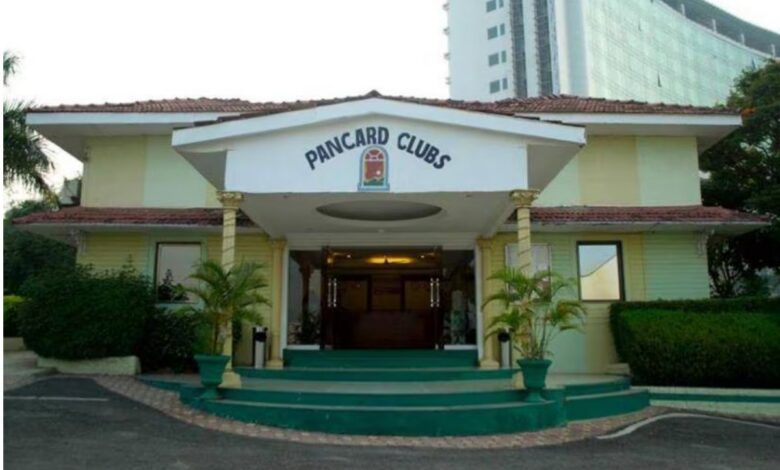
Pancard Clubs Limited was incorporated in 1997 and associated with the Panoramic Group. Its stated business was the ownership, development and operation of hotels, clubs and resorts and the provision of holiday options. Historical material published by the company described a model in which customers purchased room nights in advance, generally at discounted rates, with unused room nights capable of being surrendered for an estimated monetary value.
That surrender feature proved decisive. A conventional hotel membership is a service contract. SEBI concluded that the addition of a monetary surrender value, the pooling of contributions, the management of those contributions by the company, and the absence of day-to-day investor control converted the arrangements into a Collective Investment Scheme under Section 11AA of the SEBI Act. The company never obtained the required registration.
SEBI’s examination of individual plans revealed utilisation patterns that undermined the hospitality characterisation. Under the Royal Membership Plan approximately ₹84.18 crore was mobilised from 54,257 customers through more than 30 lakh room nights. Of the room nights that had been either used or surrendered by the examination date, only about 0.19 percent had actually been utilised; roughly 99.80 percent had been surrendered. Under the Comfort Membership Plan approximately ₹224.72 crore was mobilised from 2,20,185 customers; SEBI recorded that only 0.013 percent of room nights sold were utilised and approximately 99.97 percent were surrendered.
Under the Luxury Membership Plan approximately ₹356.10 crore was mobilised from 2,37,092 customers through more than 83 lakh room nights; only 1,783 room nights were utilised against 82,85,247 surrendered. The Relax Holiday Plan was larger still: approximately ₹2,716.70 crore mobilised from 14,81,808 customers through more than 3.018 crore room nights, with only 78,672 utilised against 77,64,456 surrendered. These figures are SEBI’s regulatory findings. They do not prove that every customer joined solely for investment returns, but they raise an unavoidable question: if the overwhelming majority of purchased room nights were never used as accommodation, what economic reality was the product actually serving?
The ₹7,035-crore figure that dominated the first decade of the case requires careful treatment. SEBI found that Pancard Clubs had mobilised more than ₹7,000 crore through its schemes. The company’s share capital, according to the SAT record, stood at approximately ₹50.12 lakh. More than ₹1,000 crore had been invested in acquiring hotels and resorts, expanding the inventory associated with the schemes. On 29 February 2016 SEBI ordered the company and its directors, Sudhir Shankar Moravekar, Shobha Ratnakar Barde, Usha Arun Tari, Manish Kalidas Gandhi, Chandrasen Ganpatrao Bhise and Ramachandran Ramakrishnan, to wind up the schemes, refund the money collected with applicable returns, and cease the prohibited activities.
The order became the foundation for Recovery Certificate No. 1020 of 2016. The recovery amount was recorded as approximately ₹7,035 crore plus returns, interest and costs. That number is not an allegation; it is the quantum fixed by a final regulatory order that survived appellate challenge.
The procedural history that produced the 2016 order is itself instructive. On 31 July 2014 SEBI passed an ex-parte interim order restraining fresh collections, new schemes, creation of new companies for raising money, and disposal of assets obtained through the money raised. Pancard Clubs challenged the interim order. On 17 September 2014 the Securities Appellate Tribunal set the interim order aside on procedural grounds and directed SEBI to undertake a substantive examination after giving the company an opportunity to present its case.
SAT also required the company to maintain a separate account of money received under existing schemes. SEBI issued a show-cause notice on 24 August 2015. A hearing was held in February 2016. The final order followed on 29 February 2016. The sequence demonstrates that the company received an opportunity to defend itself; the defence did not succeed.
On 12 May 2017 SAT dismissed the company’s appeals and upheld SEBI’s order. The Tribunal rejected the argument that the schemes were merely service contracts. It noted the disparity between the ₹50-lakh share capital and the more than ₹7,000 crore mobilised, the investment of more than ₹1,000 crore in hotel and resort acquisitions, the pooling of funds, the surrender-value mechanism that introduced an investment component, and the absence of day-to-day management by customers.
SAT further held that Pancard Clubs could not claim the benefit applicable to an “existing CIS” because the company had been incorporated only in 1997 and the schemes in question began around 2001-02. The appeals were dismissed. The CIS characterisation therefore rests on a final appellate determination, not merely on a regulator’s assertion.
Recovery proved far more difficult than the order itself. SEBI attached bank accounts, demat accounts, shareholdings and immovable properties. Attachment orders named Pancard Clubs and the six directors. Recovery proceedings expanded to group companies, notably Panoramic Universal Limited. SEBI alleged that large amounts had been transferred from Pancard Clubs to Panoramic Universal and its subsidiaries and that Pancard Clubs had made payments for purchasing properties in the names of those entities.
A later NCLT proceeding recorded that Panoramic Universal had issued 10 crore non-convertible preference shares of ₹5 each, involving ₹50 crore, to Pancard Clubs. The shares carried 7 percent interest and were redeemable at par within 20 years from 8 January 2008. SEBI treated the ₹50-crore investment as siphoning of investors’ money through the company’s board.
Forensic audit material discussed in NCLT proceedings indicated that many of Panoramic Universal’s assets had been acquired through the merger of a Pancard Clubs subsidiary and funds transferred from Pancard Clubs. These are findings recorded in regulatory and insolvency records; they are not yet final criminal convictions, but they establish that the movement of money beyond Pancard Clubs itself was under scrutiny for years.
Maharashtra authorities intervened under the Maharashtra Protection of Interest of Depositors (in Financial Establishments) Act, 1999. A notification dated 11 April 2019 attached 74 immovable properties belonging to Pancard Clubs and its directors and appointed the Deputy Collector, Mumbai City as competent authority. Criminal proceedings under Sections 406, 420 and 34 of the Indian Penal Code and Sections 3 and 4 of the MPID Act were registered. The Economic Offences Wing took over the investigation from Dadar Police Station and filed a chargesheet on 31 December 2021 before the Special MPID Court, Mumbai.
According to ED’s later releases, the chargesheet covered Pancard Clubs, Panoramic Universal, 44 other related companies, six Pancard Clubs directors and five marketing representatives. The multi-agency character of the case, SEBI for CIS enforcement, EOW for criminal investigation, MPID for depositor protection, SFIO for corporate-fraud investigation, ED for money-laundering, and NCLT for insolvency, means that each process has its own purpose and timeline. An insolvency resolution does not automatically dissolve every prior attachment or criminal proceeding.
The Serious Fraud Investigation Office also examined transactions concerning Pancard Clubs. The Bombay High Court’s July 2024 judgment in a matter involving Siddhartha Sudhir Moravekar recorded that SFIO had summoned him on 19 January 2021, 11 January 2022, 2 March 2022 and 15 September 2022. The Court noted that his position differed from that of his late father, Sudhir Moravekar: he was not an accused in the EOW case or SEBI’s prosecution complaints according to the record before the High Court. The distinction is important. Not every family member is automatically an accused; each person’s role must be identified with precision.
ED’s involvement escalated the money-trail inquiry. In February 2025 the agency conducted searches at four premises and stated that it had seized documents relating to overseas assets operated by family members of the late Sudhir Moravekar. On 8 May 2025 ED provisionally attached 30 overseas properties—22 in Thailand, 6 in the UAE and 2 in the USA—valued at approximately ₹54.32 crore.
ED stated that these assets were held by overseas subsidiaries of Panoramic Universal and the late Sudhir Moravekar, that they had been acquired using approximately ₹54.32 crore between 2002 and 2015, that approximately ₹99 crore of alleged proceeds of crime had been diverted from Pancard Clubs to Panoramic Universal, that funds had also been diverted to personal accounts of family members, that a hotel in New Zealand had been purchased through overseas direct investment in 2002 and later sold, that the New Zealand subsidiary had been closed without duly reporting the transaction, and that approximately ₹100 crore had been remitted abroad between 2002 and 2014.
These are ED’s investigative findings. They have not yet been converted into final judicial determinations of guilt. On 1 October 2026 ED’s Mumbai Zonal Office-I provisionally attached 211 additional immovable properties valued at approximately ₹646.58 crore. The properties include commercial office spaces, luxury hotels, operational resorts, agricultural land and residential properties located across Maharashtra, Kerala, Uttarakhand, Goa, Rajasthan, Himachal Pradesh, Madhya Pradesh, Telangana and Dadra & Nagar Haveli. They are held in the names of Pancard Clubs Limited, Panoramic Universal Limited, subsidiaries, family members and beneficial owners.
Combined with the earlier overseas attachment, the total value of assets provisionally attached under PMLA reached approximately ₹700.89 crore. A provisional attachment is a legal restraint; it is not the same as final confiscation or distribution to investors. The distinction matters. ₹700.89 crore attached is not ₹700.89 crore returned to the people who paid into the schemes.
ED’s 2026 release introduced a substantially larger collection figure. The agency stated that Pancard Clubs collected ₹9,577 crore between 1997-98 and 2017-18. Of that sum, ₹2,858 crore was returned to depositors, ₹2,332 crore was paid as agent commissions, and ₹4,387 crore was identified as proceeds of crime retained and diverted. The arithmetic is internally consistent: 2,858 + 2,332 + 4,387 equals 9,577. The returned amount represents approximately 29.8 percent of collections; commissions represent approximately 24.3 percent; the alleged proceeds of crime represent approximately 45.8 percent. These percentages are derived from ED’s stated figures. They are not independent judicial findings.
The ₹9,577-crore figure differs from SEBI’s ₹7,035-crore recovery amount because the two numbers arise from different periods, different methodologies and different legal purposes. SEBI’s figure is the quantum of the 2016 refund order for the period examined by the regulator. ED’s figure is the agency’s broader investigative calculation covering 1997-98 to 2017-18. Conflating the two would be inaccurate.
ED further stated that its investigation uncovered a network of 46 corporate entities under the Panoramic Group. According to the agency, the network was used to collect money through the holiday and timeshare schemes, route funds through corporate entities, layer the proceeds, transfer money into Panoramic Universal and domestic and foreign subsidiaries, acquire properties, and hold those properties through group companies, directors or family members while presenting them as legitimate assets.
One entity specifically named is Shagun Tradelinks Private Limited, described as a shell or dummy company through which funds were allegedly layered. Historical corporate disclosures of Panoramic Universal identified Pancard Clubs as a related or associate entity and recorded transactions involving management fees, room-night and food-and-beverage sales, and dealings with other Panoramic entities. The inter-company financial flows therefore form a continuous thread running from SEBI’s recovery proceedings through EOW forensic material, NCLT records and ED’s money-laundering investigation.
One allegation in the 2026 release is particularly pointed. ED stated that a property measuring 7.08 hectares at Kalhe village, Panvel, Raigad, was sold despite earlier attachment orders by SEBI and the MPID competent authority. The agency alleged that the transaction was executed through a forged board resolution carrying the signature of the late Usha Arun Tari, who had died on 11 September 2018.
ED said the document was purportedly executed on behalf of a struck-off entity and therefore invoked Section 5(1) of the PMLA to provisionally attach the property. This remains an investigative allegation until tested in the appropriate judicial proceedings. If established, it would indicate that attachment orders themselves were not always effective barriers against disposal.
SEBI’s own recovery history shows that properties were auctioned years earlier. A Goa property, Hotel United-21 Emerald, measuring approximately 2,035 square metres, was attached and subsequently auctioned; the successful bid was approximately ₹5.21 crore. Another 2018 auction involving properties in Kerala and Goa produced a combined bid value of approximately ₹4.94 crore. SEBI’s records document auctions of immovable properties, vehicles, shareholdings, bank accounts, demat accounts and mutual-fund holdings. The cumulative recovery through those processes never approached the scale of the ordered refund.
Insolvency added another layer of finality and loss. The National Company Law Tribunal admitted the corporate insolvency resolution process of Pancard Clubs on 9 September 2022 and appointed Rajesh Sureshchandra Sheth as interim resolution professional and later resolution professional. The resolution professional developed a special claims portal because of the very large number of financial creditors in a class. Company records had been seized by SEBI, so investor information had to be extracted from forensic images obtained from EOW. The resolution professional cautioned that the accuracy and veracity of the investor database had not been independently verified.
According to IBBI statistics, total admitted claims reached ₹8,933.92 crore. Liquidation value was assessed at ₹346.51 crore and fair value at ₹459.66 crore. The realisable value under the approved resolution plan stood at ₹697.32 crore—approximately 7.81 percent of admitted claims. On 25 April 2024 NCLT approved a resolution plan submitted by Chemhub Tradelink Private Limited. The plan was implemented on 9 July 2024; the implementing entity was merged with Pancard Clubs, old shares were cancelled, and new equity was issued so that Pancard Clubs became a wholly owned subsidiary of Chemhub Tradelink.
The arithmetic is stark: admitted claims of ₹8,933.92 crore against realisable value of ₹697.32 crore leave a gap of approximately ₹8,236.60 crore. That gap is not proof that every rupee was stolen; it reflects asset values, liabilities, valuation methodology, prior attachments, litigation and recoverability. What it objectively establishes is that the corporate estate available through the resolution process was dramatically smaller than the claims admitted against it.
Even after resolution, control of certain properties remained contested. In November 2025 the Bombay High Court heard Pancard Clubs Limited versus the Economic Offences Wing in a challenge to an order of the Special MPID Court refusing to release property to the successful resolution applicant. The dispute involved the effect of the Supreme Court’s decision in National Spot Exchange Limited versus Union of India. The Court granted EOW time to file its reply and listed the matter for further hearing. The proceeding illustrates that an insolvency resolution plan does not automatically extinguish every prior criminal or regulatory attachment.
The human impact of these numbers is measured not in crores but in individual households. More than 51 lakh people—SEBI recorded 51,55,516 investors for the period 2002-03 to 2013-14; ED refers to more than 51 lakh across its longer window—paid money they believed would secure future holidays or, through the surrender mechanism, a return of capital. Many were ordinary savers for whom the sums represented a significant portion of household resources. When utilisation rates for entire plans fell below one percent and surrender rates approached 100 percent, the product’s economic function diverged sharply from its marketed description.
When SEBI ordered a refund of ₹7,035 crore and the company did not comply, the recovery process stretched across years of attachment, auction and litigation. When insolvency admitted claims of ₹8,933.92 crore and delivered only ₹697.32 crore in realisable value, the arithmetic of loss became final for the bulk of the claim base. When ED identifies ₹4,387 crore as proceeds of crime and attaches assets worth ₹700.89 crore, the provisional restraint covers only a fraction of the sum the agency itself describes as diverted.
Each of these figures demands more than a single sentence. Each represents years of process, contested jurisdiction, incomplete recovery and unanswered questions about where the money went after it left the accounts of ordinary depositors.
The chronology itself is an indictment of delay. Pancard Clubs was incorporated in 1997. Schemes examined by SEBI began operating around 2001-02. SEBI’s interim order arrived in July 2014. SAT set that interim order aside procedurally in September 2014 and required substantive adjudication. The final SEBI order was issued in February 2016. SAT upheld it in May 2017. Recovery, MPID attachment, EOW investigation, SFIO scrutiny, insolvency admission in 2022, resolution in 2024, ED overseas attachment in 2025 and the 211-property attachment in October 2026 followed.
At each stage the legal regime changed, the purpose of the proceeding shifted, and the ordinary depositor waited. The structural problem is not that any single agency failed to act; it is that the multiplicity of regimes—securities regulation, criminal investigation, depositor protection, corporate-fraud inquiry, money-laundering enforcement and insolvency—produced sequential rather than simultaneous accountability, allowing time for assets to move, records to become incomplete, and recovery prospects to diminish.
Sudhir Shankar Moravekar stands at the centre of the historical corporate structure. SAT identified him as one of the six directors involved in the 2016 SEBI proceedings. SEBI’s recovery proceedings named him as a defaulter. Panoramic Universal’s historical disclosures identified him as chairman and promoter and recorded Pancard Clubs among related enterprises. He died in 2017. ED’s later investigation referred to overseas assets connected with him and his family.
Care must be taken not to attribute every subsequent allegation to every family member without specific evidence. The Bombay High Court record concerning Siddhartha Sudhir Moravekar expressly noted that he was not an accused in the EOW or SEBI proceedings referred to in that case, although SFIO had investigated him.
The core controversy remains the legal character of the “sale of room nights.” Pancard Clubs’ defence was that customers were buying hotel accommodation and hospitality services. SEBI’s conclusion, upheld by SAT, was that the combination of advance payment, pooling of contributions, long tenure, monetary surrender value, company control and extremely low actual utilisation converted the arrangements into a Collective investment scheme. That determination is final.
What remains unresolved is the full money trail: the transfers into Panoramic Universal, the preference-share investment of ₹50 crore, the acquisition of properties in group-company names, the overseas remittances, the layering through entities such as Shagun Tradelinks, and the ultimate location of the ₹4,387 crore that ED now describes as proceeds of crime.
The 1 October 2026 attachment of 211 properties worth ₹646.58 crore is the latest chapter, not the conclusion. Provisional attachment is a necessary step; it is not recovery. Until the attached assets are finally adjudicated, monetised and distributed, the ordinary depositor who paid for room nights that were never used continues to wait for a resolution that the numbers themselves suggest may never fully arrive.
The documentary record therefore supports a layered description. At the first layer, SEBI and SAT established that the schemes were an unregistered CIS and ordered a ₹7,035-crore refund. At the second layer, recovery and group-company proceedings revealed transfers and property acquisitions that moved value beyond Pancard Clubs itself. At the third layer, MPID and EOW proceedings pursued criminal and depositor-protection remedies. At the fourth layer, SFIO examined corporate transactions. At the fifth layer, ED followed the alleged proceeds of crime across domestic and overseas assets and a 46-entity network.
At the sixth layer, insolvency quantified the gap between admitted claims of ₹8,933.92 crore and realisable value of ₹697.32 crore. The October 2026 action escalates the story by presenting a broader collection figure of ₹9,577 crore and an alleged proceeds-of-crime sum of ₹4,387 crore alongside more than ₹700 crore in provisional attachments.
The strongest public-interest demand is not rhetorical condemnation but forensic accounting: a transparent, court-supervised reconciliation of every rupee collected, every rupee returned, every commission paid, every inter-company transfer, every overseas remittance and every property acquired, so that the residual shortfall can be measured, attributed and, to the extent still possible, recovered. Anything less leaves the “sale of room nights” as a cautionary tale whose final chapter remains unwritten for the 51 lakh people who paid into it.