UPI: Indian’s Real Super Power, Being Sacrificed To Make Trump Happy!
UPI Was India’s Unbeatable Weapon, Until Washington Forced Delhi to Weaken It

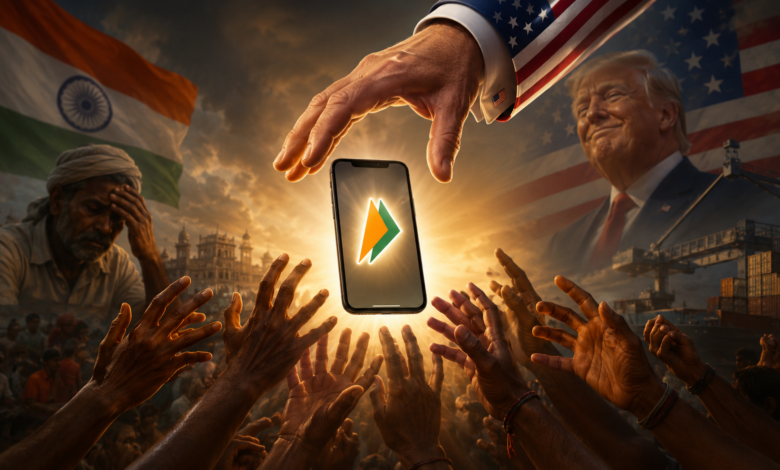
India built something the world still struggles to copy. The Unified Payments Interface, aka the UPI, that turned country of cash and fragmented banking into the largest real-time payment system on the planet. Hundreds of crores of transactions move every month at zero cost to the ordinary user and, until now, at zero Merchant Discount Rate for most merchants. Small shopkeepers, street vendors, and ordinary citizens adopted it because it cost them nothing. That zero-cost design was not an accident. It was policy. It was sovereignty. It was the one genuine digital public infrastructure success that no Western payment giant could match or easily infiltrate.
That advantage of UPI is now being placed on the negotiating table, more exclusively on a sacrificing table, for my dear friend Doland Trump.
In August 2026 the government pushed through amendments that remove the legal barrier preventing banks and payment providers from charging Merchant Discount Rate on UPI and RuPay debit-card transactions. The bill itself does not impose a fee today. It simply hands the government the power to notify charges later. Officials insist the move is about making the UPI ecosystem “financially sustainable.” The timing, the language of American trade documents, and the identity of the companies that stand to gain tell a different story.
The United States Trade Representative’s March 2026 National Trade Estimate Report on Foreign Trade Barriers explicitly listed India’s zero-MDR policy on UPI and RuPay as a barrier. Washington’s argument is straightforward: the free system favours domestic players and denies “level playing field” access to American payment companies. Visa and Mastercard operate on fee-based models. Every time an Indian consumer pays a merchant with free UPI instead of a card, those companies lose potential MDR income. RuPay’s preferential access to UPI credit rails has further eroded their market. The USTR report treated this reality as an unfair trade practice.
The Trump administration has made “level playing field” in digital payments a recurring demand in trade negotiations. Brazil received a concrete demonstration of the consequences. When Brasília refused to dilute the advantages of its own instant-payment system Pix, the United States imposed an additional 25 percent tariff on most Brazilian goods, citing electronic-payment policies among the reasons. The message to other countries was unmistakable: domestic payment systems that starve American card networks of fees will be treated as trade barriers.
India is now adjusting its legal framework in a way that responds to exactly that complaint. The government maintains that any future MDR will apply only to merchants, not to end customers, and that person-to-person transfers and small-value transactions will likely remain free. Finance Minister Nirmala Sitharaman has repeated that the change will help banks and fintechs invest in infrastructure, innovation and security. These statements are carefully worded. They do not erase the fact that the legal shield protecting zero-MDR has been removed at the precise moment American trade pressure is most intense.
Critics have been less diplomatic. Congress leader Jairam Ramesh linked the amendment directly to the USTR report and accused the government of preparing to dilute UPI so that American businesses can gain ground. Trade analysts at the Global Trade Research Initiative warned that introducing MDR simply to address US complaints or to protect the profits of Visa and Mastercard would be a strategic error. UPI’s zero-cost model, they argued, has been a primary driver of financial inclusion and of India’s fintech revolution. Sacrificing it under external pressure would trade long-term strategic autonomy for short-term trade calm.
The deeper issue is what UPI represented. It was not merely a convenient app. It was proof that a large developing country could build a public digital infrastructure that delivered speed, scale and inclusion without handing the fee pool to foreign networks. It reduced the structural advantage that Visa and Mastercard have enjoyed for decades in most markets. It kept transaction costs near zero for the poorest merchants and the smallest payments. That model is now being prepared for modification.
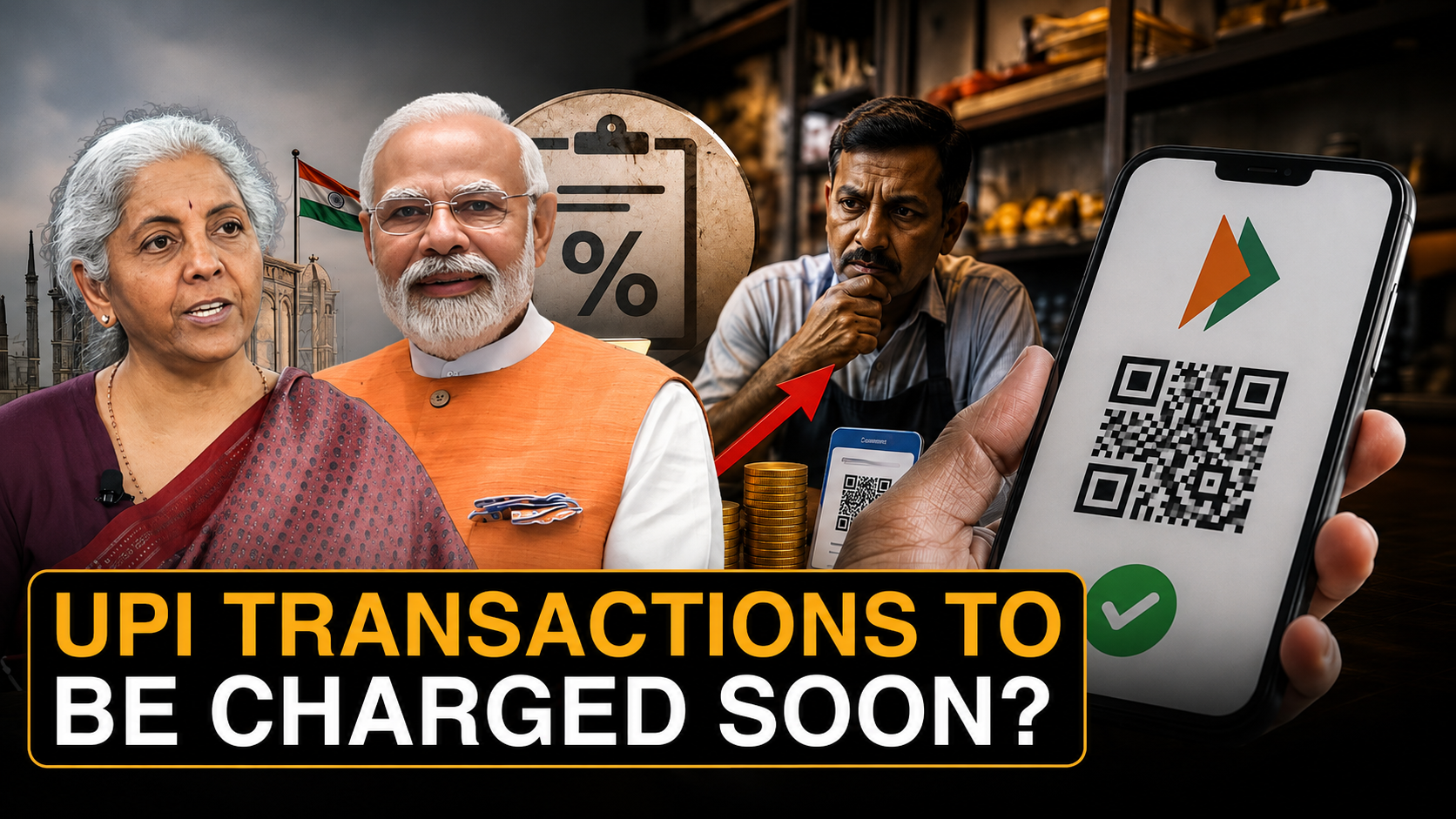
Once the legal door is open, the pressure to walk through it will only increase. Banks and payment companies that have long complained about the cost of supporting free UPI will push for revenue. Large merchants may absorb modest fees; smaller ones may pass them on or drift back toward cash. The moment any charge appears on a significant volume of transactions, the unique selling proposition that made UPI unstoppable begins to erode. American card networks, which have watched their potential Indian fee income shrink, will welcome the change. Their business model depends on merchants paying for the privilege of accepting electronic payments. A free domestic alternative was always an existential inconvenience.
India is being told that sustainability requires fees. The unspoken corollary is that sustainability must also satisfy the definition of fairness written in Washington. The same administration that lectures partners about free markets is demanding that India stop offering its citizens and merchants a free public payment rail because that rail undercuts the profits of two American corporations. The Indian government is responding by creating the legal pathway to charge.
UPI was the one domain in which India had built something the West could not easily dominate or replicate. It was cheap, interoperable, sovereign, and massively adopted. That combination is rare. It is now being softened so that the fee-based model preferred by Visa, Mastercard and the Trump trade team can reclaim space. The official explanation will continue to speak of infrastructure costs and long-term viability. The sequence of events, USTR complaint, trade pressure, parallel treatment of Brazil’s Pix, and the sudden removal of the zero-MDR legal protection, points to a simpler conclusion.
/entrackr/media/post_attachments/wp-content/uploads/2023/08/UPI-image.jpg)
India is preparing to put a price on the one digital public good that actually worked at population scale. It is doing so while American card companies and the administration that champions them watch closely. The superpower is being asked to become a little less super, a little more expensive, and a little more compatible with the revenue expectations of Western payment networks. That is not sustainability. That is accommodation.