Why Kabul Chawla Should Be Held Accountable For Harassing The Homebuyers Since Decades And Must Be Arrested, Like Other Builders Who Committed Similar Crime?

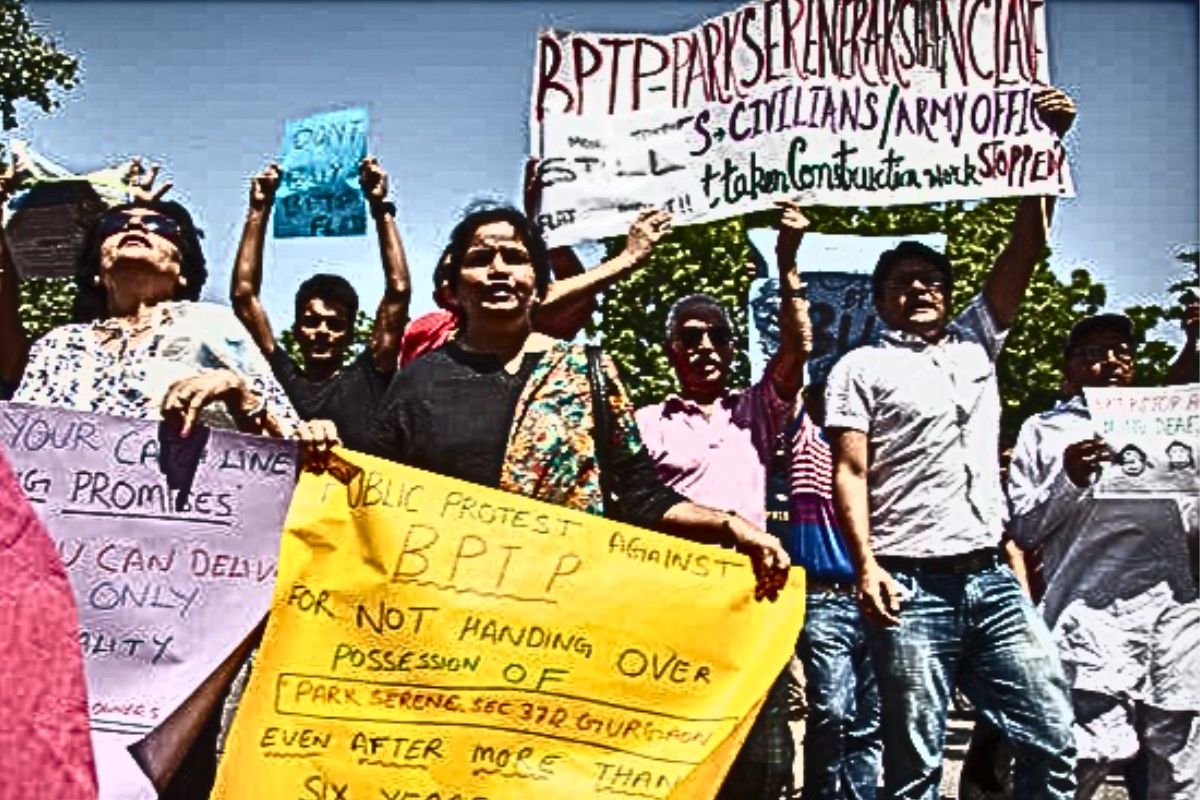
It seems BPTP do not know the meaning of full stop, at either end. On one end, it is expanding its projects like an catalyst, and on the other hand, there is no end to harassment by BPTP to homebuyers. On one hand, it launches WA-VANA, an Ikigai inspired sustainable residential enclave; and on the other hand, just two weeks after, it is reported that residents of the BPTP Discovery Park society in Faridabad are gripped by fear, after plaster fell from a 14th-floor balcony. They have raised questions regarding the quality of construction materials and the builder’s failure to carry out repairs.
“We ask: until when will all this harassment by BPTP continue? Shouldn’t the top management of BPTP, who are earning millions from selling homes (just selling, and only partly delivering), be held accountable for their company’s actions?”
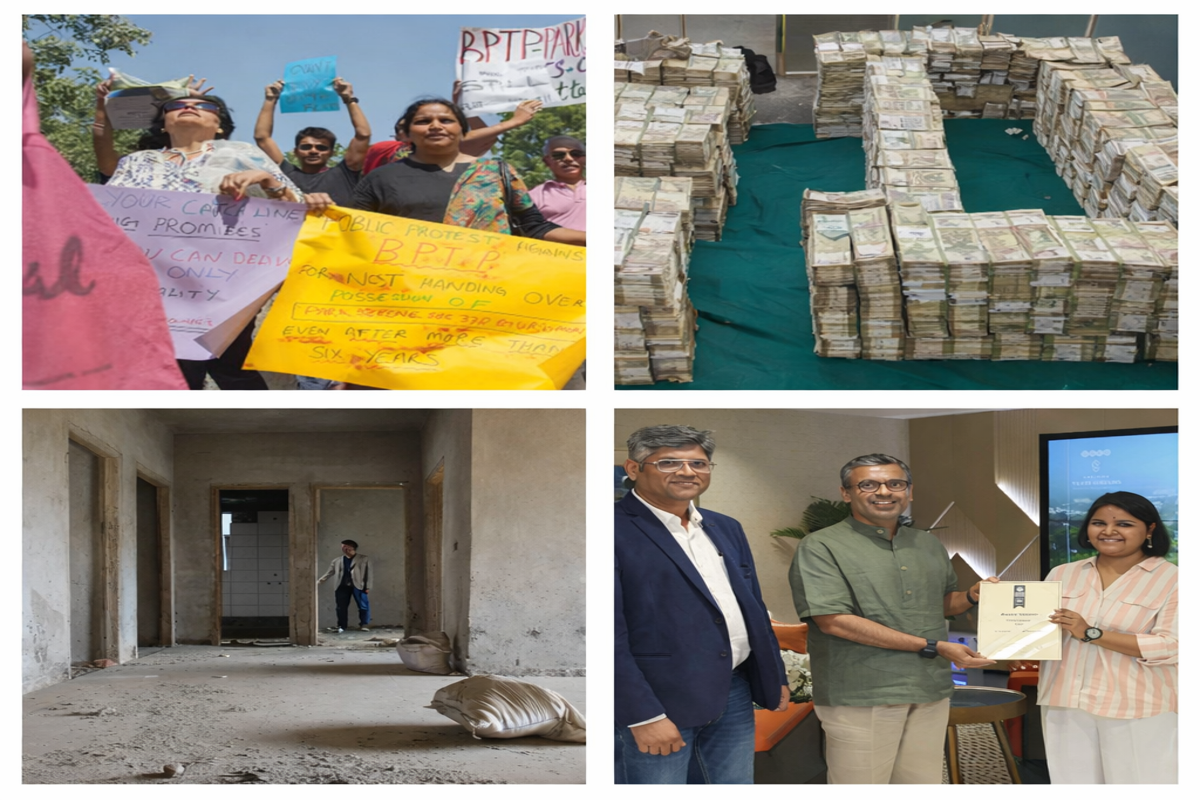
For over fifteen years, hundreds of homebuyers who invested their savings in BPTP projects have waited for flats that were promised on paper but never materialized on the ground. During this same period, other real estate promoters accused of remarkably similar conduct — diverting homebuyer money, delaying possession indefinitely, and building elaborate corporate structures to obscure where the funds went — have been arrested, jailed, and in some cases are still behind bars years later.
Kabul Chawla, the promoter behind BPTP, has not faced arrest despite the allegations against him and his company, tracking a pattern that Indian courts have repeatedly treated as criminal elsewhere. That gap between outcome and allegation is not a minor legal technicality. It is a public welfare issue, because unresolved accountability for one of the country’s most prominent developers sends a signal — to the market, to regulators, and to the thousands of families still waiting on delayed possessions — about who the law actually reaches.
The Pattern Is Already Established Elsewhere, just Kabul Chawla and BPTP follows the route
India’s real estate sector has seen this story before, and the endings have looked very different from BPTP’s. When Unitech’s Sanjay and Ajay Chandra were found to have collected money from homebuyers and used it for anything but building homes, Delhi Police filed a cheating case, and the Enforcement Directorate followed with a money-laundering prosecution under PMLA.
The brothers were arrested in 2017 and, even after receiving bail in the original cheating case, remain in custody years later because the money-laundering track carries its own, stricter bail conditions. Their father and Sanjay’s wife were arrested too. When investigators found the family allegedly continuing to run business operations from inside Tihar Jail, the Supreme Court intervened directly, ordering their transfer to separate high-security facilities in Mumbai.
Amrapali’s Anil Sharma faced an even more direct reckoning. The Supreme Court itself, while overseeing the case, found that the group had created a maze of shell companies to divert homebuyer funds and had not even prepared financial accounts for years at a stretch. Sharma and two other directors were ordered arrested straight out of the courtroom. Supertech’s R.K. Arora was arrested by the ED in 2023 on similar money-laundering allegations. Promoters at Krrish Realtech, Mantri Developers, and Karan Group Builders have all faced arrest under comparable circumstances — allegedly collecting pre-sale money for flats, diverting it, and leaving buyers stuck paying loan EMIs for homes that were never built.
Against this backdrop, BPTP stands out not because the allegations against it are milder, but because the legal consequences have been. In September 2025, the Supreme Court itself rapped BPTP for what it described as a decade-long delay in a homebuyer’s case, ordering 18% interest on a refund — a ruling that, notably, came from the same institution that has ordered arrests in the Amrapali case and upheld the framework used to prosecute Unitech and Supertech.
A court finding decade-long delay serious enough to warrant a punitive interest rate is not a minor administrative rebuke; it is a judicial acknowledgment that the underlying grievance has substance. Yet the escalation to criminal investigation, arrest, and custody — the path taken in the comparable cases above — has not followed.
Continued Selling Undercuts the “It’s Just a Business Dispute” Defense
One argument sometimes made on behalf of developers in Chawla’s position is that non-delivery reflects ordinary commercial risk — funding shortfalls, regulatory delays, market downturns — rather than fraud. That argument becomes harder to sustain when a company facing over a decade of unresolved buyer disputes reportedly continues to launch large new projects. BPTP’s reported launch of a roughly ₹3,000 crore housing project on Gurgaon’s Dwarka Expressway in early 2025, even as older buyer disputes sit unresolved in court, raises the same question investigators asked in the Amrapali and Unitech cases: where is new buyer money actually going, and is it insulated from the obligations the company still owes to its earlier customers?
In the cases where arrests followed, this was precisely the mechanism investigators found — pre-sale collections from new projects used to paper over shortfalls elsewhere, rather than ring-fenced for the buyers who paid for them. Whether that dynamic exists at BPTP is a question for investigators, not a settled fact — but it is exactly the kind of question that an ED or EOW probe, backed by the power of arrest and custodial interrogation, is designed to answer. Civil litigation dragging on for fifteen years has not answered it.
Why This Is a Public Welfare Question, Not Just a Legal One
The public welfare argument here is not about punishing an individual for its own sake. It rests on three things. First, deterrence: when large, well-resourced developers observe that peers facing similar allegations were arrested while others were not, the lesson learned is about scale and connections, not about compliance.
Second, restitution: custodial investigation and asset-attachment powers under PMLA have, in the Unitech and Amrapali cases, been the primary tools that forced disclosure of diverted funds and enabled court-ordered project completion or refunds — remedies that a decade of ordinary civil proceedings had failed to produce.
Third, and most directly, the thousands of families who paid for BPTP flats and are still waiting deserve the same investigative scrutiny that homebuyers in comparable disputes received, rather than a process that has, so far, moved at a markedly slower pace despite courts flagging comparable delay and harm.
None of this presumes guilt in a court of law — that determination belongs to investigators and judges, and Chawla is entitled to due process like any other citizen. But it does argue that the threshold already applied to Unitech, Amrapali, Supertech, and smaller developers — sustained buyer complaints, a Supreme Court finding of serious delay, and continued fundraising from new buyers amid unresolved disputes — has plainly been met. Treating that threshold consistently, regardless of a developer’s size or standing, is not an act of opinion. It is what equal application of the law, and the welfare of the buyers still waiting, actually requires.