Big Pharma’s Next Billion-Dollar Bet Is Magic Mushrooms, MDMA And LSD. Could Psychedelic Drugs Change Mental Healthcare Forever?
For decades, psychedelic drugs were dismissed as dangerous substances linked to counterculture movements and strict drug laws. Today, the same compounds are attracting billions of dollars from some of the world's largest pharmaceutical companies. With Eli Lilly's latest acquisition, the race to transform mental healthcare using psychedelics has entered an entirely new phase.

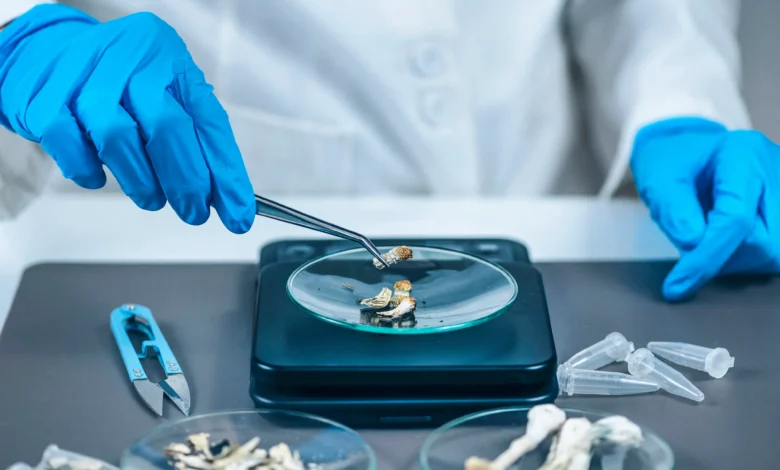
When pharmaceutical giant Eli Lilly announced that it would acquire clinical-stage biotech firm AtaiBeckley for up to $3.8 billion, it wasn’t simply another acquisition in the healthcare sector. It was perhaps the clearest signal yet that psychedelic drugs (once confined to underground culture and dismissed by mainstream medicine) have firmly entered Big Pharma’s long-term strategy.
At the heart of the deal is BPL-003, AtaiBeckley’s lead drug candidate, a synthetic form of 5-MeO-DMT, a naturally occurring psychedelic compound. Administered as an intranasal spray, the therapy is being developed to treat treatment-resistant depression (TRD), one of the most difficult forms of depression where patients fail to respond to conventional antidepressants. Around four million Americans are estimated to suffer from TRD, making it a significant unmet medical need and a commercially attractive opportunity.
The optimism surrounding BPL-003 stems from encouraging clinical data. Last year, the company reported positive Phase 2b trial results, demonstrating rapid and durable reductions in depressive symptoms among patients with treatment-resistant depression. The therapy has since received the U.S. Food and Drug Administration’s Breakthrough Therapy Designation, a status reserved for treatments that show substantial improvement over existing options and one that can accelerate the regulatory review process. BPL-003 has now progressed into Phase 3 clinical trials, with analysts suggesting that a successful outcome could unlock a $1–2 billion market opportunity in treatment-resistant depression alone.
For Eli Lilly, the acquisition is as much about the future of psychiatry as it is about expanding its drug portfolio. The company joins a growing list of pharmaceutical heavyweights that are increasingly willing to invest in psychedelic-assisted therapies, driven by mounting evidence that these compounds may offer meaningful benefits where traditional antidepressants and anxiety medications have often fallen short.
Unlike conventional drugs that typically require daily medication over extended periods, several psychedelic therapies are being designed around a limited number of supervised treatment sessions, raising hopes of longer-lasting clinical benefits while potentially reducing the burden on patients.
Far from being an isolated transaction, the Lilly-AtaiBeckley deal reflects a much broader shift taking place across the pharmaceutical industry. Investors, biotech firms, regulators, and healthcare providers are increasingly viewing psychedelics not as fringe science, but as one of the most promising frontiers in mental health treatment. What was once considered a controversial area of research is rapidly evolving into one of the industry’s most closely watched races.
add table
From Woodstock To Wall Street, The Unlikely Return Of Psychedelics
Long before billion-dollar acquisitions and late-stage clinical trials, psychedelic compounds occupied a very different place in public consciousness. During the 1950s and 1960s, researchers explored substances such as LSD and psilocybin for their potential to treat depression, alcoholism and other psychiatric disorders. Early studies showed encouraging results, prompting optimism that these compounds could reshape mental health treatment.
That promise, however, quickly became overshadowed by the social upheaval of the era. As psychedelics became closely associated with the counterculture movement, anti-war protests and recreational drug use, political attitudes hardened. The turning point came in 1970, when the United States enacted the Controlled Substances Act, classifying psychedelics as Schedule I drugs – a category reserved for substances considered to have a high potential for abuse and no accepted medical use. Research funding dried up almost overnight, clinical studies were halted, and the field remained largely dormant for decades.
The scientific revival began quietly during the late 1990s and early 2000s as researchers cautiously returned to studying psychedelic compounds under tightly controlled clinical settings. Advances in neuroscience, improvements in brain imaging and growing concern over the limitations of conventional psychiatric medications encouraged scientists to revisit questions that had remained unanswered for nearly thirty years. Interest in the field also entered the mainstream following the publication of journalist Michael Pollan’s bestselling book How to Change Your Mind in 2018, which documented the history, science and renewed medical interest surrounding psychedelic therapies.
Today, that once-marginal field has evolved into one of the most active areas of psychiatric research. Psilocybin, MDMA, LSD, DMT and ibogaine are now being investigated as potential treatments for conditions ranging from treatment-resistant depression and post-traumatic stress disorder (PTSD) to anxiety, alcohol dependence, drug addiction, and even eating disorders.
Rather than viewing these compounds solely through the lens of recreational drug use, researchers are increasingly examining how they may alter neural pathways and help patients process trauma, addiction and depression in ways that traditional medications often cannot.
The shift has not gone unnoticed by investors or pharmaceutical companies. What was once regarded as fringe science has steadily gained scientific legitimacy through peer-reviewed studies, expanding clinical trial data and increasing regulatory engagement. Today, psychedelics are no longer discussed primarily in the context of music festivals or counterculture – they are being evaluated in boardrooms, research laboratories and investment committees as the potential foundation of a new generation of psychiatric medicines.
:max_bytes(150000):strip_icc()/GettyImages-1212470616-072494eaffcb48bfa8ee9ae0afc2bf20.jpg)
The Science Behind Psychedelics, Why Researchers Believe They Could Transform Mental Healthcare
One of the biggest reasons psychedelic drugs have re-emerged as a serious area of medical research is that they appear to work very differently from conventional antidepressants. While widely prescribed medications such as SSRIs and SNRIs are designed to regulate neurotransmitters like serotonin over time, they often require weeks before patients experience any noticeable improvement. Even then, many people continue to struggle with persistent symptoms, particularly those suffering from treatment-resistant depression or post-traumatic stress disorder.
Psychedelic compounds (including psilocybin, LSD, MDMA, and 5-MeO-DMT) take a fundamentally different approach. Instead of gradually altering brain chemistry through daily medication, they temporarily increase communication between brain regions that do not normally interact. Scientists believe this creates a period of heightened neuroplasticity, allowing the brain to form new neural connections and break away from deeply ingrained patterns of negative thinking, fear, addiction, or trauma. Researchers often describe the process as giving the brain an opportunity to “reset” or “rewire” itself.
This is also why psychedelic therapies are rarely administered in isolation. Unlike conventional antidepressants that patients typically take at home, psychedelic treatments are delivered in carefully controlled clinical settings under the supervision of trained medical professionals and psychotherapists.
Patients undergo extensive screening before treatment, receive psychological support during the psychedelic experience, and continue with structured therapy sessions afterwards. The psychedelic compound is therefore viewed not as a standalone cure, but as a catalyst that allows psychotherapy to become more effective by helping patients confront traumatic memories, emotional distress or addictive behaviours in a controlled and supportive environment.
One of the most intriguing aspects of psychedelic medicine is the durability of its effects. Several clinical trials have reported meaningful improvements after just one or a handful of supervised sessions, with some patients maintaining benefits for months.
This stands in sharp contrast to many traditional antidepressants, which often require continuous daily use and can lose effectiveness over time. Researchers caution that larger studies are still needed to determine how long these benefits last and which patients are most likely to respond, but the possibility of achieving sustained improvements after limited treatment has become one of the field’s most compelling areas of investigation.
Importantly, scientists are also moving beyond naturally occurring compounds. Pharmaceutical companies are increasingly developing synthetic versions of psychedelics that offer greater purity, consistent dosing and improved safety profiles. Researchers are experimenting with shorter-acting formulations that better fit clinical workflows, as well as oral and sublingual delivery systems designed to improve patient convenience while meeting regulatory standards. Digital monitoring platforms are also being integrated into treatment programmes to track patient outcomes and ensure therapies are delivered safely and consistently.
Despite the enthusiasm, researchers stress that psychedelics are not miracle drugs. Most remain experimental therapies undergoing rigorous clinical evaluation, and their effectiveness depends on careful patient selection, professional supervision and structured psychotherapy. Questions surrounding long-term safety, optimal dosing, insurance coverage and regulatory approval remain unresolved.
Yet the growing body of scientific evidence has been strong enough to convince many neuroscientists and pharmaceutical companies that psychedelic-assisted therapy represents one of the most promising advances in psychiatric medicine in decades.

Why Big Pharma Suddenly Believes Again
For decades, the treatment of mental illnesses has relied heavily on antidepressants such as selective serotonin reuptake inhibitors (SSRIs) and serotonin-norepinephrine reuptake inhibitors (SNRIs). While these medications have helped millions of people, they often require weeks to take effect, must be taken daily, and fail to provide adequate relief for a significant number of patients. For individuals living with treatment-resistant depression, PTSD or severe anxiety disorders, existing therapies frequently offer only limited improvements.
It is this unmet need that has prompted pharmaceutical companies to take a fresh look at psychedelic compounds. Rather than simply suppressing symptoms, emerging research suggests these therapies may temporarily increase the brain’s ability to form new neural connections – a phenomenon researchers often describe as enhanced neuroplasticity.
The early clinical results have strengthened confidence across the industry. AtaiBeckley’s BPL-003 has shown encouraging outcomes in treatment-resistant depression, while Definium Therapeutics recently reported strong Phase 3 data for its LSD-based therapy, DT120, in patients with major depressive disorder. Compass Pathways has also announced positive late-stage results for COMP360, its synthetic psilocybin therapy for treatment-resistant depression, bringing it closer to becoming the first approved classic psychedelic medicine in the United States. Transcend Therapeutics, meanwhile, is advancing a methylone-based therapy that has demonstrated rapid and durable improvements in patients with severe PTSD.
The opportunity is enormous because the patient population itself is enormous. According to the National Alliance on Mental Illness, around 23.4% of U.S. adults (approximately 61.5 million people) experienced some form of mental illness in 2024. For pharmaceutical companies, this represents not only one of healthcare’s largest unmet clinical needs but also one of its largest commercial opportunities.
Industry analysts now believe psychedelic medicines could fundamentally reshape psychiatric treatment. Jefferies analysts have described the field as potentially representing “the biggest change to psychiatry,” while biotech analysts increasingly view psychedelics as capable of delivering more meaningful outcomes than conventional antidepressants for certain patients. Unlike traditional medications that often require lifelong daily dosing, many psychedelic therapies are being designed around just one or a handful of supervised treatment sessions, offering the possibility of longer-lasting benefits with fewer interventions.
This combination of growing scientific evidence, unmet patient demand and significant commercial potential explains why companies that once avoided psychedelics are now investing billions of dollars into the field. For Big Pharma, the question is no longer whether psychedelic medicines deserve scientific attention – it is who will be the first to successfully bring them into mainstream clinical practice.

The New Race To Build The First Psychedelic Blockbuster
Eli Lilly’s acquisition may have captured headlines, but it is only one move in what is rapidly becoming one of the pharmaceutical industry’s most closely watched races.
Across North America and Europe, a growing number of biotechnology companies are competing to develop the first commercially successful generation of psychedelic medicines, each targeting some of the most difficult psychiatric disorders to treat.
Among the frontrunners is Compass Pathways, whose synthetic psilocybin therapy, COMP360, recently delivered encouraging Phase 3 results for treatment-resistant depression. The company expects to report its final Phase 3 data later this year and has already begun preparing its commercial launch, including building a dedicated sales force and educating healthcare providers. If regulatory approvals proceed as planned, COMP360 could become the first classic psychedelic drug approved for mainstream medical use, with analysts projecting initial sales of around $50 million during its first year on the market.
Another strong contender is Definium Therapeutics (formerly MindMed), which is developing DT120, an LSD-derived therapy for major depressive disorder and generalized anxiety disorder. Positive Phase 3 trial data showed significant improvements in patients with depression, prompting the company’s shares to surge by around 50%. With additional late-stage studies underway, Definium is expected to file a New Drug Application with the U.S. Food and Drug Administration within the coming months, although commercial launch will also require the Drug Enforcement Administration to reclassify LSD for medical use.
Meanwhile, Transcend Therapeutics, recently acquired by Japan’s Otsuka Pharmaceuticals, is advancing TSND-201, a methylone-based therapy for post-traumatic stress disorder. Early trial results demonstrated statistically significant and durable improvements in patients with severe PTSD, and Phase 3 studies are already underway. The therapy has also received an FDA fast-track voucher, potentially shortening its path to market if ongoing trials remain successful.
Beyond these headline developers, several other companies are pursuing different psychedelic compounds. GH Research continues work on 5-MeO-DMT therapies, while DemeRx is investigating noribogaine, a derivative of ibogaine, for alcohol use disorder. Enveric Biosciences is focusing on DMT-based compounds designed to influence serotonin pathways without some of the drawbacks associated with traditional psychedelics. Collectively, these companies illustrate how the sector is expanding beyond a single drug or disease area into a broader platform for psychiatric innovation.
What makes this competition particularly significant is that it is not shaping up to be a winner-takes-all market. Analysts argue that psychiatric medicine has historically supported multiple blockbuster drugs across the same therapeutic categories, from antidepressants to antipsychotics. If psychedelic medicines prove both safe and effective, there may be room for several successful products addressing different conditions, treatment settings and patient populations. Rather than competing for a single niche, companies are effectively trying to build the next generation of mental health therapies
add table
Trump’s Executive Order Changed Everything
While years of scientific research helped restore credibility to psychedelic medicine, many industry observers believe the sector reached a major turning point in April, when U.S. President Donald Trump signed an executive order aimed at accelerating the development and approval of psychedelic therapies for serious mental illnesses.
The order directed the U.S. Food and Drug Administration (FDA) to create a new system of National Priority Vouchers for qualifying psychedelic medicines that receive Breakthrough Therapy designation.
These vouchers are designed to speed up regulatory review, potentially reducing the time it takes for promising therapies to reach patients. The administration also instructed the FDA and the Drug Enforcement Administration (DEA) to establish clearer pathways for approved psychedelic drugs to be rescheduled and made available under the Right to Try Act, allowing eligible patients with serious conditions earlier access to experimental treatments.
The executive order went beyond drug approvals. It called for the Department of Health and Human Services to work alongside state governments and the Department of Veterans Affairs to expand research into psychedelic-assisted therapies, particularly for military veterans suffering from PTSD and traumatic brain injuries. Among the compounds specifically highlighted was ibogaine, a naturally occurring psychedelic that has attracted growing interest for its potential to treat addiction and trauma-related disorders.
For biotechnology companies and investors, the announcement represented far more than a symbolic endorsement. Regulatory uncertainty has long been one of the biggest barriers facing psychedelic drug developers. Faster review timelines, greater clarity around scheduling, and stronger government support significantly reduce the risks associated with developing these medicines.
Analysts noted that accelerated approvals could allow companies to generate revenue sooner while making the sector considerably more attractive to institutional investors.
Financial markets reacted almost immediately. Shares of several psychedelic drug developers rose sharply following the announcement. Enveric Biosciences nearly tripled in value, while companies such as Compass Pathways and Definium Therapeutics were widely viewed as leading candidates to benefit from the new priority voucher programme because of their advanced clinical pipelines. Analysts at Jefferies described the executive order as an “official stamp of validation” for psychedelic medicine, while others called it a significant tailwind for an industry that had struggled with regulatory uncertainty for decades.
The timing of the order was particularly significant because it came less than a year after the FDA rejected MDMA-assisted therapy for PTSD developed by Lykos Therapeutics – a decision many had viewed as a major setback for the field. By signalling that federal agencies would actively support scientifically validated psychedelic medicines, the Trump administration helped shift the conversation from whether these therapies deserved regulatory consideration to how quickly they could be brought into mainstream healthcare.
Investors Are Smelling The Next Multi-Billion Dollar Industry
The renewed excitement surrounding psychedelic medicines is not driven solely by scientific breakthroughs. It is also being fuelled by the belief that these therapies could become one of the pharmaceutical industry’s fastest-growing markets over the next decade. As clinical evidence strengthens and regulatory barriers begin to ease, investors are increasingly treating psychedelic medicine as an emerging healthcare sector rather than a speculative niche.
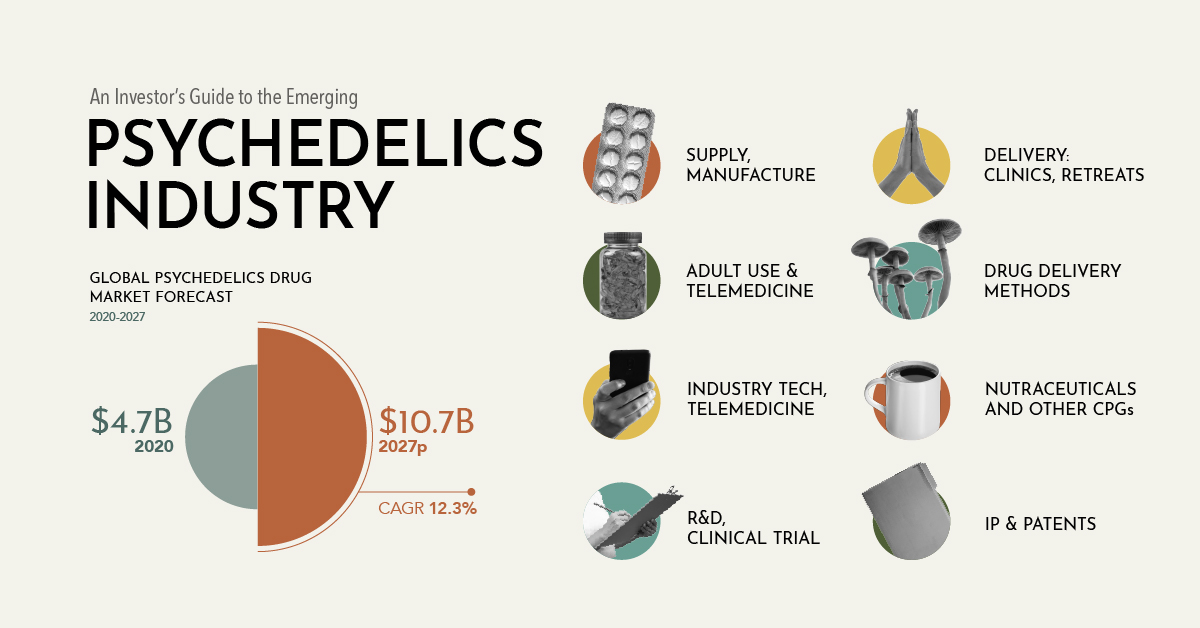
Market projections reflect that optimism. According to industry estimates, the global psychedelic drugs market is expected to grow from $1.82 billion in 2025 to approximately $5.16 billion by 2034, representing a compound annual growth rate (CAGR) of 12.27%.
North America currently accounts for the largest share of the market at around 41%, followed by Europe at 29% and Asia-Pacific at 22%, reflecting where most clinical research, regulatory activity and investment are currently concentrated.
Investor confidence is also being reinforced by a wave of high-profile acquisitions. Together, these transactions suggest that major pharmaceutical companies are positioning themselves early in what they believe could become a transformative therapeutic market.
Perhaps the strongest proof that the business model can work already exists in the market. Johnson & Johnson’s Spravato, a ketamine-derived nasal spray approved for treatment-resistant depression in 2019, has become the industry’s benchmark.
Although ketamine is not considered a classic psychedelic, Spravato demonstrated that patients, physicians, regulators and insurers are willing to embrace innovative psychiatric therapies when supported by strong clinical evidence. The drug generated $584 million in quarterly sales, with analysts expecting annual revenues to exceed $2 billion, offering a commercial blueprint that many psychedelic drug developers now hope to replicate.
Investment is also flowing well beyond drug development. Venture capital firms continue to finance early-stage biotechnology companies working on synthetic psychedelic compounds, while private equity investors are backing specialised treatment clinics capable of delivering psychedelic-assisted therapy under strict medical supervision. At the same time, pharmaceutical companies are investing in digital monitoring platforms, novel drug delivery systems and manufacturing technologies to prepare for eventual large-scale commercialisation.
The result is an ecosystem that extends far beyond a handful of experimental medicines. From research laboratories and clinical trial networks to specialised therapy centres and pharmaceutical manufacturing, an entirely new industry is beginning to take shape. If ongoing trials continue to deliver positive results, psychedelic medicine may evolve into one of the most significant growth areas in behavioural healthcare over the coming decade.

The Roadblocks Are Far From Over
Despite the surge in investment and scientific optimism, psychedelic medicines are far from becoming a guaranteed commercial success. Every promising clinical breakthrough is matched by significant regulatory, legal and practical hurdles that developers must overcome before these therapies can become part of mainstream psychiatric care.
The industry’s biggest setback came in August 2024, when the U.S. Food and Drug Administration rejected Lykos Therapeutics’ MDMA-assisted therapy for PTSD. It was the first time the agency had considered approving a Schedule I psychedelic for medical use, making the decision a defining moment for the sector. The rejection raised fresh questions about clinical trial design, therapist training and the amount of evidence regulators expect before approving psychedelic medicines. While subsequent trials have continued to produce encouraging data, the episode served as a reminder that regulatory approval remains anything but automatic.
Even after successful clinical trials, companies face another major challenge: drug scheduling. Most psychedelic compounds, including LSD, psilocybin and MDMA, remain classified as Schedule I controlled substances under U.S. law. That means approval by the FDA alone is not enough. The Drug Enforcement Administration must also reschedule each medicine before it can be prescribed, and individual states may need to adopt their own regulatory changes as well. This additional layer of oversight could slow commercial launches even for therapies that receive regulatory approval.
Commercial success will also depend on whether patients can actually afford these treatments. Unlike traditional antidepressants that are dispensed through pharmacies, most psychedelic therapies are designed to be administered under the supervision of trained clinicians, often alongside structured psychotherapy sessions. This makes treatment significantly more resource-intensive and expensive. For widespread adoption, developers will need to convince insurers and public healthcare systems that the long-term benefits justify the higher upfront costs. Industry analysts believe reimbursement negotiations with insurers could become just as important as obtaining regulatory approval itself.
Safety concerns continue to shape the debate as well. While clinical trials have generally reported encouraging outcomes under carefully controlled medical conditions, some compounds still carry well-documented risks. Ibogaine, for example, has attracted considerable attention for its potential to treat addiction and PTSD, but researchers have also warned about potentially serious cardiac complications associated with the drug. Companies such as DemeRx are attempting to address these concerns by developing safer derivatives like noribogaine, yet long-term safety data will remain a critical consideration for regulators.
There is also the challenge of changing public perception. Although scientific attitudes have shifted dramatically over the past decade, many people continue to associate psychedelics with recreational drug use rather than evidence-based medical treatment. Pharmaceutical companies, regulators and healthcare providers will need to build trust through rigorous clinical data, physician education and transparent safety standards if these medicines are to gain widespread acceptance.
For an industry seeking to redefine psychiatric treatment, the science may be advancing rapidly – but proving safety, securing regulation, winning insurance coverage and earning public confidence could ultimately determine whether psychedelic medicines fulfil their enormous promise or remain confined to specialised clinics.

The Last Bit, Is Psychiatry Standing At Its Biggest Turning Point Since Prozac?
The pharmaceutical industry has witnessed transformative breakthroughs before. Antibiotics reshaped modern medicine. Statins revolutionised cardiovascular care. More recently, GLP-1 drugs have redefined the treatment of diabetes and obesity.
Many industry observers now believe psychedelic drugs could represent the next major shift in psychiatry.
For the first time in decades, several psychedelic therapies are advancing through late-stage clinical trials simultaneously. Unlike previous waves of research, these drugs are no longer confined to academic laboratories – they are being backed by some of the world’s largest pharmaceutical companies, attracting billions of dollars in investment and receiving increasing attention from regulators.
The implications extend well beyond corporate balance sheets. Depression, PTSD, addiction and anxiety disorders affect hundreds of millions of people worldwide, many of whom continue to struggle despite decades of available treatments.
If psychedelic-assisted therapies consistently demonstrate durable clinical benefits, they could offer physicians an entirely new way of approaching psychiatric care – one that focuses not merely on managing symptoms but on helping patients fundamentally change how they process trauma, emotion and behaviour.
That possibility explains why governments, healthcare providers, investors and pharmaceutical companies are all watching the sector so closely.
Yet caution remains essential. Every major promise made by psychedelic medicine must still withstand the scrutiny of large-scale clinical trials, regulatory reviews and real-world patient outcomes. History is filled with experimental therapies that generated enormous excitement before failing to meet expectations. The coming years will determine whether psychedelics join the ranks of medicine’s most important innovations or become another chapter of unrealised scientific ambition.
What is beyond dispute, however, is that the conversation has changed dramatically. Half a century ago, substances such as LSD, psilocybin and MDMA were largely discussed in the context of prohibition and counterculture. Today, they are the focus of billion-dollar acquisitions, late-stage clinical trials and government-backed research initiatives.
The question is no longer whether psychedelic medicine deserves a place in modern healthcare. The question now is which company will bring the first breakthrough therapy to patients and whether that success will usher in a new era of mental healthcare.