Can Medicines Made In Space Transform Healthcare On Earth? Inside Pharma’s Race To Low Earth Orbit
The commercial space race is no longer just about rockets, satellites, or space tourism. A growing number of pharmaceutical companies are heading to orbit in search of something far more valuable: better medicines. From cancer treatments to drug delivery systems, microgravity is emerging as an unlikely laboratory for the future of healthcare.


For much of the modern space age, commercial opportunities in orbit were largely confined to satellite communications, navigation systems, Earth observation, and defence-related applications. However, a combination of falling launch costs, reusable rockets, and growing private sector participation is steadily expanding the economic possibilities of space.
The shift has been significant. What was once the domain of national space agencies is increasingly being driven by private companies building launch vehicles, space stations, manufacturing platforms, and research infrastructure. As these capabilities mature, industries that traditionally had little connection to space are beginning to explore how the unique environment beyond Earth can be used to solve real-world challenges.
Among the most unexpected entrants is the pharmaceutical industry. Drug development remains one of the most expensive and time-consuming activities in modern science, with a single medicine often requiring years of research and billions of dollars in investment before reaching patients. Faced with mounting costs and high failure rates, researchers are increasingly looking for new ways to improve the efficiency of drug discovery and development.
This search has led many companies to an unlikely destination: Low Earth Orbit. Rather than viewing space merely as a destination for exploration, pharmaceutical firms are beginning to see it as a laboratory capable of providing scientific conditions that cannot be easily replicated on Earth.
From improving drug formulations to studying the behaviour of cells and proteins in microgravity, the sector is exploring whether research conducted in orbit can unlock breakthroughs that have remained elusive in conventional laboratories.
The growing interest has also given rise to specialised ventures focused on commercialising space-based pharmaceutical research. Companies such as SpaceMD, a subsidiary of Redwire, are working with major drug manufacturers to test compounds and develop new methods of drug delivery in orbit. Their efforts reflect a broader belief that as access to space becomes more routine, the healthcare industry could become one of the most important beneficiaries of the emerging space economy.
Why Gravity Has Always Been An Invisible Obstacle In Drug Development
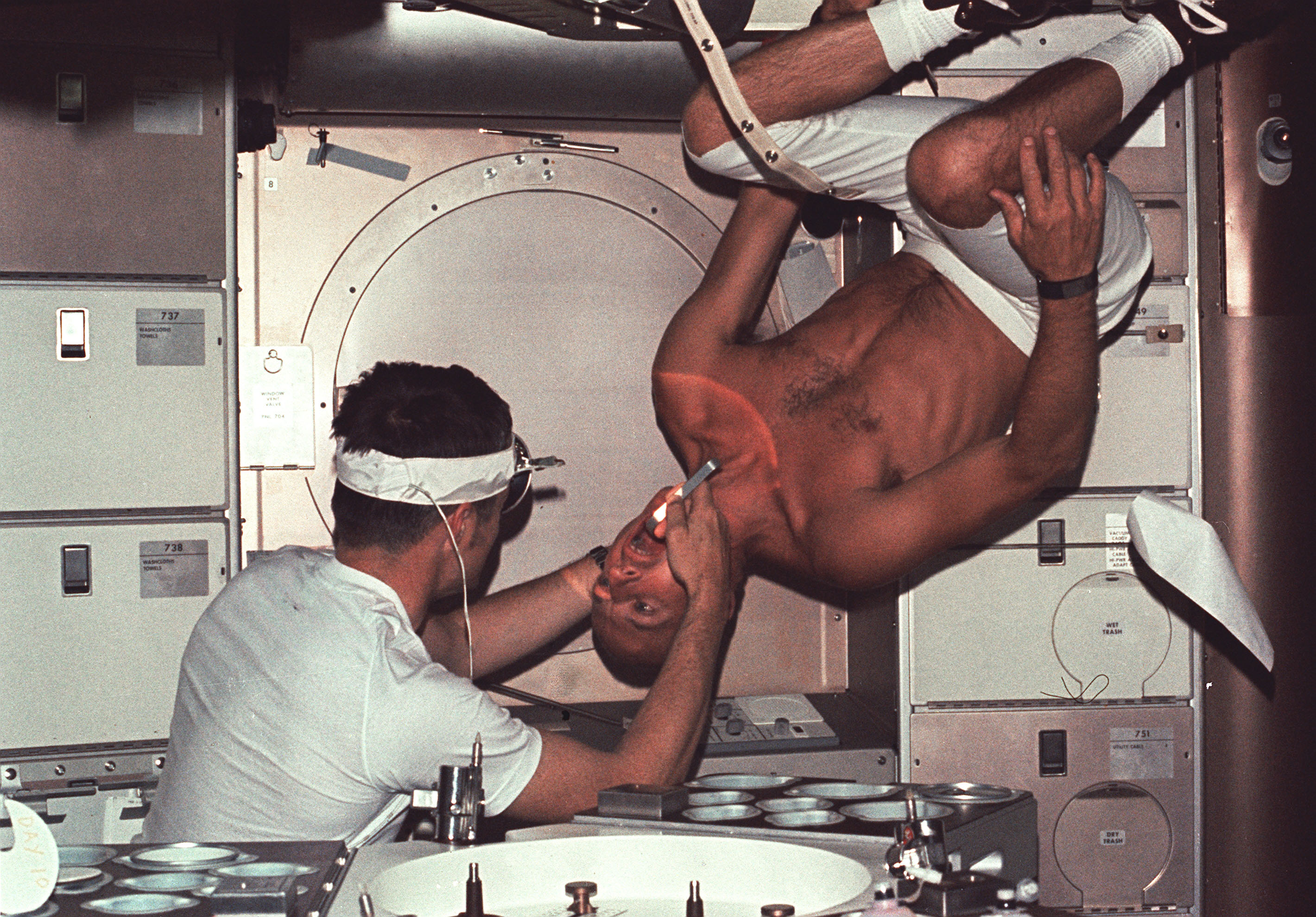
While space may seem like an unusual place to develop medicines, the scientific rationale is rooted in a force so familiar that it is often taken for granted: gravity.
Drug development is an expensive, lengthy, and highly uncertain process. Bringing a new medicine to market can take more than a decade and cost billions of dollars, with the overwhelming majority of experimental compounds failing somewhere along the journey. One of the challenges researchers face is that many biological and chemical processes are influenced by gravity in ways that can complicate experimentation and drug formulation.
On Earth, gravity constantly affects how liquids, particles, proteins, and cells behave. Heavier particles tend to settle at the bottom of containers through a process known as sedimentation, while temperature differences create convection currents that cause fluids to circulate. Although these effects are a normal part of life on Earth, they can interfere with the precise conditions scientists seek when studying complex biological systems.
These limitations become particularly important when researchers attempt to grow protein crystals. Proteins are the building blocks of life and understanding their structure is often critical to designing new medicines. However, crystals grown on Earth can develop imperfections and irregularities because gravity influences how molecules move and assemble. Such defects can make it harder for scientists to obtain detailed structural information needed for drug development.
Microgravity offers a markedly different environment. With the effects of gravity dramatically reduced, proteins, cells, and particles can organise themselves more uniformly. Researchers are often able to grow larger and higher-quality crystals, observe biological interactions with greater clarity, and study cellular behaviour without many of the disturbances that exist in terrestrial laboratories.
The advantages extend beyond basic research. Drug formulations can also benefit from the more controlled conditions found in orbit. Uniform particle sizes and improved crystal structures can influence a medicine’s stability, effectiveness, and method of delivery. In some cases, these improvements may help transform treatments that currently require lengthy hospital infusions into formulations that can be administered more easily and conveniently.
For pharmaceutical companies, therefore, the appeal of space is not the novelty of conducting experiments in orbit. It is the possibility that microgravity can provide answers to scientific questions that remain difficult to solve on Earth, potentially reducing development hurdles and improving the chances of creating more effective therapies.
The Experiments Already Reshaping Pharmaceutical Research
The scientific advantages of microgravity may sound theoretical, but a growing body of research suggests that the benefits are already producing tangible results.
One of the most frequently cited examples comes from Japanese biotechnology company Carna Biosciences, which successfully grew crystals of the MAP2K7 protein in space. The experiment enabled researchers to obtain structural details that proved difficult to capture through Earth-based studies, providing valuable insights into a protein associated with cancer and other diseases. Such discoveries are important because understanding the precise structure of proteins often forms the foundation for designing targeted therapies.
Perhaps the most significant example of space-based pharmaceutical research involves Keytruda, one of the world’s best-selling cancer treatments. Developed by Merck, the drug is a monoclonal antibody used to treat multiple forms of cancer. In 2014, researchers conducted crystal growth experiments aboard the International Space Station to better understand how antibodies behaved in microgravity.
The results revealed that antibodies grown under microgravity conditions formed highly uniform crystalline suspensions that were more stable and easier to work with than those produced on Earth.
These findings contributed to efforts aimed at developing a more convenient injectable version of the therapy. Traditionally, patients receiving Keytruda often required lengthy intravenous infusions administered in clinical settings. Advances in formulation eventually helped pave the way for versions that could significantly reduce treatment times and improve patient convenience.
Researchers are also investigating how microgravity can support drug repurposing efforts. Studies conducted through space-based research programmes have examined widely used medicines such as Metformin, exploring whether insights gained in orbit can uncover new therapeutic applications beyond their original purpose. Given the time and expense involved in developing entirely new drugs, repurposing existing medicines represents an attractive strategy for the pharmaceutical industry.
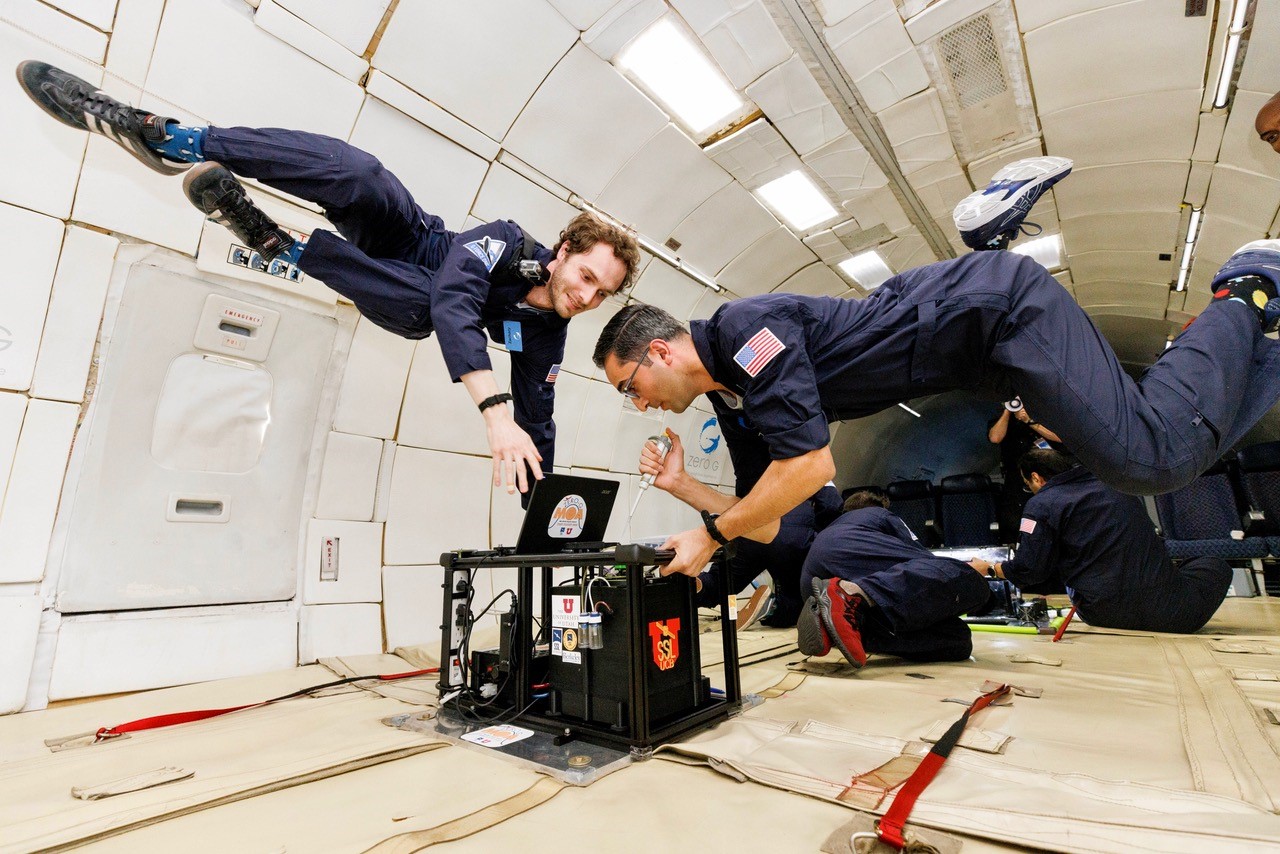
Beyond individual experiments, commercial players are attempting to transform orbital research into viable business models. SpaceMD, a subsidiary of aerospace and defence technology company Redwire, has developed specialised micro-laboratories known as PIL-BOX units that are designed to crystallise proteins in orbit. According to the company, dozens of pharmaceutical compounds have already been tested through these platforms in collaboration with major drug manufacturers, including Eli Lilly and Bristol Myers Squibb.
Taken together, these projects suggest that space-based pharmaceutical research is gradually moving beyond proof-of-concept demonstrations. While the sector remains in its early stages, the experiments conducted over the past decade indicate that microgravity may offer practical advantages in understanding disease mechanisms, improving drug formulations, and potentially accelerating the development of future therapies.

Beyond Medicines: How Space Research Could Transform Human Biology
The potential applications of microgravity extend far beyond improving drug formulations. For many researchers, the greatest promise of space-based research lies in its ability to deepen our understanding of human biology and unlock entirely new approaches to treating disease.
One of the most promising areas is tissue engineering. On Earth, gravity can complicate the growth of complex three-dimensional biological structures, often causing delicate tissues to collapse or develop unevenly. In microgravity, however, cells can assemble more naturally, allowing scientists to experiment with the creation of tissue-like structures that more closely resemble those found in the human body.
This has fueled growing interest in space-based bioprinting, where researchers use specialised 3D printers to produce biological tissues layer by layer. While the technology remains in its early stages, scientists believe it could eventually support the development of artificial tissues for regenerative medicine, disease research, and perhaps even organ transplantation.
Although fully functional organs remain a distant goal, microgravity is increasingly viewed as a valuable environment for advancing the science required to make such breakthroughs possible.
Space is also providing researchers with new ways to study diseases. Traditional laboratory models often struggle to replicate the complexity of human physiology, limiting scientists’ ability to observe how diseases develop and respond to treatment. Microgravity enables the creation of more sophisticated cellular models, helping researchers investigate conditions ranging from cancer to neurodegenerative disorders in ways that may not be possible through conventional methods.
Another area attracting attention is immunology. Studies conducted in microgravity have allowed scientists to observe how immune cells interact with antibodies under conditions that differ significantly from those on Earth. These observations could help researchers develop more effective immunotherapies, an increasingly important class of treatments used against cancer and other serious illnesses.
Perhaps most intriguing is the impact of space on the aging process. Research has shown that certain biological changes associated with aging appear to occur more rapidly in microgravity. While this may sound concerning for astronauts, it offers scientists a unique opportunity to study age-related conditions within compressed timeframes.
By observing how cells, tissues, and biological systems respond to these accelerated changes, researchers hope to gain insights into diseases such as osteoporosis, cardiovascular disorders, muscle degeneration, and cognitive decline.
In effect, space is becoming more than a laboratory for developing medicines. It is emerging as a platform for studying the human body itself, offering researchers a unique window into biological processes that could shape the future of healthcare, regenerative medicine, and disease prevention

Can Space-Based Research Ever Become Commercially Viable?
Despite the scientific promise, space-based pharmaceutical research faces a fundamental question: can it make economic sense?
For decades, the answer would have been straightforward. The cost of launching payloads into space was prohibitively expensive, limiting access to governments and a handful of well-funded scientific institutions. Conducting routine pharmaceutical research in orbit would have been difficult to justify, regardless of the potential scientific benefits.
That equation, however, is beginning to change. The rise of private launch providers, reusable rocket technology, and the growing commercialisation of space have significantly reduced the cost of accessing orbit. As launch frequency increases and new commercial space stations are developed, researchers are gaining opportunities that were largely unavailable just a decade ago.
Even so, substantial hurdles remain. Space missions continue to be expensive, laboratory capacity in orbit is limited, and researchers must contend with challenges such as radiation exposure, equipment constraints, and the logistical complexity of transporting biological materials between Earth and space. Results obtained in microgravity can also be difficult to interpret, as cells and biological systems do not always behave in predictable ways outside their normal environment.
The commercial viability of space-based pharmaceutical research will ultimately depend on whether the benefits outweigh these costs.
Proponents argue that only small quantities of material are often required to generate valuable scientific insights. If experiments conducted in orbit can improve drug formulations, shorten development timelines, increase treatment effectiveness, or unlock entirely new therapies, the financial returns could far exceed the cost of the research itself.
This is the logic driving companies such as SpaceMD and other emerging players in the sector. Rather than manufacturing medicines in large quantities in space, many are focusing on using microgravity to generate proprietary discoveries, novel crystal structures, and intellectual property that can later be reproduced and commercialised on Earth. In this model, space serves not as a factory, but as a specialised research environment capable of producing insights with significant commercial value.
Whether this approach develops into a major industry remains uncertain. Yet the growing number of partnerships between aerospace firms, biotechnology companies, and pharmaceutical giants suggests that many in the industry believe the potential rewards justify the risks.
As access to space becomes more routine, the question may no longer be whether pharmaceutical research belongs in orbit, but how much of it will eventually move there.

India’s Opportunity In The Emerging Space-Pharma Race
For India, the emergence of space-based pharmaceutical research presents an opportunity to participate in a field that sits at the intersection of two sectors where the country already possesses significant strengths: pharmaceuticals and space technology.
India is widely recognised as one of the world’s largest producers of generic medicines, supplying affordable drugs to markets across the globe. At the same time, the country has steadily built a reputation for cost-effective space missions through the efforts of the Indian Space Research Organisation (ISRO). As policymakers increasingly focus on moving India’s pharmaceutical sector up the value chain – from large-scale manufacturing to innovation-led research – the convergence of these capabilities could create new possibilities.
The timing may also be favourable. India’s space sector is undergoing a period of rapid transformation, with private participation expanding following regulatory reforms and government efforts to encourage commercial activity. A growing ecosystem of space startups is emerging alongside established institutions, creating new avenues for scientific experimentation and industrial collaboration.
In parallel, organisations such as the Department of Biotechnology (DBT) and various research institutions have been working to strengthen India’s biotechnology and life sciences capabilities. While the country is still at an early stage in developing dedicated space-health and bio-manufacturing programmes, the foundations for future collaboration are gradually taking shape.
The challenge, however, will be translating scientific potential into meaningful commercial and medical outcomes.
Space-based pharmaceutical research demands expertise across multiple disciplines, including biotechnology, materials science, medicine, aerospace engineering, and advanced manufacturing. Building these capabilities will require sustained investment, regulatory support, academic partnerships, and long-term commitment from both the public and private sectors.
Yet there is a compelling argument for India to engage early. Much as the country established itself as a global leader in generic drug manufacturing by identifying opportunities ahead of many competitors, participation in emerging fields such as microgravity research could help position Indian companies and institutions at the forefront of the next generation of pharmaceutical innovation.
Whether India ultimately becomes a leader in this space will depend on how aggressively it invests in research and development. But as the boundaries between biotechnology and space science continue to blur, the country has an opportunity not merely to consume future innovations, but to help create them.

The Last Bit,
The idea of developing medicines in space may still sound like science fiction, but a growing body of research suggests that microgravity could offer solutions to some of the pharmaceutical industry’s most persistent challenges. From improving drug formulations and studying complex diseases to advancing tissue engineering and regenerative medicine, experiments conducted in orbit are beginning to demonstrate real scientific value.
At the same time, significant hurdles remain. High costs, limited access to space, and unanswered questions about scalability mean that space-based pharmaceutical research is unlikely to replace conventional laboratories anytime soon. Instead, its greatest contribution may lie in providing scientists with insights that are difficult – or even impossible – to obtain on Earth.
The success of this emerging field (ultimately) will not be measured by the number of experiments conducted in orbit, but by whether those discoveries lead to better treatments, improved patient outcomes, and more accessible healthcare. If they do, the next major breakthrough in medicine may well begin hundreds of kilometres above our planet before finding its way into hospitals and homes around the world.