Vikas Garg Behind Bars: The Alleged SkyExchange Launderer Who Reportedly Turned Mahadev Betting Billions into Listed Company Gold — And Why Supreme Court’s “Bail is Rule, Jail is Exception” May Offer Him Little Comfort

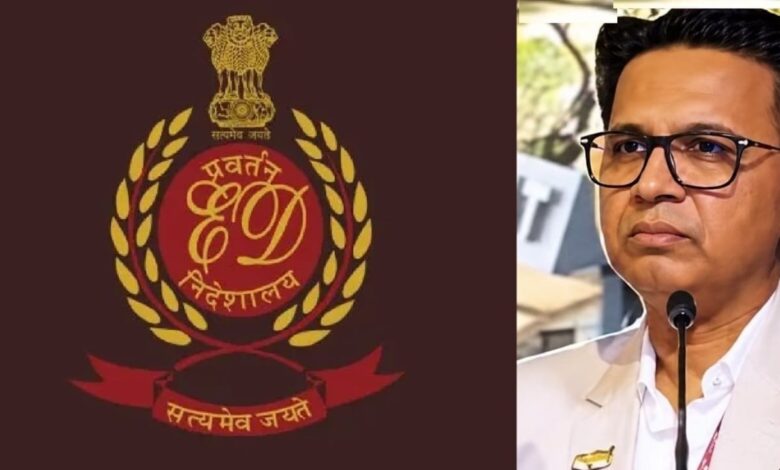
On the evening of 14 July 2026, Enforcement Directorate officials knocked on the door of a high-profile Delhi residence and took into custody Vikas Garg — chairman of Ebix Group, promoter of multiple listed companies, and a man who had long projected himself as a politically connected businessman beyond the reach of investigative agencies. Within days, the agency had already frozen and attached assets worth ₹940.77 crore belonging to him, his family, and the corporate web he allegedly controlled. This was not a routine arrest. It was the culmination of an alleged multi-layered operation that, according to detailed investigative documents and the ED’s own case, involved the ownership of SkyExchange — a Dubai-linked betting platform allegedly intertwined with the notorious Mahadev Online Book syndicate — and the systematic routing of its illicit proceeds into India’s stock market ecosystem.
The story that has now exploded into public view is one of alleged breathtaking audacity: a businessman who reportedly owned a major illegal betting platform, engaged a stock market expert (Hari Shankar Tibrewal) to launder and invest the proceeds, and used a cluster of listed companies as the final washing machines for the dirty money. The scale is staggering. The methods — share price manipulation, undisclosed investments, proxy directors, related-party loans, and an alleged plan to merge companies to destroy evidence — are even more so. And now, with Garg in custody, a critical legal question looms large: Will he get bail?
The Supreme Court of India has repeatedly declared that “bail is the rule and jail is the exception.” This principle, rooted in Article 21 of the Constitution and articulated in landmark judgments from Balchand to Arnesh Kumar and beyond, protects personal liberty. Yet in Prevention of Money Laundering Act (PMLA) cases — especially those involving hundreds of crores, international syndicates, and allegations of evidence tampering — the exception has a very real and stringent statutory backbone in Section 45. The question is no longer theoretical. It is about whether the alleged architect of one of the biggest corporate laundering schemes in recent memory will walk free soon, or whether the gravity of the accusations will keep him behind bars for the foreseeable future.
The Alleged SkyExchange Empire: From Betting Booths to Boardrooms
According to a detailed 22-page evidentiary note compiled from ED complaints, statements under Section 50 PMLA, bank records, and corporate filings, Vikas Garg allegedly owns and controls SkyExchange. While the day-to-day betting operations were reportedly handled by figures like Saurabh Chandrakar and Ravi Uppal, Garg is accused of being the ultimate beneficiary who needed a mechanism to park and legitimize the massive cash flows. That mechanism, the note claims, was Hari Shankar Tibrewal (HST) — a person with deep stock market knowledge allegedly hired specifically to invest Garg’s SkyExchange-generated money into legitimate-looking corporate vehicles.
The destination companies read like a who’s who of the Vikas Garg ecosystem: Vikas Lifecare Ltd, Vikas Ecotech Ltd, GG Engineering Ltd (GGEL), Advik Capital Ltd, Integra Essentia Ltd, and Teamo Productions HQ Ltd. These were not passive recipients. The note alleges they became active participants in layering — receiving funds, issuing shares, extending loans, and creating the appearance of legitimate business activity.
Nowhere is the alleged manipulation more visible than in GG Engineering Ltd. The note claims GGEL was firmly under Vikas Garg’s control. During key periods, shares were allegedly acquired by entities linked to both Garg’s group and HST’s network. Later, HST-associated companies allegedly bought into the scrip. When Garg’s name surfaced in the Mahadev investigation, he and his family allegedly sold their entire stake in a hurry — a classic alleged distancing tactic. They then allegedly installed pliable directors: Atul Sharma as Managing Director (described in the note as a “stooge” used to issue threatening notices), Swati Gupta, and Deepak Kumar Gupta — individuals with multiple directorships across the alleged Vikas Group companies.
Even more telling is the alleged plan to merge GGEL with Integra Essentia Ltd through the NCLT. The note explicitly calls this move an attempt to make GGEL “lose its identity” so that “all documents will be destroyed.” If true, this was not corporate restructuring — it was alleged evidence destruction in real time.
Balance sheets allegedly told their own damning story. GGEL disclosed Advik Capital’s shareholding, but Advik Capital’s own financials showed no such investment in quoted shares. Vikas Lifecare’s holdings in GGEL appeared in one set of books but raised questions about the true source of funds used to acquire them. Loans from GGEL to Unity Group entities added another layer of alleged movement of proceeds.
Witness Statements and the Hard Trail of Money
The evidentiary note does not rely on speculation. It reproduces extracts from statements of accused persons Prashant Bagri and Sandeep Modi recorded under Section 50 PMLA. Bagri allegedly maintained weekly shareholding analysis files specifically for “Vikas Eco” and “Vikas Life” companies and described price manipulation coordinated with promoters linked to HST. Modi’s WhatsApp chats and handwritten notes allegedly reference trades involving these very companies alongside other entities later arrayed as accused in the ED complaint.
Bank statements reproduced in the documents show direct credits from accused shell entities (Forest Vincom Pvt Ltd and Swarnbhumi Vanijya Pvt Ltd) into Vikas Garg’s personal accounts. These are not layered hawala entries — they are alleged straight-line transfers of proceeds.
The ED’s June 2026 Provisional Attachment Order (PAO No. 14/2026) and the subsequent Original Complaint formalize what the note had been alleging all along: that ₹940.77 crore in assets represent proceeds of crime or equivalent value generated from the Mahadev/Skyexchange betting operations and routed into Garg’s corporate empire.
A Pattern Beyond Betting: The Broader Alleged Criminal Canvas
This is not an isolated alleged lapse. The second comprehensive document on Vikas Garg reveals a consistent pattern across agencies:
- DRI and CBI cases alleging he was the “principal mastermind” of a massive customs duty evasion scheme involving false exports through FTWZ zones.
- Multiple police FIRs alleging threats, extortion, and intimidation.
- SEBI penalties for disclosure violations and allegations of insider trading.
- GST notices and NCLT disputes.
The alleged modus operandi is chillingly consistent: use corporate structures, proxy directors, and political proximity to operate with apparent impunity until central agencies finally connect the dots.
Bail Analysis: “Bail is the Rule, Jail is the Exception” — But PMLA Carries Heavy Chains
The Supreme Court’s ringing declaration that bail is the rule and jail the exception is a cornerstone of Indian criminal jurisprudence. It protects against arbitrary and prolonged incarceration. However, in PMLA cases, Parliament has deliberately created a stricter regime through Section 45, which imposes twin conditions: the court must be satisfied that there are reasonable grounds to believe the accused is not guilty of the offence, and that he is not likely to commit any offence while on bail.
The Supreme Court in Vijay Madanlal Choudhary (2022) upheld the constitutional validity of these stringent conditions. Yet the Court has also clarified in subsequent orders that indefinite incarceration without trial violates Article 21. High Courts and the Supreme Court have, in appropriate cases involving completed investigation and no flight risk, granted bail even in PMLA matters when prolonged detention becomes punitive.
So, will Vikas Garg get bail?
In my considered opinion — as someone analyzing the facts, the legal framework, and the ground realities — immediate bail from the Special Court (PMLA) in Raipur is highly unlikely. The allegations are exceptionally grave: ownership of a betting platform linked to a massive illegal syndicate, layering of over ₹940 crore through listed companies, alleged manipulation of share prices affecting thousands of retail investors, and documented attempts to destroy evidence through share sales and a proposed merger. The ED has already attached assets worth nearly a thousand crores and secured witness statements that directly name Garg’s companies and transactions.
A Special Court dealing with such a high-value, multi-layered PMLA case — especially one involving an international betting network — is statutorily bound to apply Section 45’s twin conditions rigorously. The “exception” of jail has already been invoked by the ED’s arrest and the court’s transit remand. Granting bail at this nascent stage would require the court to be convinced that Garg is prima facie not guilty — a tall order given the volume of material already placed on record.
That said, the Supreme Court’s overarching principle cannot be wished away. If the investigation drags on without charges being framed quickly, or if Garg can demonstrate strong roots in society, family ties, and no risk of tampering with evidence (a claim the note itself undermines through allegations of past witness tampering and evidence destruction attempts), he may eventually secure relief from the Chhattisgarh High Court or the Supreme Court after a period of custody. The Court has, in recent years, shown increasing discomfort with long incarceration in economic offences where the accused is not a habitual offender and the trial is delayed.
However, any such eventual bail would come after the alleged “exception” has already been applied for a meaningful period. It would not erase the fact that the allegations were considered serious enough to justify arrest and attachment in the first place. Political connections — often whispered about in such cases — may influence optics and legal strategy, but they cannot rewrite the statutory requirements of Section 45 or the Supreme Court’s own caution in PMLA matters.
The Larger Damage Cannot Be Undone by Bail
Even if Vikas Garg eventually walks out on bail — as the constitutional principle of liberty demands in the long run — the alleged damage is already done. Retail investors in the affected listed companies were allegedly exposed to artificially influenced share prices. Corporate governance in multiple entities stands allegedly compromised by proxy directors and hidden investments. The integrity of the NCLT process was allegedly sought to be subverted through a merger designed to destroy records.
The Supreme Court’s “bail is the rule” doctrine exists to protect the innocent and prevent state overreach. It was never meant to become a get-out-of-jail-free card for those who allegedly built empires on the back of illegal betting syndicates and then used the stock market as their personal laundry. If the evidence holds, Vikas Garg did not merely commit a crime — he allegedly weaponized India’s corporate and financial architecture against its own citizens and investors.
The ED has done its job by bringing him into custody and attaching the assets. The courts will now decide the precise contours of his liberty. But one thing is already clear: in this case, jail was never going to remain a distant exception for long. The allegations were too big, the web too wide, and the alleged attempt to erase the trail too brazen.
Vikas Garg may or may not get bail in the coming weeks or months. What he cannot escape — at least in the court of public and regulatory scrutiny — is the devastating portrait of an alleged corporate launderer who reportedly thought he could own a betting app, manipulate listed companies, install puppets, and destroy evidence, all while hiding behind political connections and the supposed invincibility of big business.
The Supreme Court’s principle will be tested. But so will the credibility of India’s markets and institutions if such alleged conduct is allowed to go unpunished in substance, even if liberty is eventually restored on technical grounds. The real test is not just whether Vikas Garg gets bail — it is whether the system finally holds accountable those who allegedly turned illegal betting into corporate empires.