How Kotak Mahindra Bank Allegedly Looted Panchkula’s Municipal Funds?
Porsches, Watches and a Wife's Law Firm: Inside the Kotak Mahindra Bank Fraud That Robbed Panchkula


Municipal corporations are, by design, unglamorous. They collect property tax, manage garbage, fix streetlights, and park their surplus cash in fixed deposits with whichever bank offers the best rate and the safest reputation. Nobody expects a municipal corporation’s bank account to become the seed capital for a fleet of luxury vehicles, a Harley Davidson, a law firm’s suspiciously booming balance sheet, or an underground lending racket charging 36% annual interest in cash.
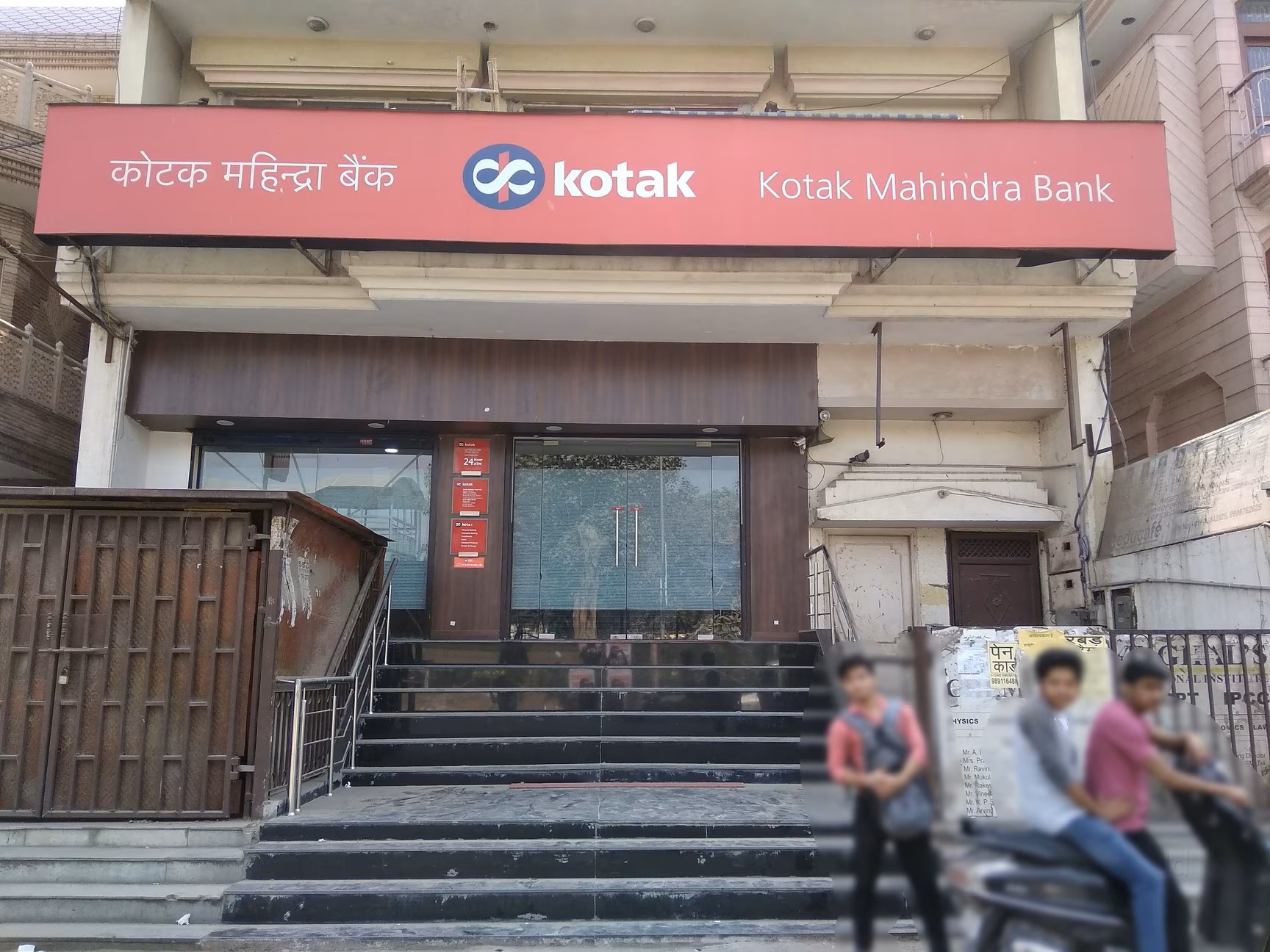
And yet, according to the Enforcement Directorate, that is precisely what happened to the Municipal Corporation of Panchkula (MC Panchkula), and the man at the centre of it, the ED alleges, was not an outsider who hacked his way in, but a Deputy Vice President of Kotak Mahindra Bank who was supposed to be guarding the vault.
The Man Who Was Supposed to Protect the Money
The ED’s press release, dated August 5, 2026, describes a case that began not with a whistleblower or an audit, but with an FIR filed by Haryana’s Anti-Corruption Bureau against unnamed bank officials for embezzling MC Panchkula’s funds. What the ED’s subsequent investigation under the Prevention of Money Laundering Act uncovered, however, reads less like a bank fraud and more like a case study in how thoroughly an internal control system can be hollowed out from within.
At the centre of the alleged conspiracy is Pushpinder Singh, described by the ED as the then Deputy Vice President — and elsewhere in the same release, as the former Branch Manager — of Kotak Mahindra Bank. Investigators allege that Singh worked in tandem with Vikas Kaushik, an official of MC Panchkula itself, and with the support of Dilip Raghav, another Kotak Mahindra Bank employee, to open two entirely unauthorised bank accounts in the Municipal Corporation’s name. To do this, the ED alleges, the trio fabricated a “series of fake documents and authorisations,” constructing parallel paperwork that mimicked the genuine authorisation letters MC Panchkula would ordinarily send — while, crucially, disregarding the actual, legitimate instructions the corporation was sending in parallel.
It is worth sitting with that detail for a moment. This wasn’t a case of someone slipping through a gap in the system. According to the ED, the genuine communications from MC Panchkula existed, were received, and were deliberately set aside in favour of forged ones. If true, this represents not a lapse but a calculated override of a public institution’s authority over its own money — carried out, allegedly, by the very bank entrusted to safeguard it.

Hijacking the Alarm System
Every bank has safeguards designed to prevent exactly this kind of fraud — SMS alerts, email confirmations, one-time passwords, callback verifications. The ED’s press release describes, in granular detail, how these safeguards were allegedly neutralised.
Investigators say the mobile numbers and email IDs linked to both the fake accounts and the genuine MC Panchkula accounts were quietly updated to numbers and addresses under the “effective control” of Kaushik and Singh. In effect, the alarm system was allegedly rewired to report to the burglars rather than the homeowner. Every confirmation SMS, every authorisation prompt that should have alerted MC Panchkula to unusual activity, was instead allegedly routed straight to the men accused of emptying its accounts. The ED describes this as ensuring the “seamless execution of the fraud” — a phrase that, however clinical, captures how methodically the alleged scheme was constructed.
Once the funds landed in the two unauthorised accounts, the ED alleges they didn’t stay there long. They were pushed onward to individuals — Rajat Dahra, Swati Tomar, Kapil Kumar, Vinod Kumar and Sonia — and to entities named S.K. Agrotech and S.K. Agrofirm, in what investigators describe as a deliberate layering exercise to obscure the money’s origin. Two of those intermediary accounts, belonging to Swati Tomar and Rajat Dahra, were allegedly under Singh’s direct control — meaning, if the ED’s account is accurate, that Singh was moving the corporation’s money through other people’s names before eventually pulling it back into his own.
Where the Money Allegedly Went
The funds also allegedly flowed to Preeti Thakur, Singh’s wife, and — in a twist that deserves particular scrutiny — into a business allegedly used to launder the proceeds through professional-looking channels. The ED states that Thakur’s firm, M/s Chaudhary & Sethi Legal Advisory Pvt. Ltd., saw a “significant growth in turnover and profits” beginning in FY 2023-24, a period the agency notes “coincides with the period of the offence.” Investigators allege the firm was used for the “disposal of movable and immovable properties acquired from the Proceeds of Crime.” If accurate, this points to something more sophisticated than simple asset-buying — an attempt, allegedly, to give stolen public money the appearance of legitimate professional income.
Perhaps the most brazen detail in the ED’s account involves a property in Sector 2, Panchkula. Investigators say that after the fraud was detected, Singh sold this property to his own sister, Gunita Sethi — using funds that had themselves originated from Thakur’s law firm. The ED describes this as “round tripping,” alleging it was intended to disguise ownership and shield the asset from attachment under PMLA. In plain terms: the agency is alleging that Singh attempted to move a stolen asset into a family member’s name, using money laundered through his wife’s firm, specifically to keep it out of the ED’s reach once he sensed the walls closing in.
A Loan Shark on the Side
Perhaps the most quietly damning allegation in the entire press release is almost a footnote: that Singh used the siphoned municipal funds to advance unsecured loans — to individuals including Sunny Garg, Priyanka Garg, Samar Mohan Ranga and Aryan Singh, and to entities such as Sanat Realtors, Central Infradevelopers, Sanat Ventures Enterprises, Savage Rechords and Sanat Enterprises — at interest rates of 3% per month, or 36% annually, paid in cash.
That figure is worth pausing on. A 36% annual return, paid in untraceable cash, is not the language of banking; it is the language of the informal, often predatory, private lending economy that operates in the shadows of India’s formal financial system. If the ED’s allegations are accurate, a serving bank official didn’t merely steal from a municipal corporation — he allegedly redeployed that stolen public money as working capital for a private, high-interest cash-lending operation, extracting a second layer of illicit profit from money that was never his in the first place.
The Numbers, and What They Tell Us
The ED puts the total embezzlement at ₹107.24 crore — funds retained across the unauthorised accounts and the web of intermediaries and beneficiaries. The agency’s Provisional Attachment Order, issued on July 29, 2026, covers assets worth ₹131.13 crore, comprising ₹12.85 crore in bank balances and ₹118.28 crore in immovable property. Notably, the ED states this attachment represents 100% of the embezzled municipal funds, plus a portion of the cash interest Singh allegedly collected from his private lending activities — and that this full recovery was achieved within just four months of the FIR being registered, a pace the agency appears keen to highlight as evidence of investigative efficiency.
Nine accused persons have now been named in the prosecution complaint filed on July 30, 2026, under Sections 44 and 45 of the PMLA. Singh himself was arrested by the ED on June 1, 2026, and remanded to nine days of custodial interrogation by the Special PMLA Court in Panchkula. Searches under Section 17(1) of PMLA were carried out in April 2026 at the premises of Singh, Rajat Dahra, Dileep Kumar Raghav, Vikas Kaushik, Sanat Realtors, Sunny Garg and Kapil Kumar — a sweep wide enough to suggest investigators were, from an early stage, treating this as a network rather than a lone-wolf theft.
The Uncomfortable Institutional Question
Strip away the luxury cars and the Harley Davidson, and what remains is a far less cinematic but far more troubling question: how does a bank’s own Deputy Vice President allegedly rewrite a municipal corporation’s contact details, fabricate its authorisation letters, and open shadow accounts in its name — without a single internal red flag being raised for months?
This is not a case of a junior clerk exploiting a loophole. It is, per the ED’s own account, a senior banking official allegedly using his institutional authority and insider knowledge of Kotak Mahindra Bank’s Standard Operating Procedures to defeat those very procedures. That distinction matters enormously, because it exposes a vulnerability that no customer-facing security measure can fix: when the person allegedly committing the fraud is also the person entrusted with detecting it, the checks and balances collapse from the inside, invisibly, until an unrelated department elsewhere decides to reconcile its accounts.

For MC Panchkula, and for the residents whose property taxes and municipal fees fund its operations, the ED’s swift 100% attachment of the embezzled sum will be read as a rare piece of good news in a story otherwise defined by betrayal — the money, if the courts uphold the ED’s case, will eventually find its way back. But recovery of funds does not answer the harder question this case forces onto the table: how many similar shadow accounts, in how many other municipal corporations across India, are quietly waiting to be discovered — not by regulators, but by the accident of a reconciliation exercise, months or years after the fact.
Until banks are made to answer that question with something more convincing than a press release, the next Pushpinder Singh — whoever and wherever they are — has very little standing in their way.