Medical Checkup Or Escape Plan? IDFC Fraud Accused Vikram Wadhwa Nabbed In Hotel With Sons
Custody, Corruption, Cover-Up! The Case of Vikram Wadhwa's Hotel Detour!

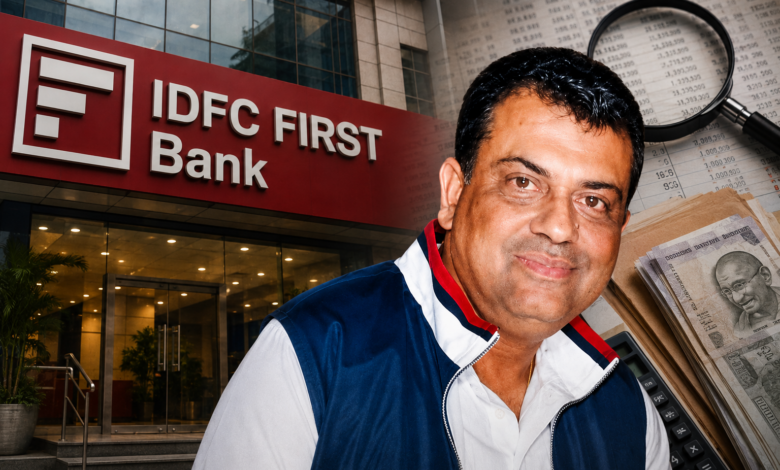
The ₹645 Crore Question: How Vikram Wadhwa Allegedly Turned Government Money Into Marble Floors
There are scams that unfold quietly, buried in spreadsheets and forensic audits, understood only by chartered accountants and investigators. And then there are scams that arrive with the theatrics of a thriller, forged fixed deposit receipts, shell companies with names like “SRR Planning Gurus,” a bank relationship manager allegedly moonlighting as a money mule, and finally, a scene straight out of a heist film; where an undertrial prisoner taken out for a “medical checkup,” only to turn up in a hotel room with his sons while two policemen stood guard outside.
That is the story of the ₹645-crore IDFC First Bank fraud case, and at the centre of it, according to the Enforcement Directorate (ED), sits a Chandigarh-based real estate developer named Vikram Wadhwa.
This is not a story about one man. It is a story about how easily public money, meant for schools, sanitation boards, power corporations and municipal councils, can vanish into private hands when a bank, a bureaucracy and a business network decide to look the other way. But Wadhwa’s name, more than any other in the ED’s charge sheet, has become shorthand for the scale of the alleged betrayal. And the events of the past week, where his alleged detour to a hotel instead of jail, have only deepened public suspicion that money of this scale rarely moves without protection.
The Anatomy of an Alleged ₹645 Crore Heist
According to the ED’s press release dated July 31, 2026, the agency has filed a prosecution complaint against 14 accused persons and entities before the Special PMLA Court, alleging offences under the Prevention of Money Laundering Act. The list includes Ribhav Rishi, described by the ED as the “principal architect” of the conspiracy; Abhay Kumar, a former Relationship Manager at IDFC First Bank; Naresh Kumar alias Naresh Bhuwani, a Superintendent in Haryana’s Development and Panchayat Department; and Vikram Wadhwa, identified by the agency as “a Chandigarh-based real estate developer” and “one of the major beneficiaries of the Proceeds of Crime.”
The alleged mechanics, as laid out by the ED, are almost administrative in their audacity. Government departments, the Development and Panchayat Department, the Haryana School Shiksha Pariyojana Parishad, Haryana Power Generation Corporation, the Haryana State Agricultural Marketing Board, the Haryana State Pollution Control Board, Municipal Corporation Panchkula, Municipal Council Kalka, CREST, and Chandigarh Smart City Ltd, along with two private schools, had parked funds with IDFC First Bank’s Chandigarh branch, largely for fixed deposits.
Investigators allege that instead of these deposits sitting safely, forged FDRs, fabricated RTGS/NEFT instructions, counterfeit debit notes and manipulated bank statements were used to siphon the money out and route it through a web of shell entities: Capco Fintech Services, Swastik Desh Projects, RS Traders, SRR Planning Gurus Pvt Ltd, and Maa Vaibhav Laxmi Interiors.
From there, the ED alleges, funds moved to jewellers, business entities, and significantly, directly into Wadhwa’s own accounts, before being layered through multiple transactions and finally converted into hard assets: residential towers, commercial plots, agricultural land, and stakes in real estate ventures.
The agency’s arithmetic is stark. Of the total ₹645 crore allegedly diverted, the ED has so far provisionally attached properties worth ₹200.84 crore under Section 5(1) of PMLA, and of that, ₹151.33 crore in attached assets is linked to Wadhwa alone, spanning properties held in his own name as well as entities connected to him. In other words, if the ED’s tracing is accurate, roughly three-quarters of everything the agency has managed to freeze so far runs through one man’s name.
That is the number that should give any reader pause. Not because a number alone proves guilt — it doesn’t — but because it illustrates why investigators believe Wadhwa was not a peripheral player receiving stray payments, but a central destination for the money once it left the bank’s books.
Who Is Vikram Wadhwa?
Publicly, Wadhwa has been described as a well-known Chandigarh-based real estate businessman, someone with a footprint across residential and commercial projects, real estate partnerships, and land dealings in the tricity region of Chandigarh, Panchkula and Mohali. It is precisely this footprint, legitimate on its face, that investigators say made him useful to the alleged conspiracy: a ready-made conduit through which diverted government funds could be dressed up as real estate investment, indistinguishable from any other builder’s cash flow.
This is, in fact, one of the more unsettling aspects of large diversion cases in India. The laundering rarely needs an exotic offshore structure. It needs a legitimate-looking local business, where a builder, a jeweller, a trader, willing (allegedly) to absorb dirty money into an already cash-heavy, valuation-flexible sector like real estate. If the ED’s case holds up, Wadhwa’s businesses served exactly that function, allegedly transforming diverted public funds into “premium residential and commercial properties, land parcels and real estate ventures,” in the agency’s own words.
The Hotel, the Sons, and the Cops
If the money trail was the slow-burn chapter of this scandal, the first week of August 2026 supplied the cliffhanger.
According to Chandigarh Police, Wadhwa, already in judicial custody at Model Jail, Burail, in connection with the case, was taken out on August 4 or 5 for a scheduled medical examination at the government hospital in Sector 16. The two escorting officers, Sub-Inspector Jag Mehar Singh and Assistant Sub-Inspector Surender of Police Lines, Sector 26, were tasked with returning him to jail after the checkup.
Instead, police allege, Wadhwa was taken to a hotel in Sector 17, where his two sons, Karan Wadhwa and Kunal Wadhwa, were allegedly waiting. Acting on what police described as specific intelligence, a Chandigarh Police team raided the hotel and detained all five, Wadhwa, his two sons, and the two escorting police personnel, reportedly before any escape could be executed.
A First Information Report was subsequently registered under Section 7 of the Prevention of Corruption Act (relating to public servants accepting gratification) along with Sections 199, 261, 262, 62 and 61(2) of the Bharatiya Nyaya Sanhita, provisions that, broadly, cover offences such as furnishing false information, aiding escape from custody, and criminal conspiracy. Police allege that Wadhwa’s sons paid the escorting officers to facilitate the detour, in what investigators are treating as a deliberate, pre-planned attempt to help their father slip out of custody.
Wadhwa was eventually taken back to jail. Because he was already an undertrial in judicial custody in the larger case, police say he will need to be formally arrested in this fresh matter after securing the court’s permission — an almost bureaucratic footnote to what could easily have been read as an outright escape.
Why This Detour Matters More Than It Seems
It would be easy to treat the hotel episode as a sideshow — a colourful footnote to the “real” story of the ₹645-crore fraud. That would be a mistake.
If the allegations are proven, what happened outside that hospital is arguably more damaging to public trust than the original diversion of funds. A financial fraud, however large, is at least a known category of crime — banks get defrauded, officials get bribed, funds get diverted, and law enforcement, however slowly, eventually responds. But an alleged conspiracy involving two serving police officers escorting a high-profile undertrial to a hotel — allegedly for money — cuts at something more fundamental: the integrity of the custody chain itself, the very mechanism society relies on to ensure that accused persons in serious economic offences cannot simply buy their way around the system.
It also raises an uncomfortable question: if this attempt is proven true, was it opportunistic, where two low-level officers succumbing to a bribe on a single outing, or does it point to a broader pattern of influence that the ₹645-crore case has already suggested?
The ED’s own press release notes that its investigation has revealed “involvement of certain public servants and payments made to them through middle-man,” and that “all such details are under further investigation.” Naresh Kumar, the Panchayat Department superintendent named in the ED complaint, is separately described as having acted as a “middle-man for certain Public Servants” in the scheme. The pattern — money, middlemen, public servants — repeats itself with uncomfortable consistency.
The Larger Rot: A System That Enabled It
It is worth stepping back from Wadhwa specifically to ask the harder structural question: how does ₹645 crore belonging to government departments — money meant for school infrastructure, pollution control, rural development and municipal services — sit in a private bank’s accounts for long enough to be forged, siphoned and laundered without anyone noticing until a routine account-closure reconciliation triggered alarm bells?
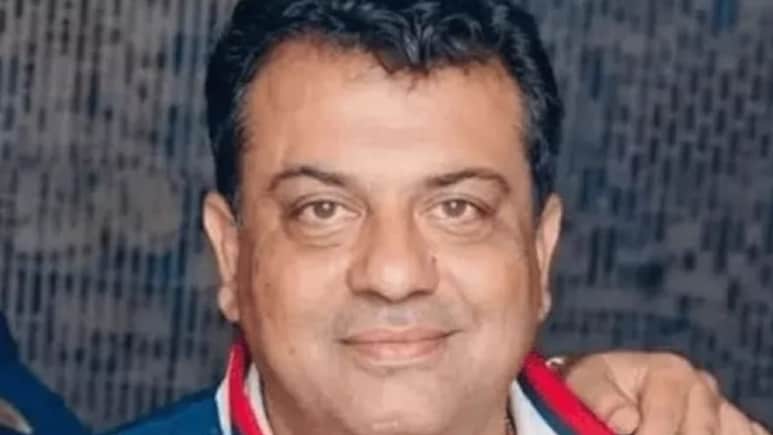
The case, which first surfaced in early 2026 when a Haryana government department sought to shift funds out of IDFC First Bank’s Chandigarh branch and discovered a mismatch in balances, eventually widened to implicate multiple private banks and swelled from initial estimates of roughly ₹590 crore to the ₹645 crore figure now cited by the ED. That escalation itself is a story about oversight failure — about how many months, or years, such diversions can continue when reconciliation between government departments and their banking partners is treated as a formality rather than a safeguard.
Wadhwa’s alleged role, however central, cannot obscure this larger institutional failure. A relationship manager allegedly forging documents does not act alone; a builder allegedly absorbing ₹150-plus crore into his business does not do so without willing counterparties across banks, registries and possibly law enforcement. The hotel episode, if the allegations hold, is simply the latest data point suggesting that the network extends well beyond a boardroom and into the machinery meant to hold it accountable.
What Happens Next
The Special PMLA Court will now examine the ED’s prosecution complaint against all 14 named accused, including Wadhwa. Separately, the fresh FIR over the alleged hotel episode will proceed through Chandigarh Police’s own investigation, with both escorting officers and Wadhwa’s sons already sent to judicial custody for 14 days, according to court records reported by local media. The ED, for its part, has stated that “further investigation is in progress” — a signal that more names, more attachments, and possibly more revelations about the “involvement of certain public servants” may yet surface.
For now, Vikram Wadhwa remains what he legally is: an accused person, entitled to defend himself, entitled to bail applications, entitled to the presumption of innocence that any citizen deserves. But the scale of the allegations against him — ₹151.33 crore in attached assets traced to his name alone, out of a total ₹645-crore diversion — and the sheer brazenness of the alleged hotel episode have already made him the public face of a scandal that exposes far more than one man’s ambition. It exposes how thin the line can be between a government’s treasury and a private developer’s portfolio, when the people meant to guard that line decide the price is right.
Whether the courts ultimately uphold these allegations is a matter for due process. But the questions this case has forced into the open — about bank oversight, about custodial integrity, about the ease with which public money can be dressed up as private wealth — deserve to outlast the headlines, regardless of how the verdict eventually falls.