India’s Record $5 Billion Realty Boom Is Built For Profit, Not People, And Affordable Homes Are Disappearing
India’s real estate sector is witnessing a record surge in investment, with billions flowing into the market and activity accelerating across major cities. Yet, even as capital pours in and prices rise, affordable homes are disappearing, leaving a widening gap between a booming sector and the people it was meant to serve.

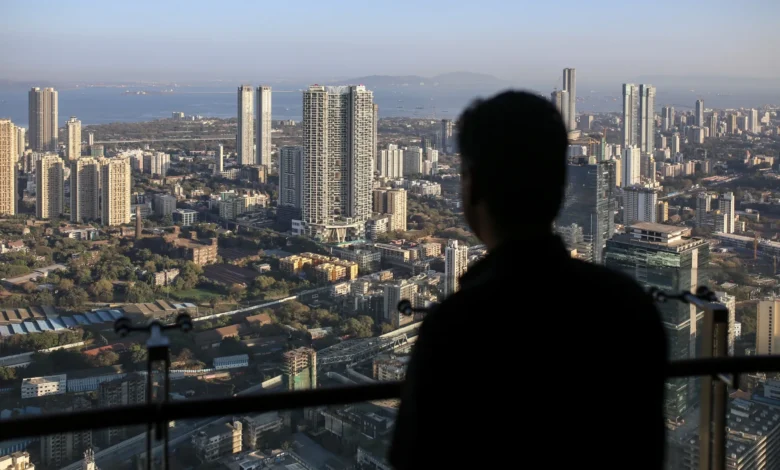
India’s real estate sector has begun 2026 on a note that leaves little room for doubt. Capital is flowing in at an unprecedented pace, signalling strong investor conviction in the country’s property market despite global uncertainties.
In the first quarter of 2026 alone, real estate investments surged to $5.1 billion, marking a 72% increase year-on-year and the highest quarterly inflow ever recorded. The momentum was not just a continuation of an existing trend but a sharp acceleration, with investments rising 53% compared to the previous quarter.
What stands out even more is the nature of this capital. Domestic investors accounted for an overwhelming majority of the inflows, contributing nearly 96% of the total investment. Developers led the charge, closely followed by Real Estate Investment Trusts (REITs), which have seen a significant uptick in activity. The growing role of REITs, in particular, points to a market that is steadily moving towards institutionalisation, with a stronger focus on yield-generating, income-producing assets.
The bulk of this investment has been directed towards built-up office assets and land acquisitions, together accounting for over 90% of total equity inflows during the quarter. Major urban centres such as Bengaluru, Mumbai, and Delhi-NCR continue to dominate, collectively attracting nearly two-thirds of the total capital deployed.
This surge is not occurring in isolation. It reflects a broader belief that India’s real estate sector remains one of the most resilient and attractive investment avenues, supported by economic stability, urbanisation, and long-term demand fundamentals. Even foreign capital, though relatively selective, continues to participate, with countries like Singapore and Canada contributing a significant share of overseas inflows.
By every measurable parameter, the sector appears to be thriving. Capital is abundant, institutional participation is deepening, and demand for high-quality assets remains strong.
And yet, beneath this record-breaking momentum lies a far more uncomfortable question – if the sector is doing so well, why is owning a home becoming increasingly difficult for the very people it is meant to serve?

The Great Disconnect – Prices vs People
If the first quarter of 2026 tells the story of a sector flush with capital, the lived reality of most Indian households tells a very different story. Beneath the headline numbers and record inflows lies a widening gap between the housing market and the people it is meant to serve.
Over the past few years, property prices in India have risen steadily, but incomes have not kept pace. Between 2020 and 2024, residential property prices grew at an annual rate of 9.3%, while household incomes rose by just 5.4%. This divergence, though gradual at first, has now compounded into a structural affordability problem.
Two key indicators make the scale of this imbalance clear.
The first is the price-to-income ratio, which measures how many years of income it would take to purchase a home. A ratio of five or below is generally considered sustainable. In India, that number now stands at around eleven. In practical terms, this means that an average household would need to set aside its entire income for over a decade just to afford a home – an unrealistic proposition in any real-world scenario.
The second is the EMI-to-income ratio, which captures the financial burden of home loan repayments. Globally, a level above 50% is considered financially risky. In India, this figure has climbed sharply from 46% in 2020 to approximately 61% in 2024. For many households, this translates into a life defined by trade-offs—where discretionary spending is cut, savings are stretched, and long-term financial flexibility is sacrificed at the altar of homeownership.
The consequences are already visible across major urban markets. Cities such as Mumbai, Delhi-NCR, and Hyderabad have become increasingly unaffordable for middle-income buyers. What was once considered an achievable milestone is now, for many, an exercise in compromise – either in terms of location, size, or financial stability.
This is not merely a cyclical phase driven by short-term factors. It reflects a deeper structural shift in the housing market, where prices are increasingly decoupled from income realities. The result is a growing disconnect: a market that continues to expand in value, even as its accessibility steadily shrinks.

The Vanishing Affordable Home
If rising prices have made homeownership harder, the more troubling shift is on the supply side. Affordable housing is not just becoming difficult to buy – it is quietly disappearing from the market.
Across India’s major cities, the number of homes priced within reach of the middle class has fallen sharply. Inventory in the sub-₹1 crore category declined from around 3.1 lakh units in 2022 to under 2 lakh in 2024, a drop of 36% in just two years. In 2024 alone, supply in this segment fell by nearly 30% compared to the previous year. What was once the backbone of urban housing supply is now steadily thinning out.
The decline is particularly sharp in cities where affordability was already under pressure. Hyderabad has seen nearly a 70% drop in affordable housing supply. Mumbai has recorded a fall of around 60%, while Delhi-NCR has witnessed a near halving of inventory in this segment. In absolute terms, the numbers are even more striking. In 2024, Delhi-NCR added just 2,672 homes priced below ₹1 crore – barely a fraction of its total new supply.
This is not a case of weak demand. If anything, demand for affordable and mid-income housing remains strong, even as supply dries up. The real shift is happening on the developer side.
Developers are increasingly moving up the value chain, focusing on premium and luxury housing where margins are significantly higher and buyers are less sensitive to price fluctuations. Homes priced above ₹1 crore have surged by nearly 48% in the same period, with cities like Bengaluru and NCR witnessing a sharp increase in high-end launches.
What appears, at first glance, to be a slowdown in affordable housing is in fact a deliberate repositioning of the market. The economics of real estate have changed in a way that makes lower-priced housing less attractive to build. As a result, supply is being redirected toward segments that promise higher returns, even if that means leaving a large section of potential buyers underserved.
The consequence is a structural imbalance. The segment that houses the largest share of demand is shrinking, while supply is expanding where demand is comparatively narrower but more lucrative.
In effect, the market is not failing to produce homes. It is choosing not to produce the kind of homes most people can afford.

Why Builders Have Moved On
To understand why affordable housing is shrinking, it is necessary to step into the developer’s position. What appears, from the outside, as a shift driven purely by profit is also shaped by a set of economic realities that have steadily eroded the viability of lower-cost housing.
At the heart of the issue is the sharp rise in input costs. Land, which already constitutes a significant portion of total project cost, has become increasingly expensive in most urban centres. In cities such as Mumbai and Gurugram, land alone can account for 30 to 40% of the total cost of a project. This leaves very little room for developers to price homes within the affordable bracket without compromising on margins or quality.
Construction costs have followed a similar trajectory. Prices of key materials such as steel and cement have remained elevated, while labour costs have also risen over time. For projects that are already operating on thin margins, even modest increases in input costs can significantly alter the financial equation.
Financing adds another layer of complexity. Smaller developers, who traditionally played a crucial role in delivering affordable housing, are finding it increasingly difficult to access low-cost capital. Higher borrowing costs and tighter lending conditions have made it harder to sustain projects that do not offer high returns. As a result, many are either exiting the segment or shifting focus to higher-value developments.
Regulatory and approval-related delays further complicate matters. Affordable housing projects often face long and uncertain approval timelines, which increase holding costs and delay revenue realisation. In a market where time directly impacts profitability, these delays make lower-priced projects even less attractive.
Taken together, these factors have fundamentally altered the economics of real estate development. Building homes priced between ₹50 lakh and ₹90 lakh – once considered the sweet spot of the market – no longer makes financial sense for many developers.
This shift does not necessarily reflect a lack of demand for affordable housing. Rather, it outlines a market where the cost of supplying such housing has risen to a point where it is no longer commercially viable at scale.
In response, developers are making a rational, if uncomfortable, choice. They are moving towards segments where margins are higher, risks are lower, and capital recovery is faster. The result is a market that continues to build, but increasingly for those who can afford more.

The System Is Rigged – Structural Distortions in the Market
Rising costs and shifting developer preferences explain part of the story. But they do not fully account for the scale of the affordability crisis. Beneath the surface lies a set of structural distortions that continue to shape how real estate in India is priced, transacted, and distributed.
These are not isolated inefficiencies. They are embedded within the system, influencing both supply and demand in ways that steadily push housing further out of reach for the average buyer.
1. Black Money and the Circle Rate Gap
One of the most persistent distortions in the market stems from the gap between circle rates and actual market prices.
Circle rates, set by the government, determine the minimum value at which a property can be registered. In many markets, however, these rates remain significantly below prevailing market prices. The difference creates a window for cash transactions, allowing a portion of the deal to be settled outside the formal system.
In practice, this means a property with a market value of ₹1 crore may be officially registered at a much lower value, with the balance paid in cash. For buyers with access to undeclared income, this reduces tax liability. For developers, it provides liquidity and quicker cost recovery.
The distortion becomes more pronounced in bulk transactions involving high-net-worth individuals and investors. When a significant portion of units in a project is sold this way, developers are under less pressure to price remaining inventory competitively. Instead, prices can be pushed higher for end-users, often justified by an artificially created sense of scarcity.
The outcome is a two-tier market – one that favours those with access to capital and flexibility in transactions, while formal, salaried buyers are left to operate within a far narrower and more expensive framework.
2. Floor Space Index Constraints and Limited Supply
Another structural constraint lies in the way Indian cities regulate construction through the Floor Space Index (FSI), which determines how much built-up area is permitted on a given plot of land.
In many global cities, higher FSIs allow developers to build vertically, increasing housing supply and distributing land costs across a larger number of units. In India, however, FSI limits are often restrictive, particularly in densely populated urban centres.
The result is a constrained supply environment. When developers are unable to build upwards at scale, the cost of land gets distributed over fewer units, pushing up per-unit prices. In high-demand cities where land is already scarce and expensive, this becomes a key driver of rising housing costs.
Increasing FSI is often seen as a solution, but it is not without challenges. Without parallel investments in infrastructure – transport, water, sewage, and public services – higher density can strain already overburdened urban systems. As a result, policy adjustments in this area tend to be gradual and uneven.
3. Capital Flows and Speculative Demand
The nature of capital entering the real estate sector has also evolved. As seen in recent investment trends, a growing share of funding is being directed towards yield-generating assets, premium developments, and land banking.
Institutional investors, REITs, and high-net-worth individuals are increasingly active in the market, often with investment horizons and return expectations that differ from those of end-users. For such participants, real estate is not primarily about ownership or occupancy, but about returns.
This has two implications. First, capital tends to flow into segments that promise higher yields, reinforcing the shift toward premium and luxury housing. Second, it can contribute to price inflation in certain pockets, particularly when properties are acquired as investment assets rather than primary residences.
In addition, participation from non-resident investors, who often operate with stronger currencies, adds another layer of demand that is less sensitive to domestic affordability constraints.
Taken together, these structural factors create a market where prices are influenced not just by demand and supply in the conventional sense, but by financial flows, regulatory gaps, and transaction practices that favour capital over consumption.
The result is a system that continues to function efficiently for investors and developers, while becoming increasingly inaccessible for the very segment that drives real demand – the end user.

The Urban Trap
Even as prices rise and supply shifts upward, demand continues to remain heavily concentrated in a handful of cities. This is not accidental. It is the result of how India’s economic and institutional framework has evolved – one that continues to funnel opportunity into a few urban centres while leaving others underdeveloped.
Cities such as Mumbai, Bengaluru, Delhi-NCR, Hyderabad, and Pune have become magnets for jobs, education, and economic mobility.
A disproportionate share of high-quality employment, particularly in sectors like technology, finance, and services, is clustered within these urban hubs. At the same time, a significant number of the country’s leading universities and professional institutions are concentrated in the very same locations.
This creates a self-reinforcing cycle. People move to these cities in search of better opportunities. As population density increases, so does housing demand. Developers respond by building more, but often in segments that maximise returns rather than affordability. Over time, this pushes prices higher, making these cities increasingly difficult to afford – yet no less essential for those seeking upward mobility.
The imbalance becomes more pronounced when viewed against the broader urban landscape. Compared to countries like the United States or the United Kingdom, India has far fewer large, economically vibrant cities relative to its population. This concentration places enormous pressure on existing urban infrastructure and housing markets, leaving little room for prices to stabilise.
The result is what can be described as an urban trap. For many middle-class households, moving to a major city is not a choice but a necessity. Employment opportunities, career growth, and access to quality education are all tied to these locations. Yet, the very act of moving into these cities exposes them to housing markets that are increasingly unaffordable.
Attempts to address affordability purely through housing policy often fall short because they do not tackle this underlying concentration of demand. As long as economic activity and opportunity remain clustered in a few cities, pressure on housing in these regions will persist.
In effect, the housing crisis is not just about real estate. It is also about how and where India grows.

The Unsold Paradox
At first glance, India’s housing crisis appears to be a straightforward case of shortage – too many buyers chasing too few homes. But the data tells a far more complicated story.
Despite rising prices and declining affordability, India is not running out of homes. In fact, the country continues to carry a significant inventory of unsold housing units, estimated at around one million. What makes this particularly striking is that a large share of this unsold stock falls within the affordable and mid-income categories.
This presents a paradox. If homes exist, and demand clearly exists, why are transactions not happening at scale?
The answer lies in a mismatch that goes beyond simple supply and demand. Many of these unsold units are either located in peripheral areas with limited connectivity, or priced at levels that no longer align with the financial capacity of the target buyer segment. What is classified as “affordable” on paper often fails to meet the practical definition of affordability when factors such as commuting costs, infrastructure gaps, and overall cost of ownership are taken into account.
In several cases, projects have been launched with assumptions about future price appreciation rather than present-day purchasing power. As market conditions evolve, these assumptions no longer hold, leaving inventory that is technically available but effectively out of reach.
There is also a behavioural dimension at play. Developers, having already recovered a portion of their costs through early sales or bulk transactions, are often in no immediate rush to liquidate remaining inventory at lower prices. Holding on to unsold units in anticipation of better valuations can be a rational strategy from a financial standpoint, even if it contributes to broader market inefficiencies.
For buyers, however, the implications are sharp. The presence of unsold inventory does not translate into better bargaining power or improved access. Instead, it reinforces a market where availability does not equate to affordability.
The paradox, therefore, is not just about excess supply. It is about a disconnect between what is being built, where it is being built, and what buyers are actually able to afford.
In a market shaped by such mismatches, both supply and demand can exist in abundance and yet fail to meet.

What Needs to Change
If the problem were limited to pricing cycles or temporary supply shortages, the market might have corrected itself over time. But what this analysis reveals is something deeper – a structural imbalance that will persist unless there is a deliberate shift in how the housing ecosystem is designed, regulated, and incentivised.
Fixing this does not require a single sweeping reform. It requires coordinated changes across pricing mechanisms, supply conditions, and the way demand is distributed across cities.
A. Fix Pricing and Transparency
At the heart of many distortions lies the gap between official valuations and actual transaction prices. Bridging this gap is essential to restoring transparency and trust in the system.
Circle rates need to be revised more frequently so that they reflect prevailing market conditions rather than lag behind them. A narrower band between circle rates and market prices would reduce the scope for cash components in transactions and bring more of the market into the formal economy.
At the same time, real estate transactions need greater visibility. A centralised, digital-first framework – where transactions are recorded in real time and historical pricing data is accessible – would reduce information asymmetry and limit the scope for artificial price inflation. Strengthening and standardising such systems can make pricing more transparent and more accountable.
B. Fix Supply-Side Constraints
Improving affordability also requires addressing the cost and complexity of building homes.
Approval processes need to become faster and more predictable. Delays not only increase project costs but also discourage developers from entering segments where margins are already tight. A more streamlined, single-window clearance mechanism could significantly reduce time overruns.
Land remains one of the most critical constraints. Unlocking underutilised land parcels, particularly those held by public authorities, could expand supply without pushing developers into increasingly expensive acquisitions. In parallel, targeted adjustments to FSI – especially in areas with adequate infrastructure – can allow for higher density without overwhelming urban systems.
Financial incentives also have a role to play. Tax reliefs, targeted subsidies, or credit support mechanisms for projects that meet affordability criteria can help improve the viability of this segment for developers.
C. Redistribute Demand More Evenly
Perhaps the most complex, but also the most necessary, set of changes lies in reducing the excessive concentration of demand in a few cities.
This requires a broader economic shift. Expanding employment opportunities beyond the largest urban centres, investing in infrastructure in emerging cities, and decentralising higher education institutions can gradually ease the pressure on housing in metro regions.
When smaller cities become viable alternatives – not just in terms of cost, but also in terms of opportunity – the demand for housing begins to spread more evenly. Over time, this can help stabilise prices in overheated markets while creating new growth centres elsewhere.
Policy measures can support this transition. Incentivising development in Tier-2 and Tier-3 cities, improving connectivity, and encouraging businesses to expand beyond traditional hubs can all contribute to a more balanced urban landscape.
None of these changes are simple, and none will deliver immediate results in isolation. But without a coordinated effort across these areas, the current trajectory is unlikely to reverse.
The housing market, as it stands today, is not short of capital or demand. What it lacks is alignment.

The Emotional Core – The Indian Dream
For decades, owning a home in India has been more than a financial goal. It has been a marker of stability, a symbol of having “made it,” and, for many families, the single most important milestone in a lifetime of work.
It was a dream built on a certain assumption – that with enough discipline, steady income, and time, homeownership would eventually be within reach. Previous generations lived that reality. A modest flat in a reasonably connected part of the city was attainable with planning and patience.
That assumption is now beginning to break.
For a large section of the middle class, buying a home is no longer just a question of saving enough or waiting for the right time. It is increasingly a question of whether it is possible at all without taking on a level of financial strain that reshapes everyday life.
The consequences of that strain are not abstract. High EMIs limit consumption, reduce financial flexibility, and delay other life decisions—from education and healthcare spending to retirement planning. A home, instead of being a source of security, begins to feel like a long-term obligation that defines and restricts financial choices.
At the same time, the social narrative around homeownership has not changed. Renting is still widely seen as temporary, even inadequate. The expectation to eventually own a home remains deeply embedded, regardless of whether the economics support it.
This creates a quiet tension. Individuals and families find themselves caught between aspiration and affordability – between what they have been told to aim for and what they can realistically achieve.
And yet, the idea of a home continues to carry emotional weight. It represents permanence in an otherwise uncertain environment. It offers a sense of control, identity, and belonging that few other assets can replicate.
But as prices rise and access narrows, that idea is beginning to shift. For many, the definition of success is being forced to adapt – not by choice, but by necessity.
The Indian dream has not disappeared. It is being redefined in real time.
The Last Bit, A Market That Works Just Not for Everyone
India’s real estate story, at first glance, appears to be one of strength and momentum. Record capital inflows, rising prices, and growing institutional participation all point to a sector that is expanding with confidence.
But a closer look reveals a more uneven reality.
The market is functioning efficiently for those it is increasingly designed to serve—developers, investors, and high-income buyers. Capital is being deployed, projects are being built, and returns are being generated. By those measures, the system is working.
What it is not doing is delivering accessibility at scale.
For the middle class, the pathway to homeownership is becoming narrower with each passing year. Prices continue to move ahead of incomes, affordable supply is shrinking, and structural inefficiencies keep costs elevated. Even where homes are available, they are often out of sync with what buyers can realistically afford or sustain over time.
This is not a temporary imbalance. It is the outcome of a market that has gradually shifted its centre of gravity – from meeting broad-based housing needs to optimising for capital efficiency and higher returns. Unless that balance is restored, the gap will continue to widen.
The implications extend beyond individual households. Housing is not just an asset class; it is a foundation for economic stability and social mobility. When access to housing becomes constrained, it affects consumption patterns, savings behaviour, and long-term financial security across a large segment of the population.
India is not short of demand. It is not short of capital. What it lacks is alignment between the two.
Until that alignment is addressed, the contradiction at the heart of the market will remain – a sector that continues to grow in value, even as it moves further out of reach for those it was once expected to serve.