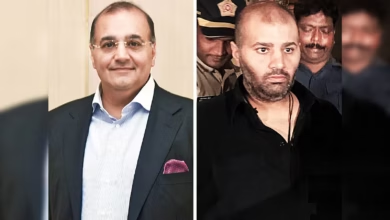
Meet Kabul Chawla The Media’s Blue Eyed Boy & India’s Most Controversial Real Estate Tycoon
Even ED, CBI, Income Tax Can't Dare To Take Action Against Him. Cases Remains Pending After Raids

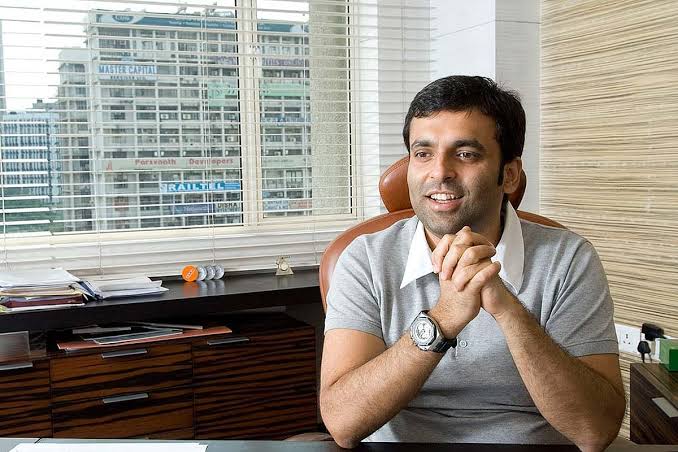
Kabul Chawla’s BPTP Empire: Two Decades of Unfinished Homes, Criminal Complaints, Regulatory Fire, and the Relentless Art of Staying Untouched
Kabul Chawla did not merely build a real-estate company. He constructed a high-velocity machine that collected thousands of crores from middle-class families, army officers, professionals and investors across Delhi-NCR, then left a long trail of incomplete projects, cancelled dreams, and court files that rarely seemed to close with personal consequences for the man at the top.
As Chairman and Managing Director of BPTP Limited, Chawla rose from a Karnal background to a land baron controlling thousands of acres, a luxury lifestyle, overseas property controversy, and repeated attempts to access public capital markets. What the public record also shows, with brutal consistency, is a parallel history: non-bailable warrants that gathered dust, FIRs that multiplied, consumer and RERA orders that kept coming, income-tax searches, a major 2025 Enforcement Directorate investigation into hundreds of crores of foreign investment structures, and a 2026 CBI case born from Supreme Court scrutiny of builder-bank practices.
This is not a story of one isolated “scam” judicially declared. It is the story of a sustained pattern — aggressive collections, chronic delays, formal criminal complaints, regulatory findings of deficiency, and an extraordinary ability to keep operating, launching projects, collecting awards, and preparing IPOs while thousands of buyers waited, protested, litigated, and paid EMIs on homes they never received. The record is damning in its volume and longevity, even where final criminal convictions remain absent.
1. Early Life Of Kabul Chawla
Kabul Chawla emerged from Karnal, Haryana — a first-generation figure with no inherited real-estate dynasty. He is the cousin of the late astronaut Kalpana Chawla, a detail repeatedly used in profiles to create an uncomfortable contrast between national heroism and the controversies that later defined his own name.
He began by putting up a building on his father’s property in his early twenties. Marriage into the Taneja family of the TDI Group gave him an early foothold in Haryana’s developer networks. By the late 2000s he was living in Delhi’s ultra-exclusive Amrita Shergil Marg, driving luxury cars, and cultivating the image of a deeply religious deal-maker who made thanksgiving trips to Vaishno Devi after major transactions.
The transformation was rapid. From modest beginnings he became the face of a company that, at its peak publicity, claimed land banks of 2,000–2,500 acres and pre-sold tens of thousands of units. The speed of that rise, and the political climate in which it occurred, remains central to every critical examination of how BPTP was built.
2. How He Started BPTP
BPTP Limited (CIN U45201HR2003PLC082732) was formally incorporated in 2003. Chawla started with a small team and an aggressive appetite for land in Faridabad, Gurugram and Noida. The real explosion came during the Bhupinder Singh Hooda Congress government in Haryana (2005–2014), a period of unprecedented change-of-land-use licensing. BPTP moved from relative obscurity to one of the largest land holders in the region in a matter of years.
In 2008 the company made national headlines by outbidding DLF for a massive Noida commercial parcel at a reported price exceeding ₹5,000 crore — a deal that later ran into payment and execution difficulties. Foreign private-equity money followed, including entities linked to Citi and JPMorgan. By 2011–12 media reports put the company’s turnover near ₹1,400 crore and Chawla’s personal wealth above ₹2,000 crore.
The official narrative was of a visionary first-generation builder transforming Faridabad and creating integrated townships. The unofficial record that accumulated alongside it was of buyers who had paid nearly everything and received almost nothing for years, of incomplete agreements, of protests by retired military officers, and of a growing pile of formal complaints that would eventually reach police stations, consumer forums, RERA, the Income Tax Department, the Enforcement Directorate, and the CBI.
3. List of Controversies, Allegations, Scams & Fraud on Kabul Chawla Since Start Of BPTP
The pattern is not subtle.
Parklands and its associated Faridabad developments became the longest-running open wound. Contemporary reporting described more than 22,000 overall customers at one stage, with Parklands alone involving over 10,000 apartments and 5,000+ residential plots. Buyers repeatedly claimed they had paid 95–100 % of the consideration yet remained without possession for years. Infrastructure promises lagged. Refunds and conveyance documents became battlegrounds.
Park Serene drew particular bitterness: hundreds of retired military officers who had booked apartments specifically marketed to them found themselves protesting incomplete delivery while still servicing loans. Business Standard reported that in one military-oriented project roughly 400 buyers had paid more than 100 % of the price while the project stayed unfinished years later.
A 2011 wave of allegations around Faridabad projects was later described in media as involving more than 1,000 buyers and approximately ₹400 crore — a figure that remains secondary-reported rather than independently verified from primary FIR documents in the core record, but which has never been effectively buried.
Then came the specific FIRs: incomplete plot agreements with blank spaces, full payment without possession, collection of stamp duty and conveyance charges for undelivered units, subvention schemes in which construction had not even started by the promised possession date, and repeated claims of cheating, criminal breach of trust, forgery and conspiracy.
The 2025 ED investigation added a new layer — more than ₹500 crore of Mauritius foreign investment structured with put/swap options that the agency alleged violated prevailing FEMA/FDI rules, non-compliance with RBI directions, beneficial ownership of foreign entities, and examination of a costly New York property. The ED explicitly linked earlier project non-completion FIRs to its inquiry into alleged diversion of funds.
BPTP’s standard defence has always been external delays, governmental hurdles, and the claim that many complaints were frivolous or settled. Settlements and quashing orders did occur. What never disappeared was the scale of the complaints, the years of buyer suffering, and the formal registration of criminal cases against the company’s leadership.
4. List of Court Cases, Criminal Cases, Civil Cases, Consumer Cases, RERA Action, ED Raids, CBI Raids, ED FIR, CBI FIR, Income Tax Raids on Kabul Chawla
Income Tax Two major Section 132 searches struck the BPTP group and Chawla’s premises — 15 November 2007 and December 2010–February 2011. Assessments followed. The Delhi High Court later constrained additions for completed years without incriminating search material, but the searches themselves confirmed sustained tax scrutiny of the group controlled by Chawla and his wife Anjali.
Criminal FIRs and the non-bailable warrant December 2011: Patiala House Court issued a non-bailable warrant against Kabul Chawla in a Delhi case arising from a ₹40 lakh commercial-plot complaint (cheating, criminal breach of trust, misappropriation). Police said they were looking for him. Fifteen years later the public record still does not show his arrest on that warrant.
2014: Faridabad police registered a case against Chawla and a BPTP executive on court direction after complainants alleged incomplete agreements, full payment, and non-delivery of two plots in Parklands Sector 85.
2015: FIR under Sections 420 and 406 IPC for a Gurugram Sector 57 flat booked in 2006 — ₹25 lakh paid, neither flat nor refund received.
2016: Three FIRs in the SVP Sector 102 project naming Chawla and seven others, involving roughly ₹3 crore across three investors, under a battery of IPC sections including forgery and conspiracy.
A separate 2016 Parklands FIR was later quashed by the Delhi High Court after settlement — the Court noting that breach of contract alone does not equal cheating.
Delhi Police EOW closed a 2019 Parklands Owners Association complaint for lack of prima-facie cognizable offence, pointing to pending civil cases.
2026: CBI registered FIR RC2192026E0001 concerning Pedestal @70A under the Supreme Court’s broader monitoring of alleged builder-bank collusion in subvention schemes. The Supreme Court order confirmed the FIR against BPTP and a director. The publicly available extract does not independently name Chawla as the second petitioner.
Consumer and RERA The volume is industrial. NCDRC and State Commission cases repeatedly named Chawla as Managing Director. HARERA handled consolidated batches of 45 and 36 Spacio complaints in 2022 alone. Pedestal orders recorded delays of more than four years with construction still at an early stage years after the contractual possession date. Concrete refund directions included roughly ₹1.25 crore and ₹1.45 crore with interest. Execution proceedings continued into 2025–2026.
Insolvency NCLT admitted a CIRP petition against BPTP in November 2022. It was stayed by NCLAT only after settlement with the operational creditor. Another IBC claim for a Terra project refund did not trigger full insolvency.
ED – August 2025 Official searches on 26–27 August 2025 hit BPTP offices, Chawla’s residence, the residence of Whole-Time Director Sudhanshu Tripathi, and multiple other locations. The agency focused on ₹537.5 crore of Mauritius investment, alleged impermissible put/swap structures, foreign entities of which Chawla was said to be beneficial owner, and a New York property under examination. Lockers were frozen; documents and digital evidence seized. This remains an ongoing FEMA investigation. No PMLA conviction or ECIR has been established in the official material reviewed.
New York property The 2015 New York Times investigation linked a $19.4 million Time Warner Center condominium to Chawla through a Delaware entity. He denied ownership. JPMorgan’s later attempt to seize it was rejected by a federal judge for insufficient evidence of linkage. The 2025 ED release revived the issue.
No criminal conviction of Kabul Chawla on the core real-estate fraud charges has been recorded in the material examined. The absence of final personal conviction, set against the mountain of formal actions, is itself part of the story critics find most revealing.
5. Powerful Lobby Around Kabul Chawla
BPTP’s land bank did not assemble itself in a vacuum. Its most dramatic expansion occurred during the Hooda Congress years in Haryana, when change-of-land-use licences flowed on an unprecedented scale. Multiple investigative accounts have described Chawla as close to that administration. His marriage into the TDI Group further embedded him in the state’s established developer networks.
Earlier, around the Delhi sealing-drive judgments, Chawla’s name surfaced in connection with a company linked to the sons of then Chief Justice Y.K. Sabharwal — a controversy highlighted by Prashant Bhushan and reported in mainstream outlets. Foreign institutional investors provided capital and a veneer of legitimacy during the growth years.
Critics have long argued that political and bureaucratic proximity helps explain why a 2011 non-bailable warrant remained unexecuted for a decade and a half, why certain probes moved slowly, and why the company continued to secure approvals and launch projects while buyer litigation piled up. These remain allegations of influence, not adjudicated findings of criminal conspiracy with politicians. What is undeniable is the observable outcome: a promoter who faced repeated formal criminal complaints yet continued to operate at scale.
6. BPTP IPO Which Was Planned to Be Launched in 2010
In 2009–2010 BPTP filed a DRHP with SEBI to raise approximately ₹1,500 crore. The prospectus spoke of debt reduction, project construction and development charges. SEBI approval came. Foreign investors who had entered with put options and IPO-exit expectations were watching.
By late 2010 the company cited market volatility and abandoned the launch. The timing coincided with the first major wave of buyer protests and the 2011 criminal cases. The failed IPO left those early private-equity structures in place — the same structures that would later feature in the 2025 ED investigation and earlier arbitration disputes that ended in a reported large settlement.
7. The IPO Which He Has Planned in 2026
By early 2026, reports stated BPTP was preparing a far larger public offering, frequently cited around ₹5,000 crore. Merchant bankers were said to have been appointed. Revenue projections were being talked up. New launches on the Dwarka Expressway were being showcased. Grey-market prices for unlisted shares were reported elevated.
The proposed listing arrives while the 2025 ED FEMA investigation is ongoing, while the 2026 CBI FIR confirmed by the Supreme Court remains live, while RERA execution proceedings continue, and while the long history of consumer disputes has never been fully extinguished. Critics see an attempt to convert a troubled private empire into a publicly listed one — transferring residual risk onto retail and institutional investors while the promoter’s personal criminal accountability remains incomplete. The company presents growth, land bank and recent deliveries. The public record of the previous sixteen years supplies the counter-argument.
The Pin
Kabul Chawla built one of the most visible real-estate machines in the NCR. He also presided over one of the most persistent accumulations of buyer grievances, formal criminal complaints, tax searches, regulatory findings of delay, and high-level agency investigations in the sector.
Warrants were issued and not executed. FIRs were registered and often settled or closed. Refund orders were passed. Searches were conducted. An ED investigation into hundreds of crores of foreign investment structures is underway. A CBI case born from Supreme Court monitoring is live. Awards for “sustainable development” continued to be accepted. New projects continued to be launched. IPO plans returned.
Thousands of families paid nearly everything and waited years. Some are still waiting. The gap between the documented pattern of formal actions and the absence of final personal criminal conviction is the most uncomfortable fact in the entire record. That gap is what continues to define the public case against Kabul Chawla and the BPTP empire he built.