Wow! The government has finally heard your cries. GST rates are going down. Cars are cheaper, paneer is cheaper, education is cheaper, flights are cheaper, homes are cheaper. Big win, right? But before you thank the powers that be, take a deep breath because you’re still going to suffer. Not because the taxes are high, but because the services are dead.
Welcome to India, where the billboards scream “Ease of Living” but your life looks like a tragicomedy scripted by Kafka on steroids. Lower taxes may grab headlines, but the everyday reality remains mired in floods, scams, delays, and adulterants. Let’s see how corruption and neglect are hollowing out those GST gains from the inside.
Cars: Congratulations, You Can Now Drown for Less
From September 22, your dream sedan will indeed cost less. GST on small cars has been slashed from 28% to 18%, knocking off a good chunk of the price. You might save tens of thousands of rupees on that new ride overnight. Big win, right? Except you’ll still be driving that shiny new car through Delhi’s drowned underpasses, Gurugram’s floating flyovers, Mumbai’s submerged roads, Punjab’s pothole-riddled highways, Himachal’s landslide-prone slopes, Jaipur’s clogged drains, and Bengaluru’s water-parks-disguised-as-streets. In other words, your cheaper car is still at the mercy of crumbling infrastructure.
Just last year, a 22-year-old woman in Bengaluru drowned when her family’s car got stuck in a flooded underpass in the heart of the city. In Delhi too, torrential rains have turned underpasses into death traps, with similar tragedies occurring during the monsoons. Your new car’s price tag might be lower, but its chances of literally sinking in neglect remain high.
And when your car eventually dies, not because you’re a bad driver but because it gasped for oxygen under three feet of civic negligence, the repair bills will stab you harder than any GST ever could. The savings from the tax cut will evaporate the first time you have to replace a flood-ruined engine or a suspension demolished by potholes. Those potholes, by the way, are not just minor annoyances; they caused over 5,600 deaths in India from 2018-2020. So much for your “safe” new car.
But wait, there’s the ethanol twist too. The government has been pushing compulsory ethanol-blended petrol (E20 fuel) as a green initiative. Sounds eco-friendly in theory of sustainability! But it’s been engineered to burn holes in your pocket. Most existing cars weren’t built for 20% ethanol blends, and experts warn that using E20 in incompatible engines can cause serious damage over time.
Think corroded fuel tanks, degraded rubber seals, poorer mileage, all on your dime. To add insult to injury, insurers have publicly hinted they might void your insurance claims if engine damage is traced to using the wrong fuel. One major motor insurer stated that if you run an E10 car on E20 and blow the engine, they won’t pay a paisa and it’ll be deemed “gross negligence” by the owner. So while ethanol-blended fuel is marketed as “green,” it could leave you deep in the red. It’s sustainability alright, but mainly of the insurance companies’ profits.
In short, GST cuts have made cars cheaper, but the systemic corruption and incompetence in maintaining infrastructure mean you can now drown your new car for less money. And thanks to policy moves made with more haste than foresight, even the fuel in your tank might become a liability.
Paneer: From 5% GST to Zero, Still Served with Adulterants
Rejoice, foodies! Paneer (the beloved Indian cottage cheese) now enjoys GST exemption, down from a 5% tax to 0%. Finally, India can have its protein without taxation. But before we celebrate that our shahi paneer got a few rupees cheaper, let’s talk about what’s still lurking in your plate. Because chances are that paneer isn’t pure in the first place. It’s likely laced with detergent, starch, urea, and who-knows-what, courtesy of a food supply chain long compromised by adulteration.
Our dear food regulator, the FSSAI, operates in a perpetual state of slumber when it comes to protecting consumers. India has a notorious reputation for adulterated dairy products, and paneer is no exception. In one recent nationwide crackdown, authorities seized over 4,000 kg of “fake” paneer in just a single operation. This counterfeit paneer was being transported in bulk, intended for sale in everyday markets. Its ingredients? Laboratory tests often reveal a witch’s brew of cheap oils, soap-like emulsifiers, and non-dairy fats used to mimic real paneer’s texture and richness. So yes, you’ll pay zero GST on paneer now, but you might still end up paying lakhs to oncologists later if you regularly consume these chemical-laden fakes.
Where is FSSAI in all this? Asleep at the wheel, it seems, until a crisis explodes. This is the same regulator that needed a general citizen’s tip-off to learn that Cadbury’s Bournvita, a popular children’s health drink that had more sugar than a gulab jamun festival. In April 2023, a social media influencer’s viral video revealed that Bournvita was essentially a sugar bomb with a dash of cocoa and vitamins. The company slapped him with legal threats, but the public outcry (#BoycottBournvita trended) forced FSSAI to finally take note. The regulator claimed it would crack down on misleading health claims only after an embarrassed citizenry pointed out what should have been its job to begin with.
Likewise, FSSAI only woke up about Indian spices when foreign watchdogs sounded the alarm. In 2024, Britain’s food safety authority imposed extra controls on all Indian spice imports after tests found carcinogenic chemicals (like ethylene oxide) in products from big brands. Nepal outright banned certain Indian spice brands after detecting toxins. Our response? Scramble, after the fact, to investigate domestic spice manufacturers. Never mind that Indian consumers had been seasoning their curries with these same potentially tainted spices for years. It took international shame for regulators here to act. Domestic reports and whistleblowers raising concerns have routinely been ignored until some foreign country’s import ban suddenly makes it an “issue.”
So enjoy your tax-free paneer tikka, but remember it still might come with a side of E. coli or detergent. The GST reduction won’t neutralize the calcium carbide in your vegetables, the diluted milk in your tea, or the poison in your paneer. When food safety agencies prioritize damage control over prevention, the common man’s thali remains as endangered as ever. We got relief on the bill, but not in the belly.
Education: Free of Tax, Full of Gobar
Good news on paper as educational services are now GST-free. The government has removed the 18% GST from many forms of education to make learning more affordable. Your child’s textbooks, tuition, or coaching classes might cost a bit less. But while the tax burden has been lifted, the brain-fog burden on our students remains as heavy as ever. Welcome to India’s education system, which now available without GST and with generous helpings of bovine excrement (sometimes literally).
This is the same education milieu where a minister, an elected lawmaker, once proudly declared that Hanuman was the first astronaut to reach space. Yes, you read that right. At a National Space Day event in 2025, a Union Minister told a room full of students that Lord Hanuman, the mythological monkey-god, was the first being to ever travel to space, predating Neil Armstrong.
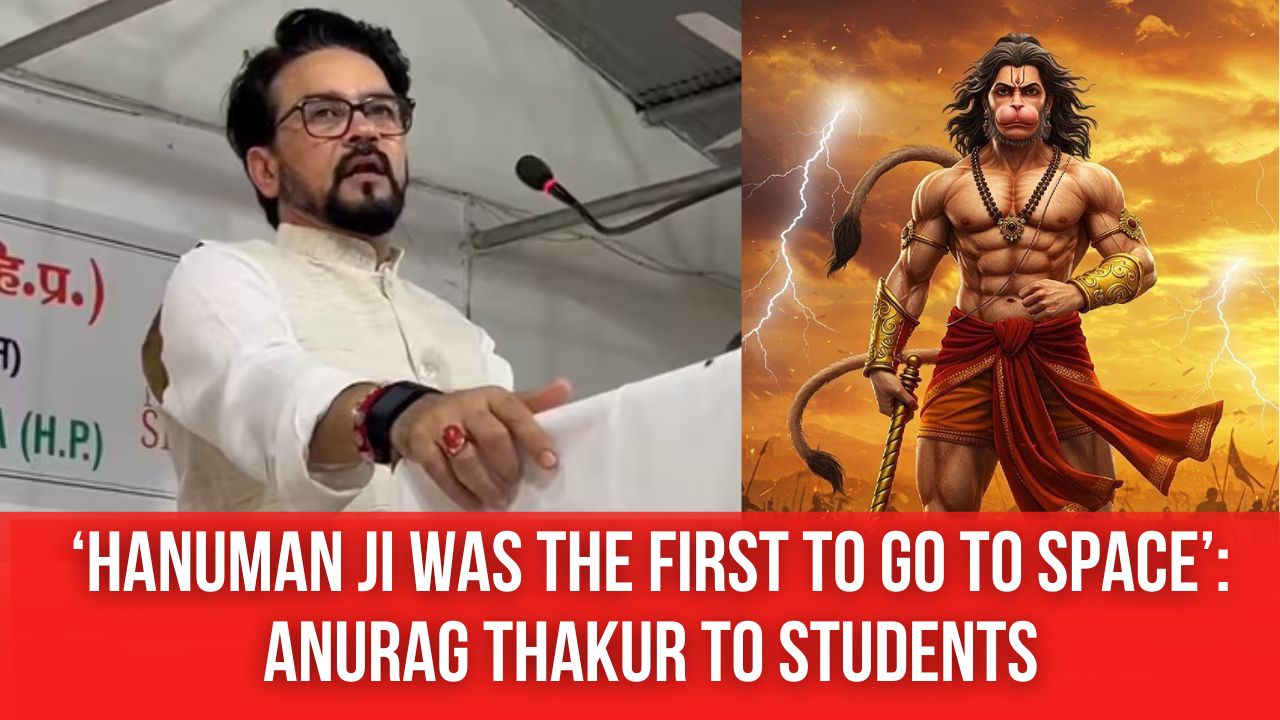
The shocked students had answered “Neil Armstrong” to his question, but the minister corrected them: “I think Hanuman ji was the first.” This wasn’t said in jest. He meant it, linking it to pushing “ancient knowledge” in education. When top officials blur the line between mythology and science in classrooms, what hope is there for a scientifically literate generation?
Not to be outdone, a Delhi University college principal recently undertook a “research” project so absurd that it belongs in satire columns. She coated her classroom walls with cow dung in an attempt to naturally cool the room. In a viral video, the principal is seen atop a desk, smearing cow dung in broad swaths across the walls with her bare hands.
Her claim was cow dung has insulating properties per traditional wisdom and would reduce the temperature in the summer heat. This happened in 2025, in the capital city, in an institution of higher learning and was even initially defended as an innovative experiment. While there’s nothing wrong with exploring traditional practices, one might ask, “Is this really the cutting-edge research our colleges should be doing, effectively turning classrooms into barns, while basic modern amenities are ignored?”
If you think pseudo-science stops there, think again. At the prestigious IIT Madras, the director himself joined the fray of cow science evangelism. In January 2025, during a public lecture, IIT-M Director Dr. V. Kamakoti heaped praise on cow urine (gaumutra), claiming it has “anti-bacterial, anti-fungal” properties and can cure everything from infections to irritable bowel syndrome. He even narrated a tale of a holy man curing his fever by chugging cow urine, to approving nods.
It’s the kind of claim that would make real scientists cringe (and late night comedians rejoice). The timing couldn’t have been more ironic as it was just months earlier, scientists at the government’s own Indian Veterinary Research Institute (IVRI) had published research showing that fresh cow urine is often teeming with harmful bacteria and is not safe for human consumption.
The IVRI study tested dozens of urine samples and found at least 14 types of dangerous microbes, including E. coli, in many of them, leading researchers to flatly warn that no one should be drinking this stuff. In other words, science says consuming raw cow urine can make you seriously ill, but an IIT director (an aerospace engineer by training, no less) is on stage touting its magical benefits.
So yes, you’ll pay nothing in GST for your child’s schooling now, but what exactly are they learning? That Hanuman pioneered space travel, that smearing dung on walls is modern HVAC technology, and that sipping bovine waste is a cure-all. Our education system, plagued by politicization and a lack of accountability, often elevates the absurd to the pedestal of truth. Tax-free or not, this is a raw deal for the next generation. It’s free misinformation, gift-wrapped by your tax money, and now even cheaper.
Air Travel: 5% GST and 100% Delays
If you thought flying would offer some escape, think again. The GST on economy-class airfare has dropped from 18% to 5%, ostensibly to make air travel more affordable for the common man. On paper, your flight tickets should be cheaper. But the real question is, “will your flight actually take off on time?” In India’s current aviation scenario, that’s as uncertain as a coin toss, whether there is GST cut or no GST cut.
Indian air passengers have been reeling from a spate of delays, cancellations, and airline malfunctions that no tax tweak can fix. Let’s talk numbers. In the first 11 months of 2024, flight delays impacted over 2.39 million passengers, a whopping 27% increase compared to the same period the previous year. That is millions of people stuck in airport terminals, sleeping on makeshift cardboard beds or anxiously refreshing the airline app for updates. If you’ve flown anytime recently, you know the script. “Delayed due to operational reasons”, “awaiting incoming aircraft”, “air traffic congestion”, or the all-time favorite “weather disruption” even when the sun is shining. The only thing that runs on time, it seems, are the automated apology announcements.
And it’s not just one or two airlines struggling, it’s across the board. Even India’s largest airline by market share had its on-time performance (OTP) drop to around 71% in 2024, meaning nearly 3 in 10 flights didn’t depart as scheduled. Others fare far worse (one beleaguered airline’s OTP was an abysmal 55% in a given month). Missing flight connections, waiting hours on the tarmac, or being herded into buses after a sudden cancellation have become routine parts of the Indian flying experience. So that 13% GST savings on your ticket is probably going straight into the ₹300 coffee you buy during your extra three-hour wait at the gate.
And let’s not forget the “technical difficulties” that plague flights even after they miraculously take off on time. In mid-2022, SpiceJet, one of the country’s carriers, suffered such a spree of mid-air incidents that the aviation regulator had to step in. Within just three months, there were at least eight separate safety glitches of engines failing, smoke in the cabin, cracked windshields, even a burst tire that caused an emergency landing. It got so bad that the DGCA issued a show-cause notice and ordered the airline to operate no more than 50% of its flights for a period, citing concerns over its ability to maintain “safe, efficient and reliable” service.
The Aviation Minister himself admitted these incidents were alarming and needed a thorough investigation. SpiceJet’s response? The Chairman shrugged that such “trivial” incidents happen every day (even if passengers could have very well died in some of those cases). Eventually, a few months later, that airline’s financial troubles grounded it further, stranding thousands of ticket-holders with no recourse. Meanwhile, another airline, Go First outright collapsed in 2023, declaring bankruptcy overnight and leaving travelers in the lurch. So much for “affordable air travel.”
In summary, the government cut the GST on your flight, but you might pay with your time and nerves instead. The skies aren’t particularly friendly when regulators, airlines, and airport authorities don’t get their act together. You save a few hundred rupees on the ticket, only to spend far more on an extra night in a hotel due to a cancellation or on therapy for the trauma of that near-miss mid-air engine flameout. The 5% GST feels like a joke when you realize that in our aviation sector, efficiency and safety often fly economy, way behind political grandstanding and corporate mismanagement.
Real Estate: Lower GST, Same Scam
Home sweet home? The GST on under-construction residential properties has been slashed from 12% to 5%. In theory, this should make buying a new flat or house significantly more affordable for the middle class. Developers hailed the decision, politicians patted themselves on the back for enabling “Housing for All,” and gullible buyers rushed to booking offices imagining the dream home now within reach. But on the ground, the real estate sector remains a minefield of corruption, where a lower tax has zero effect on the shenanigans that actually determine whether you end up with a roof over your head or a legal headache.
Let’s start with one word that can send a chill down any Indian homebuyer’s spine, Ambernath. If you haven’t heard of it, Ambernath is a town in Maharashtra that became the epicenter of one of the country’s biggest housing scams in recent memory. A particular builder group (Mohan Lifespaces and associates) in collusion with local authorities managed to construct over 70 illegal apartment buildings; yes, 70 buildings on forged papers.
They sold flats to thousands of buyers, collected crores in booking amounts and EMIs, all while the buildings lacked legitimate permits, safety clearances, or titles. When some whistleblowers uncovered that many of the Commencement and Occupancy Certificates were fake or duplicated, the extent of the fraud was staggering. Entire seven- to eighteen-story towers had been built on paperwork as solid as quicksand.
What happened when this scam came to light? For the longest time, absolutely nothing. Homebuyers filed complaints and petitions, but not a single FIR was registered against the culprits initially. The local police and municipal officials, many of whom were likely complicit or bribed, simply dragged their feet.
Thousands of middle-class families were left in limbo. They had loans to pay and life savings sunk into flats that might be demolished any day for being unauthorized. No refunds, no homes, no justice, just EMIs and anxiety. Only after relentless pressure did higher authorities begin slow action, but years later, many victims are still awaiting either their flat or their money back. The builders, meanwhile, roamed free, and some corrupt officers even got promoted.
Ambernath is not an isolated case; it’s just the tip of the iceberg. From Noida’s infamous Amrapali and Jaypee group project failures to Bangalore’s building bye-law violations, from Punjab’s collapsing new colonies to Chennai’s stalled mega-developments, the story is the same. Builders take money from buyers and promises from politicians, then proceed to flout every rule, secure in the knowledge that enforcement is lax (or on the take). When the house of cards falls, it’s the common man left holding the bag. Courts are flooded with cases of housing fraud, but resolutions are slow. In the meantime, buyers continue to pay bank interest on “ghost” apartments.
So, the government can lower GST on homes all it wants; it means nothing if the builder-banker-politician nexus continues to exploit people. The GST cut might save you a few lakh rupees on paper, but what about the 20–30 lakh you could lose outright if your project is a scam or never gets completed? What about the years of your life spent fighting cases to get possession of a flat that was promised in 2018 but still a barren plot in 2025?
These are not hypotheticals. They’re reality for tens of thousands of Indian families. For example, in the Amrapali case in NCR, over 40,000 homebuyers were left in the lurch until the Supreme Court intervened (and that took a decade). In Ambernath, over 3,000 buyers face the prospect of their “dream homes” being demolished because of builder fraud. Some have turned activist, dubbing it “the housing scam that made the middle class homeless.”
In a country where the real estate regulator (RERA) is in place, one might expect better. But RERA’s implementation is as patchy as our monsoon rains. Some relief here and there, but drought in most places. Powerful builders find ways to delay or dodge penalties, often with tacit support from authorities. Meanwhile, politicians who often have real estate interests themselves (or receive campaign funds from those who do) are more interested in announcing new subsidy schemes or one-time loan reliefs than in cracking down on the everyday cheating in the sector.
The result is caveat emptor where the buyer must be beware. A lower GST does not mean a safer investment. The common man still needs to approach any home purchase with the skepticism of a CBI officer interrogating a scam artist. Is the land title clean? Are the approvals genuine? Will the developer siphon off money and leave the project half-built? These are the questions keeping buyers up at night, not whether GST is 5% or 12%.
In the end, many Indians wanted a home but got a courtroom date instead. We’re effectively telling our citizens that Housing is cheaper now, but we can’t guarantee you’ll actually get housing. It’s a cruel joke.
The Larger Problem: India’s Services, or the Lack Thereof
Here’s the bitter truth underlying all these scenarios: The problem in India isn’t simply the tax rates. It’s the services, or rather, the catastrophic absence of them. We, the people, are being nickel-and-dimed with taxes and cesses at every turn, but in return we get public services that range from shoddy to non-existent. We’re overtaxed but under-serviced. We pay through the nose, but what do we receive?
At the root of all this is a bloated, graft-prone bureaucracy and a political class that often treats the common man as nothing more than an ATM. Need a driving license, a land record, a hospital bed, or a police verification? Prepare to grease someone’s palm or call in favors, because efficient service is the exception, not the norm. The taxpayer is seen as an endless source of funds, while accountability for delivering results is virtually nil. In fact, when citizens demand better services, they’re often met with shrugs or the classic “This is how it is in India” defeatism.
The GST cuts we’re seeing now make for great optics. They create a narrative that the government is pro-people and is lowering the cost of living. But it’s lipstick on a pig; it doesn’t address the rot beneath. What does it matter if your tax burden drops a bit when your life remains a carousel of floods, scams, delays, and adulteration?
The Apathy of a Nation
Perhaps the saddest part of this story isn’t the government’s apathy, it’s ours. We, as a nation, have become adept at suffering with a smile (or at least a resigned grin). Lowering GST makes for a news headline, but on the ground, the average Indian has internalized that public services won’t improve, and one must just “adjust.” We have normalized the absurd.
When roads flood, we joke about starting a fishing business on Bangalore’s Outer Ring Road. When yet another food scandal breaks, we forward WhatsApp tips on how to test for fake spices at home. When flights are delayed, we roll out our neck pillows and wait. When a building crashes or a scam is exposed, we say “Is desh ka kuch nahin ho sakta” (nothing can be done about this country) and move on. We’ve become experts at coping, at making do, at finding private workarounds to public failures (be it in health, education, or safety).
It’s telling that as citizens, our major demand to the government often stops at “please reduce prices/taxes,” rather than “please improve quality and honesty.” It’s as if we’ve collectively said that “We don’t expect you to fix the potholes or the hospitals, just don’t make us pay quite as much”. And the government is happy to oblige with token financial relief, rather than systemic reform. After all, it’s easier to cut a tax than to cut corruption; easier to waive a fee than to ensure a bridge doesn’t fall down.
So here we are, celebrating cheaper cars and paneer, while standing knee-deep in sewage with a GST-free pakoda in one hand and an unmet mortgage in the other. The dignity of a basic, well-serviced life has been discounted, and we’re almost grateful for that discount! It’s a dark comedy of low expectations. We don’t demand world-class roads, we’ll settle for roads that merely don’t kill us. We don’t demand an education that sparks innovation, we’ll settle for one that at least doesn’t peddle mythology as fact. We don’t insist on clean governance, we’ll settle for the occasional anti-corruption raid that makes the news.
This apathy didn’t develop overnight. It’s the product of repeated betrayals. Every scam that went unpunished, every flood that could have been prevented, every official that got away with bribe-taking. They all taught us that shouting into the void is pointless. So, many have stopped shouting. Just pay a little less tax, and suffer the rest in silence.
But let’s not lose sight of the real tragedy: India could be so much better. We have the resources, the talent, the manpower to build and maintain superb infrastructure, to regulate food and drugs strictly, to educate our youth in a spirit of inquiry, to run airlines and railways on time, and to house our population safely. What holds us back is not ability or money. It’s the tentacles of corruption and the toxin of indifference.
Until those are addressed, any relief, GST or otherwise, is cosmetic. Lower taxes give temporary reprieve, yes. They put a little money back in your pocket in the short term. But they don’t fix the long-term leak in your wallet from bad services. If anything, they’re like painkillers masking a deeper illness. The patient (our nation) feels a bit better for now, but the disease festers underneath.
In the end, the cost of living in India might be coming down, but the cost of existing remains as high as ever. It’s measured not just in rupees, but in stress, in health risks, in lost time, in crushed hopes. Until we demand and achieve a cleaner system ;one that delivers real services for the taxes we pay, we’ll continue to drown, sometimes literally.

So next time the government crows about slashing GST rates, remember to ask, “where is that other dividend, the service dividend, that was supposed to come from all the taxes we’ve been paying all along?” Until that appears, the common Indian man’s plight remains a tragic tale of being nickeled and dimed by corruption, even as he’s thrown a few tax crumbs to keep quiet. Lower GST or not, we’re still neck-deep in the floodwaters of misgovernance. And no one up top seems particularly interested in throwing us a lifeline.
Welcome to India, where the cost of a car might be low, but the cost of a commute is unbearable; where your paneer is cheap but maybe not cheese at all; where education is tax-free but often fact-free; where airfare is less but flying is a game of chance; and where a home is taxed less but also, frequently, delivered never. Ease of Living, did you say? In this tragi-comedy, that phrase is just another joke, one that the common man has heard far too many times.