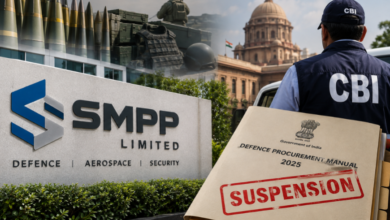
Is SEBI Enabling India’s IPO Scams, And Is That Why Firms Like TDI Infrastructure And BPTP Can Still Eye IPO Markets?
The ED’s attachment of ₹206 crore worth of assets linked to TDI Infrastructure in a money laundering probe tied to homebuyer complaints has once again put NCR’s troubled real estate sector under scrutiny. With the TDI promoter family connected to BPTP promoter Kabul Chawla (and reports of a possible IPO in the pipeline) uncomfortable questions now confront SEBI. If companies facing such serious allegations can eye IPOs, what exactly is SEBI’s role in protecting investors?

What happens when two of NCR’s prominent real estate developers – TDI Infrastructure and BPTP – linked through promoter families and surrounded by years of stalled projects and distressed homebuyers, continue operating as if nothing has happened? And what happens when the same companies begin speaking about expansion and even potential IPO ambitions?
Thousands of homebuyers across NCR would say they have already paid the price for that answer.
Those questions have taken on renewed urgency after the Enforcement Directorate attached ₹206 crore worth of assets linked to TDI Infrastructure in a money laundering probe tied to homebuyer complaints.
The Enforcement Directorate’s Gurugram Zonal Office has provisionally attached immovable properties worth approximately ₹206.40 crore linked to TDI Infrastructure Ltd. in a money laundering investigation connected to alleged homebuyer fraud. The action has been taken under the provisions of the Prevention of Money Laundering Act (PMLA).
According to the agency, the attached assets include land parcels measuring around 8.3 acres along with commercial units located in Kamaspur in Haryana’s Sonipat district. These properties are held by TDI Infrastructure and associated entities linked to the company.
The attachment forms part of a broader investigation into allegations that the real estate developer collected large sums of money from homebuyers but failed to deliver promised projects within agreed timelines. The probe concerns projects launched by the company and its management, which has been led by members of the Taneja family, including D. N. Taneja, Kamal Taneja, Ravinder Taneja and CEO Akshay Taneja.
For a company that has recently projected itself as financially transformed and expansion-ready, the ED’s action presents a sharply contrasting reality. It also raises a question that cannot simply be brushed aside: if enforcement agencies are uncovering financial irregularities of this scale, how are such companies still able to operate normally and project themselves as viable future market players?
The answer may lie partly with the country’s regulatory ecosystem and that is precisely where uncomfortable questions begin to emerge.
Probe Triggered By 26 FIRs Filed Over Alleged Homebuyer Fraud
The ED investigation did not emerge in isolation. It was triggered by 26 FIRs registered by the Delhi Police and the Economic Offences Wing, along with charge sheets filed in connection with alleged cheating and fraud involving homebuyers.
According to the allegations cited in these cases, TDI Infrastructure Ltd., along with its promoters and key managerial personnel including members of the Taneja family – D. N. Taneja, Kamal Taneja, Ravinder Taneja and CEO Akshay Taneja – allegedly collected money from buyers for residential and commercial projects but failed to deliver the promised units within the committed timelines.
In at least one of the projects mentioned in the investigation, delays in possession reportedly stretched as long as 16 to 18 years.
To understand what that means in human terms, one only needs to consider the typical profile of a homebuyer. For many middle-class families in India, buying a home is not a speculative investment. It is the culmination of years of savings, loans, and personal sacrifice. It is meant to be security, stability, and often the single largest financial decision of their lives.
When projects stall for a decade or more, the consequences are not abstract. Families continue paying EMIs for homes they cannot occupy. Some pay rent simultaneously. Others watch their savings slowly evaporate while waiting for a promise that never materializes.
Against that backdrop, the allegations in these FIRs are not merely regulatory matters. They represent thousands of individual stories of delayed dreams and mounting financial stress.
₹4,619 Crore Collected From Over 14,000 Homebuyers
The scale of the alleged financial activity involved in the investigation is substantial.
According to findings cited in the ED probe, TDI Infrastructure Ltd., led by the Taneja promoter family, launched multiple residential and commercial projects in Sonipat between 2005 and 2014. Through these projects, the company is alleged to have collected approximately ₹4,619.43 crore as advance booking amounts from 14,105 customers across 23 separate projects.
Yet even after years of construction and financial transactions, several of these developments remain incomplete. Investigators have stated that occupation certificates for four projects have still not been granted, while one project – Park Street – remains unfinished.
For thousands of buyers, this means waiting indefinitely for homes that were promised many years ago.
And this is where the story moves beyond one company or one investigation. When developers collect thousands of crores from buyers and projects remain incomplete for years, the issue is not merely about construction delays. It becomes a question of financial governance, accountability, and oversight.
Which brings us back to the central issue this article raises.
If companies surrounded by such allegations and investigations can continue to operate, expand, and potentially approach public markets, then regulators – particularly SEBI – will eventually have to answer a very simple question: What exactly are the safeguards meant to protect investors and homebuyers from situations like these?
Allegations Of Fund Diversion Surface In ED Probe
The ED investigation has also brought to light allegations that funds collected from homebuyers may not have been used primarily for completing the housing projects for which they were raised.
According to the agency’s findings, substantial amounts of money collected from buyers were allegedly diverted to subsidiaries, erstwhile subsidiaries and land-owning companies linked to the developer. These transfers were reportedly made as advances for purchasing land and for other financial purposes unrelated to the immediate completion of the projects.
Investigators have stated that funds raised from customers were also allegedly used to repay company loans and make investments elsewhere.
If these findings are ultimately established through the course of the investigation, they would point to a troubling pattern: homebuyer money – collected with the promise of delivering residential units – being routed into financial activities that did little to move the projects themselves toward completion.
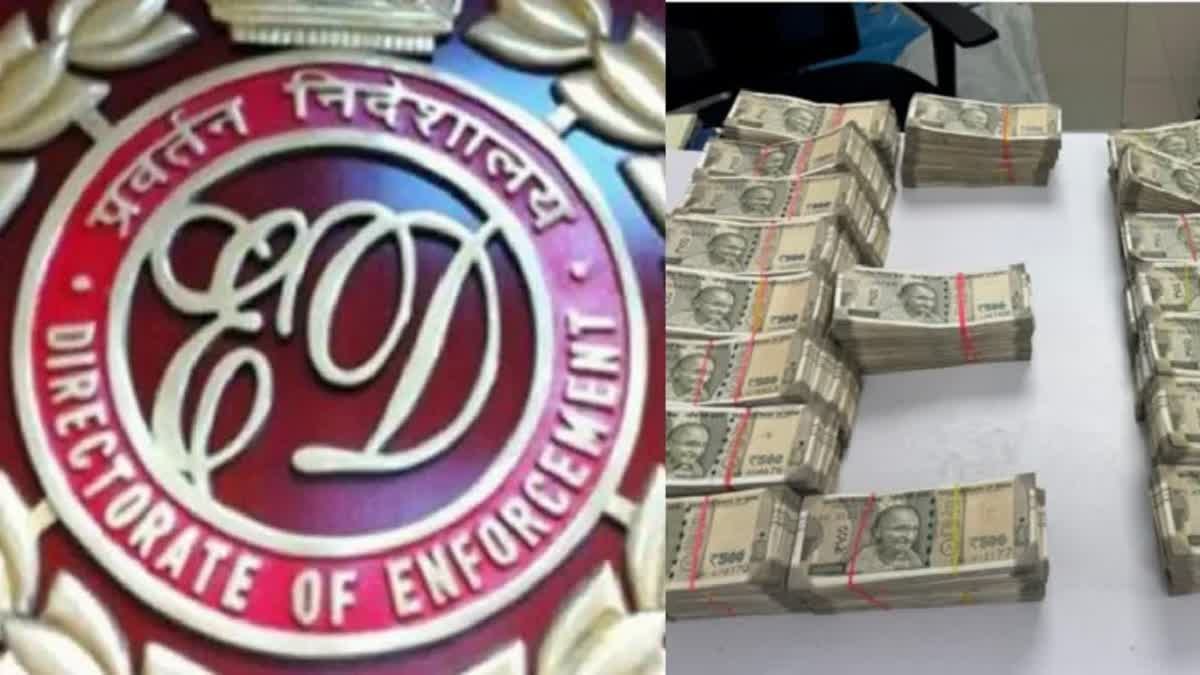
The attachment of assets worth ₹206.40 crore announced by the ED represents the latest step in the investigation. Earlier in the case, the agency had already provisionally attached assets worth ₹45.48 crore belonging to TDI Infrastructure and related entities. With the latest action, the total value of assets attached in the case has now reached approximately ₹251.88 crore.
Asset attachment under the Prevention of Money Laundering Act is typically intended to prevent the disposal or transfer of properties that investigators believe may be linked to the proceeds of crime while the investigation continues.
The ED has stated that further investigation into the matter remains underway.
Yet even at this stage, the scale of the enforcement action raises broader questions about oversight within India’s real estate sector.
If projects involving thousands of homebuyers and thousands of crores can reach this stage of investigation years after the money was collected, it inevitably raises questions about how such situations are allowed to evolve for so long before enforcement action becomes necessary.
And those questions do not stop at the doors of enforcement agencies. They eventually reach the regulators responsible for overseeing corporate governance and protecting investors – including SEBI.

Debt-Free And Ready For Expansion
Even as the ED investigation gathers momentum, the public perception presented by the company in recent months has been markedly different.
In July 2025, TDI Infrastructure announced that it had repaid approximately ₹2,000 crore in outstanding loans, declaring itself a debt-free company.
In a statement issued at the time, the company said it had cleared all its obligations without any restructuring, settlement or waiver, describing the move as a key milestone in its transformation.
CEO Akshay Taneja described the development as part of the company’s long-term financial discipline and commitment to delivering on-ground performance. On paper, the message was – the company was presenting itself as financially rejuvenated and ready for the next phase of growth.
But when placed alongside the allegations now being investigated – involving thousands of buyers, thousands of crores collected and projects delayed for years – the contrast becomes difficult to ignore. The question that inevitably arises is this: which of these two stories reflects the real state of affairs?
Celebrations, Announcements And A Grand Anniversary Event
The optimism did not stop there.
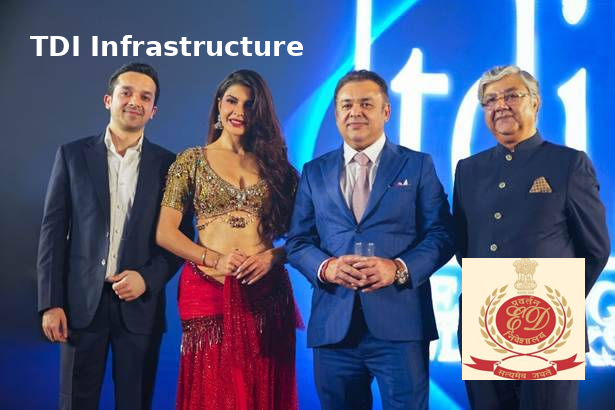
In November 2025, the company celebrated three decades of operations with a grand anniversary event held at the Crowne Plaza in Rohini, Delhi.
The event was attended by members of the promoter family including D. N. Taneja, Kamal Taneja, Ravinder Taneja and CEO Akshay Taneja, along with industry associates and partners. Adding star power to the evening were Bollywood actor Jacqueline Fernandez and singer B Praak, who performed live during the celebration.
The occasion was presented as a milestone moment – a celebration of longevity, growth and the company’s contribution to urban development across northern India.
For observers watching from the outside, however, the picture is difficult to ignore.
On one hand, enforcement agencies are investigating allegations involving thousands of homebuyers and large-scale financial irregularities. On the other, the company is celebrating milestones, hosting high-profile events and announcing ambitious plans for the future.
It is a contrast that invites closer scrutiny.
The Grand Vision: TDI City, Kundli
At the center of the company’s future expansion plans lies TDI City, Kundli, a massive township project that the developer describes as a new urban hub for North NCR.
Spread across approximately 1,100 acres, the integrated township is planned to include residential plots, commercial spaces, parks, schools, retail zones and various lifestyle amenities.
According to the company, the project will include more than 7,000 residential plots and is designed to function as a self-sustained ecosystem combining residential, commercial and recreational infrastructure.
Speaking at the anniversary event, CEO Akshay Taneja described the township as a project that could effectively become the “Gurgaon of the North.”
Part of the optimism surrounding the Kundli project stems from the rapid infrastructure development taking place in the region.
Major connectivity upgrades are transforming the area, including the Urban Extension Road-II (UER-II), which connects NH-1 to Indira Gandhi International Airport and Gurugram, significantly reducing travel times to central parts of Delhi.
Other infrastructure projects such as the KMP Expressway, the proposed Delhi Metro expansion, and the Regional Rapid Transit System (RRTS) corridor are also expected to improve connectivity across the region.
Kundli’s proximity to Rajiv Gandhi Education City, which houses several universities and research institutions, and the proposed Amritsar–Delhi–Kolkata Industrial Corridor (ADKIC) further strengthens the area’s long-term development prospects.
Taken together, these developments have positioned Kundli as one of the emerging real estate hotspots in North India. Which makes the situation surrounding the projects under investigation even more significant.
Because when a region poised for growth also carries a trail of delayed projects, financial allegations and enforcement investigations, the story is no longer just about real estate development. It becomes a story about accountability, governance and trust.

The Apple Does Not Fall Far From The Tree
As the saying goes, the apple does not fall far from the tree. And as more light begins to fall on the networks and relationships within NCR’s real estate sector, the picture begins to widen.
TDI Infrastructure is not simply another developer operating in isolation. The company has long been run by the Taneja family, with key figures including D. N. Taneja, Kamal Taneja, Ravinder Taneja and CEO Akshay Taneja playing central roles in the group’s operations and expansion.
Over the past three decades, the group has built projects across multiple cities including Kundli, Mohali, Panipat, Rajpura, Faridabad, Agra and Moradabad, positioning itself as a significant regional real estate developer.
But as investigations and allegations surrounding delayed projects and financial conduct surface, the focus inevitably begins to shift toward the individuals behind the companies themselves.
Because in real estate (as in many sectors) companies rarely operate in isolation. Promoters, families, partnerships and long-standing networks often define how projects are launched, financed and executed.
And in this particular story, those networks lead directly to another prominent name in NCR real estate.
The BPTP Connection
The story becomes even more interesting when one examines the family connections linking TDI Infrastructure to another controversial real estate developer: BPTP Ltd.
The promoter of BPTP, Kabul Chawla, is not an unrelated figure in this ecosystem. He is married into the Taneja family, making him the son-in-law of the promoter family behind TDI Infrastructure.
In other words, the two developers that now appear repeatedly in discussions around NCR real estate controversies are not entirely separate entities in the broader business sense. They are linked through family ties at the promoter level.
This connection, illuminated in earlier reporting, adds another layer to the story.
The name BPTP itself is no stranger to controversy.
Founded and led by Kabul Chawla, the developer rose rapidly during the real estate boom years in Delhi-NCR, launching multiple large-scale residential and commercial projects across Gurgaon, Faridabad and surrounding regions.
Like many developers that expanded aggressively during the sector’s boom period, the company’s growth was accompanied by an increasing number of disputes involving homebuyers.
Over the years, BPTP has faced numerous complaints from buyers, legal disputes and regulatory scrutiny tied to project delays and delivery issues. For many homebuyers who invested their life savings into these developments, the experience has been deeply frustrating.
The pattern is one that has repeated itself across several projects in the NCR region – buyers waiting years beyond promised delivery dates while legal battles and regulatory complaints slowly make their way through the system. And the controversies surrounding Kabul Chawla have not stopped at buyer grievances.
Yet despite this long list of disputes, complaints and investigations, BPTP has continued to remain active within the NCR real estate market.
Which makes the family connection between Kabul Chawla and the Taneja promoters of TDI Infrastructure impossible to overlook.
Two developers.
Two long trails of controversy.
And a promoter family connection tying them together.
Seen individually, each development may appear to be a separate issue.
A money laundering probe.
Thousands of homebuyers waiting for possession.
Years of stalled construction.
Financial irregularities under investigation.
Promoters facing legal scrutiny.
But once these pieces are placed side by side, the pattern becomes impossible to ignore. Across NCR, thousands of homebuyers have spent years fighting through courts, consumer forums and regulatory offices simply to obtain homes they paid for long ago.
And yet many of the developers involved in these disputes continue to operate normally.
They launch new projects.
They announce expansion plans.
They hold celebratory events.
They present themselves as companies ready for the future.
TDI Infrastructure declaring itself debt-free after repaying ₹2,000 crore in loans is one example. Lavish anniversary celebrations and ambitious township announcements are another. And BPTP’s continued presence in NCR’s real estate market despite years of buyer disputes, is another!
Which raises a simple but uncomfortable question. How do developers surrounded by so many controversies continue operating almost as if nothing has happened?

The IPO Route: A New Chapter Or A Convenient Exit?
India’s booming capital markets now offer another route for companies looking to raise large amounts of money.
The IPO route.
A public listing allows companies to raise fresh capital, restructure their finances and present themselves to investors as growth stories with ambitious expansion plans.
But that raises a question that investors – particularly retail investors – must confront.
What happens when companies with long trails of disputes and unresolved controversies approach public markets?
Many investors assume that if a company reaches the IPO stage, it must have cleared rigorous scrutiny. After all, India has a market regulator tasked specifically with ensuring that companies meet disclosure standards and governance norms before raising public money.
That regulator is SEBI. And that is precisely where the story now turns.
The Questions SEBI Cannot Ignore
The Securities and Exchange Board of India exists for a reason.
It is supposed to protect investors, ensure transparency in capital markets and prevent companies with questionable financial practices from raising money from unsuspecting investors.
But cases like the ones described in this article raise uncomfortable questions.
- If a developer facing serious allegations involving thousands of homebuyers and thousands of crores in disputes can continue operating normally – announcing expansion plans and presenting itself as a viable market player – then what exactly is the threshold for regulatory concern?
- When promoters facing years of legal disputes, investigations and buyer grievances remain active in the sector, how closely are their track records examined before they are allowed to access public capital?
- And when developers with a long trail of stalled projects and angry homebuyers begin positioning themselves for future fundraising, who exactly is responsible for protecting the next wave of investors?
These are not just mere questions. They go to the very heart of how India’s capital markets are supposed to function.
Because if companies surrounded by investigations, disputes and unresolved homebuyer grievances can still move toward raising money from the public, one uncomfortable possibility begins to emerge.
And that is precisely the question SEBI now finds itself confronting.
A Pattern That Has Already Played Out In India’s IPO Market
Concerns about questionable companies reaching public markets are not theoretical.
India’s IPO market has already witnessed several high-profile listings where companies with weak profitability or unresolved concerns were allowed to raise billions from investors.
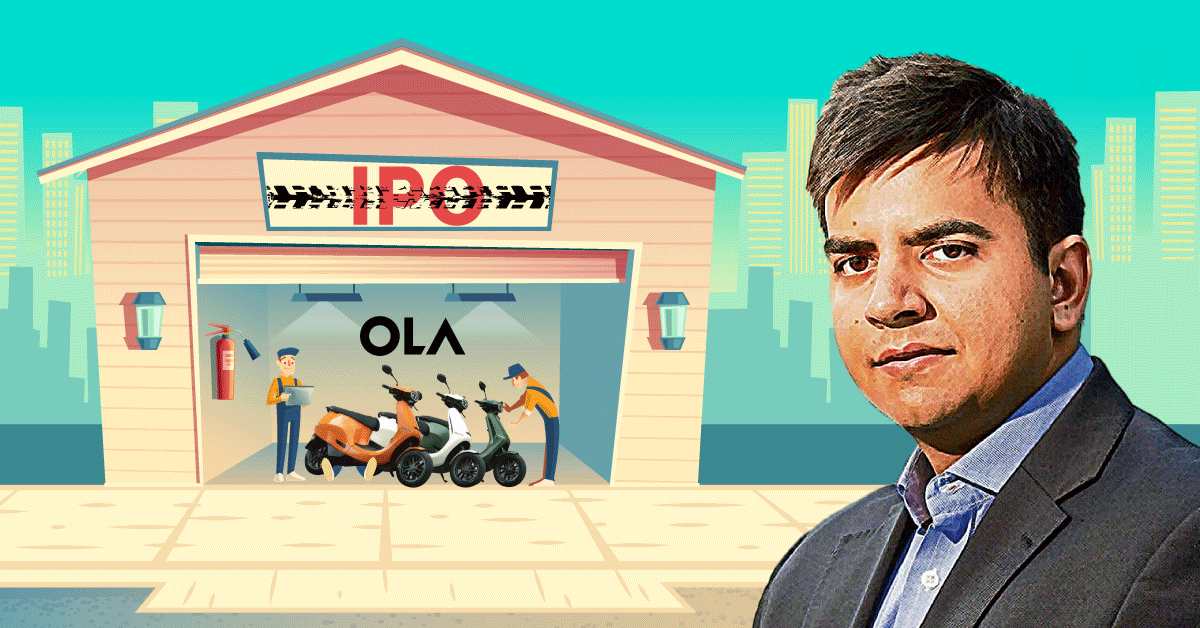
Ola Electric Mobility (2024 IPO)
Electric vehicle startup Ola Electric, led by Bhavish Aggarwal, launched its IPO in August 2024, raising around ₹6,145 crore.
The company went public despite reporting significant losses. In FY24 alone, Ola Electric posted a net loss of around ₹1,584 crore, highlighting the gap between revenue growth and sustainable profitability.
The stock’s performance since listing has raised serious concerns. After listing around ₹91 against an issue price of ₹76, the share price later plunged to around ₹24 by March 2026, representing a collapse of more than 70 percent from its listing price.
For many retail investors who bought into the electric vehicle growth story, the IPO has turned into a painful reminder of the risks involved when companies far from profitability tap public markets.
Paytm (One97 Communications)
Perhaps the most widely cited example remains Paytm, which raised ₹18,300 crore in its 2021 IPO.
The fintech giant went public while still heavily loss-making, with its business model dependent largely on future growth projections rather than present profitability.
The listing quickly turned into one of the most disastrous debuts in Indian market history. The stock crashed soon after listing, destroying billions of rupees in investor wealth.
Years later, the company has still struggled to regain the valuation levels investors were promised at the time of the IPO.
For many observers, Paytm became a symbol of overpriced IPOs built on hype rather than financial fundamentals.
There are plentiful examples.
A Broader Pattern Emerging In India’s IPO Market
Taken together, these examples point to a broader trend.
Over the past few years, India’s IPO market has increasingly welcomed companies that are still loss-making or dependent on uncertain future profitability, particularly in sectors such as fintech, e-commerce, logistics and electric mobility.
The pitch to investors is often the same: disruptive business models, massive growth potential and dominant market positions.
But the reality has frequently been very different.
Several of these companies have struggled to sustain their IPO valuations, with some losing large portions of their market capitalisation within months or years of listing.
In other words, the IPO boom has not always translated into wealth creation for retail investors.
SEBI is often described as the gatekeeper of India’s capital markets.
Its job is to ensure that companies raising public money meet acceptable standards of governance, disclosure and financial transparency.
Yet the examples above show that loss-making companies with uncertain profitability paths have repeatedly reached public markets.
Now consider the second dimension raised in this article.
Developers facing serious allegations, investigations and thousands of homebuyer complaints.
When these two trends intersect – controversial companies and easy access to public capital – the question becomes unavoidable.
If companies that are not yet profitable can raise billions through IPOs, and developers facing serious disputes can continue operating normally, then one question becomes impossible to ignore:
Where exactly does SEBI draw the line?
The Last Bit,
If companies such as TDI Infrastructure and BPTP facing serious allegations, stalled projects and thousands of angry homebuyers can still move toward raising money from public markets, then the problem is no longer about one developer or one IPO.
It becomes a question about the system itself – and about whether India’s market regulator, SEBI, is truly acting as a gatekeeper, or simply watching the gates remain wide open.