From Nashik To Nagpur, Two Cities, Similar Allegations. Are Workplaces And NGOs Becoming Unsafe Power Centres?
Two cities, two very different institutions, yet a striking similarity in the allegations emerging from them. From a corporate office in Nashik to an NGO in Nagpur, questions are being raised about coercion, misconduct, and silence. Is this a coincidence, or does it point to a deeper, systemic failure?

Nashik: The Corporate Case That Raises Questions
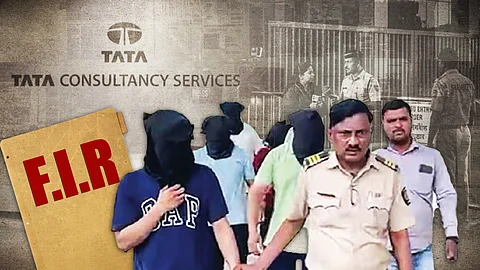
Allegations emerging from a Tata Consultancy Services BPO unit in Nashik have quickly escalated into a serious legal and institutional concern. Multiple FIRs have been registered, several arrests have been made, and complaints point to a disturbing mix of sexual misconduct, mental harassment, and alleged coercion linked to religious practices.
What gives the case additional weight is not just the nature of the allegations, but the scale and repetition being reported. Investigations suggest that the individuals accused were not operating in complete isolation, raising questions about how such behaviour could persist within a structured corporate environment.
TCS, for its part, has responded with a series of measures. The company has stated that it maintains a zero-tolerance policy towards any form of harassment and has suspended employees linked to the case. It has also constituted an independent oversight panel, bringing in external firms to review the situation, while confirming cooperation with ongoing investigations.
At the same time, the company has said that no formal complaints were received through its internal ethics or POSH channels. That assertion introduces a critical contradiction.
Because outside the organisation, complaints exist in the form of FIRs, arrests, and ongoing probes. Inside the system, however, there appears to have been silence.
This gap raises uncomfortable but necessary questions. Are employees hesitant to use internal mechanisms, and if so, why? Or do such systems fail to capture distress until it reaches a breaking point?
When formal structures record no complaints while serious allegations surface externally, the issue moves beyond individual wrongdoing. It begins to point towards a deeper institutional blind spot, where the presence of systems does not necessarily translate into their effectiveness.

Nagpur: When a Safe Space Turns Into Control
In Nagpur, the allegations emerge from a very different kind of institution, but lead to equally troubling questions. An NGO, expected to function as a space of support and trust, is now at the centre of accusations involving coercion, sexual misconduct, and pressure linked to personal and religious choices.
According to reports, the individual heading the organisation has been arrested, with investigators examining claims that vulnerable women were subjected to sustained psychological influence and inappropriate behaviour. Unlike a corporate setup, where hierarchy is formal and documented, NGOs often operate on informal authority, where trust replaces structure and dependence replaces distance.
That dynamic can make such spaces particularly sensitive.
Individuals associated with NGOs are often in positions of need, whether emotional, financial, or social. This creates a relationship where questioning authority becomes difficult, and resistance can carry personal consequences. In such an environment, influence can gradually turn into control, and control, if unchecked, can slip into coercion.
What makes cases like this harder to detect is the absence of rigid oversight. Unlike corporate systems that at least claim to offer reporting mechanisms, smaller or independent organisations often function without consistent scrutiny. When authority is concentrated and oversight is limited, the line between guidance and pressure can become dangerously thin.
The Nagpur case, therefore, is not just about alleged misconduct within a single organisation. It reflects a deeper vulnerability within spaces that are built on trust but may lack the safeguards needed to protect those who depend on them.
Connecting the Dots: Not Isolated Incidents
Placed side by side, the cases in Nashik and Nagpur begin to look less like isolated incidents and more like variations of a similar pattern. The settings are different, the structures are different, but the underlying dynamics show a striking overlap.
In both instances, the individuals at the centre of the allegations appear to have occupied positions of authority, whether formal within a corporate hierarchy or informal within a trust-based organisation. That authority, combined with proximity, creates an environment where influence can be exercised quietly and, over time, more assertively.
The individuals affected, on the other hand, are not random. They are often those managing new environments or dependent systems, fresh recruits, young professionals, or individuals seeking support. This asymmetry between authority and vulnerability becomes the starting point.
From there, the pattern tends to follow a familiar progression. It begins with influence, sometimes subtle, sometimes framed as guidance. It deepens into dependence, where questioning becomes harder. And in some cases, it escalates into pressure, where boundaries are blurred and personal autonomy is compromised.
What is equally notable is how long such dynamics can remain unaddressed. Early signs are often dismissed, internal discomfort is normalised, and formal complaints are either delayed or never filed. By the time the situation surfaces through legal channels, the problem has already moved beyond individual incidents.
Seen through this lens, the similarity between Nashik and Nagpur is not accidental. It points towards a recurring structure, where power, proximity, and vulnerability intersect in ways that existing systems struggle to monitor or regulate.

The Institutional Failure
If the similarities between Nashik and Nagpur point to a pattern, the next question is harder to ignore: where were the systems meant to prevent it?
In Nashik, a large corporate structure existed, complete with formal reporting mechanisms, compliance frameworks, and defined channels for grievance redressal. TCS has stated that no formal complaints were received through these systems, even as external complaints led to FIRs, arrests, and an ongoing investigation. The company has since acted, suspending employees, setting up an oversight panel, and initiating external reviews.
But that sequence itself raises a deeper concern.
If systems respond only after external intervention, they are not functioning as safeguards, they are functioning as after-the-fact correctives. The presence of policies, however robust on paper, becomes less meaningful if they fail to capture early signals of distress.
The contrast becomes sharper when placed alongside the Nagpur case. Here, the issue is not the failure of a formal system, but the absence of one. NGOs, particularly smaller or independent ones, often operate without consistent regulatory scrutiny or internal accountability structures. Oversight, when it exists, tends to be fragmented.
Despite these differences, the outcome in both cases appears similar: concerns either go unreported, unregistered, or unaddressed until they escalate.
This suggests that the problem is not limited to a specific type of institution. It lies in a broader gap between the existence of safeguards and their actual effectiveness. Systems may be present, but they are not always trusted. Oversight may exist, but it is not always active.
When that gap widens, accountability becomes reactive rather than preventive, and intervention comes only after the damage has already been done.
The Silence Problem
Across both cases, one element stands out as much as the allegations themselves: the delay in speaking out.
Silence in such situations is rarely accidental. It is often shaped by a mix of uncertainty, dependence, and perceived risk. For a young employee in a new workplace, raising a complaint against someone in a position of authority can feel professionally dangerous. Within an NGO setting, where relationships are more personal and support systems more intertwined, that hesitation can be even stronger.
There is also the question of belief. Individuals may doubt whether their concerns will be taken seriously, especially if the behaviour does not begin in overt or easily provable ways. Early discomfort is often internalised, rationalised, or dismissed as a misunderstanding. By the time it is recognised as something more serious, the threshold for speaking out has already risen.
Institutional culture plays a role here as well. If systems are seen as procedural rather than responsive, or if previous complaints have not led to visible action, trust in those mechanisms weakens. Silence, then, is not just personal reluctance. It becomes a reflection of how safe or unsafe a system feels to those within it.
What makes this particularly concerning is that silence does not prevent escalation. It only delays visibility. And when visibility finally comes, it often does so in the form of formal complaints, legal action, and public scrutiny, by which point the situation has already intensified.

The Last Bit,
The cases emerging from Nashik and Nagpur are still under investigation, and the full facts will take time to establish. But even at this stage, they raise questions that go beyond individual culpability.
They point towards systems that appear robust but may not always be responsive, and spaces built on trust that may lack adequate safeguards. Whether in a corporate office or an NGO, the underlying concern remains the same: how easily vulnerability can go unnoticed until it becomes visible in the most serious way.
This is not just about what went wrong in two places. It is about how long such situations can exist without interruption, and what that says about the environments in which they unfold.
The real issue is not only that these cases surfaced, but whether similar patterns remain unaddressed elsewhere, waiting to be acknowledged only after the damage is already done.