Climate Change Is Accelerating And The World Isn’t Ready For What Comes Next. Are We Underestimating The Crisis?
For decades, climate change was seen as a slow-moving crisis. That assumption is now being challenged. Temperatures are rising faster than expected, signals are becoming harder to interpret, and the pace of change may already be outstripping our ability to respond. Are we underestimating how fast the crisis is advancing, and how little time remains to respond?

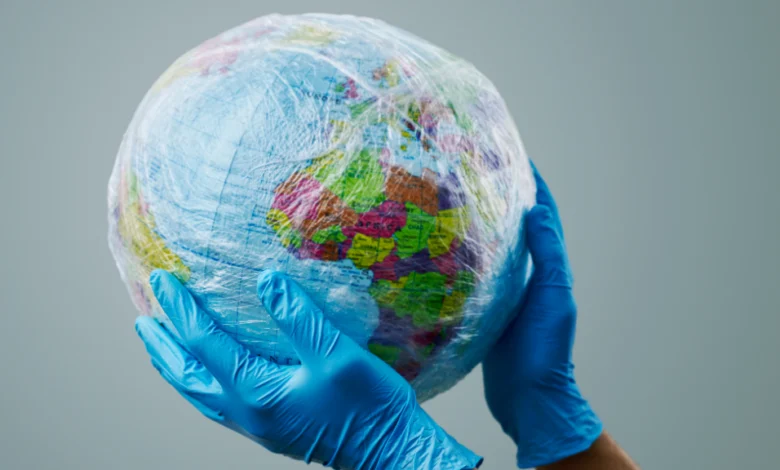
Climate change is no longer following a gradual, predictable path – it is beginning to accelerate in ways that are catching even scientists off guard. What once appeared to be a steady rise in global temperatures is now showing signs of a sharper shift, prompting an uncomfortable debate about how fast the crisis is truly unfolding.
Over the past few years, the planet has not just been warming – it has been warming faster than expected. What was once seen as a gradual, predictable rise in temperatures is now beginning to show signs of acceleration, prompting an uncomfortable debate within the scientific community.
Some researchers believe this is a structural shift – that climate change itself is speeding up beyond what existing models projected. Others argue that recent spikes are being amplified by natural variability and may not represent a lasting trend.
The distinction is not academic. If the warming is indeed accelerating, the world may have far less time than anticipated to prepare, adapt, or respond. And that raises a far more difficult question – not just how much the planet will warm, but how quickly that future is arriving.
The Acceleration Debate – Signals, Spikes, And Scientific Divide
For decades, global temperatures followed a relatively steady upward trend, rising at about 0.18°C per decade. But sometime in the 2010s, that pace began to edge higher. What initially appeared to be a modest shift has, in recent years, turned into something far more pronounced.
By 2023, the world recorded its hottest year on record – and not by a narrow margin. The spike was sharp enough to surprise even scientists who had already accounted for an accelerating trend. The year was marked by a cascade of extreme events: devastating floods in Libya, unprecedented cyclones across Mozambique and Mexico, and wildfires that tore through regions of Canada, Greece, Chile, and Hawaii.
Then came 2024, which pushed temperatures even further, briefly breaching the 1.5°C threshold above pre-industrial levels, a symbolic and scientific marker tied closely to the most ambitious global climate targets. Through 2025, temperatures remained persistently elevated, with heatwaves claiming thousands of lives across Europe and severe weather events continuing to disrupt large parts of the world.
At the centre of this shift lies a growing divide within the scientific community. Some researchers argue that global warming has entered a phase of clear acceleration. Studies suggest the rate may have increased to around 0.32°C – or even 0.36°C – per decade in recent years, significantly higher than earlier estimates.
Others, however, urge caution. They argue that recent temperature spikes are heavily influenced by short-term natural factors and remain broadly consistent with long-term climate projections. In their view, what appears to be acceleration may, in part, be the result of overlapping climatic events rather than a fundamental shift in the underlying trend.
What makes this debate particularly difficult is timing. The signal scientists are trying to isolate – a sustained acceleration in warming – is emerging at the same moment as multiple natural fluctuations. Distinguishing between the two is not straightforward.
But the implications of getting that distinction wrong are significant. Because if the current trend does represent a structural acceleration, then the timeline for meaningful climate action may be shrinking far faster than previously assumed.
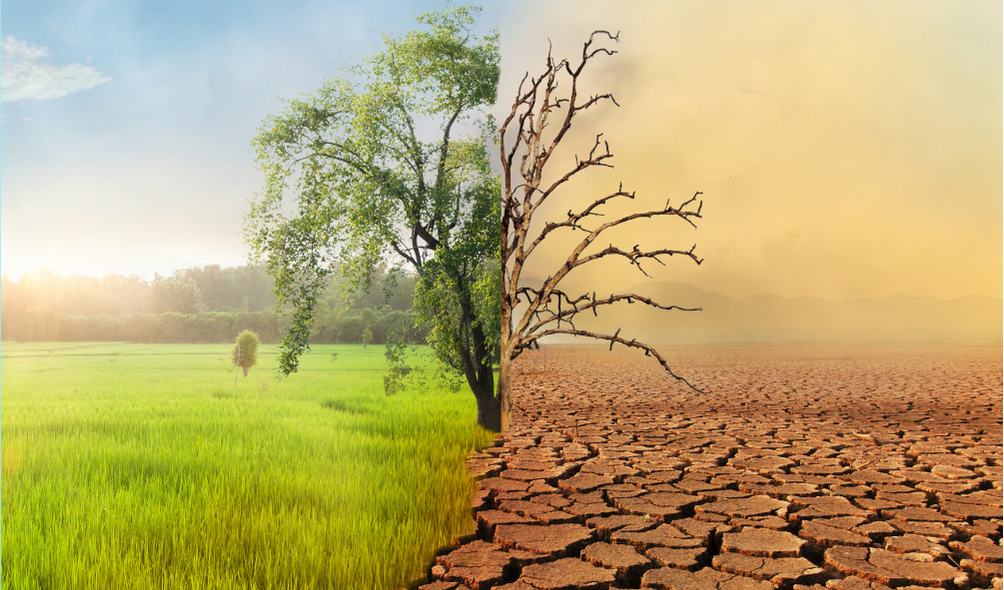
What’s Driving the Heat, Peeling Back The Layers
If temperatures are rising faster than expected, the obvious question is why. The answer, according to scientists, is not a single cause but a combination of overlapping forces – some human-driven, some natural, and some still not fully understood.
Aerosols And The “Faustian Bargain”
For decades, one of the more overlooked aspects of industrialisation has been its unintended cooling effect. The same fossil fuel activity that released carbon dioxide into the atmosphere also emitted sulphur aerosols – tiny particles that reflect sunlight back into space and help form reflective clouds.
In effect, these aerosols masked a portion of global warming.
But that mask is now being lifted. As countries move to reduce air pollution – for both environmental and public health reasons – sulphur emissions have declined sharply. China alone has cut its sulphur output significantly since the late 2000s, while global shipping regulations have further reduced emissions over the oceans.
The result is a cleaner atmosphere, but also one that allows more solar radiation to reach the Earth’s surface. What was once partially hidden warming is now becoming visible, adding to the recent surge in temperatures.
Natural Variability, The Background Noise
At the same time, several natural factors have been amplifying global temperatures in the short term.
The current phase of the solar cycle has increased the amount of energy reaching Earth. A massive underwater volcanic eruption near Tonga injected large amounts of water vapour – itself a greenhouse gas – into the stratosphere. And perhaps most significantly, a strong El Niño event across 2023 and 2024 redistributed heat across the Pacific, pushing global temperatures higher.
Each of these factors, on its own, is temporary. But together, they create a layer of “background noise” that makes it harder to determine whether the recent warming spike is part of a longer-term shift or a short-lived surge.
The Wild Card – Climate Feedback Loops
Beyond aerosols and natural variability lies a more uncertain and potentially more consequential factor – climate feedback loops.
Among the most closely watched is the behaviour of low-lying clouds over the oceans. These clouds play a critical role in reflecting sunlight and regulating temperature. Some researchers now believe that changes in atmospheric conditions are reducing cloud cover, allowing more heat to be absorbed by the planet.
If this process is being driven not just by pollution changes but by warming itself, it could signal the emergence of a feedback loop – where rising temperatures lead to conditions that cause even more warming.
This is where the uncertainty becomes more concerning. Climate models have historically struggled to accurately represent cloud behaviour. If these feedback mechanisms are stronger than expected, it could mean that current projections are underestimating how sensitive the climate system really is.
What emerges from all of this is not a single explanation, but a layered picture — one in which human actions, natural cycles, and complex feedbacks are interacting at the same time. The challenge for scientists is to separate these threads.
The challenge for the rest of the world is what happens if they can’t do it quickly enough.
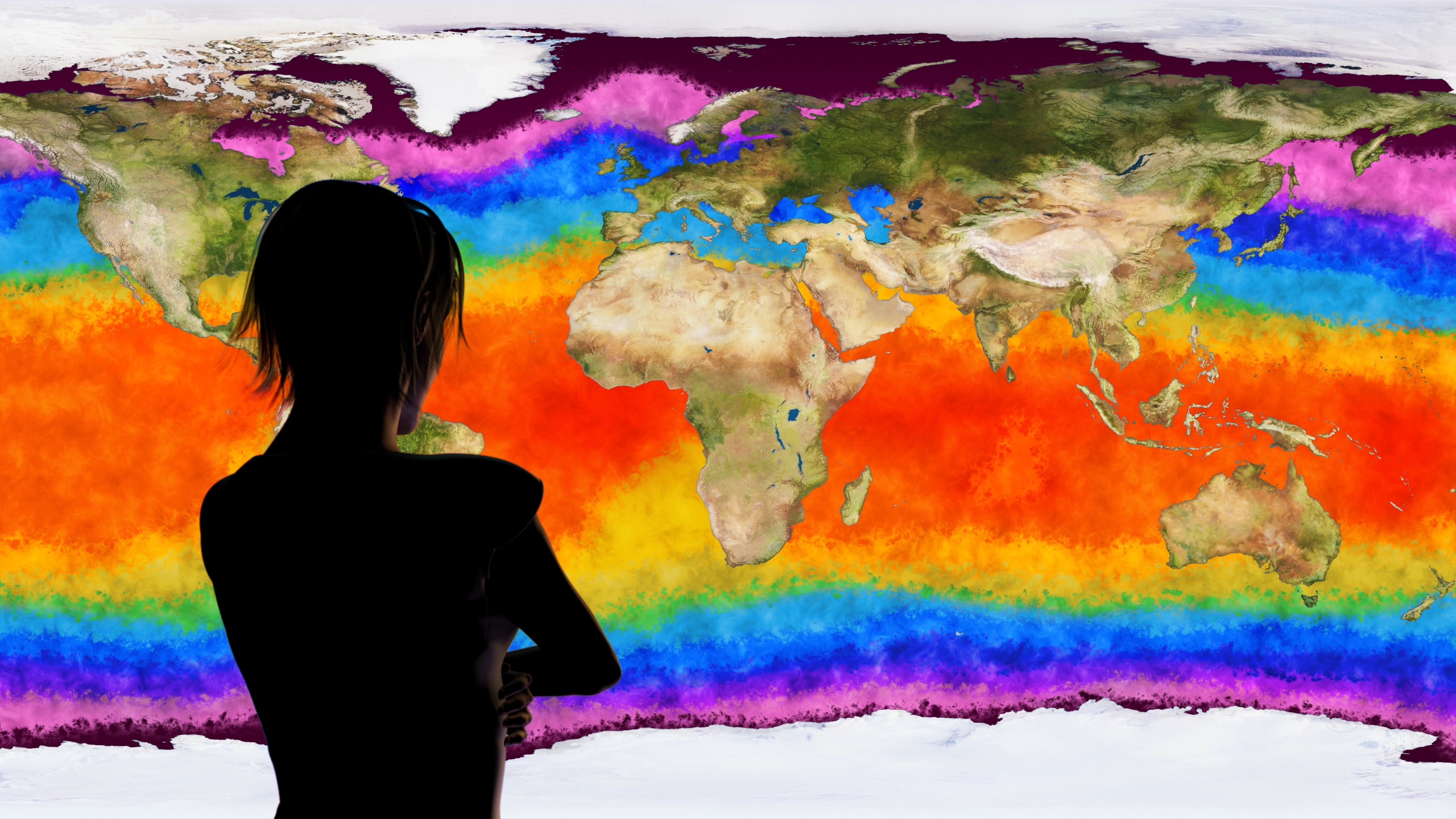
The Bigger Risk – Are We Underestimating Climate Sensitivity?
At the heart of this debate lies a deeper and more consequential question – not just how fast the planet is warming, but how sensitive it is to that warming.
Climate sensitivity, in simple terms, refers to how much the Earth’s temperature responds to a given increase in greenhouse gases. It is the foundation on which long-term projections are built – including estimates of how much warming the world is likely to experience by the end of this century.
Under current policies, the planet is broadly on track for around 2.7°C of warming. That figure, while already alarming, comes with a margin of uncertainty — roughly plus or minus 1°C. Within that range lies a stark difference in outcomes.
At the lower end, while the impacts would be severe, many regions could still adapt with significant effort. At the higher end, closer to 3.7°C, the consequences become far more difficult to manage. Certain parts of the world could face conditions that are not just challenging, but increasingly uninhabitable.
This is where the possibility of accelerated warming becomes critical. If recent temperature trends are being driven not just by temporary factors but by deeper structural changes – such as feedback loops or a stronger climate response – then existing models may be underestimating the true trajectory.
In that case, the world is not just dealing with a warmer future, but one that is arriving faster and with greater intensity than anticipated. There is also a second, more immediate concern. Even if the science eventually settles the debate, time lost in uncertainty is not recoverable. Emissions continue to rise, and meaningful reductions remain uneven across countries.
Which means the risk is twofold – that the climate may be more sensitive than expected, and that the global response remains slower than required.
If both are true, the gap between where we are and where we need to be is not just wide – it is widening.
A Planet Physically Changing – Earth’s Rotation Is Slowing
For all the discussion around rising temperatures, extreme weather, and emissions, there is another, quieter shift underway – one that is far less visible, but no less significant.
The Earth itself is changing.
Recent research by teams at ETH Zurich and the University of Vienna suggests that human-driven climate change is now influencing the planet’s rotation. As polar ice sheets in Greenland and Antarctica melt, vast amounts of water are being redistributed from the poles towards the equator.
This redistribution of mass, while subtle, is enough to alter how the Earth spins.
The effect is small but measurable. Scientists estimate that the length of a day is increasing by roughly 1.3 milliseconds per century due to this process. On its own, that change may seem negligible. But in geological terms, it is unusually rapid.
What makes this finding more striking is its historical context. Based on geological records, the current rate of change appears to be unlike anything observed in approximately 3.6 million years. In that sense, the present moment stands out not just as another phase of planetary evolution, but as a clear anomaly.
It is a reminder that climate change is no longer confined to the atmosphere or the oceans. It is beginning to leave its imprint on the fundamental mechanics of the planet itself.
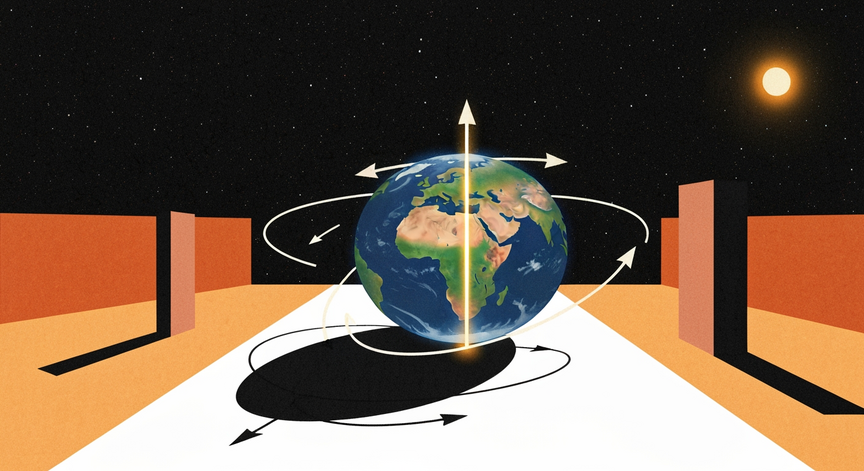
The Science Behind It – The “Figure Skater Effect”
To understand why the Earth’s rotation is slowing, it helps to turn to a simple principle from physics – one that is often demonstrated in something as familiar as figure skating.
When a skater pulls their arms in close to their body, they spin faster. When they extend their arms outward, their rotation slows down. The reason lies in how mass is distributed relative to the axis of rotation.
The same principle applies to the Earth.
As glaciers and polar ice sheets melt, the water they release does not stay at the poles. It flows into the oceans and gradually spreads towards the equator. This movement shifts mass farther away from the Earth’s axis of rotation.
And as that mass moves outward, the planet’s spin slows – not dramatically, but enough to be measured with modern instruments.
In scientific terms, this is linked to changes in what is known as the Earth’s moment of inertia. But the underlying idea remains straightforward: the farther mass is distributed from the centre, the slower the rotation.
For most of Earth’s history, such changes occurred over vast timescales, driven by natural cycles like ice ages. What makes the present situation unusual is the pace. Human-driven warming is accelerating ice melt, and in doing so, compressing what would typically take thousands of years into just a few decades.
It is a subtle shift – measured in milliseconds – but it reflects something much larger. The redistribution of mass is not just altering coastlines and sea levels; it is beginning to influence the physical behaviour of the planet itself.
Why This Tiny Change Actually Matters
A change of a few milliseconds in the length of a day may seem inconsequential in everyday life. It is not something people will notice, nor something that disrupts daily routines.
But in systems that rely on extreme precision, even such minute variations matter.
Modern infrastructure – from GPS navigation and satellite communications to financial networks and space missions – depends on highly accurate timekeeping. Atomic clocks, which form the backbone of these systems, measure time with extraordinary precision. However, they operate independently of the Earth’s rotation.
To keep global time aligned with the planet’s actual position, periodic adjustments are required. Even small shifts in rotation can accumulate over time, requiring corrections to ensure synchronisation between atomic time and astronomical time.
Without these adjustments, errors – however slight – could begin to creep into systems that depend on exact timing. Navigation systems could lose accuracy, communication networks could experience disruptions, and financial transactions that rely on precise timestamps could face inconsistencies.
Historically, such variations were driven by natural forces and occurred over long timescales. What is changing now is not just the presence of variation, but the influence behind it.
Human activity, through its impact on climate and ice melt, is becoming part of a process that was once governed almost entirely by natural dynamics.
It is a subtle but important shift – one that shows how deeply interconnected modern systems are with the physical state of the planet.

Climate Change Is Rewriting Human Behaviour – Heat And Inactivity
The effects of climate change are often framed in terms of rising seas or extreme weather. But there is a quieter shift underway – one that is beginning to reshape everyday human behaviour.
A recent global study examining data across more than 150 countries found that sustained exposure to higher temperatures is directly linked to increasing levels of physical inactivity. Each additional month with average temperatures above 27.8°C was associated with a measurable rise in inactivity levels worldwide.
The reasons are physiological as much as environmental. In extreme heat, the body diverts blood flow դեպի the skin to regulate temperature, increasing cardiovascular strain. Sweating intensifies, raising the risk of dehydration, while fatigue sets in more quickly. Add humidity and air pollution to the mix, and physical exertion becomes significantly more taxing.
The response is predictable – people stay indoors. Over time, that behavioural shift begins to accumulate at a population level.
The consequences extend beyond lifestyle. Physical inactivity is already linked to a range of non-communicable diseases, including cardiovascular conditions, diabetes, and obesity. Rising temperatures risk amplifying these trends, adding a new dimension to the public health burden of climate change.
Projections suggest that by 2050, heat-driven inactivity could contribute to hundreds of thousands of additional premature deaths each year, alongside billions of dollars in lost productivity globally.
For countries like India, where large parts of the population are already exposed to high temperatures and where access to climate-controlled infrastructure is uneven, the implications are particularly significant. Even modest increases in inactivity rates could translate into substantial health and economic costs.
In that sense, climate change is not just altering the environment; it is beginning to reshape how people live, move, and function on a daily basis.
Emerging Health Threats – The Rise Of Invisible Risks
Not all consequences of a warming planet arrive as extreme weather or rising temperatures. Some emerge quietly, in places that are harder to monitor and even harder to control.
Among them is the growing concern around free-living amoebae – microscopic organisms found in water bodies that, under certain conditions, can cause rare but often fatal brain infections.
Recent research suggests that climate change may be creating more favourable conditions for these organisms to survive and spread. Warmer water temperatures, combined with changing environmental conditions and gaps in detection systems, are allowing these pathogens to persist in places where they were previously less common.
They have been detected in lakes, rivers, poorly maintained swimming pools, and even within drinking water systems and household plumbing. What makes them particularly difficult to manage is their resilience – some species can withstand disinfectants such as chlorine, making them harder to eliminate through conventional water treatment methods.
The risk of infection remains low, but the consequences are severe. These infections progress rapidly, and early symptoms often resemble common illnesses, making timely diagnosis difficult. By the time the correct cause is identified, treatment options are limited and survival rates are extremely low.
Beyond the immediate threat, researchers are also raising concerns about a more complex problem. Amoebae can act as hosts for other harmful microorganisms, including bacteria and viruses, effectively shielding them from external conditions. In doing so, they may contribute to the persistence and spread of pathogens and even play a role in the growing challenge of antimicrobial resistance.
What makes this particularly concerning is not just the organisms themselves, but the broader pattern they represent. As environmental conditions shift, so too do the ecosystems that support microscopic life.
Infections that were once rare or geographically limited may begin to appear in new regions, often without adequate surveillance or preparedness.
It is a reminder that the health impacts of climate change are not always immediate or visible but they are expanding in ways that are difficult to predict and even harder to contain.
The Common Thread – A System Under Strain
Taken individually, each of these developments may appear unrelated. Rising temperatures, melting ice sheets, shifting cloud patterns, changes in planetary rotation, new public health risks, and even subtle changes in human behaviour seem to belong to different scientific conversations.
Yet they are connected by a single underlying reality: the Earth functions as a tightly interlinked system.
Changes in one part of that system rarely remain confined there. Warming oceans influence atmospheric circulation. Melting ice redistributes mass across the planet. Shifts in temperature alter ecosystems, which in turn affect human health and behaviour. Even the physical mechanics of the planet – its rotation and the length of its day – can be influenced by the cascading effects of a warming climate.
What scientists are observing today is not simply a warmer world, but a system that is adjusting across multiple dimensions at once.
Some of these adjustments are expected. Others remain uncertain. And a few, such as the potential emergence of climate feedback loops, raise the possibility that the system may respond in ways that models have not fully captured.
This is why the debate over whether warming is accelerating carries such weight. If the planet’s response to rising greenhouse gases is stronger than anticipated, then many of the projections guiding current climate policy may prove to be conservative.
The challenge, however, is that the climate system does not pause while these questions are resolved. Emissions continue to accumulate, temperatures continue to rise, and the signals scientists are trying to interpret are unfolding in real time.
Which leaves the world confronting a difficult possibility: that the pace of change may already be outstripping the pace of understanding.
The Last Bit, A Future Arriving Faster Than Expected
For much of the past three decades, climate change has often been described as a gradual crisis – one that would unfold slowly enough for societies to prepare, adapt, and respond.
That assumption is now being tested.
The evidence emerging from recent years suggests that the planet may be entering a phase where multiple systems are shifting simultaneously. Temperatures are rising faster than expected, long-standing climatic patterns are becoming more volatile, and the physical consequences of melting ice and warming oceans are beginning to ripple across the planet’s mechanics.
At the same time, human systems – from health and infrastructure to economic productivity – are already feeling the strain.
Whether the recent surge in warming proves to be a temporary spike or the beginning of a more accelerated phase remains an open scientific question. But one reality is increasingly difficult to ignore: the margin for delay is narrowing.
Climate change is no longer simply about how warm the planet will eventually become. It is about how quickly that future may arrive and whether the world is moving fast enough to meet it.