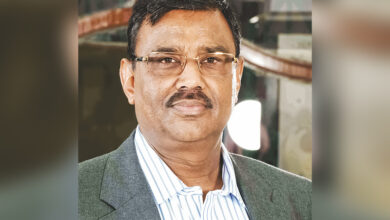
Blood, Steam, And Selective Outrage: How 20 Workers Were Killed At Vedanta’s Plant? Why The Real Accountability Story Is Being Buried?

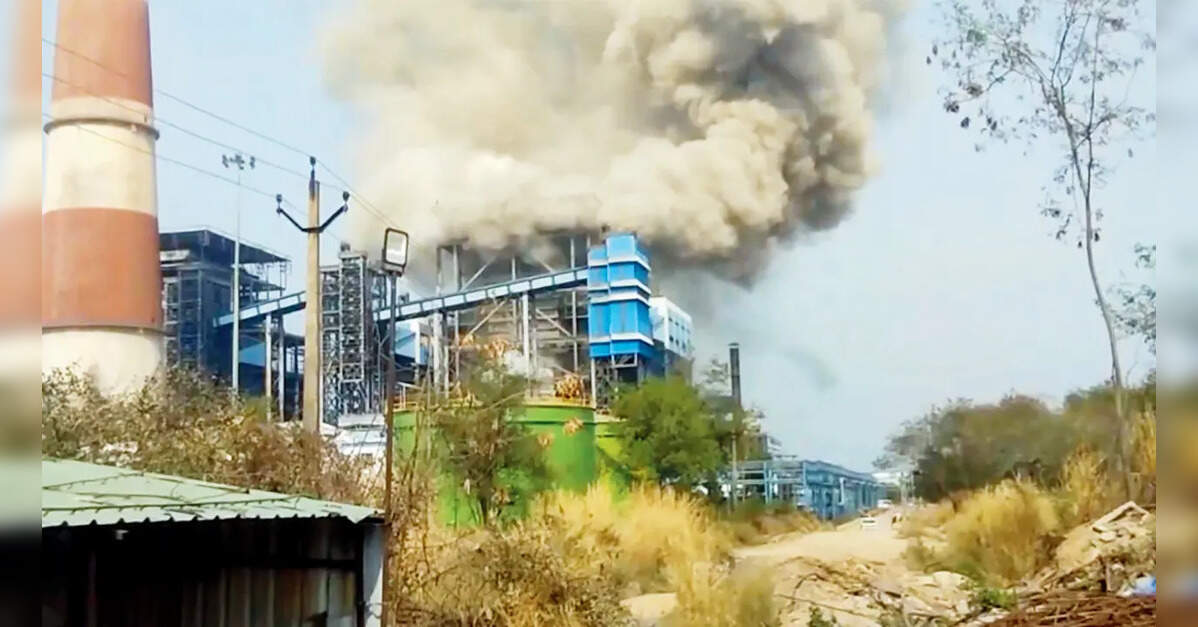
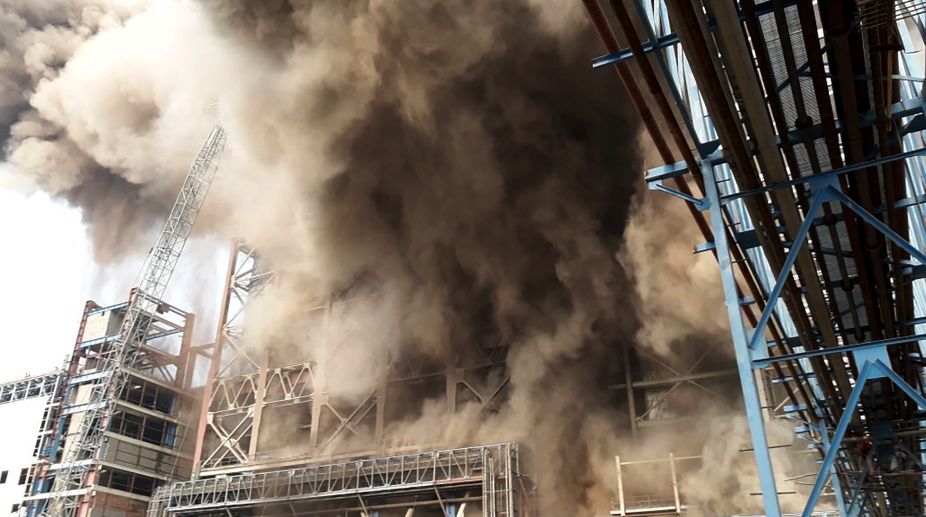
At 2:33 PM on April 14, 2026, a Tuesday afternoon, the 600 MW Unit-1 boiler at the Vedanta power plant in Singhitarai village, Sakti district, Chhattisgarh, was torn apart from within.
A tube carrying superheated, high-pressure steam, pressurised to conditions the human body cannot survive for even a fraction of a second, was violently displaced from its designated position. In the milliseconds that followed, an invisible wall of scorching gas and steam was released across work areas where, at that moment, dozens of workers were present. There was no time to run. There was no warning alarm that responded. There was, according to investigators, simply the catastrophic consequence of decisions, or the failure to make decisions that had been accumulating for days, perhaps weeks, inside that furnace.
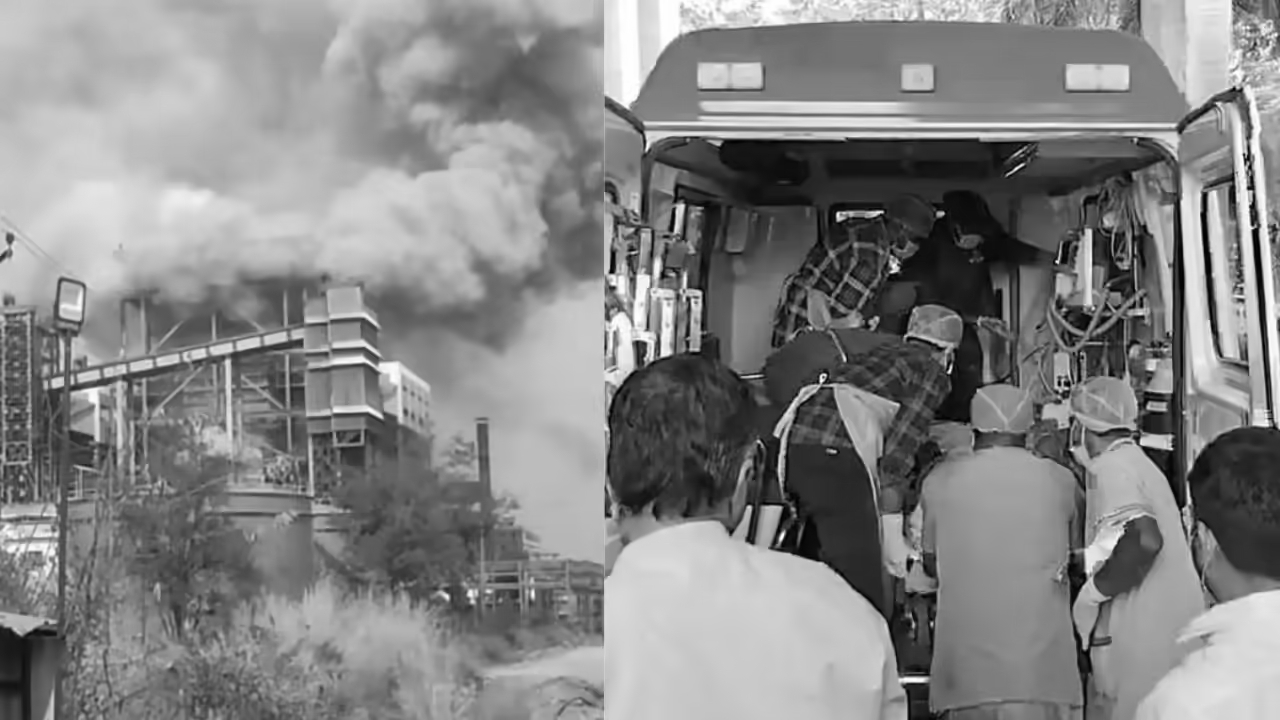
By the time the count was concluded, 20 workers had been killed. Fifteen others had been left fighting for their lives in multiple hospitals across Raigarh district Medical College Hospital, Apex Hospital, Metro Hospital; some requiring airlift to Raipur for advanced burns care. These were men who had reported to work that morning, as they did every morning, trusting that the machinery around them was being watched, measured, and managed by those whose sole contracted purpose was to do exactly that. “That trust was fatally misplaced”.
What the Investigation Actually Found, And Why It Matters?
A preliminary technical investigation was conducted by the Chief Boiler Inspector of Chhattisgarh. A parallel analysis was carried out by the Forensic Science Laboratory (FSL) in Sakti. Both reached the same conclusion, stated in plain technical language:
Excessive fuel accumulation inside the boiler furnace had generated high pressure. This pressure forced a lower pipe of the boiler out of its designated position, resulting in the blast.
This is not a mysterious finding. It is, in fact, the precise category of failure that industrial boiler safety protocols exist to prevent. Pressure monitoring is not optional. It is not a luxury. It is the single most non-negotiable function in thermal power plant operations. The accumulation of excessive fuel in a furnace, and the resulting pressure build-up is not a sudden, undetectable event. It is a process. It has measurable indicators. It has warning signs. It requires human intervention at a specific, knowable point to avert disaster. That intervention was not made. That is the core of this tragedy.
The probe did find and this must be stated plainly and without omission that both Vedanta Limited and its sub-contractor NGSL had failed to properly adhere to maintenance and operational standards. This is an important finding that neither Vedanta’s defenders nor NGSL’s protectors should be allowed to gloss over. Both entities carry institutional accountability. But the nature, the degree, and the directness of that accountability are vastly different — and it is here that the accountability story grows complicated, politically inconvenient, and, apparently, unattractive to India’s mainstream media.
The Entity Nobody Is Talking About: NGSL
NGSL stands for NTPC GE Power Services Limited. It is not a small-time contractor. It is not a fly-by-night vendor engaged because it submitted the cheapest bid. It is a specialised joint venture between two industrial titans: NTPC Limited — India’s largest state-owned power generation company, a Maharatna PSU under the Ministry of Power — and GE (General Electric), one of the most recognised engineering and power infrastructure conglomerates in the world.
At the Singhitarai plant, NGSL was not a peripheral player. NGSL was the technical custodian. The daily firing of the boiler unit, the monitoring of critical steam pressure and heat levels, the enforcement of safety protocols for floor workers, and the execution of routine repairs and maintenance — all of this was NGSL’s operational responsibility. Vedanta Limited owns the asset. NGSL ran the machines.
This distinction is not semantic. In industrial law, in safety regulation, in engineering ethics, there is a profound difference between the company that owns a plant and the company whose trained engineers are physically present, reading the gauges, managing the furnace load, and holding the authority to call a shutdown. When a furnace accumulates excessive fuel and pressure builds toward explosion — it is the technical operator, the entity whose engineers are in the control room — that is the first, most direct line of failure.
The Vedanta plant management’s own statement, issued on the day of the blast, made this clear: “An unfortunate incident occurred at one of the boiler units at our Singhitarai plant, involving personnel from our sub-contractor, NGSL (NTPC GE Power Services Ltd), which operates and maintains the unit.”
The FIR Question: Why Is India’s Most Famous Billionaire Being Named Instead of the Engineers?
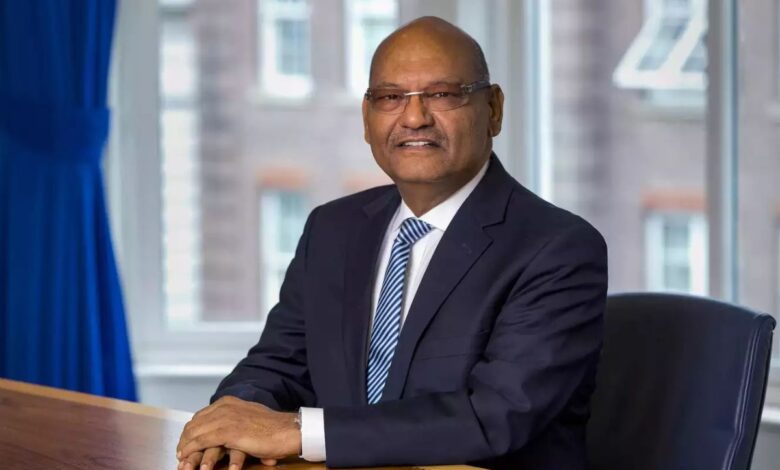
An FIR has been registered at Dabhra police station against Anil Agarwal, the Chairman of Vedanta Resources Limited — a man based in London, who oversees a global metals and resources empire spanning multiple continents. The FIR names him alongside Plant Manager Devendra Patel and other officials, under Sections 106(1) (causing death by negligence), 289 (negligent conduct with machinery), and 3(5) (common intention) of the Bharatiya Nyaya Sanhita.
Let the implications of this be sat with for a moment.
A boiler explodes because of excessive fuel accumulation and unmonitored pressure build-up — a failure of real-time operational monitoring — and the FIR names the global chairman of the asset-owning company, not the on-ground technical operators of the entity contractually responsible for that very monitoring. This is not to argue that Vedanta bears zero responsibility. It does not. A company cannot contract away its duty of care. Plant Manager Devendra Patel’s inclusion in the FIR is at least operationally logical. The plant-level management of the asset-owning company does carry supervisory accountability.
But Anil Agarwal? The Chairman of Vedanta Resources, London? Under Section 3(5) — common intention?
This is where the legal reasoning strains credulity. “Common intention” in criminal law implies shared knowledge and coordinated will to bring about an outcome. To establish that the global chairman of a conglomerate shared “common intention” with a pressure gauge that was allowed to malfunction in Chhattisgarh requires a remarkable leap — one that the investigation has not, at this stage, provided evidence to support.
Naveen Jindal, steel industry leader and former parliamentarian, was among the few voices to raise this concern publicly. He stated that naming Vedanta’s Anil Agarwal in the FIR raises “serious concerns,” and called for an investigate-first-then-act approach. This is not a defence of Agarwal as an individual. It is a demand that legal process be grounded in evidence of actual, causal culpability — not headline value.
The Precedent That Should Make Every Indian Ask Hard Questions
The year is 2017. The location is the Feroze Gandhi Unchahar Thermal Power Station in Raebareli, Uttar Pradesh — operated directly by NTPC, the very Maharatna PSU that is a joint venture partner in NGSL. On November 1st of that year, at approximately 3:30 PM, the boiler of Unit 6 — a newly commissioned 500 MW commissioned unit — exploded.
The cause? Ash accumulation inside the furnace that had been detected but not acted upon. Three senior department heads each with approximately 28 years of experience, each responsible for operations, ash handling maintenance, and boiler maintenance respectively had made a collective decision not to shut down the unit despite detected issues. The ash level increased, thermal stress fractured the boiler tubes, pressure built, and the unit ruptured catastrophically.
The death toll from the 2017 NTPC Unchahar blast was 45 to 46 workers. Over 100 others were injured, many with severe burns covering 70% or more of their bodies. NTPC’s internal investigation, the findings of which were reviewed by Reuters in July 2018, attributed the disaster to an “error in judgment” by those three senior operators. The accountability mechanism invoked was one of operational culpability — the engineers in the room, who had the knowledge, the authority, and the responsibility to shut down a failing unit, and who chose not to.
The FIR in the NTPC Unchahar case was directed at the men operating the plant — not at NTPC’s Chairman and Managing Director. Not at NTPC’s board. Not at the Government of India, which owns NTPC. The accountability logic was clear: identify who had direct control, who had the technical authority, and who failed to act in the face of detected danger.
Why is that same logic not being applied consistently in Singhitarai in 2026?
The Structure of Selective Accountability — And Who Benefits
It is worth asking, without apology, why the accountability narrative in the Vedanta blast has been so different from the 2017 NTPC precedent. Several uncomfortable possibilities demand examination.
First, there is the optics of a billionaire’s name. Anil Agarwal is one of India’s most prominent industrialists, a global figure, a lightning rod for public sentiment about corporate power. His name generates clicks. It generates outrage. It is a name that can be placed on a headline and trusted to be read. The name of NGSL’s site supervisor is not. Neither is the name of NTPC’s JV arm. This is not a neutral observation — it is an indictment of how public accountability is mediated through media logic in a world where, as the source notes, most people do not read beyond a 240-character summary.
Second, NTPC is a government entity. In the current political climate — and the source document itself raises this — there may be institutional reluctance to see a PSU dragged into the centre of an industrial disaster narrative. NGSL is 50% NTPC. Any systemic scrutiny of NGSL’s operational failures is, unavoidably, scrutiny of NTPC’s standards. And NTPC does not operate one plant with NGSL — NGSL handles operations and maintenance for power leaders including BHEL, GSECL, and NTPC itself across multiple facilities. If one plant managed by them can suffer fatal failure in basic pressure monitoring, the question of whether other NGSL-operated plants have been audited is one that demands a serious answer.
Third, GE’s majority shareholders like institutional giants like Vanguard and BlackRock have an interest in GE’s reputational management globally. A finding that a GE joint venture’s on-ground negligence caused the deaths of 20 Indian workers has implications far beyond Chhattisgarh. Whether this consideration is consciously influencing the framing of accountability, or whether it is an incidental consequence of how financial power operates, it cannot be ignored by any honest investigative analysis.
What Real Accountability Looks Like — And What Is Being Demanded
The 20 families who lost a breadwinner, a father, a son, a husband on April 14, 2026, deserve justice. That is the starting point and the ending point of this entire discussion. Accountability is not a performance. It is not a press release. It is not a headline-generating FIR that names the most recognisable person connected to an organisation six degrees removed from the control room where the disaster unfolded.
Real accountability, in this case, requires the following at minimum.
The SIT, led by Additional SP Pankaj Patel, including forensic expert Srishti Singh and other technical specialists, must complete its investigation without political interference, and its report must be made public. The names of NGSL’s on-site engineers, supervisors, and control room personnel who were on duty on April 14 must be part of the accountability record. The question of whether NGSL’s safety protocols at Singhitarai met the standards required under the Boilers Act and the Factories Act must be formally answered. NTPC, as a 50% stakeholder in NGSL, must be asked publicly whether it conducts safety audits of NGSL-operated plants, and when the last such audit at Singhitarai was conducted.
And critically, if the evidentiary standard is met, accountability must reach whoever at Vedanta’s plant management level was responsible for supervisory oversight of NGSL’s daily operations. Devendra Patel’s presence in the FIR is not the issue. The issue is that the legal architecture of accountability must be built on evidence of actual, causal negligence, not on the gravitational pull of a famous surname.
The Chief Minister of Chhattisgarh, Vishnu Deo Sai, announced Rs 5 lakh compensation for families of the deceased and ordered a full inquiry. Compensation is the minimum obligation, not the ceiling of justice. What is owed to these families is a complete, unvarnished, evidence-based account of why that furnace was allowed to accumulate pressure to the point of explosion, and who, specifically, had the power and duty to stop it.
The Broader Crisis This Tragedy Illuminates
The Singhitarai disaster does not exist in isolation. It is one data point in a deeply troubling pattern. India’s thermal power sector operates a vast, ageing fleet of boilers and turbines, many of which are maintained under complex sub-contracting arrangements where operational responsibility is diffused, safety accountability is ambiguous, and the workers on the floor — almost always contract workers, not permanent employees with the safety of union representation — bear the greatest physical risk.
The 2017 NTPC Unchahar blast killed 45-46 workers and burned over 100 others. Multiple investigations were conducted. Safety policies were revised. Mock drills were announced. And yet, nine years later, in 2026, 20 more workers have been killed in a disaster with a mechanistically identical cause: fuel accumulation, pressure build-up, catastrophic tube failure. The same chain of events. The same kind of morning-shift workers who did not return home.
Something is systemically broken. It is broken in how safety compliance is monitored. It is broken in how sub-contractor accountability is structured. It is broken in how investigations are conducted when government entities are implicated. And it is broken in how media and public discourse are shaped by the availability of a famous name to serve as a villain, while the institutional failures of less photogenic organisations are allowed to quietly fade from the narrative.
Conclusion: Can We Expect To Honour the Dead by Finding the Actual Truth?
Twenty lives were lost on April 14, 2026, in Singhitarai. Each of those lives was complete. Each contained a family, a future, a set of daily habits and small joys that can never be recovered. The grief of their families is not an abstraction. It is not a data point in a political debate. It is a real and permanent wound.
The deepest respect that can be shown to those lives is a commitment to factual, evidence-based accountability — one that follows the engineering trail to whoever held actual technical custodianship of that furnace, whoever had the authority and duty to detect a dangerous pressure build-up and respond to it, and whoever failed.
NGSL must answer for its role as technical operator. Vedanta’s plant management must answer for its supervisory obligations. The SIT must be allowed to complete its work without political interference. NTPC must be compelled to audit every facility where its joint venture operates.
And the FIR against Anil Agarwal — whatever its eventual legal fate — should not be allowed to substitute for this harder, more complicated, more politically inconvenient process of finding the real technical truth.
The workers of Singhitarai went to work and did not come home. They are owed nothing less than the full truth — not just the loudest headline.