NTA: A System Built On Scams?
Why NTA kept hiring the blacklisted companies? Why NTA diluted the rules for blacklisted companies? Who will be responsible for the death of students who were 'tortured' by the systematic negligence of NTA? Why the agency that was supposed to 'decorate' the Indian education system from its reforms, became the death bed of very students it was supposed to serve? Who will take the responsibility of 'killing' the future of the nation? 8 Years, Countless Failures, and the Human Cost of India's National Testing Agency, aka the NTA…

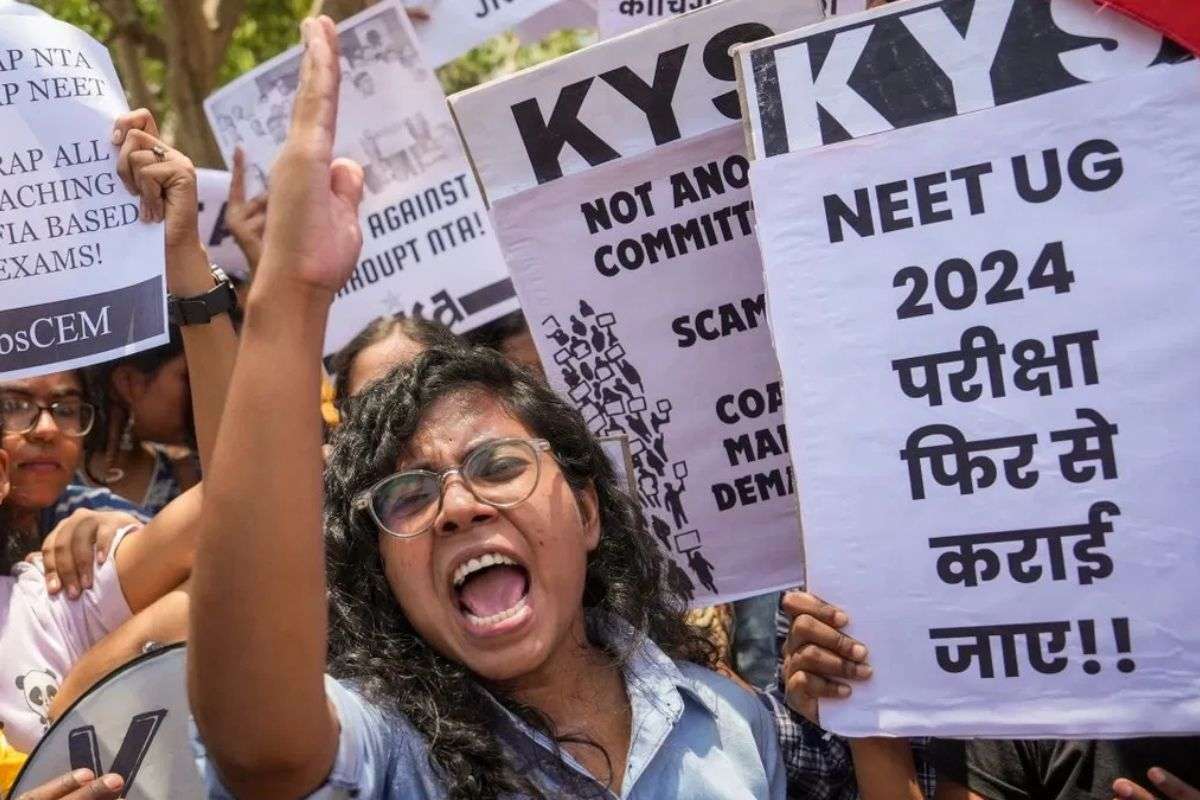
This is a painful critique, a hard, documented, evidence-based critique, of an institution that has repeatedly, demonstrably, and over nearly a decade failed the very students it exists to serve.
We will also describe, with utter pain and regret, the deaths of young Indians whose families and communities have publicly and repeatedly connected their loss to the stress, uncertainty, and chaos generated by examination failures attributable to the National Testing Agency (NTA). This is necessary, because pretending the human cost doesn’t exist would be its own form of dishonesty.
When an institution’s repeated, well-documented failures create the very conditions of fear, chaos, broken trust, wasted years, in which vulnerable young people make irreversible decisions, who bears the moral and institutional responsibility for fixing it before more lives are lost?
NTA: An Institution Born With a Promise It Has Never Fully Kept
In May 2018, the Government of India formally established the National Testing Agency, a registered society under the Societies Registration Act of 1860, tasked with one stated mission: to conduct entrance and eligibility examinations for higher educational institutions through a transparent, technology-driven, and standardized examination system. The intent, on paper, was admirable.
8 years later, that founding promise reads almost like satire. Since its inception, the NTA has been at the center of paper leaks, biometric failures, server crashes, answer-key disputes, grace-mark scandals, last-minute exam cancellations, impersonation rackets investigated by the Central Bureau of Investigation, and, in its most devastating chapters, controversies that families, mental health advocates, and student associations have directly linked to a string of suicides among young aspirants. This is not the record of an agency experiencing the occasional bad year. It is the record of a structurally troubled institution that has, again and again, been given the benefit of the doubt, only to generate a fresh crisis within months of the last one fading from headlines.
The Early Warning Signs (2019–2021)
The JNU Entrance Examination Leak Allegations (2019)
The NTA’s very first major controversy arrived within a year of its founding. Students appearing for Jawaharlal Nehru University’s entrance examinations, specifically for foreign language courses including Russian, French, German, and Spanish, alleged that question papers had circulated on WhatsApp before the scheduled exam time. The university’s student union escalated the matter further, alleging not just a leak but also incorrect answer keys, flawed evaluation, and a broader lack of transparency in how the agency communicated with affected students.
The NTA’s response set a template that would recur for years afterward: outright denial. The agency stated it had not received any formal complaint from the university and maintained that no leak had been confirmed. No conclusive investigation ever definitively proved that a leak occurred. But the controversy mattered enormously regardless of its ultimate, unresolved status, because it was the first moment a meaningful section of the Indian public was forced to ask a question that should have been settled before the agency was even created: can the NTA actually be trusted to securely conduct a national-level examination? Six years and dozens of controversies later, that question remains disturbingly unanswered.
NEET-UG 2019: The First Cracks in Evaluation Integrity
The same year, in 2019, NEET-UG, already established as India’s single largest medical entrance examination, generated its own wave of complaints. Thousands of students reported errors in how their Optical Mark Recognition (OMR) answer sheets were scanned, with some students alleging their actual answers were not what got recorded in the final evaluation. The resulting discrepancy between what students believed they had answered and the marks they were awarded pushed a meaningful number of aggrieved candidates to approach High Courts directly, seeking re-evaluation.
It’s worth being fair here: individual evaluation errors are not unique to the NTA, and any examination processing tens of lakhs of physical answer sheets will encounter some non-zero error rate. What this episode exposed wasn’t necessarily fraud; but it was something arguably more troubling for a “technology-driven” agency to get wrong: a grievance redressal process too slow, too opaque, and too dismissive to resolve legitimate disputes without forcing students into the country’s already overburdened court system. An agency built explicitly to modernize examinations was, within a year of its founding, pushing aggrieved 18-year-olds into litigation just to get their actual answers correctly counted.
JEE Main 2020: A Pandemic Stress-Test the Agency Failed
When COVID-19 forced the NTA to conduct the Joint Entrance Examination under genuinely unprecedented circumstances, some operational strain was inevitable and, to a degree, forgivable. What was less forgivable was the specific nature of the failures that followed. Candidates reported being allotted examination centres hundreds of kilometres from their homes, which was an almost incomprehensible administrative error during a period when interstate travel itself carried serious health risk and logistical difficulty. Reports of inadequate COVID safety arrangements at centres compounded the anxiety.
On top of this, the computer-based testing format suffered its own technical disruptions of network failures and system glitches that cost candidates examination time they could never recover.
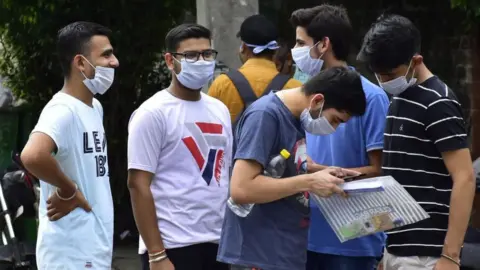
None of this, taken individually, constitutes fraud or criminal wrongdoing. But collectively, it represented something the NTA would prove incapable of shaking off for years afterward: an agency whose “technology-driven” identity kept failing at the most basic technological tasks, of reliable networks, accurate centre allocation, functioning hardware, at the exact moments when failure caused the most human damage.
JEE Main 2021: When the Crisis Stopped Being Administrative and Became Criminal
If 2019 and 2020 raised doubts about competence, 2021 introduced something categorically more serious: organized criminal conspiracy. Investigations, eventually escalated to the Central Bureau of Investigation, uncovered what can only be described as an industrial-scale impersonation and “solver gang” racket operating around the JEE Main examination.
The mechanics, as uncovered by investigators, were genuinely alarming for a system meant to be technologically secure; where candidates allegedly paid substantial sums to secure favourable outcomes, professional “solvers” were suspected of effectively taking computer-based exams on behalf of paying candidates, and remote-access software was reportedly used to manipulate exam sessions in real time. Biometric verification systems, ostensibly the agency’s frontline defence against exactly this kind of impersonation, were allegedly bypassed entirely.
This was not a vague allegation circulating on social media. This was a CBI investigation into a NTA that had apparently found and exploited fundamental weaknesses in it’s own identity verification, cybersecurity, and examination centre monitoring; the precise three pillars any “technology-driven, standardized” testing agency would need to get right as a baseline condition of existing. The agency had been operational for barely three years before investigators confirmed that its core security architecture could be, and had been, circumvented for profit.
A Recurring Quality Control Failure (2021–2023)
NEET-UG, Year After Year: The Question-Paper Problem That Never Got Fixed
Between 2021 and 2023, NEET-UG generated litigation almost annually over a remarkably consistent set of complaints: incorrect answer keys, questions with more than one defensible correct answer, ambiguous or poorly worded questions, translation errors in regional-language versions of the paper, and questions that ultimately had to be deleted from evaluation entirely. Courts, repeatedly confronted with these disputes, frequently ordered corrections or re-evaluation in response.
It would be one thing if this pattern occurred once, got identified, and triggered a fix. It is an entirely different and far more damning thing that it recurred, in broadly similar form, across multiple consecutive examination cycles. Large-scale examinations inevitably contain some imperfection, that much is true of testing systems anywhere in the world.
But the NTA’s specific, repeated failure to meaningfully improve its question-paper quality control process, year after year, despite the same categories of error recurring, raises a structural question this article will return to in detail: was anyone within the agency actually responsible for closing the loop between “students keep flagging this exact same kind of error” and “we have fixed the process that produces it”? The available evidence suggests, overwhelmingly, no.
CUET-UG 2022: A Brand-New Exam, an Old Set of Failures
In 2022, the NTA was handed responsibility for an entirely new, high-stakes examination: the Common University Entrance Test (CUET), designed to standardize undergraduate admissions across India’s central universities. This was the agency’s opportunity to demonstrate it had absorbed the lessons of its first four years. Instead, CUET’s launch year became, almost immediately, one of the most chaotic examination rollouts in recent Indian academic history.
Candidates across the country faced server crashes mid-examination, software failures that halted tests before completion, sudden power outages at testing centres, incorrect question papers being distributed to the wrong candidates, last-minute changes to assigned examination centres that left students scrambling for alternate travel arrangements, and, in a development that should have triggered serious internal alarm at the agency, a wave of re-tests so extensive that some candidates reportedly ended up sitting for the same subject paper multiple times purely because of repeated technical failures, not because of any fault of their own.
Think about what that actually means from a single student’s perspective: months of preparation, a single shot at a transformative exam, and then watching that shot evaporate not because of anything you did, but because of a server crash, and then having to do it all again, with all the accumulated stress of round one carried forward into round two, sometimes round three. This is not a minor inconvenience. For an eighteen-year-old whose entire near-term future runs through this single test, it is a destabilizing, anxiety-inducing experience inflicted entirely by institutional failure.
CUET-UG 2023: Same Test, Same Failures, One Year Later
If CUET’s inaugural year could be charitably described as new-system teething problems, its second year removed that excuse entirely. The 2023 edition again produced computer malfunctions, delayed examinations, repeated postponements, and last-minute scheduling upheavals, almost a direct repeat of the prior year’s failure categories, this time with no “first-time rollout” justification available.
Compounding this, the 2023 cycle introduced a new and specifically contentious problem: disputes over score normalization. Because CUET, like many large standardized tests, runs different candidates through different examination shifts; sometimes with materially different question difficulty between shifts, the process of “normalizing” scores across shifts to ensure fairness becomes mathematically and procedurally critical.
Students argued, in substantial numbers, that the difficulty level varied considerably between shifts, and that the agency’s normalization methodology failed to adequately correct for this gap. When a normalization process is contested by the very population it’s meant to treat fairly, that’s not a footnote; it’s evidence that the agency’s core measurement methodology, the single thing it exists to get right, was not trusted by the people most affected by it.
2024 — The Year the Crisis Became National
If everything documented so far built a case for institutional dysfunction, 2024 is the year that case became impossible for the country to ignore.
NEET-UG 2024: India’s Largest Examination Scandal
More than 24 lakh candidates sat for NEET-UG 2024, a staggering number that underscores exactly how much is riding on the NTA getting this single examination right every single year. What followed instead was, by most independent assessments, the most serious crisis the agency has faced since its founding.
The alleged paper leak. Police investigations across multiple states uncovered what investigators described as organized networks allegedly involved in leaking the examination paper. The scale and seriousness of these findings led the government to transfer the entire matter to the Central Bureau of Investigation, the country’s premier investigative agency, typically reserved for cases of significant national concern. When a routine annual entrance exam requires CBI intervention, that alone tells you how far outside “normal operational hiccup” territory this had travelled.
The grace marks controversy. Separately, some candidates received compensatory “grace” marks, awarded on the rationale that they had lost examination time at certain centres due to administrative issues. The downstream effect of this grace-mark policy was dramatic and immediately suspicious to outside observers: 67 candidates achieved a perfect score of 720 out of 720, which was an outcome so statistically improbable, especially compared to the exam’s own historical pattern, that it triggered immediate public outrage.
To put that number in proper context: independent reporting on the exam’s history noted that from NEET’s inception in 2016 through 2023, only seven students in total had ever achieved a perfect score across all those years combined. Going from seven perfect scores across eight years to 67 perfect scores in a single year is not a statistical anomaly that can be waved away — it is the kind of number that, on its face, demands rigorous explanation. The matter escalated to litigation before the Supreme Court of India. Facing that scrutiny, the grace marks were ultimately withdrawn, and the affected candidates were given the option to sit for a re-test.
Rank inflation concerns. Beyond the grace-marks episode specifically, students and education analysts separately raised concerns about an unusually high number of top scorers overall, sharp year-on-year increases in admission cut-offs, and broader questions about whether the evaluation methodology itself had been compromised or simply mismanaged.
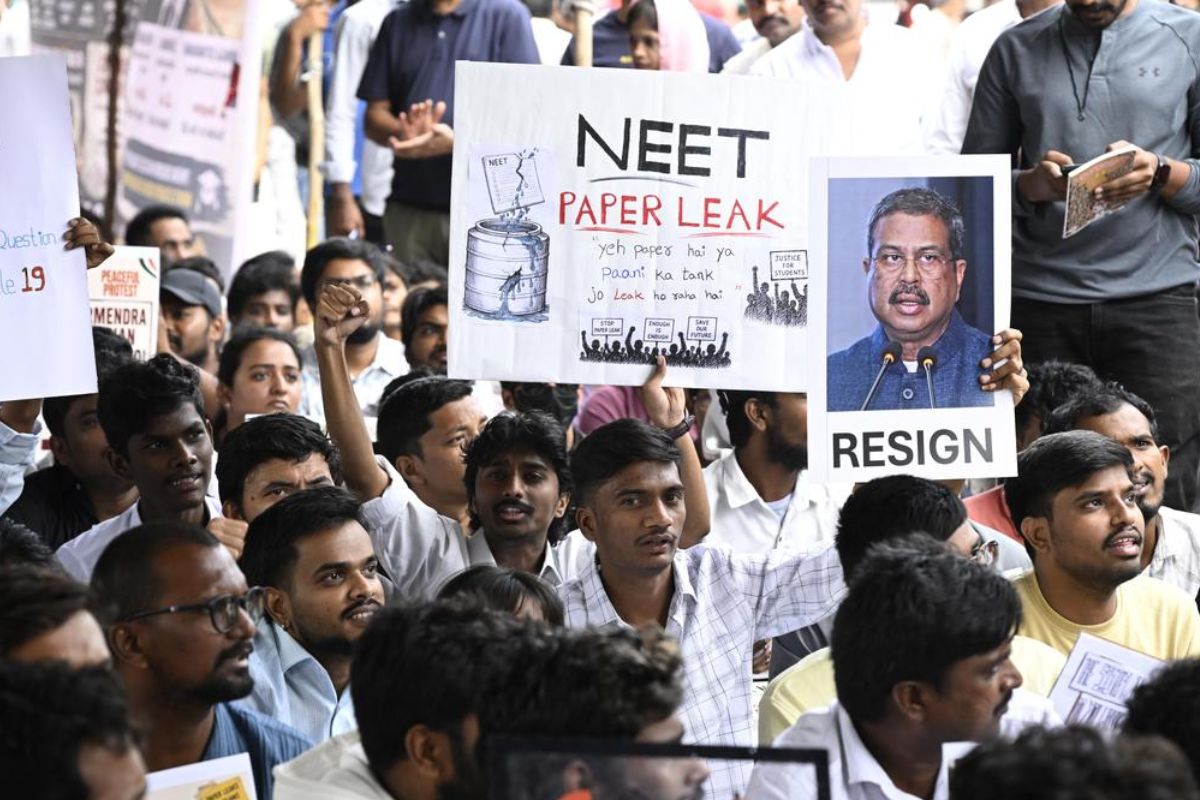
The political and institutional fallout. The cumulative effect of these overlapping controversies was a genuine national crisis: nationwide student protests, extended debate in Parliament, an active CBI investigation running in parallel with litigation, and ultimately the formation of a high-level committee specifically tasked with recommending structural reforms to the examination system. The Supreme Court, for its part, declined to order a nationwide re-examination, reasoning that there was insufficient evidence that a leak had affected the entire examination — while simultaneously acknowledging that leaks had, in fact, occurred at certain specific locations.
That distinction matters and deserves to be stated precisely: the country’s highest court did not declare NEET-UG 2024 entirely clean. It found that the proven contamination, while real, was not extensive enough to justify invalidating the results of 24 lakh candidates nationwide. That is a meaningfully different finding than “nothing was wrong”, and it is precisely the kind of finding that, while judicially sound, does little to restore the confidence of a student who spent three years of their life preparing for an exam that the country’s apex court has now confirmed was, at least partially, compromised.
UGC-NET, June 2024: An Examination Cancelled the Day After It Was Conducted
If NEET-UG 2024 was the year’s slowest-burning crisis, the UGC-NET cancellation was its most abrupt. In an essentially unprecedented decision, the NTA cancelled the UGC-NET examination just one day after it had already been conducted, citing information received by the government suggesting the examination’s integrity may have been compromised.
Pause on the mechanics of that decision for a moment, because they matter. This wasn’t a pre-exam cancellation triggered by an early-warning tip. Candidates had already sat for the test, already endured the months of preparation and the exam-day stress that comes with it, and were waiting for results — when the agency abruptly informed them that the entire exercise had been voided.
The matter was referred to the CBI. Lakhs of candidates were directly affected, their preparation rendered moot overnight, with no fault of their own. If there is a single moment in the NTA’s history that best illustrates the agency’s capacity to upend a candidate’s life with almost no warning and no clear path to a quick resolution, the UGC-NET cancellation of June 2024 is very likely it.
CSIR-UGC NET 2024: A Quieter, But Still Telling, Failure
Running parallel to these higher-profile crises, the CSIR-UGC NET examination experienced its own breakdown in 2024 — not, as far as public record shows, through a confirmed paper leak, but through repeated postponement and rescheduling that left candidates in prolonged uncertainty about when, or whether, their exam would actually proceed as announced. No headline-grabbing scandal here, just a slower, grinding erosion of a candidate’s ability to plan their preparation, their travel, their life around a date the agency itself could not seem to commit to.
CUET-UG 2024: The Third Consecutive Troubled Launch
By its third year, CUET should reasonably have stabilized. It did not. The 2024 cycle again produced technical failures, delayed results, disruptions specific to certain centres, and scheduling problems — with many candidates specifically complaining about inconsistent examination conditions between different centres, meaning two students sitting the “same” exam could, in practice, be experiencing meaningfully different testing environments, which strikes directly at the fairness the entire standardized-testing concept is supposed to guarantee.
2025 and 2026 — Proof the Pattern Was Never Fixed
NEET-UG 2025: Smaller Headlines, Same Underlying Problems
The 2025 cycle of NEET-UG did not produce a nationwide paper-leak scandal on the scale of 2024. But the underlying operational fragility that has defined the agency since 2018 remained clearly visible: reports of biometric authentication failures, power outages at testing centres, localized disruptions, and broader centre-management issues continued to surface. Several centres ultimately had to conduct re-tests because candidates had lost meaningful examination time due to these failures — the same fundamental category of harm that has recurred, in one form or another, across nearly every major examination the agency has run since 2019.
NEET-UG 2026: The Crisis Repeats, Almost Exactly
Then came 2026, and with it, almost a point-by-point repeat of 2024’s worst chapter. Following reports of a multi-state paper leak, the government cancelled the scheduled examination entirely and ordered a fresh nationwide test. More than 2.3 million candidates were directly affected by the cancellation.
Investigations led by central agencies pointed toward an organized leak network; reports specifically named Rajasthan’s Sikar district — itself a major coaching hub with a history of disproportionately high success rates that had separately drawn scrutiny in 2024 — as a key focus of the investigation, with some reports alleging papers were sold for sums as high as 5 lakh to 15 lakh rupees. NTA director Abhishek Singh publicly stated the agency was “taking responsibility” for the incident.
Security protocols were subsequently overhauled, including changes to how question papers are prepared and handled — an admission, in effect, that the previous protocols had failed catastrophically enough to require a fundamental redesign, not a minor patch. The cancelled exam was rescheduled, and a nationwide re-examination was set for June 21, 2026, with a mock security drill conducted the day before in an effort to reassure an understandably anxious candidate population.
What should alarm anyone reading this chronologically is not just that this happened — it’s that it happened again, using broadly the same playbook (leak, cancellation, CBI referral, public outrage, promised reform) that the country had already watched unfold in 2024. An institution that experiences the same category of catastrophic failure twice within two years, despite an intervening high-level committee specifically tasked with preventing exactly this outcome, is not an institution suffering from bad luck. It is an institution whose reform process has not yet caught up with its risk profile.
The Human Cost — What This Looks Like for the Students Living Through It
Everything documented above can, if you let it, stay comfortably abstract — server crashes, normalization disputes, committee reports. It is important, and necessary, to make this concrete, because abstraction is exactly what allows institutional failure to persist without consequence.
The 2026 Crisis: A Specific, Documented, Devastating Window
When the NTA cancelled the NEET-UG 2026 examination on May 12, citing investigations into an alleged paper leak, it set in motion a roughly six-week window of acute uncertainty before the rescheduled examination on June 21. During that window, multiple, separately reported deaths of NEET aspirants occurred across different states, each independently covered by Indian and international news organizations, each tied by grieving families and local reporting to the stress generated by the cancellation and the agonizing prospect of having to prepare and sit for the exam all over again.
Reported cases, as covered by named news organizations, include:
- A 17-year-old NEET candidate named Renu, found dead at her home in Delhi’s Palam Colony. Delhi Police reported that a handwritten note found at the scene indicated she had apologised to her parents for what she felt was her inability to meet their expectations. She had appeared for the cancelled May 3 examination and was, according to investigators, reportedly struggling with depression in its aftermath.
- A 22-year-old aspirant named Umesh, who died in Sikar, Rajasthan — one of India’s most concentrated coaching hubs for medical entrance exam preparation. Authorities recovered a note and registered a case while investigating the circumstances.
- Pradeep Meghwal, also 22, also from Sikar, who according to his parents had spent three years preparing for this single examination and was reported to be under significant stress following the leak controversy.
- Ritik Mishra, 21, from Lakhimpur Kheri in Uttar Pradesh, who according to his family had attempted the exam for a third time and was, in his father’s words to international media, devastated by the leak and cancellation. His father, Anok Mishra, was quoted by Al Jazeera describing the loss in terms that deserve to be reproduced carefully and exactly as a grieving parent’s stated belief, not as this article’s own legal conclusion: he called it “a systemic killing caused by negligence and failure.”
- Siddharth Hegde, 17, from Goa, who died by suicide on the night of May 12 — the same day the exam cancellation was officially announced.
- A 20-year-old medical aspirant in northwest Delhi’s Azadpur area, who died during the same high-stress window between cancellation and the rescheduled date.
- A young woman named Ruchi, reported to have felt highly confident about her original exam performance; the subsequent cancellation and rescheduling reportedly upset her severely, and she remained under significant stress despite counselling and family support, according to a medical representative’s account to the Times of India.
Independent tallies compiled by Indian news organizations during this period documented between 12 and 13 reported suicides in roughly 37 days surrounding the cancellation and re-examination window — figures drawn from separate, named reporting by Outlook India and Business Standard, both citing local police records and family statements. Delhi alone reportedly registered three separate student deaths during this period.
This is not a vague, unverifiable claim circulating on social media. These are specific, named individuals, reported by name in mainstream Indian and international press, each case independently documented through police records, family statements, or both.
This Was Not a New Phenomenon in 2026 — It Has a Documented History
What makes the 2026 cluster especially difficult to dismiss as an isolated tragedy is that it fits an established, years-long pattern that student groups, mental health professionals, and even government bodies have repeatedly flagged.
In 2023, the All India JEE-NEET Students Association (AIJNSA) formally wrote to the National Human Rights Commission, requesting urgent intervention, after five NEET-UG 2023 aspirants died by suicide that year alone. Their letter specifically requested that authorities ensure sufficient gap between board examinations and NEET, ensure timely allotment of exam city centres (a recurring administrative failure documented earlier in this article), and improve coordination between state education boards and the NTA.
The same reporting that documented this letter referenced an RTI (Right to Information) response revealing that 119 medical aspirants had died by suicide over the preceding five years, with more than 1,000 students dropping out of the preparation process entirely, figures that, whatever the precise causal mix behind each individual case, establish beyond reasonable dispute that the pressure-cooker environment surrounding India’s medical entrance examination system carries a serious, sustained, and documented mental health toll.
What Mental Health Experts and Student Bodies Have Consistently Asked For
Across these years, the demands from those closest to the crisis have remained remarkably consistent: strengthened counselling services accessible to aspirants, dedicated helplines specific to exam-related distress, greater awareness and active promotion of stress-management resources, more predictable and timely administrative processes (city allotment, admit cards, schedule communication) precisely because last-minute uncertainty is itself a documented stress multiplier, and — repeated again and again, year after year, controversy after controversy — basic, reliable assurance that the examination process itself will not become an additional, avoidable source of trauma layered on top of the exam’s already-significant inherent pressure.
The Question This Article Will Not Answer for You, But Will Not Let You Avoid Either
This article cannot tell you, with legal certainty, that the National Testing Agency caused any specific individual’s death. No publication honestly can, because the law correctly demands a higher bar than pattern-matching, and because grief, mental health, and individual circumstance are never reducible to a single external trigger, however significant that trigger may have been.
But here is what the documented public record does support, without requiring any speculative leap: an agency that has, since 2018, repeatedly failed at the basic operational tasks of conducting fair, secure, well-administered examinations; that has had those failures formally acknowledged by its own minister, investigated by its own government’s high-level committee, and flagged again by a parliamentary panel in 2026 as continuing despite two years of supposed reform; and that has, across multiple independent examination cycles, created exactly the conditions — sudden cancellations, unexplained delays, integrity scandals, prolonged uncertainty — that mental health professionals and student bodies have explicitly and repeatedly warned constitute serious risk factors for the population sitting these exams.
When an institution is warned, repeatedly, by the people closest to the harm, about the specific conditions that worsen that harm — and then goes on to recreate those same conditions in subsequent examination cycles anyway — the conversation about responsibility cannot remain purely abstract. It does not require proving causation in any single case to ask, legitimately and urgently: how many warnings, committees, and reform reports does an institution get before “operational failure” stops being an adequate description of what is happening, and starts requiring a different word?
The Structural Diagnosis — What Investigations Have Actually Found Wrong
It would be a disservice to readers to leave this story at “the NTA keeps failing” without engaging seriously with why, because the available institutional record actually offers a fairly clear answer, and it’s not a flattering one for the agency or the government that oversees it.
The Radhakrishnan Committee: A Real Attempt at Reform
In the immediate aftermath of the 2024 NEET-UG crisis, the Ministry of Education constituted a high-level committee on June 22, 2024, chaired by Dr. K. Radhakrishnan, former chairman of ISRO and chairman of the Board of Governors at IIT Kanpur, with other members including the former director of AIIMS Delhi, Randeep Guleria. This was not a token gesture, but the committee was explicitly tasked with recommending reforms across three critical dimensions: the examination process mechanism itself, improvements to data security protocols, and the structure and functioning of the NTA as an organization.
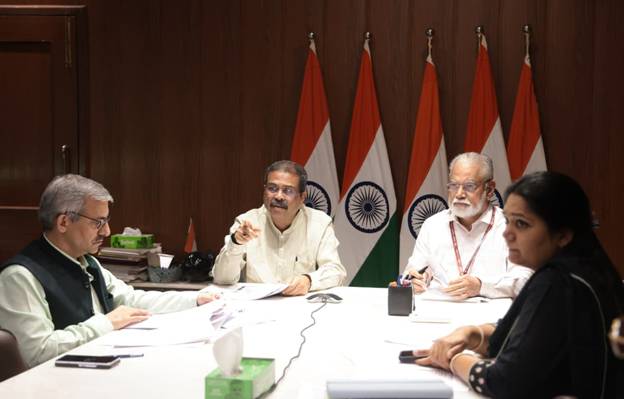
The committee submitted its findings to the ministry on October 21, 2024, after a public consultation period that invited direct feedback from students and parents. Its conclusions were genuinely substantive: 101 distinct recommendations, including a fundamental restructuring of the NTA into three specialized sub-committees overseeing Test Audit, Ethics, and Transparency; Nomination and Staff Conditions; and Stakeholder Relationships.
The committee also recommended that the NTA narrow its focus to primarily conducting entrance examinations, expanding into additional exam types only once its core capacity had been meaningfully strengthened — an implicit, important acknowledgment that the agency had been stretched into running more examinations than its existing infrastructure could reliably support. Further recommendations included assigning a dedicated NTA “presiding officer” at every individual testing centre to serve as overall in-charge of the process on the ground, and the deployment of “Mobile Testing Centres” to improve access and reliability for candidates in rural and remote areas.
On paper, this is a serious, technically sound reform blueprint, authored by genuinely credible experts, in direct response to a crisis the government itself had been forced to acknowledge.
Independent Reporting on the Root Causes
Beyond the Radhakrishnan Committee’s formal recommendations, assessment into the NTA’s recurring failures has converged on a consistent set of structural weaknesses. These include a heavy dependence on outsourced vendors for various components of the examination lifecycle, a persistent shortage of permanent, dedicated staff within the agency itself, a pattern of rapid expansion in the sheer number and scale of examinations the NTA has been handed responsibility for since 2018 — often without a corresponding expansion in institutional capacity — alongside inadequate technological resilience in the systems underpinning computer-based testing, and broadly weak risk-management and contingency planning for when (not if, as the record makes clear) something goes wrong.
None of these factors, on their own, prove deliberate misconduct. But taken together, they describe an agency that has been asked to do significantly more, at significantly larger scale, than its underlying infrastructure and staffing were ever actually built to reliably support — a mismatch between mandate and capacity that, this article would argue, sits at the root of nearly every operational failure documented in the preceding sections.
The 2026 Parliamentary Verdict: Reform on Paper, Not Yet in Practice
Here is where the story becomes genuinely damning in a way that goes beyond any single examination cycle’s specific failure. In 2026 — roughly two years after the Radhakrishnan Committee submitted its 101 recommendations — the Parliamentary Standing Committee on Education, Women, Children, Youth and Sports, chaired by Rajya Sabha MP Digvijaya Singh, presented its 381st action-taken report directly addressing the state of NTA reform.
The committee’s core finding deserves to be stated plainly: examination irregularities have continued despite the measures the government claims to have taken. The panel specifically recommended that the Ministry of Education publish a time-bound roadmap for actually implementing the Radhakrishnan Committee’s recommendations — a recommendation that, by its very existence, confirms that two years after a credible expert panel delivered 101 specific reform proposals in direct response to a national crisis, the government still had not produced a clear, public timeline for putting them into practice.
The committee also surfaced a specific, concrete failure that illustrates the broader accountability gap better than almost any other detail in this entire chronology: it found that several firms involved in paper-setting, administration, and correction had been blacklisted by one organisation or state government for misconduct — but that this blacklisting did nothing to prevent those same firms from securing fresh contracts from other states or organisations. Think about the magnitude of that finding.
A vendor proven untrustworthy enough to be formally blacklisted by one government body can simply walk across to a different state or organisation and continue handling the exact same sensitive, high-stakes work — paper-setting, administration, correction — for India’s examination ecosystem, because no centralized, nationwide blacklist exists to stop them. The parliamentary committee’s recommendation, in response, was almost startlingly basic: compile a single nationwide list of blacklisted firms, so that “blacklisted” actually means something consistent across the system, rather than being a label a vendor can simply outrun by changing which government body they’re contracting with next.
In its formal response, the Higher Education Department pushed back specifically on the characterization that core NTA functions are outsourced, stating that paper-setting and evaluation constitute core NTA functions and are not outsourced, and that the agency maintains its own records of penalised vendors, including terminations, blacklisting, and contract cessations.
This is a fair clarification worth including in full — the government’s own position is that the most sensitive functions remain in-house. But the parliamentary committee’s underlying concern was not erased by that clarification; if anything, it sharpens the question. If paper-setting and evaluation are indeed core, non-outsourced NTA functions, then the recurring leaks, errors, and integrity failures documented throughout this article become harder, not easier, to attribute to third-party vendor failure — and correspondingly more directly attributable to the agency’s own internal processes.
Education Minister Dharmendra Pradhan himself, as the parliamentary committee’s report explicitly notes, acknowledged on June 16, 2024 — in the immediate aftermath of the NEET-UG crisis — that “a lot of improvement is needed in the NTA.” That is the agency’s own overseeing minister, on the public record, conceding the central thesis of this entire article. The parliamentary committee’s 2026 finding is, in essence, a follow-up question to that 2024 admission: two years on, how much of that needed improvement has actually happened? Their answer, delivered through the careful, understated language of an official committee report, was unmistakably: not enough.
Why This Matters More Than Any Single Scandal
The significance of the 2026 parliamentary finding is that it definitively closes off the most generous interpretation available to the NTA’s defenders — the idea that each crisis was a one-off, properly investigated, properly remediated, and unlikely to recur. The Radhakrishnan Committee process was, by most credible accounts, a genuine, well-resourced attempt at structural reform. And yet, within roughly eighteen months of that committee submitting its findings, NEET-UG 2026 experienced what independent reporting describes as a multi-state paper leak serious enough to force a complete nationwide cancellation and re-examination affecting over 2.3 million candidates — almost the exact same category of catastrophic failure the committee had been convened specifically to prevent.
An institution can be forgiven a crisis. It can reasonably be given the benefit of the doubt through one reform process. What the public record increasingly does not support is continuing to extend that same benefit of the doubt after a second, near-identical catastrophic failure occurs despite an intervening, credible, expert-led reform effort.
At some point, the explanation shifts from “implementation is still catching up” to a harder, more uncomfortable question about whether the reforms recommended were ever actually capable of being implemented at the speed and scale the agency’s risk profile demands — or whether the gap between the government’s stated commitment to reform and its demonstrated pace of actually executing that reform has itself become the primary driver of the NTA’s ongoing crisis.
The Opportunity Cost Rarely Discussed
There is a further, less visible cost that deserves explicit mention: every additional year an aspiring student spends preparing or re-preparing for NEET or JEE due to institutional failure is a year not spent building an alternative career path, gaining work experience, or — in the case of students who eventually do not succeed even after multiple attempts — establishing themselves in any field at all. For a 22-year-old who has spent three years almost exclusively focused on a single examination’s syllabus, an unplanned fourth year forced by a leak or cancellation isn’t merely an inconvenience to be absorbed.
It represents a genuinely significant deferral of adult life — of financial independence, of relationship and family milestones common to peers who took a different academic path, of the basic psychological stability that comes from forward momentum in one’s own life.
None of this shows up in a parliamentary committee’s action-taken report. It shows up in coaching hub towns like Kota and Sikar, in family WhatsApp groups discussing whether to fund “just one more year,” and — as this article’s documentation of the 2026 crisis makes starkly clear — sometimes in the worst possible outcome a family can experience.
Conclusion: A Closer Look at the Supreme Court’s NEET-UG 2024 Proceedings
Given how frequently NEET-UG 2024 has been referenced throughout this article, it is worth examining the judicial proceedings around it in slightly greater procedural detail, because the precise contours of what the Supreme Court did and did not find are frequently flattened in public discourse into an oversimplified “the Court cleared NTA” narrative that does not accurately represent what actually happened.
The litigation arose from a consolidated set of petitions filed by aggrieved candidates and parents, alleging that the scale of the leak and the grace-marks controversy had compromised the examination’s integrity to a degree that the only fair remedy was a complete, nationwide re-examination for all 24 lakh candidates. The government and the NTA, for their part, argued that while isolated incidents had occurred, they were confined to specific centres and did not justify invalidating an exam that the overwhelming majority of candidates had taken under fair conditions.
The students sitting for NEET-UG’s rescheduled 2026 examination, and the millions more who will sit for NTA-administered exams in the years that follow, deserve an answer that is better than the one this record has provided so far.