11-Month-Old Killed By Parents In Bengaluru, Couple Stages Death As Accidental Cot Fall

A Two-Foot Fall That Wasn’t: The Death of an 11-Month-Old in Bengaluru, and the Questions It Leaves Behind
She was eleven months old. Old enough to have a name that her parents chose with some hope attached to it, old enough to have started recognising faces, perhaps old enough to have taken her first wobbling steps holding onto someone’s finger. She will not get any older than that.
On June 9, 2026, in Kithaganur on Bengaluru’s eastern edge, a family reported that their infant daughter had died after falling from her cot while her mother had dozed off during breastfeeding. It is, on its face, one of the quiet tragedies that occasionally visit new parents, where a moment’s exhaustion, an unwatched instant, an accident no one intended. Police initially treated it exactly that way, registering it as an unnatural death under Section 194 of the Bharatiya Nagarik Suraksha Sanhita, the standard first step when a death occurs outside a hospital and its cause isn’t immediately clear.
But a two-foot fall does not usually explain what a post-mortem examination is capable of finding. Investigators say the infant had sustained extensive internal injuries, significant internal bleeding, and respiratory failure — a pattern of trauma that medical examiners did not believe could plausibly result from tumbling out of a cot. The story that had been offered as an explanation began, under scrutiny, to come apart.

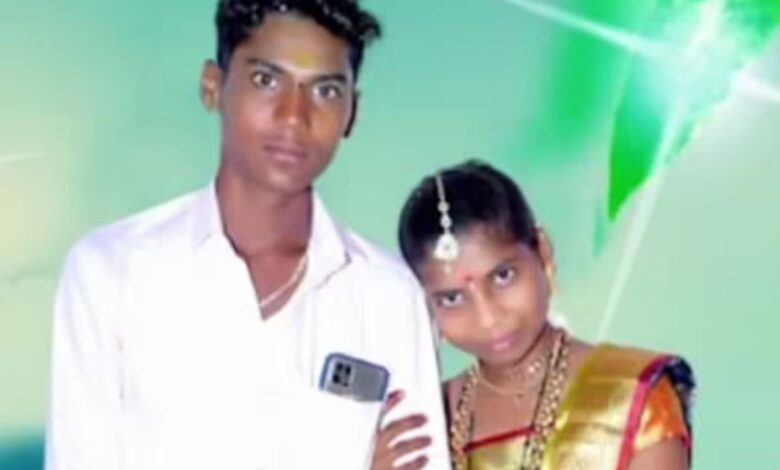
What police now believe happened is far harder to sit with than an accident. The case has been converted into a murder investigation. The child’s father, a 22-year-old tractor driver named Shekhappa, originally from Yadgir district, has been arrested. Her mother, Vijayalakshmi, has been named as a co-accused and remains absconding as authorities continue to search for her. Both parents have been booked under provisions of the Bharatiya Nyaya Sanhita relating to murder.
It is worth pausing, deliberately, on what these words mean before rushing past them. A child’s own parents, the two people whose most basic obligation in the world was to keep her safe, are now accused of taking her life, and then constructing a story about a fall from a cot to conceal it. If the allegations bear out, this was not simply a death. It was a death followed by a decision: to look at a lifeless infant and choose fabrication over the truth, however briefly that truth might have been postponed.
There is no way to write about this gently without being dishonest about what it is. And yet there is also no need to dwell on the clinical details beyond what the public record already states. What matters more, perhaps, is what a case like this asks of everyone reading it from a distance.
The first thing it asks is that we resist the temptation to look away simply because it is unbearable. Infant deaths at the hands of caregivers are, thankfully, rare — but when they happen, they are almost never isolated, single-moment failures. They tend to sit at the end of a long, often invisible chain: untreated postpartum distress, chronic poverty and instability, domestic conflict that no one outside the household ever sees, a young couple with a second child arriving into circumstances that were already stretched thin, and no one — no relative, no neighbour, no health worker — close enough, or attentive enough, to notice before it was too late.
None of that explains away what happened to this child. Nothing could. But understanding the conditions in which such tragedies incubate is part of how a society tries, however imperfectly, to prevent the next one.

The second thing this case asks of us is a kind of humility about how much we still don’t know. Vijayalakshmi remains absconding; her side of events, whatever it may be, has not been heard. Shekhappa has been arrested, not convicted. India’s justice system, for all its slowness and imperfection, exists precisely so that accusations — however damning the initial evidence appears — are tested, not assumed. It is possible to hold two things at once: grief for a child who is unambiguously gone, and restraint about assigning final judgment to individuals whose trial has not yet taken place.
But the third thing, and perhaps the hardest, is simply to let this be what it is: the death of a baby who trusted, in the entirely unknowing way that infants trust, that the arms that held her were safe. She did not choose her parents, her circumstances, her city, or the day she was born. She had no way of protecting herself, no way of asking for help, no way of being anywhere other than exactly where the adults around her placed her. That is the quiet, universal vulnerability of every infant everywhere — and it is precisely why the rare betrayal of that trust cuts as deep as it does.

Somewhere in Kithaganur, there will now be an empty corner of a small home. A cot that will not be used again, or that will be used and will carry a weight no piece of furniture should have to carry. Relatives who will have to explain, for years, in fragments and half-truths, what happened to a child they may have barely gotten to hold. And a police investigation that will continue, methodically, to establish exactly what the evidence supports — because that, in the end, is the only form of justice available to a child who cannot speak for herself.
She did not get a childhood. She got eleven months. The very least owed to her now is the truth, however difficult it is to reach, and however long it takes to get there.