Ex-CEC Rajiv Kumar Got Rewarded: Chairman of India’s Largest Private Bank HDFC – The Ultimate Post-Retirement Perk for Damaging Institutional Trust & Stealing India’s Elections
EX CEC Rajiv Kumar Got Rewarded, To Be The Chairman Of India's Largest Private Bank HDFC, Got Post Retirement Benefits To Cheat India & Indians

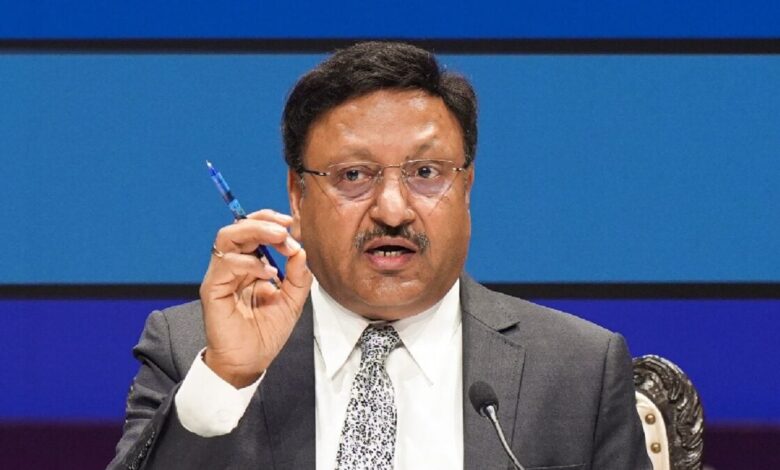
Rajiv Kumar has been handed one of the most powerful positions in Indian finance. He is now the Part-time Non-Executive Chairman of HDFC Bank, India’s largest private sector lender by assets, deposits, and market influence. As Chairman, even in a non-executive capacity, he will shape board oversight, influence audit and risk committees, guide governance standards, and serve as the primary face of the bank to the Reserve Bank of India and institutional investors. He will not run daily operations — that remains with CEO Sashidhar Jagdishan — but he will carry decisive weight on CEO performance reviews, succession planning, regulatory communications, and the overall credibility of the institution.
This is not a minor retirement sinecure. This is a strategic governance role at a bank that holds the savings of millions of ordinary Indians.
The Man Who Was Chief Election Commissioner
Before this appointment, Rajiv Kumar was the Chief Election Commissioner of India from May 2022 to February 2025. In that role, he was the constitutional custodian of the world’s largest democracy’s electoral process. He was expected to be the ultimate neutral referee — above politics, above pressure, above suspicion.
Instead, his tenure became defined by persistent, widespread allegations that the Election Commission under him had lost its claim to impartiality.
A Long List of Controversies
During his time as CEC, serious questions were raised on multiple fronts:
- Alleged pro-ruling party bias in enforcement of the Model Code of Conduct. Opposition parties repeatedly accused the Commission of delayed or lenient action against senior BJP leaders while acting swiftly on complaints against opposition figures.
- Weak and delayed response to hate speech and communal polarization during the 2024 Lok Sabha elections. Critics argued that strong action — campaign bans or FIR recommendations — came too late or not at all.
- Defensive and combative handling of EVM and VVPAT concerns. Instead of increasing transparency, Rajiv Kumar’s Commission was seen as aggressively dismissing legitimate questions, further deepening public distrust.
- The controversial change in the process of appointing Election Commissioners. Parliament altered the selection panel after a Supreme Court order, replacing the Chief Justice with a Union Minister — a move widely criticized as reducing institutional independence. The EC under Rajiv Kumar became entangled in this larger debate.
- Perceived soft handling of violations by star campaigners and selective enforcement of rules.
- Defensive press conferences that many felt came across as combative rather than reassuring.
These were not minor procedural lapses. They struck at the heart of democratic legitimacy. When the institution responsible for conducting free and fair elections starts losing public confidence in its neutrality, the damage is not temporary.
Why India and Indians Lost Trust
Trust in constitutional institutions is not abstract. It is the invisible capital that holds a democracy together. When the Election Commission — once respected for its fierce independence — began to be viewed by large sections of the opposition and civil society as compromised or timid, that capital was depleted.
Rajiv Kumar’s tenure did not create this distrust from nothing, but it failed to arrest or reverse it. Instead of rising above political accusations, the Commission under him often appeared reactive, defensive, and selective. The result: millions of Indians now look at the electoral process with greater cynicism than before. That is not a small failure. That is institutional damage.
Can Indians Trust Rajiv Kumar With Their Hard-Earned Money?
This is the real question HDFC Bank’s depositors and shareholders should be asking.
A man whose tenure as CEC was marked by serious allegations of compromised neutrality is now being positioned to oversee the governance of a bank that holds over ₹40 lakh crore in deposits. These are not abstract numbers. These are the life savings, retirement funds, and emergency reserves of ordinary Indians.
If questions were raised about his ability to remain neutral when conducting elections that decide the fate of the nation, why should anyone assume he will suddenly display impeccable independence when overseeing a bank’s risk management, related-party transactions, or regulatory interactions?
The uncomfortable truth is this: A man accused of tilting the scales in elections is now being trusted with the scales of financial oversight at India’s biggest private bank.
HDFC Bank Was Already in Hot Water
HDFC Bank did not approach this appointment from a position of strength. The abrupt resignation of former Chairman Atanu Chakraborty in March 2026 — citing ethical and value concerns — had already damaged confidence. The post-merger integration with HDFC Ltd continues to create margin pressure, deposit challenges, and operational complexity. The bank was looking for a figure who could restore credibility and reassure the RBI and markets.
Instead of choosing someone with an unblemished record of institutional neutrality, the board chose a man carrying heavy political and perception baggage from his time as CEC.
Why Choose Such a Controversial Figure?
The answer is uncomfortable but obvious. Rajiv Kumar brings deep bureaucratic connections, regulatory familiarity, and the comfort of having worked closely with the system. In certain circles, that is considered an asset. It sends a signal of “alignment” and “understanding.”
But at what cost?
By appointing him, HDFC Bank has chosen to ignore — or worse, normalize — the serious questions that surrounded his CEC tenure. It has decided that administrative connections matter more than public trust. It has signaled that post-retirement rewards for former constitutional authorities can include plum corporate positions, even when their record in office remains deeply contested.
This is the revolving door at its most brazen.
Is HDFC Bank Going to Be Secure in the Future?
A man who presided over one of the most controversial periods for the Election Commission is now the Chairman of India’s largest private bank.
A man accused of compromising the neutrality of the institution that protects democracy is now in a position to influence the institution that protects people’s money.
Can someone who allegedly tilted the democratic process be trusted not to tilt governance decisions when billions are at stake?
Can depositors sleep peacefully knowing that the person with oversight responsibility over their savings carries such a heavy shadow of institutional distrust?
People’s money and trust are not safe with a chairman who carries this kind of black history.
Rajiv Kumar has been richly rewarded with a prestigious post-retirement position at HDFC Bank. Whether this appointment ultimately serves the interests of India’s depositors or merely rewards a controversial tenure remains to be seen. But one thing is already clear: the message sent to ordinary Indians is deeply troubling.
When constitutional office holders with damaged credibility are fast-tracked into controlling the financial lives of millions, the line between public service and private reward becomes dangerously blurred. HDFC Bank’s depositors deserve better. India deserves better.