Ola’s New Shakti Bet But What Is Happening To The Business That Made Ola What It Is? Can It Fix A Business Still Deep In Losses?
Ola Electric is betting on Shakti and Mahashakti to turn its battery technology into a new growth engine spanning homes, businesses and the grid. But as the company expands beyond scooters, its core EV business is still battling falling market share, heavy losses and the long road to profitability.

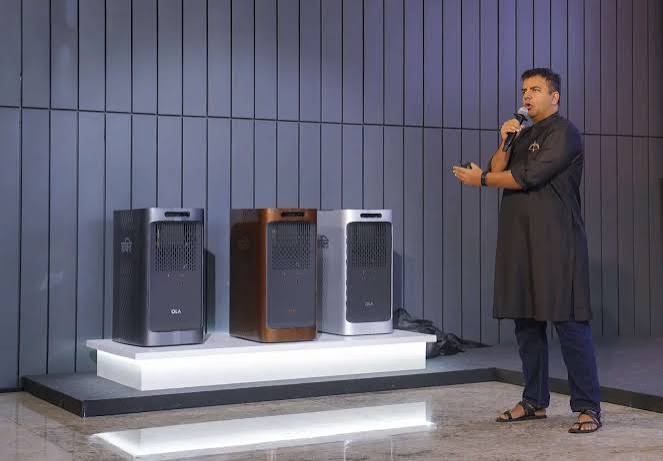
Ola Electric is expanding beyond electric vehicles and into energy storage, unveiling a three-tier Shakti portfolio aimed at homes, businesses and large-scale power applications.
The company has introduced Shakti Gen2 for residential users, Shakti Rack for commercial facilities and Mahashakti for large-scale energy storage. The portfolio will span systems ranging from kilowatt-hour-scale home batteries to a 6.26 MWh containerised storage system.
The new portfolio will be built around Ola’s indigenous Lithium Iron Phosphate (LFP) cell technology, marking an expansion of its energy business beyond the first-generation Ola Shakti, which was launched using the company’s 4680 Bharat Cells.
Ola is pitching the move as part of its broader push towards what it calls India’s “energy independence”. The company sees energy storage as a potentially significant business alongside its electric two-wheeler operations and external cell sales.
For residential users, Shakti Gen2 can be controlled through the Shakti app and integrated with solar power through Ola’s solar charge controller. The company has also designed the system more like a consumer appliance than a conventional industrial battery cabinet, suggesting an attempt to make energy storage a household product.
The larger Mahashakti platform takes Ola into commercial and utility-scale applications, including manufacturing facilities, warehouses, commercial buildings, retail and data infrastructure. A Mahashakti rack has 257 kWh of energy capacity and more than 125 kW of expandable power capability.
The expansion comes as Ola looks to build additional demand for its cell manufacturing business. In May, founder and CEO Bhavish Aggarwal had identified energy storage as one of three key demand engines for Ola’s cell manufacturing operations, alongside electric vehicles and external cell sales.
The company’s parent had also approved a ₹2,000 crore investment into its electric vehicle and battery manufacturing subsidiaries, including ₹1,500 crore for Ola Electric Technologies and ₹500 crore for Ola Cell Technologies.
Ola’s FY26 disclosures had indicated more than 50,000 customer leads for Shakti, with interest from telecom companies, petrol pumps, retail chains, dark stores and other commercial users.
The company is therefore positioning Shakti and Mahashakti as more than an extension of its EV business. It is attempting to build another business around the battery technology and manufacturing capabilities it has been developing for its electric vehicles.
But the timing of that expansion is important.
While Ola is building a new energy-storage business, the electric two-wheeler business that made the company one of India’s biggest EV names is still trying to recover.
Energy Storage Is Becoming Ola’s Second Act
The Shakti expansion is not Ola Electric’s first attempt to turn its battery capabilities into a business beyond scooters.
The company has been increasingly positioning energy storage as another growth opportunity, and its move into larger-scale battery storage gives that strategy a much bigger canvas.
Ola has already signed a memorandum of understanding with Hyderabad-based renewable energy developer Axis Energy for the potential deployment of up to 20 GWh of battery energy storage systems by 2032. The agreement is the first large-scale partnership for Ola Mahashakti, its platform for commercial, industrial and utility-scale storage.
Under the non-binding agreement, the two companies are looking at ramping up to 5 GWh of annual battery storage capacity from 2028. Axis Energy has more than 15 years of experience in developing wind, solar and hybrid renewable projects and has projects across Andhra Pradesh and Rajasthan.
The opportunity is significant because India’s renewable-energy expansion is creating a growing need for battery storage. As more intermittent solar and wind power enters the grid, storage can help provide balancing capacity and make electricity available when renewable generation is low.
Ola’s pitch is built around vertical integration. The company wants to use its own cell technology and system-engineering capabilities to compete in a market where storage systems are often assembled using components sourced from multiple suppliers.
That could potentially give Ola greater control over costs and supply chains while allowing it to use capabilities developed for its EV business in another market.
But there is an important caveat.
The Axis Energy agreement is still a non-binding MoU, not a confirmed order, and the eventual scale of the business will depend on how quickly Ola can move from announcing storage capacity to actually deploying it.
That makes Shakti and Mahashakti an interesting new growth bet for Ola. But the bigger question remains what is happening to the business that still accounts for its identity and continues to weigh heavily on its finances.
But What About Ola’s Core EV Business?
The timing of Ola Electric’s push into energy storage becomes more interesting when viewed against the state of its core electric two-wheeler business.
Ola was once the clear leader of India’s electric scooter market. At its peak, the company commanded nearly half the market and was selling more than 50,000 scooters a month.
That position has changed dramatically. During the first half of calendar 2026, Ola Electric registered around 65,999 electric two-wheelers, a decline of approximately 44% from the corresponding period last year. Its market share fell from 18.6% in H1 2025 to around 6.8% in H1 2026.
In July, the company registered roughly 13,085 electric two-wheelers, leaving it with a market share of around 7%. A year earlier, its share was closer to 17%. The decline is particularly striking because the overall electric two-wheeler market has continued to expand.
TVS Motor, Bajaj Auto, Ather Energy and Hero MotoCorp have been capturing much of that growth. During H1 2026, the four companies together accounted for around 95.6% of incremental electric two-wheeler registrations.
The July numbers underline the shift. TVS crossed 52,000 electric two-wheeler registrations, Bajaj recorded more than 43,000 and Ather crossed 28,000. Hero MotoCorp’s VIDA portfolio also crossed 20,000 registrations.
Ola, at roughly 13,000 units, was therefore selling only about a quarter as many electric two-wheelers as TVS in the month.
This is the uncomfortable part of Ola’s story. The problem is not that India’s electric scooter market has stopped growing. It is that Ola is no longer capturing that growth at the rate it once did. And behind the falling market share sits an even bigger problem: the business is still losing money.
The Business Is Still Losing Money
The falling market share would be worrying on its own. But for Ola Electric, the bigger concern is what that decline means for a company that is still trying to move towards profitability.
For FY26, Ola Electric reported revenue from operations of approximately ₹2,253 crore, down around 50% from ₹4,514 crore in FY25. At the same time, its consolidated net loss stood at roughly ₹1,833 crore, although that was an improvement from the ₹2,276 crore loss recorded a year earlier.
The pressure continued into the final quarter of the financial year.
Revenue from operations in Q4 FY26 fell to around ₹265 crore from ₹611 crore a year earlier, while the consolidated net loss stood at approximately ₹500 crore.
The company has nevertheless pointed to some signs of improvement.
Ola Says the Reset Is Working
Ola’s management has described FY26 as a year of reset, with lower volumes but stronger underlying fundamentals.
The company reported its first operating cash-flow-positive quarter in Q4 FY26. It has also cut its operating cost base and says the improved cost structure, combined with its gross-margin profile, means adjusted operating EBITDA breakeven could be achievable at around 20,000 to 25,000 units a month.
That target is now one of the most important numbers to watch.
Ola’s volumes have already shown some recovery from their lows. The company registered 3,973 vehicles in February 2026, before climbing to 15,139 units in May. April-June registrations reached approximately 43,719 units, nearly twice the previous quarter’s level.
But July brought the number back down to roughly 13,085 units. So while the recovery is visible, Ola still needs to prove that it can consistently reach the volume required to make the business financially sustainable.
And that is where its next set of moves – from dealers and service improvements to new products and in-house cells – becomes critical.
Ola Is Trying to Fix the Business It Already Has
The recovery effort goes beyond cutting costs. Ola Electric is trying to address several of the operational problems that contributed to its earlier slowdown, while also rebuilding the foundations of its auto business.
One of the biggest areas of focus is manufacturing.
Ola is working to increase its gigafactory capacity from 6 GWh to 20 GWh through a fundraise at its cell subsidiary. The company has also been increasing the use of its own 4680 cells, with management saying it expects to transition entirely to in-house cells by the end of the next quarter.
The argument is straightforward: producing its own cells could lower costs and reduce dependence on external suppliers.
Bhavish Aggarwal has said that even at relatively low production volumes, Ola’s own cells are already cheaper to manufacture than buying them externally. At scale, the company expects an advantage of around 10% to 15%, including operational overheads.
Service Is Another Part of the Reset
After-sales service has been one of Ola’s most persistent problems, and the company is now pointing to a significant improvement in its service metrics.
Management said service-related pendency has fallen sharply, with same-day closures at around 87% and part pendency down 69%. The company has also previously said average repair time had fallen from around nine days to one day.
The importance of this cannot be understated.
For an electric two-wheeler company trying to win back customers, improving the scooter itself is only part of the job. Customers also need to know that when something goes wrong, the vehicle can be repaired quickly and spare parts will be available.
Ola is also trying to rebuild demand through new products.
Its Roadster electric motorcycle has emerged as what management calls a second auto growth engine, with the company saying bikes accounted for 15% of April gross orders. Management has claimed demand is strong enough that supply, rather than customer interest, is currently the constraint.
The company is therefore attempting a broader reset of its auto business: lower costs, more in-house technology, better service, new products and a gradual recovery in volumes.
But there is another part of the old Ola model that is changing just as significantly – how the company sells and services its vehicles.
From D2C Disruptor to Dealer Network
One of the biggest changes Ola is making to its core EV business is happening on the ground.
The company is moving away from the direct-to-consumer model that defined its early strategy and is increasingly opening its sales and service network to independent dealer partners across India.
When Ola entered the electric two-wheeler market, it deliberately chose not to follow the traditional automotive model. Customers could configure and purchase scooters digitally, while Ola operated its own experience centres and service infrastructure.
The strategy gave the company greater control over pricing, customer data and the buying experience. It also allowed Ola to expand without relying on the traditional dealership system used by established two-wheeler manufacturers.
But scaling that model proved harder.
Buying a scooter is not quite like buying a consumer gadget. Customers want test rides, financing support, registration and insurance assistance, vehicle delivery and, crucially, somewhere they can take the vehicle when something goes wrong.
As Ola’s installed vehicle base grew, maintaining all of that infrastructure itself became increasingly difficult.
Ola Had Already Started Bringing in Partners
The shift towards dealers is not entirely new.
In September 2024, Ola announced its Network Partner Programme and began onboarding third-party partners. At the time, however, company-owned stores remained at the centre of its sales and service network, with partners positioned largely as an extension of the D2C model.
The latest strategy goes further.
Independent dealers are expected to increasingly handle local sales, customer service and geographic expansion, while Ola’s company-owned outlets gradually become brand and product experience centres.
That is a significant change for a company whose original pitch was built around disrupting the traditional dealership model.
Distribution Could Be Critical to the Recovery
The reason is simple: Ola is now competing against companies that already have enormous physical networks.
TVS Motor, Bajaj Auto and Hero MotoCorp have spent decades building dealership ecosystems across India. Those networks provide not just sales outlets, but financing, insurance, servicing, spare parts, local marketing and customer relationships.
A dealer-led model could allow Ola to expand into smaller cities and towns without having to fund every new location itself. It could also address one of the company’s biggest weaknesses: proximity to customers after the sale.
But dealers are not a magic fix. Ola will still need to ensure that spare parts are available, technicians are trained and service quality remains consistent across the network.
The EV Market Is Growing. Ola Is Not Capturing Enough of It
The most important point in Ola Electric’s recovery story is that the company is not operating in a shrinking market.
India’s electric two-wheeler market continues to grow. Retail sales reached around 14 lakh electric two-wheelers in FY26, up 21.81% from the previous year, according to the Federation of Automobile Dealers Associations.
The problem is that Ola’s competitors are capturing a much larger share of that growth.
TVS and Bajaj Have Scale on Their Side
TVS Motor and Bajaj Auto have emerged as the two strongest players in the market, combining growing EV sales with the financial strength of much larger automotive businesses.
In May 2026, TVS sold 42,376 electric two-wheelers and held around 24.9% market share. Bajaj followed with 39,104 units and a 22.9% share.
Together, the two accounted for nearly half of the electric two-wheeler market.
Their biggest advantage, however, goes beyond sales.
Both companies already have profitable internal-combustion-engine businesses, extensive dealership networks and established customer bases. Their EV operations can therefore be scaled with the backing of businesses that are already generating cash.
Hero MotoCorp is also gaining ground. Its VIDA electric portfolio grew 196% in FY26, with sales nearly tripling to 1.44 lakh units.
Ather Is Taking a Different Route
Ather Energy presents a different challenge for Ola because it is another pure-play electric vehicle company, but one that has been steadily improving its financial performance while expanding.
Ather sold 28,190 units in May 2026 and held around 16.5% market share. Its FY26 sales grew 82.3% year-on-year to 2.39 lakh units.
The company has also been expanding beyond its original premium, urban customer base. Its Rizta family scooter helped it move into a broader segment, while its experience-centre network doubled from 351 to 700 in a year.
Ather’s losses also narrowed from ₹812 crore in FY25 to ₹517 crore in FY26, while its Q4 EBITDA margin improved to -2.5%.
That makes the competitive picture particularly uncomfortable for Ola.
It is not simply fighting larger, better-funded legacy manufacturers. It is also competing with a pure-EV rival that is growing rapidly while moving closer to operating break-even.
For Ola, the challenge is therefore no longer about proving that electric scooters have a market in India. The market has already answered that question. The challenge is proving that Ola can capture enough of it and do so profitably.
Ola’s Core Business Still Has a Long Way to Go
The numbers suggest that Ola Electric has made progress from its worst point, but they do not yet show a business that has fully turned around.
The company’s sales recovery from the February low is encouraging. So is the improvement in service performance, the positive operating cash flow in Q4 FY26 and management’s confidence that EBITDA breakeven is possible at 20,000 to 25,000 units a month.
But the gap between where Ola is today and where it needs to be remains significant.
At 13,085 registrations in July, the company was still well below the monthly volume management has identified as necessary for operating EBITDA breakeven. Its market share was also around 7%, compared with 18.6% in H1 2025.
That means Ola needs both higher volumes and sustained improvement, not just one strong month.
The Margin Picture Is Complicated
There is, however, one part of Ola’s financial picture that deserves attention.
In May 2026, Ola reported a gross margin of around 38.5%, higher than Ather Energy’s 25%. On the surface, that suggests the scooters themselves can generate a healthy contribution after manufacturing costs.
The bigger problem is what happens after that.
Ola’s operating EBITDA margin was still deeply negative, at around -123% in May. The company has argued that the figure was distorted by low volumes and the fixed costs of a business built for significantly higher production and sales.
That is why the 20,000–25,000 monthly-unit breakeven target matters so much.
If Ola can rebuild volumes without giving away its margins, the operating economics could improve sharply. If it cannot, the company will continue carrying a cost structure that its current sales cannot comfortably support.
And that is ultimately why the Shakti and Mahashakti expansion matters.
Ola is not entering energy storage from a position where its core business has already become a stable, profitable cash machine. It is building another potential revenue stream while simultaneously trying to repair the one that brought it to the market in the first place.
The Last Bit, So Can Shakti Become a Genuine Growth Engine?
This is where Ola Electric’s energy-storage bet becomes more complicated.
On paper, the logic is compelling. The company already has experience in batteries, cell manufacturing and energy management through its EV business. Moving those capabilities into residential, commercial and utility-scale storage gives Ola access to a much larger potential market than electric scooters alone.
It also gives the company another source of demand for the cell manufacturing capacity it has been building. But storage is still a developing business for Ola, and the company will have to prove that the opportunity can translate into meaningful revenue and profits.
The Axis Energy agreement is a promising start, but it remains a non-binding MoU. The proposed 20 GWh deployment by 2032 is therefore not the same as having 20 GWh of confirmed orders.
There is also the question of execution.
Ola has already learned, the hard way, that building a large business quickly does not automatically mean building a sustainable one. Its EV experience showed how problems with service, distribution and operational execution can eventually catch up with aggressive expansion.
Mahashakti will face its own set of challenges, from manufacturing and project execution to customer acquisition and the ability to compete with established energy-storage players.
That does not make the Shakti bet a bad one. It simply means the company now has two businesses that need to prove themselves.
The EV business needs to recover volumes, regain market share and reach operating breakeven. The energy-storage business needs to move from product launches and partnerships into large-scale commercial deployments.
For Ola, the opportunity is significant. So is the amount of execution still required.